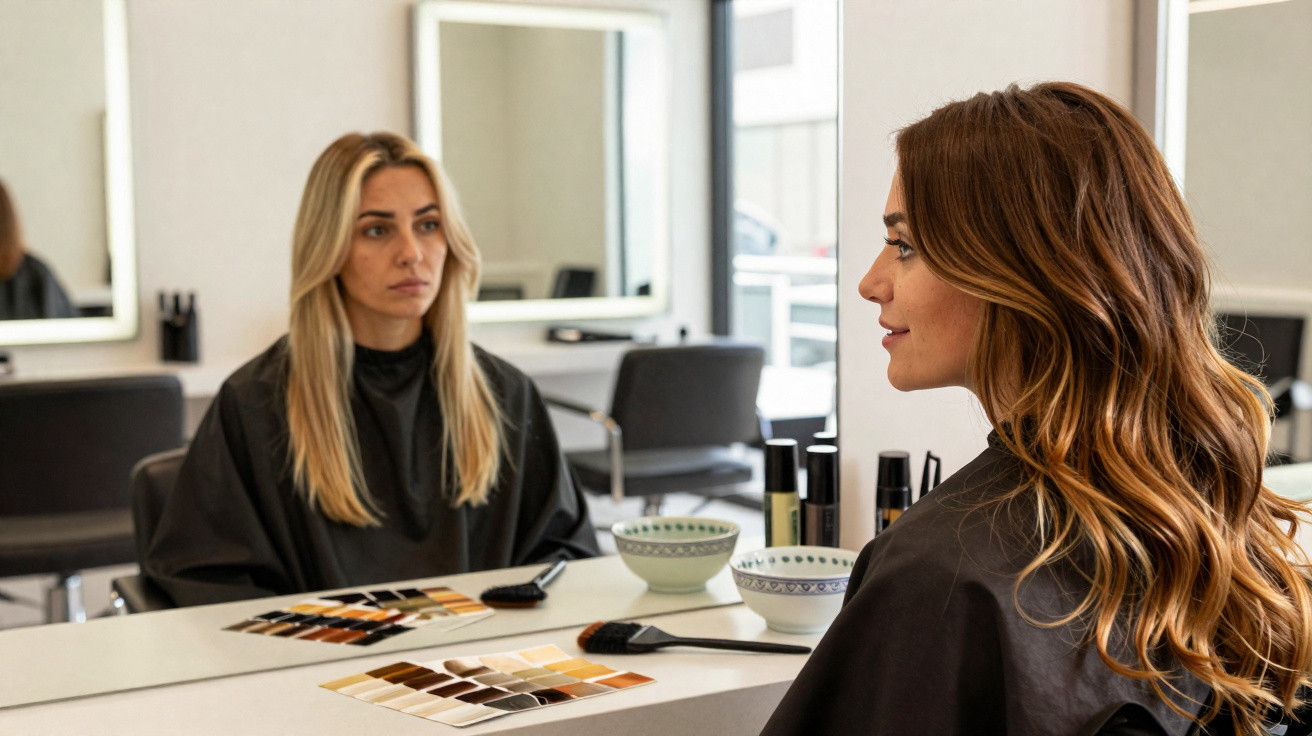
The first warm days, more daylight, fewer jumpers – and suddenly there is an urge to make a fresh start with your hair, too. On Instagram, models and influencers compete to shine in icy blonde. What looks flawless on screen can, in real life, drain the mood and complexion of darker-haired types. For many brunettes, the on-trend extreme blonde is the number-one colour mistake made in the salon.
Why radical icy blonde can quickly disappoint brunettes
After a long winter with a dark mane, the prospect is tempting: leave everything behind and begin again with a platinum-light hair colour. The idea is understandable – bring more light to the face, look fresher and more modern, perhaps even create a little “celebrity vibe”.
This is exactly where the issue starts. What works beautifully in glossy photographs depends on studio lighting, make-up and filters. In everyday life, an ultra-light blonde often clashes directly with a dark natural base, making the overall look seem severe rather than radiant.
The most important point: Too stark a contrast between natural brunette hair and extremely light blonde can visually harden the face and make it look pale.
Anyone relying solely on social-media before-and-after images overlooks all the elements working in the background: beauty filters, edited skin, perfectly styled brows and softened facial contours. The same shade looks very different in ordinary daylight – and often far less forgiving.
Stark contrast: when eyebrows and hair colour clash
A central issue with many brunette-to-platinum transformations is contrast. Dark eyebrows usually remain dark. If the hair suddenly becomes almost white blonde, it can create a kind of “foreign body effect” in the face.
Attention is immediately drawn to the brows, which appear much more prominent by comparison. This can lead to the following effects:
- The expression can look permanently stern or surprised.
- Facial expressions appear harsher, even when the face is relaxed.
- The visual proportions of the face can become unbalanced.
There is also the light framing effect around the face: a very light blonde acts like a spotlight aimed directly at the skin. While warm browns or subtle highlights soften the look, extremely pale shades define every line more sharply.
This is particularly noticeable on more angular face shapes, where cheekbones, the jaw and the forehead can look more pronounced. Anyone hoping their new colour will create a lighter, softer appearance may therefore end up with precisely the opposite result.
When hair colour makes the complexion look sallow
Colour temperature is another stumbling block. Many especially fashionable blonde shades are very cool: ash, pearlescent and almost silvery. They truly suit only a small number of skin types. Many brunette types have warmer skin undertones instead, such as golden, beige or olive.
When cool blonde pigments meet warm, lightly tanned or olive skin, the hair colour can quickly “take” the face’s natural warmth away.
The everyday consequences include:
- The complexion can appear greyish or tinged with green, depending on the light.
- You look more tired than you actually are.
- Colleagues suddenly ask whether you are ill or stressed.
Artificial lighting in an office or on public transport can intensify this effect. The theory that “lighter hair = a fresher complexion” therefore often fails when the cool blonde shade does not suit the wearer.
The instant-ageing effect: when blonde emphasises fine lines
The aim is to look younger, fresher and softer. Yet for many extreme-blonde makeovers, the reality is the so-called “coup-de-vieux” effect – a visibly ageing change caused by colour alone.
Very light hair directs the eye relentlessly towards shadows and unevenness in the face:
- Dark circles look darker and more clearly defined.
- Fine dehydration lines around the eyes and mouth become more visible.
- Redness, pigmentation marks or blemishes stand out more.
Without warm reflections around the face, the “soft-focus effect” is missing. Warm tones can make skin appear subtly fuller and more lively. Cool, very pale shades sharpen facial contours, potentially leaving the face looking harsher and “drawn”.
The overlooked strain: what bleaching does to hair
Taking dark hair to a very light level requires intensive chemical processing. This means opening the hair cuticle and removing pigment, often over several sessions.
The darker the starting colour, the more intensive the lightening process usually needs to be – and the greater the risk of brittle, dull lengths.
Typical consequences of radical lightening on brunette hair include:
- A loss of shine, leaving the hair looking lacklustre.
- Dryness and a “straw-like feel” at the ends.
- More split ends and breakage, particularly in fine hair.
There is also the maintenance involved: specialist shampoos, masks, leave-in products and regular salon appointments for touch-ups. Those unwilling to invest time and money can quickly end up with a brittle mane.
Regrowth: the maintenance marathon for brunettes
Another point many people only realise after visiting the hairdresser is the regrowth. With naturally dark hair, roots become highly noticeable after only a few days. After two weeks at the latest, the hairstyle can quickly look “unkempt”, simply because the difference between platinum-light lengths and dark roots is so pronounced.
This means:
| Aspect | Consequence with extremely light blonde |
|---|---|
| Regrowth | Roots are often visible after just 10–14 days |
| Hair appointments | Very frequent touch-ups are needed |
| Cost | High ongoing spending on colour and care |
| Everyday practicality | More styling, more products, more time |
Anyone seeking a low-maintenance look can therefore find themselves trapped in a constant cycle of recolouring and restorative care – hardly the “easy spring change” they had imagined.
Flattering alternatives: how lightening can look truly elegant on brunettes
The answer is not to abandon every blonde idea immediately. The key lies in the shade and technique. Rather than making a radical full switch to platinum-light hair, it is worth considering soft transitions.
Gentle brightness instead of a harsh break
Many colourists use approaches for brunette types that respect the natural base:
- Balayage or “bronde”: Hand-painted, softly blended highlights that sit between brown and blonde.
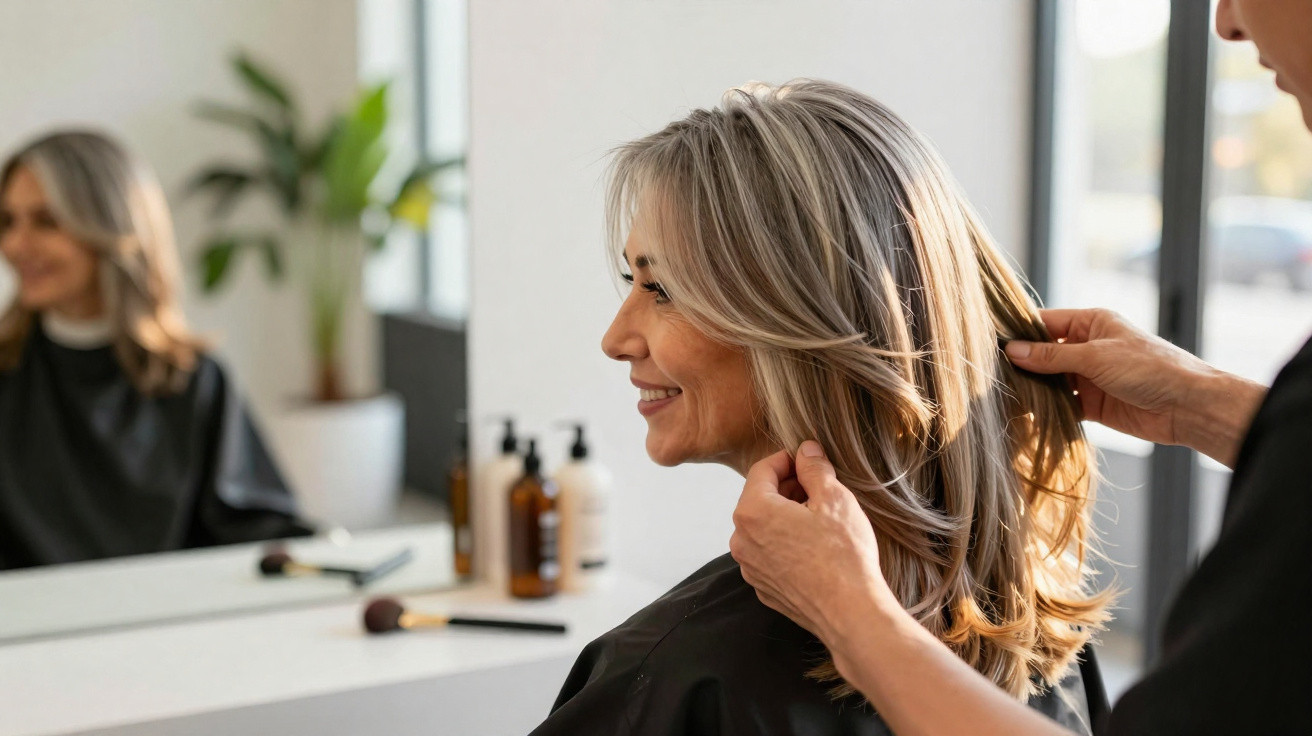
- Soft ombré: The roots remain darker while the lengths gradually become lighter, with no harsh line.
- Blended roots: The natural root colour is deliberately retained, with the shade gently flowing into lighter ends.
This creates more light in the hair without overwhelming the facial area with an overly pale “frame”. Regrowth is less distracting, appearing more like an intentional shadow that adds depth.
Why warm shades often suit brunettes better
Golden accents can work wonders, especially on warm or olive skin tones. Suitable colour directions include, for example:
- Almond or honey tones
- Caramel highlights
- Hazelnut blends
- Subtle copper reflections
These shades reflect light without “washing out” the skin. They add movement to the hair, make haircuts look more vibrant and generally harmonise much better with dark eyebrows.
The rule of thumb: The new colour should be no more than two to three shades lighter than the natural base – and should remain within the same colour family.
What brunettes should consider before a hair appointment
Anyone considering a blonde change can prepare well by asking a few questions:
- How much care and styling effort am I genuinely prepared to take on?
- How much should skin blemishes, fine lines or dark circles be emphasised or concealed?
- Which photographs genuinely show a skin and hair type similar to mine?
- Am I open to in-between options, such as balayage rather than a full blonde colour?
Many colourists recommend a colour consultation before a major change. This assesses whether the skin appears warm or cool, how dense and strong the hair is, and how heavily the existing colour has already been processed. On this basis, it is possible to identify blonde shades that genuinely work in daily life.
A make-up test can also be useful: anyone finding that only heavy make-up or strong bronzing can “save” their complexion against a very cool blonde will quickly see how practical their desired colour really is.
Ultimately, hair colour needs to work not only in photographs but also in everyday life – under office lights, on a walk, and in the bathroom mirror in the morning. Brunettes in particular can achieve a huge effect with carefully placed warm accents and a little more light in their hair, without losing their natural radiance. The radical icy-blonde option may look spectacular, but it often leaves faces looking more severe and tired than many people realise.















Comments
No comments yet. Be the first to comment!
Leave a Comment