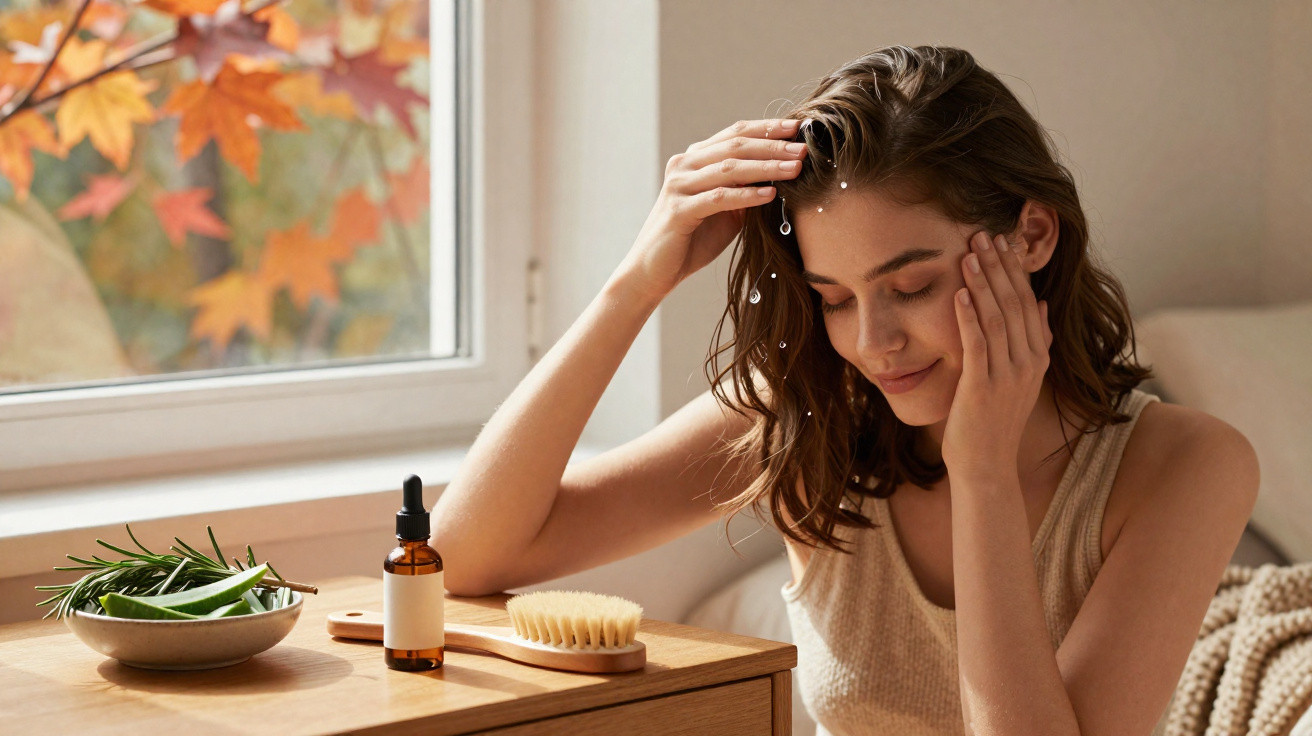
Your scalp bore the brunt of it, your ends are paying the price, and autumn calls for a reset. Not an exhausting 12-step ritual-just something gentler, practical and genuinely manageable. This season’s most intelligent hair trend is straightforward: care for your scalp as you would your skin, and allow everything else to follow.
At 7:30 a.m., I saw a woman in a steam-clouded bathroom run cool fingertips along her hairline, as though pressing a wrinkle from a shirt. She was not styling her hair. She was paying attention-feeling for soreness behind her ears and separating strands to spot tiny flakes catching the light. We have all experienced the moment when the roots reveal the truth before the mirror does. She picked up a brown-glass bottle, patted out several drops and exhaled with the relief that comes when a plan finally clicks. The solution had been sitting at the root all along.
Why “scalp first” is taking over autumn 2025
Hair is dead fibre, whereas the scalp is living tissue. It may sound like a minor distinction, but in practice it is driving some of the season’s most compelling changes. The movement now has a name: skinification of the scalp. Toners, serums and barrier-supporting practices are travelling north from facial skincare to the follicles. Consider low-dose gentle acids, plant ferments and prebiotic mists that prioritise balance rather than stripping everything away.
Search trends and salon conversations tell the same story. Retailers report rising demand for prebiotic scalp waters, rosemary-leaf oil blends and PHA micro-peels that seem better suited to a skincare shelf than beside shampoo. One stylist told me that bookings for detox-and-seal treatments doubled in September, fuelled by clients who had spent the summer wearing SPF and relying on dry shampoo. This is less a fad than a necessary correction after years of excessive washing and fragrancing.
The appeal becomes clear when you test it yourself. Your scalp microbiome is a miniature ecosystem, where yeast, bacteria and sebum exist in a delicate compromise. Remove too much and you may trigger itchiness and rebound oiliness; weigh it down and you create buildup and flat roots. A balanced routine gently guides this system: prebiotics nourish the beneficial organisms, lightweight acids break down residue, and oils work as seals rather than masks. This season, your scalp gets the spa.
Scalp-first care: simple steps and natural gains
Begin with a reset rather than a purge. Once weekly, apply a low-percentage PHA or mandelic-acid scalp rinse to lift the film left by styling spray, sweat and hard water, without the sting associated with old-fashioned scalp scrubs. Then massage in a few drops of rosemary and peppermint diluted in a carrier oil, such as jojoba or squalane, for three minutes. Rinse it away or leave it in according to how your roots feel after thirty minutes. Autumn responds well to routine, and so do your roots.
Then support the biome. This is the role of prebiotic toners-seek out inulin, alpha-glucan oligosaccharide, birch sap or rice-water ferments. After washing, mist them along your partings and allow the scalp to air-dry before tying your hair up. If seasonal shedding increases, low-concentration caffeine tonics can work alongside this approach. Let’s be honest: hardly anyone truly does this every day. Two or three applications a week are enough to create consistent change you can notice beneath your fingertips.
Reduce friction and encourage circulation. Replace abrasive scrubs with a fingertip massage, or use a silicone scalp brush fitted with small, flexible cones. Make each pass soft and unhurried, as if lathering a cashmere jumper. When hair feels limp, try a slow-wash routine: cleanse the scalp rather than the lengths, then condition from the mid-lengths to the ends, keeping the first inch near the roots clear. That small gap helps pores remain calmer and keeps volume looking natural.
“Healthy hair is a side effect of a calm scalp. Feed the roots, lighten the load, and your lengths will tell the story,” says a veteran trichology educator.
- Daily two-minute massage: use the pads of your fingers in circular motions with light pressure.
- Weekly micro-peel: choose low-strength PHA or mandelic acid, then rinse thoroughly.
- Prebiotic mist after washing: create sections, spritz it on and let the scalp breathe.
- Oil as a seal, not a soak: use 2–4 drops, never enough to drench the scalp.
- Microfibre towel and a cool dryer start: less friction means fewer flare-ups.
What is trending-and what genuinely helps
Fermented botanicals are appearing everywhere this autumn. Rice water has moved beyond its kitchen-remedy status, with brands stabilising ferments using postbiotics to reduce odour and improve slip. Pumpkin enzymes are turning up in Sunday-night “micro-masks”, offering enough refinement to loosen flakes without the sandpaper sensation of salt scrubs. Sea moss gels are also finding their way into leave-in products, bringing light root hydration to curls that need lift without crunch.
The conversation around oils is louder, yet more considered. Rosemary made headlines last year; this year, it is combined with mint, black seed and caffeine in dropper bottles intended for scalp mapping. The aim is not to turn your head into a salad. It is about precise care: a few well-placed drops behind the ears when that area feels tight, or a small amount across the crown if you wear hats and are dealing with sweat. Heat caps are also enjoying brief moments of popularity-five minutes rather than forty-to support penetration without overheating the cuticle.
There is also a subtle return to thinking about water quality. Shower filters are gaining traction again as cities adjust treatment methods during cooler months, and the root-level benefit can appear quickly: less residue and a calmer itch. People are tracking shedding patterns on their phones, identifying how stressful weeks and heating season can intensify them, then using gentle tonics on those days rather than panic-washing. One modest adjustment can achieve more than ten grand promises.
Your autumn scalp routine, made simple
Imagine a week that is easy to maintain. Wash the scalp, not the narrative. Add a micro-peel on Sunday, apply a prebiotic mist on Tuesday, and massage on Thursday evening while your podcast plays in the background. Place a couple of drops of rosemary blend along the parting before a walk, and trade your usual towel for a gentler option that does not rub at the hairline. You are not pursuing shine; you are creating calm. Roots respond to dependable kindness.
Avoid fear-based choices. If fragrance-heavy products make you itchy, set them aside for a month. If gritty scrubs feel “effective”, swap them for PHAs that work quietly instead of aggressively. Keep the dryer cool around the scalp for the first minute, then use your fingers rather than a round brush to lift the roots. Your hair will behave more like itself, which is precisely the goal. Autumn is a time to return to baseline.
Trends have value when they cut through the noise. That is the real strength of 2025’s scalp moment: fewer products performing more effectively, guiding an ecosystem rather than overpowering it. You will recognise progress when wash day becomes unremarkable and your roots still feel settled at 4 p.m. Quiet roots make loud hair.
| Key point | Detail | Benefit for the reader |
|---|---|---|
| Scalp-first routine | Rotate gentle acids, prebiotics and lightweight oils | Healthier roots, less itchiness and fuller-looking lengths |
| Micro over mega | Short massages, brief heat-cap sessions and targeted drops | Better results with less time and less product |
| Water and friction control | Filtered showers, microfibre towels and cool airflow | Fewer flakes, reduced breakage and a calmer scalp |

















Comments
No comments yet. Be the first to comment!
Leave a Comment