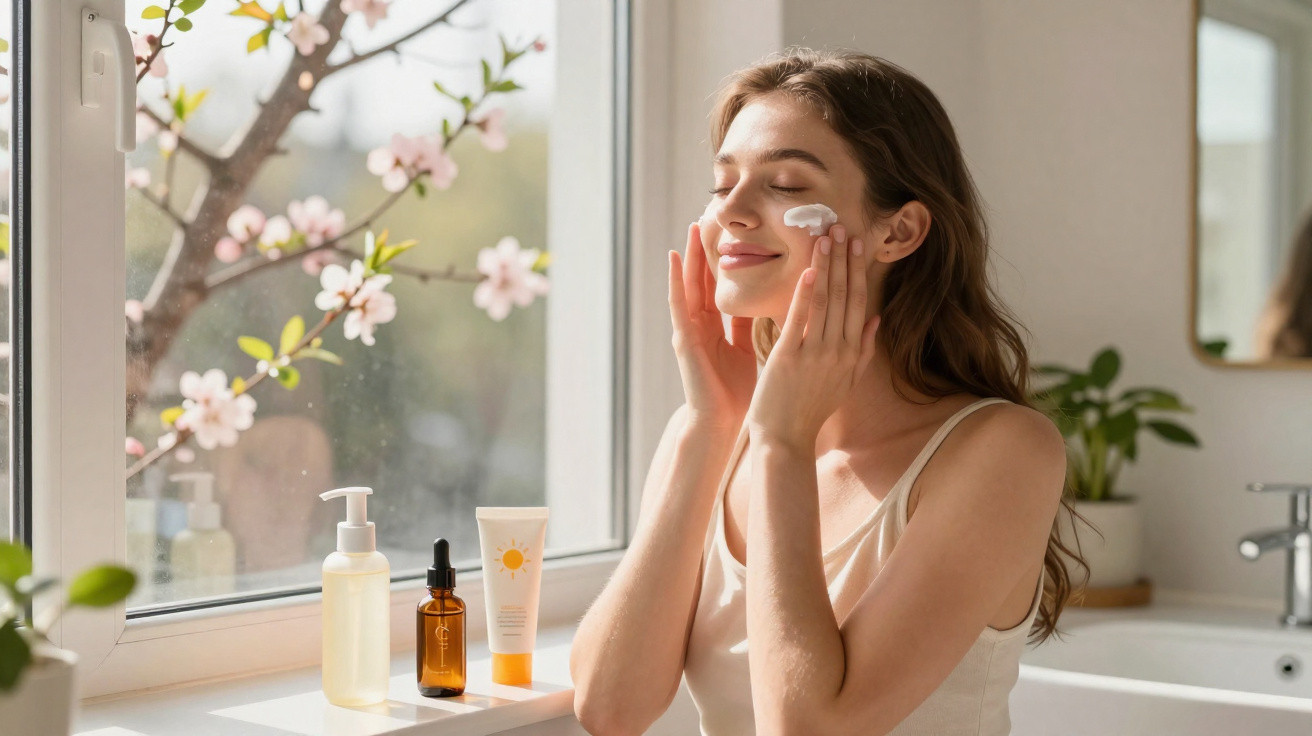
With a few targeted skincare steps, you can restore its natural glow.
The change from winter to spring is a real test for the skin. Dry central-heating air indoors, cold and wind outdoors – all leave their mark: a grey-looking complexion, dry patches and fine lines that suddenly seem more noticeable. Beauty professionals therefore advise adapting your routine specifically at this time: moving away from “winter protection” towards regeneration, hydration and consistent sun protection.
Why skin is so stressed after winter
Throughout winter, the skin is constantly operating in low gear. Sebaceous glands become less active, circulation is reduced and humidity levels fall. As a result, the natural protective barrier becomes unbalanced, moisture evaporates more quickly and dead skin cells remain on the surface for longer.
“The skin looks dull and uneven and loses firmness – not the ideal start to the sunny season.”
Simply continuing to use a thick winter cream will usually not solve the issue. At worst, overly rich textures can clog pores while the skin beneath them remains thirsty. This is exactly where a well-planned spring routine comes in.
Gentle exfoliation: the reset button for tired winter skin
Before serums and creams can work to their full potential, the “old” winter skin needs to go. Regular yet gentle exfoliation is the most important starting point in spring.
“Gentle chemical exfoliation removes flakes, smooths the surface and clears the way for active ingredients.”
Which exfoliants make sense now
- Enzyme exfoliants: use enzymes to dissolve dead cells and are ideal for sensitive or dry skin.
- AHA acids (such as glycolic, lactic or mandelic acid): refine the skin’s appearance, boost radiance and may reduce pigmentation marks.
- PHA acids: work in a similar way to AHAs but are considerably gentler, making them suitable for sensitive skin types.
Mechanical exfoliants containing coarse particles unnecessarily irritate many faces, especially where broken capillaries or redness occur easily. A better approach is to include a mild chemical exfoliant in your evening routine two to three times a week, then soothe and nourish the skin well afterwards.
Replenishing hydration: what skin really needs now
Most people notice it clearly: after winter, skin feels tight, make-up settles into fine lines, and the forehead or cheeks may flake slightly. This indicates a lack of moisture – not necessarily a lack of oil.
“Post-winter hydration means binding water, strengthening the protective barrier, but not smothering the skin.”
Active ingredients professionals rely on
- Hyaluronic acid: binds water in different layers of the skin and visibly plumps fine lines in the short term.
- Ceramides: building blocks of the skin barrier that help close gaps and slow moisture loss.
- Squalane: a lightweight, skin-identical lipid ingredient that leaves skin supple without weighing it down.
- Beta-glucan: calms irritated skin, strengthens its defences and supports regeneration.
Many experts recommend swapping very rich, balm-like creams for lighter emulsion or gel textures in spring. Ideally, apply a hydrating hyaluronic acid serum beneath a ceramide cream designed to strengthen the barrier. Combination skin benefits from targeted care: use something lighter on the T-zone and a slightly richer product on the cheeks.
Retinol & Vitamin C: a boost for radiance and smoother skin
Anyone who focused purely on “survival” over winter can begin active-ingredient skincare in spring, or increase it again. Vitamin C in the morning and retinol in the evening are leading choices.
Retinol: the anti-ageing classic with rules
“Retinol stimulates cell renewal, promotes collagen and can visibly improve fine lines, pores and pigmentation marks.”
Retinol, a form of vitamin A, is regarded as one of the most thoroughly researched ingredients in modern skincare. Used correctly, it produces noticeable effects:
- smoother skin texture
- less visible fine lines
- more refined pores
- a less uneven complexion and fewer post-spot marks
- reduced sun-related discolouration
What matters:
- Start slowly: begin with 1–2 applications a week, then increase use if the skin does not react strongly.
- Use it only in the evening: retinol makes skin more sensitive to light.
- Always pair it with skincare: follow with a soothing, non-irritating cream.
- Never go without sun protection: apply SPF consistently during the day, otherwise new damage may occur.
Vitamin C for an immediate glow boost
Vitamin C is particularly suited to a morning routine: it has an antioxidant effect, protects against free radicals and helps even out skin tone. Many users report visibly greater radiance after just a few weeks. Combined with a high sun protection factor, it enhances protection against light-induced skin ageing.
Sun protection: the most important step from the first day of spring
Perhaps the most crucial part of all spring skincare is this: wear sunscreen every day. UV radiation does not only appear beside a lake on a hot day; even in March, it can shine down from the sky with surprising intensity – including through clouds.
“Without daily sun protection, all other skincare steps operate in low gear because new damage develops faster than the skin can recover.”
What practical UV protection looks like
| Step | Recommendation |
|---|---|
| Filter strength | SPF 50 for the face and neck, particularly when using active-ingredient skincare |
| Amount | Around two finger lengths of product for the whole face |
| Frequency | Apply in the morning and reapply in strong sunshine or after sweating |
| Order | The final skincare step after serum and cream, before make-up |
Anyone using retinol, AHA acids or PHA acids should not compromise on UV protection. These active ingredients can increase sensitivity to UV rays. Sun spots, redness and accelerated wrinkle formation would be the logical consequences – exactly what many people want their skincare to prevent.
What a simple spring skincare routine could look like
Morning
- mild cleansing gel or cleansing lotion
- alcohol-free toner, if desired
- a vitamin C serum or hydration boosters, such as hyaluronic acid
- a lightweight cream with ceramides or squalane
- finish with a generous application of SPF 50 sunscreen
Evening
- thorough cleansing; with make-up, feel free to use “double cleansing” (oil + gel)
- a mild AHA or PHA exfoliant 2–3 times a week
- a retinol product on alternate evenings
- a soothing, barrier-strengthening cream
Less can be more: it is better to use a few well-chosen products than ten different tubes that irritate one another. Skin responds well to consistency and clarity.
How to tell that your skincare is working
Skin does not react overnight, but after a few weeks you should see clear signs:
- The complexion appears fresher and more even.
- Make-up settles less into fine lines.
- Dry patches disappear or occur less often.
- Redness and feelings of tightness reduce.
If you instead experience intense burning, flaky patches or persistent tightness, the combination of exfoliation, retinol and sun may be too much. In that case, take a break, use plenty of hydration and keep your routine simple – and, if in doubt, see a dermatologist.
Common mistakes – and how to avoid them easily
Many skincare problems arise not from “wrong” products but from using them incorrectly. Frequent springtime pitfalls include:
- introducing several highly irritating active ingredients at once
- using exfoliants too often in the hope of becoming “smooth faster”
- applying sunscreen only at weekends or when the sky is clear
- continuing to use very thick layers of rich winter cream
A realistic plan is to stabilise the skin barrier first, then introduce active-ingredient products gradually, use sun protection consistently and pay attention to the skin’s signals. This helps the complexion move through spring and summer looking noticeably calmer and more radiant – without radical measures or expensive salon treatments.

















Comments
No comments yet. Be the first to comment!
Leave a Comment