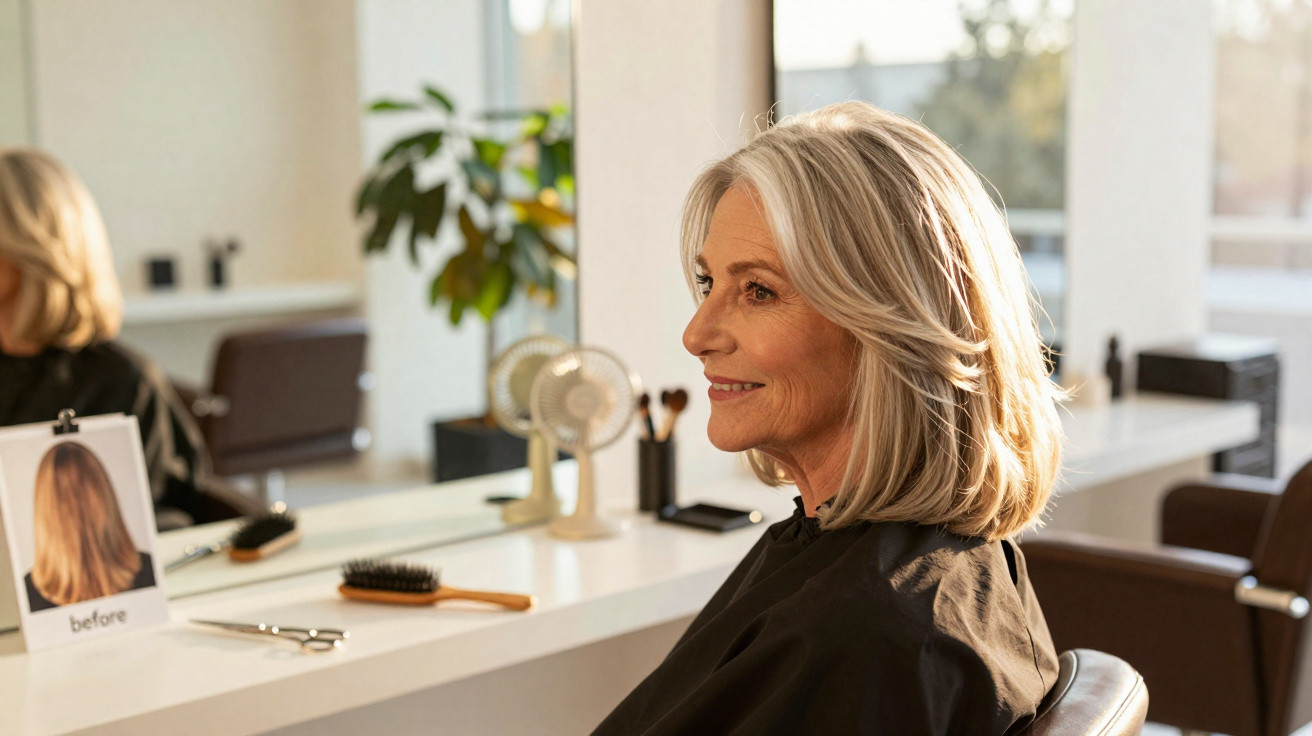
Many women stick with the haircut they have always worn because it has suited them for years. Yet age changes not only the texture of the hair, but the face too. Hairdressers say that one particular way of wearing long hair can be especially unforgiving as we get older – even though it is often seen as the ultimate symbol of femininity.
Why hair after 60 changes the appearance of the face so much
As we age, hair commonly becomes finer, drier and more prone to breakage. At the same time, the skin loses firmness, volume in the cheeks diminishes and facial contours become softer.
“The way hair falls can visually lift the face – or pull everything down.”
Long, weighty sections do more than frame the face. They can create a downward visual pull, draw attention to fine lines and alter the whole impression a person gives. Hairdressers see it daily in the salon: one haircut can seemingly take five years off – or add five years.
The one hairstyle that can make women over 60 look particularly older
The problematic style on which many experts agree is clearly defined: very long, straight hair with no layers, movement or noticeable texture.
It is typically characterised by:
- hair falling well below the bust, or even to the lower back
- few or no layers
- blow-dried straight or naturally straight hair, with no wave or bounce
- one uniform, solid length
Although this may initially appear polished and feminine, visually it often has the opposite effect:
- The roots sit flat against the head.
- The ends can quickly look thin and stringy.
- The face appears longer and narrower – and therefore more tired.
- Fine lines and sagging contours become more prominent.
“Long, straight curtains of hair without movement visually pull the face down and highlight every sign of tiredness.”
This is exactly the effect that can make women beyond a certain age seem more severe or exhausted, even when they feel full of energy. The contrast between very sleek, static hair and a more mature face intensifies the impression of harshness.
It is not length alone, but the weight
Hairdressers stress that nobody has to “cut it all off” simply because they are 60. The era in which women were expected to choose a short haircut automatically at a particular age has passed. What matters less than the number of candles on the birthday cake is:
- How dense is the hair still?
- How much natural movement does it have?
- Is the face more oval or angular?
- Where is volume lacking, such as at the sides or crown?
Extremely long hair magnifies every issue with volume. Rather than supporting the shape, it hangs downwards. Anyone whose hair is already fine can quickly look “dragged down” with XXL lengths – both visually and emotionally.
What hairdressers recommend instead
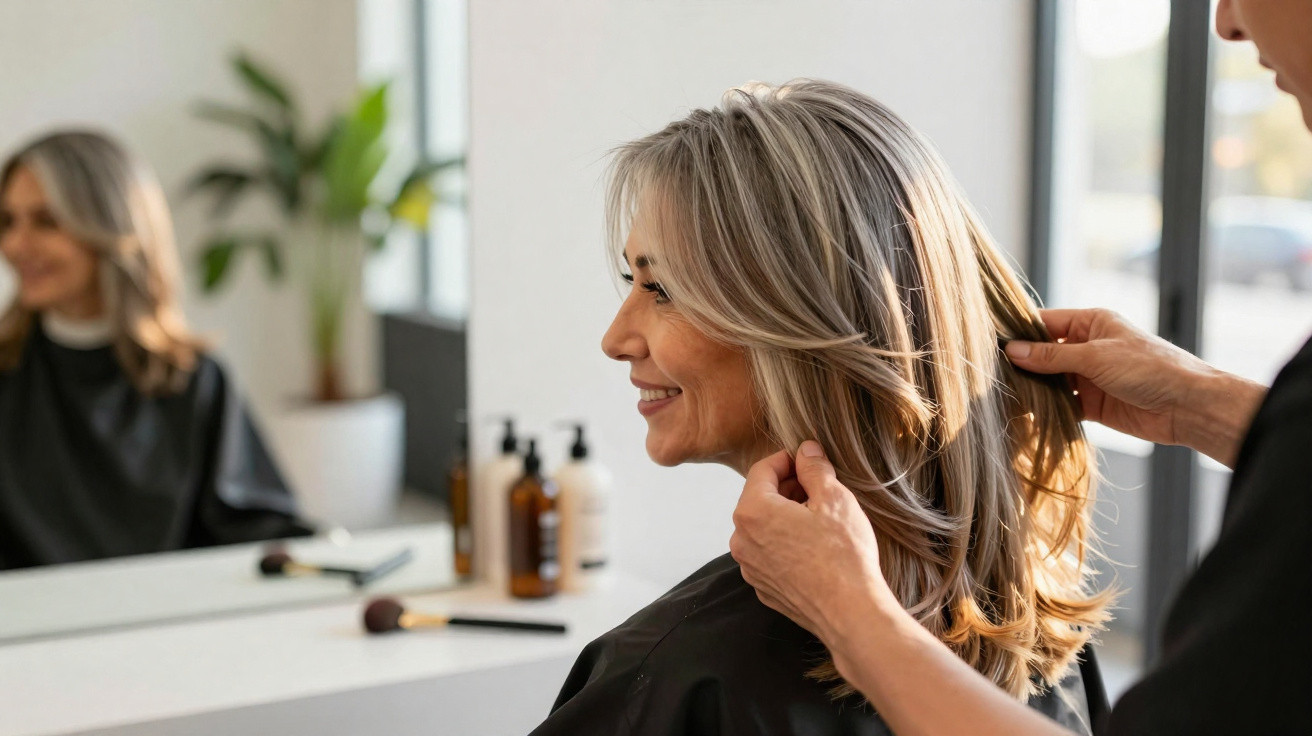
Most hair professionals advise adding lightness, movement and softer transitions. Medium-length styles are particularly popular.
“The ideal area is often between the shoulders and shoulder blades – with soft layers and some volume at the roots.”
Medium length rather than extra-long: a small but crucial difference
Those who do not want to part with long hair can gain a great deal without making a drastic cut. Many hairdressers work to these rules of thumb:
- Keep the length no lower than the shoulder blades.
- Add gentle layers around the face.
- Lightly thin the ends so that nothing looks blocky.
- Build more volume at the crown with subtle graduation.
The result is that the bulk of the hair is distributed more evenly, while the face looks more open, lively and approachable. Fine lines fade into the background because attention is drawn more strongly to the eyes and smile.
The “lob” – why this cut works so well
One cut that stylists recommend especially often is the “lob”: a long bob that usually sits just above, or at, shoulder level. It is also commonly described simply as a long bob or a shoulder-length cut.
Typical features of a lob haircut include:
- it finishes between the collarbone and shoulder
- it has light layers, particularly at the front
- softly feathered ends frame the face
- it works with both straight hair and soft waves
“The long bob is considered one of the most reliable hairstyles for making the face appear softer, fresher and more modern.”
Many well-known women over 50 and 60 demonstrate how effective this can look: a medium length, slight movement and volume in the right places can have a noticeably rejuvenating effect without looking as though they are trying to appear younger.
How layers and movement create a younger look
Layers offer more than a fashionable benefit; they also have an optical effect. Different lengths bring greater dynamism, allowing light to reflect through the hair differently and strands to fall with more variation.
This brings several benefits at once:
- The face looks softer because no hard line dominates its contours.
- Volume is created where it is most needed: at the sides and crown.
- The overall look becomes more lively and less static.
Light layering around the cheekbones is particularly useful for highlighting this area. It can make the face appear fuller and firmer, much like a very subtle lift.
Fringes, bangs and partings: small details with a big impact
Details matter as much as the actual length. A parting alone can make a difference of years. A severe, perfectly straight centre parting combined with very long, sleek hair highlights every asymmetry and line in the face.
According to many hairdressers, these alternatives give a noticeably softer impression:
- a gentle side parting
- a slightly side-swept fringe that softens forehead lines
- loose face-framing strands rather than a harsh outline
“Small changes around the fringe can visually conceal forehead lines and lowered brows – without any procedure.”
How to tell whether your current length makes you look older
Anyone unsure whether their hairstyle is rejuvenating or emphasising age can try a simple check:
- Take a photograph with your hair worn down at its full length.
- Then pin it up or virtually “cut” it shorter, for example to chin or shoulder level.
- Place the two images side by side and focus only on your facial expression.
Many women only notice in this comparison how much their very long, straight hair pulls their features downwards. Even an imagined cut of five to ten centimetres often looks like an instant boost of freshness.
Additional factors: colour, care and texture
Alongside the cut, colour also plays a part. Very dark, uniform shades in extra-long, straight hair can make the face look harsher still. Softer, slightly lightened tones and fine highlights create more depth and a livelier overall appearance.
Care has an effect too: shine makes hair look healthy, while dull lengths can soon appear neglected. After 60, hair becomes more sensitive to heat and chemical treatments, which makes gentle products and heat protection increasingly important.
Practical examples of a rejuvenating haircut
Anyone ready for a change can give their hairdresser specific requests. The following phrases can be helpful:
- “I want to keep my length, but I would like my hair to fall more lightly.”
- “Please add more movement around my face, without heavy layers at the back.”
- “The cut should soften my face and not draw attention to my chin.”
A good hairdresser will consider posture, proportions and everyday habits: Do I often wear glasses? Do I like tying my hair up? How much time do I want to spend styling it? All of this informs the cut.
The risks of holding on to XXL lengths
Those who continue to opt for extremely long, straight hair despite increasingly fine texture should keep several points in mind:
- Ends break more easily, leaving the lengths looking uneven.
- The roots and crown visibly lose volume.
- Styling becomes more time-consuming, including blow-drying or straightening.
- The face may look more severe, serious and tired than the person feels.
In individual cases, an XXL mane can still suit someone perfectly at 70 – for instance, where the hair is very dense and strong and the facial features are defined. For most people, however, a well-cut medium-length style is far more flattering.
No final rule: use hair as an ally
After 60, hairstyles are less about rules and more about effect. Understanding why extra-long, straight hair can often pull the face down makes it easier to decide consciously. Medium lengths, soft layers and a little movement can visibly rejuvenate the overall look – without a radical transformation.














Comments
No comments yet. Be the first to comment!
Leave a Comment