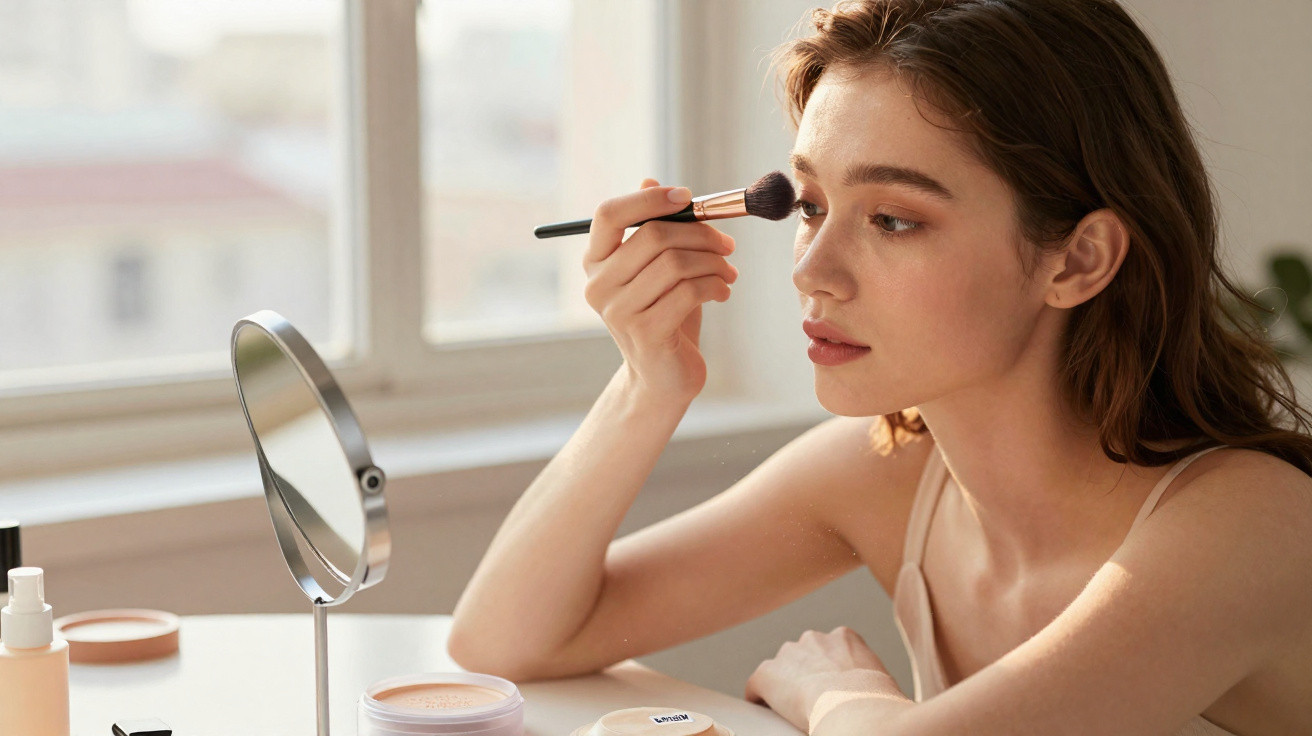
Rather than relying on heavy make-up, the current trend is all about a soft-focus effect that blurs pores, fine lines and dark circles – at a price that sounds more like a bargain than a luxury purchase.
What makes this setting powder sensation so special
The much-hyped powder formula comes from essence, a brand that has long been known on the high street for strong value for money. At around £4, this is not merely a basic mattifying powder; it is a product designed to visibly improve the appearance of the complexion.
“The texture works like a light photo filter: it smooths, refines and gives the skin radiance – without looking mask-like.”
Once applied, an ultra-fine veil settles over the skin. Pores look smaller, the complexion appears more even and minor imperfections are visually pushed into the background. Particularly interesting is the softly peach-toned shade, which adds freshness without resembling traditional blusher.
The result is reminiscent of the famous “well-rested, without much effort” look: the complexion seems calmer rather than heavily powdered, with a softly blurred appearance. Many users describe it as a “mini-lift in a compact” – especially around the eyes.
Glow, not a mask: matte skin that still looks alive
A common issue with powders is that they either mattify intensely and leave skin looking dull, or allow shine to return after only a few hours. This product aims for a middle ground: it removes excess shine while retaining the skin’s natural reflection.
- The T-zone is kept under control without looking dry.
- The complexion stays fresh rather than looking “overdone”.
- Make-up lasts longer, including on combination skin.
- The finish remains even in artificial light and daylight.
Under changing light sources – at the office, on the train or at dinner in the evening – many classic powders reveal their weaknesses: they can look patchy, cakey or overly powdery. The texture described here focuses instead on a blurring effect, creating a lightly soft-focus finish. Fine lines around the eyes are less emphasised rather than becoming filled with product.
How to apply essence setting powder step by step
The formula is not the only factor: technique matters too. Sweeping a dense brush firmly across the entire face simply wastes its potential.
The foundation: the right brush and amount
Use a soft, fluffy brush. Pick up a little powder, then tap the brush lightly against the edge so that no excess ends up on the skin.
- Blend liquid products, including foundation and concealer, thoroughly.
- Work the powder gently into the T-zone: forehead, nose and chin.
- Sweep any remaining product lightly over the cheeks.
This keeps the centre of the face under control while allowing the outer areas to reflect a little more light. The result is a natural-looking “Hollywood lighting” effect.
A dark-circle trick: powder instead of thick concealer layers
It becomes especially useful beneath the eyes. Instead of applying ever more coverage, this powder formula sets concealer while visually smoothing the surface.
Using a small brush or a slightly damp make-up sponge, take up a minimal amount of powder. Carefully press it into the under-eye area rather than wiping it across the skin. This allows the texture to sit like a fine veil over fine lines without visibly settling into them.
“Used correctly, a good setting powder can soften dark circles without making the area look dry or older.”
What exactly is setting powder?
Setting powder is a make-up product applied after foundation and concealer. It is intended to perform several tasks at once:
- Keep make-up in place.
- Control shine without making the skin look dull.
- Visually blur pores and fine lines.
- Smooth and balance the complexion.
Modern formulas use extremely fine, often almost transparent textures. They are meant to look invisible on the skin while working like a filter. Depending on the version, there are clear translucent, lightly tinted and colour-correcting options – including, as here, a delicate peach undertone for added freshness.
How do you find the right setting powder?
There is no single “best” option for everyone. Your skin type and the effect you want are what matter.
| Skin type / desired result | Recommended type of setting powder |
|---|---|
| Combination to oily skin | A more strongly mattifying formula that is still finely milled |
| Dry skin | A very light, radiant texture, used sparingly |
| Noticeable pores / uneven skin texture | Powder with a blur or soft-focus effect |
| Tired, sallow complexion | A brightening, lightly peach-toned shade |
Those who favour extremely natural looks should choose translucent powders with barely any pigment. Anyone seeking more freshness can benefit from shades with a subtle colour effect, such as soft peach or champagne tones. The high-street favourite described here fits precisely into this category: it does not add coverage but makes the complexion look more lively.
When should powder be applied in your make-up routine?
The ideal moment is after all cream products have been worked in. In other words, begin with skincare, followed by primer if desired, then foundation and concealer. Once everything has properly blended into the skin, it is time for powder.
For everyday wear, a thin layer on the T-zone and beneath the eyes is enough. If you are prone to shine, you can lightly top it up at lunchtime or after work with a small brush. The important thing is to build thin layers rather than applying one heavy layer. That keeps the finish looking fresh.
Common mistakes – and how to avoid them
Many powder problems are caused not by the product, but by application. Typical pitfalls include:
- Applying too much product at once – the result is powdery, cakey and highlights every line.
- Using the wrong tool – very dense brushes or sponges used without care can quickly create a mask-like effect.
- Applying powder to foundation that is still wet – this can cause patches or product to pill.
- Mattifying the entire face heavily – the complexion can appear flat and lifeless.
By powdering only oilier areas and leaving the cheeks and upper cheekbones relatively free, you create far more dimension in the face. A little sheen in the right places looks more youthful than a completely mattified complexion.
Why affordable powders are so sought after right now
Over recent years, high-street beauty brands have made considerable technical progress. Micronised pigments, blurring effects and caring ingredients were once found almost exclusively in high-end products. Similar technology is now appearing on shelves for just a few pounds.
For many consumers, value for money is crucial: when a product for four euros refines pores, smooths dark circles and makes the complexion look fresher, the expensive luxury alternative is quickly called into question. The effect is especially interesting in photos and selfies, where the finish often looks as though a light filter has been switched on.
Anyone who already loves their foundation does not need to change it. A well-chosen setting powder can work like an upgrade: the same base, but a visibly more refined result. In everyday life, when time is short, concealer, a touch of this powder and some mascara can often be enough to make the complexion look rested and well cared for.

















Comments
No comments yet. Be the first to comment!
Leave a Comment