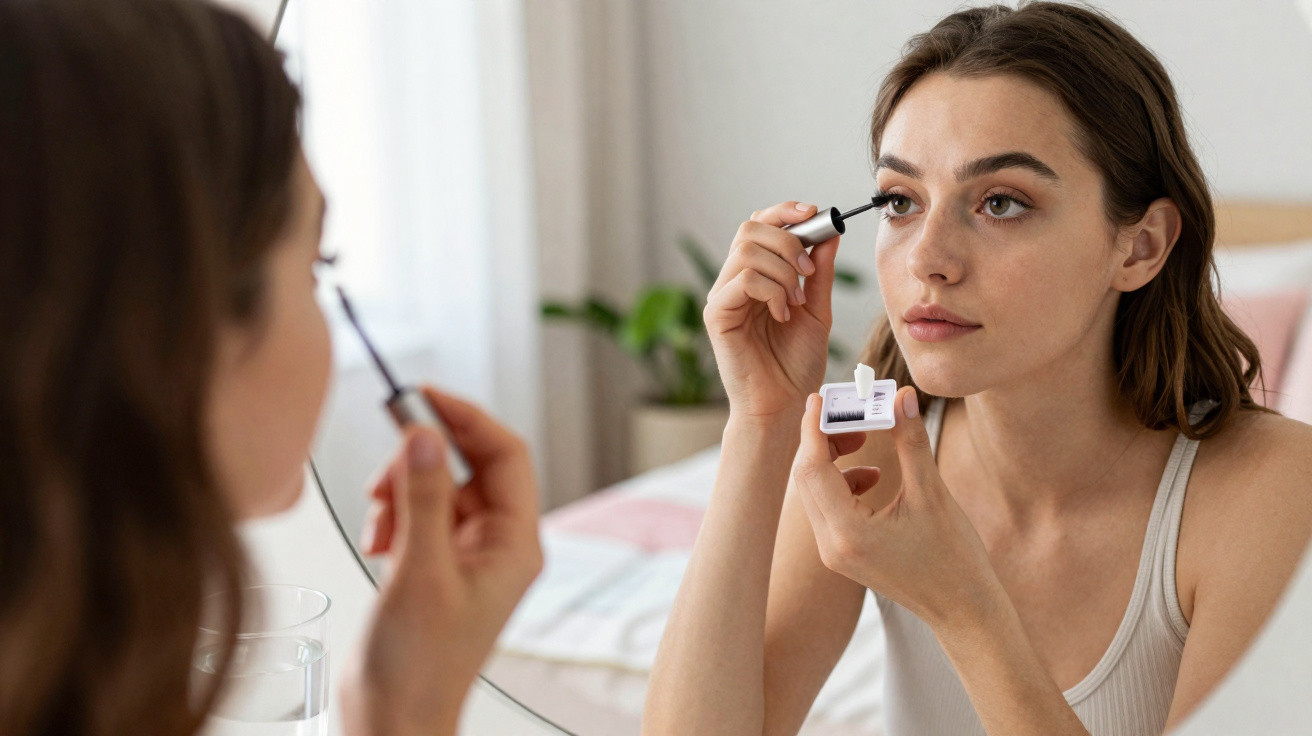
Ultra-long, thick eyelashes may be fashionable, but do they justify the cost – and the potential health risks?
Our natural eyelashes have vital roles. Because the eye is exposed to the environment, it can provide a route for bacteria and viruses to enter the body – with potentially fatal consequences.
Lashes help protect the eyes by redirecting airflow away from the eyeball’s surface. They also encourage us to blink when airborne debris approaches, keeping particles out and helping to maintain lubrication of the eyeball.
Eyelash extensions and the risks of adhesive
Eyelash extensions are single fibres fixed individually to each natural eyelash.
They can be produced from a range of materials, including natural fibres such as silk, mink hair or horse hair, as well as synthetic options including nylon and plastic. The fibres are secured with glue, which itself may create problems.
Before an appointment, most technicians carry out a patch test – typically on the wrist or behind the ear – to identify an allergy to the adhesive. Yet, even where no allergic reaction occurs, chemicals in the glue may irritate the sensitive area around the eyes. The weight of the adhesive can also irritate the eyelashes.
Correct application is essential. There have been cases in which people have accidentally glued their eyelids together using eyelash adhesive. More worryingly, because it is used so close to the eye, eyelash glue must never touch the surface of the eye.
One study found that more than 60% of women reported keratoconjunctivitis after eyelash adhesive entered their eyes. This condition involves simultaneous inflammation of the cornea and conjunctiva. The same research found that 40% of women experienced an allergic reaction to the glue.
In some cases, nail glue – which is considerably stronger and more powerful – has been marketed as eyelash glue or used instead of it. In one particularly alarming example of incorrect application, a woman’s eyelids were sealed together after superglue was used to attach her eyelash extensions.
Eyelash adhesives may also present another health concern. In one study, 37 professional and consumer eyelash glues were examined for formaldehyde, a chemical known to cause cancer.
The study showed that 75% of the 20 professional glues assessed emitted formaldehyde, while four of the 17 consumer products contained it too. Formaldehyde was not listed among the ingredients of some glues that contained the chemical.
Preservatives used in adhesive can trigger toxic conjunctivitis and conjunctival erosion. This is when the epithelium – the layer of cells covering the cornea’s surface – separates from the layer below. It is painful and may impair vision.
Eyelash extensions, blepharitis and lash mites
The complication most frequently linked with eyelash extensions is blepharitis, meaning inflammation or irritation of the eyelids. Along the eyelid margins are the follicles from which eyelashes grow. These follicles contain two kinds of glands that produce antimicrobial substances, preventing bacteria from accumulating around the eyes.
Changing the natural lashes can disrupt this process, allowing bacteria to build up and cause blepharitis. Modifications to natural lashes may also lead to styes, as either adhesive or bacterial accumulation can obstruct follicle secretions.
Inadequate salon hygiene can also result in an infestation of lash mites. Most people carry some Demodex mites, but they can pass between hosts. Poor hygiene of lash tools may therefore cause an infestation, particularly where the natural function of eyelashes has been compromised.
Even when eyelash extensions are removed by a highly professional practitioner, the process can still damage natural lashes.
Eyelash serums and prostaglandin side effects
As a result, some people have rejected extensions in favour of eyelash serums. Growth serums containing prostaglandin, for instance, have gained popularity because they can substantially increase the length, thickness and darkness of natural eyelashes.
These serums originated from glaucoma treatment, a condition in which fluid build-up in the eye affects eyesight. It was noticed that glaucoma patients using prostaglandin eye drops developed lashes that were longer, thicker and darker.
More recently, prostaglandin analogues – molecules with similar properties – have become widely used. However, both forms of product may carry health risks.
They may alter iris colour, possibly permanently. They can also cause a loss of fatty tissue around the eye, known as prostaglandin-associated periorbitopathy. This can make the eyes appear hollow and intensify the appearance of dark circles.
If you choose to spend money on eyelash enhancements, make sure you visit an experienced technician in a professional salon with meticulous hygiene standards – and, if your natural lashes matter to you, avoid making it a routine habit.
Adam Taylor, Professor and Director of the Clinical Anatomy Learning Centre, Lancaster University
This article is republished from The Conversation under a Creative Commons licence. Read the original article.

















Comments
No comments yet. Be the first to comment!
Leave a Comment