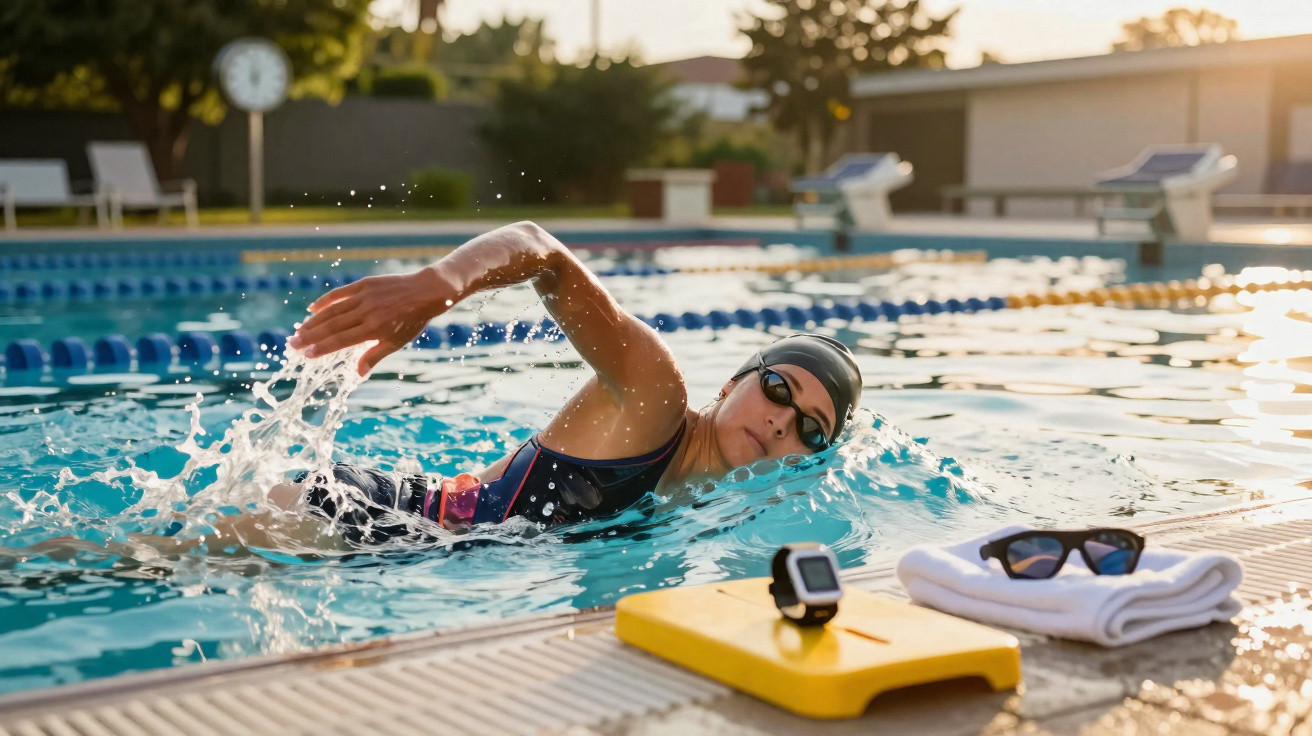
The swimming trunks feel a little tighter, the bikini is still in the wardrobe, and suddenly summer seems much closer than expected. Anyone aiming to tone their stomach will sooner or later turn to a classic: swimming. This sport is considered kind to the joints, works the entire body and is said to help shape the area around the midsection in particular. But how long should you spend in the water for your waist measurement to genuinely decrease?
Why swimming is so effective for reducing belly fat
Swimming is a compact all-round fitness workout: cardiovascular exercise and muscle building happen at the same time. In the pool, your whole body works against the resistance of the water. That includes your arms, legs, back – and, naturally, your abdominal muscles.
With every stroke, your core keeps your body stable in a horizontal position. This continuous stabilising work engages the entire core without you consciously having to do sit-ups. The deeper abdominal muscles in particular, which are important for a flat stomach, get a thorough workout.
“Swimming burns calories, challenges the cardiovascular system and tones the core muscles at the same time – precisely the combination you need for a firmer stomach.”
Training only one area of the body to lose fat does not work. Your body decides which fat stores it draws energy from. However, anyone who regularly burns plenty of calories while building muscle will soon notice a difference around the waistband. Swimming raises energy expenditure not only during the session, but also boosts metabolism for a while afterwards.
There is another advantage: buoyancy in water greatly reduces the strain on joints, ligaments and spinal discs. This means that people with back problems or excess weight can work out more intensively in the pool than they could on land – without constantly worrying about pain.
The ideal duration: how long you should swim per session
A coach from a major sportswear manufacturer puts it simply: if you want visible changes around your stomach, you primarily need enough movement in the aerobic zone – in other words, cardio that challenges you without leaving you completely breathless.
“As a rule of thumb, around 45 minutes of continuous swimming is ideal for making a noticeable difference to your stomach.”
Why 45 minutes? During the first minutes of a workout, the body mainly uses readily available energy stores. As the session continues, the proportion drawn from fat stores increases. By swimming regularly for at least three quarters of an hour, you give your metabolism enough time to enter this mode while also burning a substantial number of calories.
Getting the intensity right matters. Your heart rate can rise noticeably, but you should still be able to speak in short sentences if somebody at the poolside asks you something. If you are continually gasping for air, the pace is too fast – and you are unlikely to sustain it for 45 minutes.
Which swimming strokes are especially worthwhile for your stomach
The coach recommends combining different strokes and training aids within one session. This keeps the workout varied and works the full core from different angles.
- Breaststroke: A classic, comparatively gentle option that is good for warming up and easing off between harder sections. It burns roughly 300–350 calories per half hour, depending on your pace.
- Front crawl: Much more dynamic and demanding for the heart and circulation. It is ideal for the working phases of the session.
- Backstroke (back crawl): Takes pressure off the neck, stabilises the core and can help with posture issues.
- Equipment such as a kickboard or fins: These direct the effort towards the legs or core while still keeping your heart rate elevated.
Although butterfly burns an extremely high number of calories, it is technically demanding and simply too strenuous for many recreational swimmers. A flat stomach does not require acrobatics – regular swimming at a brisk pace is entirely sufficient.
Sample plan: a 45-minute swimming session for a flatter stomach
A structured workout is easier to maintain and makes progress simpler to assess. One possible 45-minute session could look like this:
1. Warm-up: ease into it (10 minutes)
Begin at a relaxed pace to prepare your cardiovascular system and muscles:
- 4–6 lengths of breaststroke at an easy pace
- 4 lengths of backstroke to mobilise the shoulders and back
Breathe deeply and evenly. If you are already out of breath after these opening minutes, slow down.
2. Main set: raise your heart rate, keep your stomach engaged (25 minutes)
This is the section in which you do the most for fat burning and your midsection. Work in intervals:
- 4–6 minutes of front crawl at a brisk pace, keeping your core as stable as possible
- 2–3 minutes of active recovery using a kickboard or fins, with a focus on controlled leg work
- Repeat this block 3–4 times, depending on your fitness level
While swimming front crawl, try to rotate your upper body slightly and deliberately. This movement particularly works the oblique abdominal muscles.
3. Core circuit in the water: targeted strengthening (10 minutes)
Finish by giving your abdominal muscles another focused dose of work – in the water rather than on an exercise mat.
| Exercise | Duration/repetitions | Effect |
|---|---|---|
| Kicking with a kickboard | 3 × 2 minutes, 30 seconds’ rest | Stabilises the core and works the lower abdominal area |
| Front crawl with pronounced core rotation | 4 lengths slowly | Trains the oblique abdominal muscles |
| “Plank” at the pool edge (draw knees towards chest) | 3 × 15 repetitions | Strengthens the rectus abdominis and hip flexors |
For the “plank” at the pool edge, hold on with your hands, keep your upper body as still as possible and draw your knees towards your chest in a controlled way. You should clearly feel it in your stomach, not in your lower back.
How many times a week will actually make a difference?
One session, however tough it may be, will not change much. Noticeable effects on your waist measurement and body tone come from consistency. A realistic, everyday approach is:
- 2–3 swimming sessions per week, each lasting at least 45 minutes
- Ideally, take a rest day between them so your muscles and cardiovascular system can recover
If you are just starting out, begin with 25–30 minutes and add five minutes each week until three quarters of an hour feels manageable.
Swimming alone is not enough: supporting the effect through diet
Swimming can achieve a great deal, but it cannot offset a constant calorie surplus. To tone your stomach, you need at least a slight calorie deficit. In practical terms, this means consuming a little less energy over time than you use.
Useful adjustments include:
- Cut down on fizzy drinks, juices and sweetened coffee
- Limit ready meals and very fatty snacks
- Include protein sources such as quark, yoghurt, pulses or lean meat
- Choose lighter evening meals with plenty of vegetables
Small changes that add up over weeks often fit everyday life better than extreme diets – and help keep swimming enjoyable.
Water-based alternatives for anyone who prefers a gradual start
Not everyone immediately feels comfortable swimming lengths. Water offers other ways to train your abdominal area without focusing straight away on performance:
- Aqua jogging: Running in deep water with a belt; it is very gentle on the joints but still challenges the cardiovascular system.
- Aqua fitness classes: Music, a group and an instructor – ideal for anyone who needs external motivation.
- Active play with children: Splashing about, pulling and pushing in the water may not be a traditional workout, but it is better than no movement at all.
These activities also raise your heart rate and engage your core, provided you are genuinely moving rather than simply standing in the water.
Tips to help you stick with swimming
The biggest obstacle is rarely the first trip to the swimming pool; it is usually week three or four. A few strategies can make it easier to keep going:
- Put fixed swimming times in your diary, treating them as an appointment with yourself
- Arrange to go with a friend and swim lengths together
- Record your progress: time spent swimming, rest periods and perceived effort
- Create music or podcast playlists for the journey there and back as a small ritual
Anyone who establishes these routines will notice a difference after a few weeks not only around the stomach. Shoulders become more upright, the back feels more relaxed, and regular exertion in the pool often benefits sleep too.

















Comments
No comments yet. Be the first to comment!
Leave a Comment