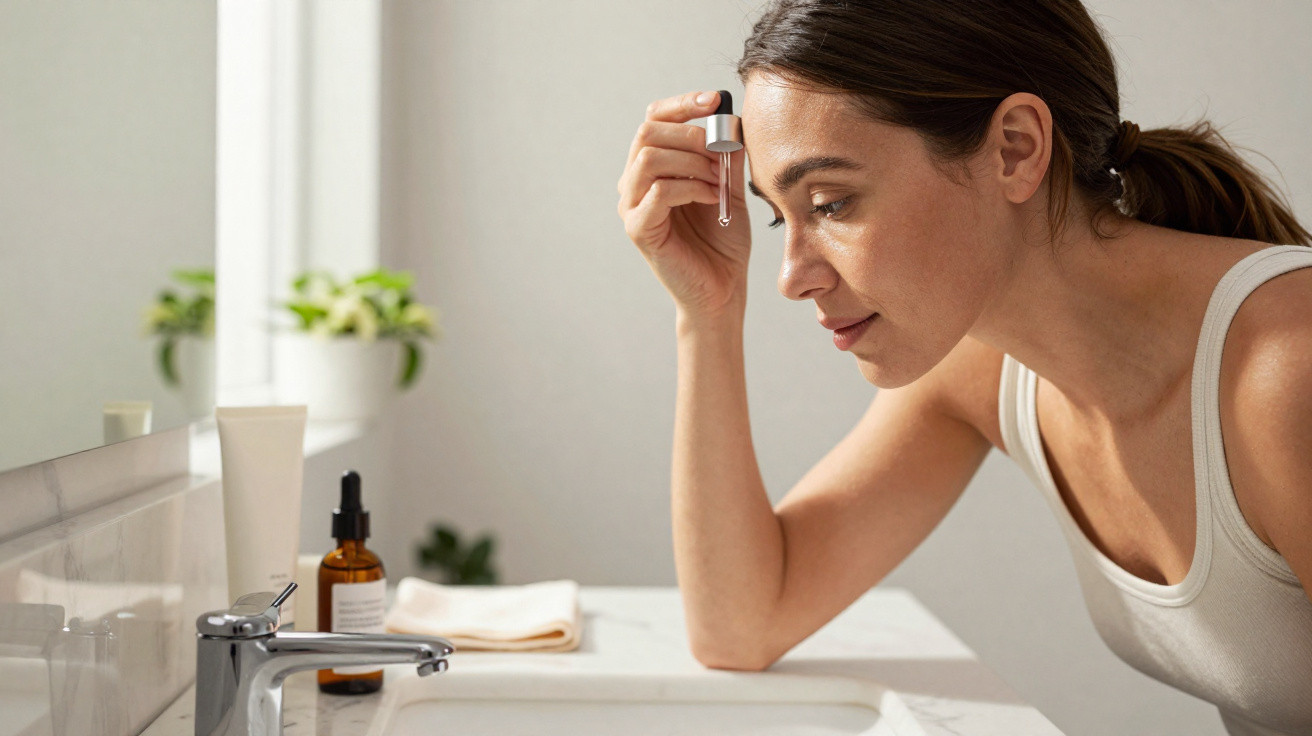
Combination skin can make skincare difficult: the T-zone quickly becomes oily again, while the cheeks feel dry and the first fine lines appear at the same time. Many anti-wrinkle creams are too rich and clog pores, whereas lightweight fluids often fail to ease dryness. Cosmetics experts explain how the right textures and active ingredients can manage this balancing act surprisingly well.
What really sets combination skin apart from normal skin
Dermatologists primarily identify combination skin by sebum production: the T-zone – the forehead, nose and chin – produces considerably more sebum than the cheeks. This is visible as a shiny forehead as the day goes on, blackheads around the nose and cheeks that look comparatively matte and can feel slightly rough.
In terms of the ageing process, combination skin is not especially different from normal skin. Moisture levels, pH value and elasticity usually sit within a similar range. The key issue is the uneven distribution of oil production. Anti-ageing ingredients therefore encounter two very different sets of needs on one face.
"Good anti-wrinkle skincare for combination skin smooths wrinkles without creating shine in the T-zone, while also soothing dry areas."
If the skin barrier is weakened, for instance by overly harsh cleansing or excessively potent active ingredients, it can quickly react with redness, tightness and intolerance – even to high-quality creams. Even trusted classics such as hyaluronic acid or retinol then work less effectively because the skin is simply overwhelmed.
The most important anti-ageing ingredients for combination skin
Many anti-wrinkle ingredients work just as well for combination skin as they do for other skin types, provided the formulation is suitable. The following groups of active ingredients are particularly relevant:
- Hyaluronic acid: retains water in the skin and plumps fine lines without leaving an oily finish.
- Glycerine: a classic moisture booster that is well tolerated and ideal for everyday use.
- Ceramides: reinforce the protective barrier and help prevent tightness.
- Niacinamide: regulates sebum production, has an anti-inflammatory effect and refines the complexion.
- Retinoids and retinal: stimulate collagen production, smooth wrinkles and improve skin texture.
- Bakuchiol: a plant-based alternative with effects similar to retinol, usually with greater gentleness.
- Peptides: support firmness and elasticity, making them particularly interesting from the mid-thirties onwards.
- Antioxidants such as vitamin C or resveratrol: protect against UV-related damage and environmental stress.
Studies indicate that even moderate concentrations can make a substantial difference: low-dose retinoids visibly smooth wrinkles, peptides improve elasticity, and after twelve weeks bakuchiol can produce effects reminiscent of retinol creams – while often being better tolerated.
Textures that genuinely suit combination skin
Even the best cream offers little benefit if the T-zone perceives it as an "oil bomb". Combination skin particularly benefits from:
- Gel creams: lightweight and water-based, with barely any film on the skin while still providing enough moisture.
- Fluids: very light emulsions, ideal when the T-zone is particularly shiny.
- Fine emulsions with balanced oils: containing nourishing oils without the heavy texture of butters.
Terms such as "non-comedogenic", "oil-free" or "lightweight" on the packaging provide useful guidance for the T-zone. At the same time, the cheeks often need a touch more comfort, especially during winter or in centrally heated rooms.
"Best combination: use a lightweight gel cream as a base, then apply a slightly richer skincare product only to dry areas."
Specific product types experts recommend
The selection of anti-ageing creams is vast, but certain formulation approaches appear repeatedly in expert recommendations. Common examples include:
- Lightweight skincare with ceramides and hyaluronic acid, as offered by many dermatologically focused brands. These strengthen the barrier without burdening pores.
- Fine anti-wrinkle creams with bakuchiol, which are especially suitable for sensitive or mildly reactive combination skin.
- Fluids with fruit acids, such as glycolic acid, for combination to oilier skin that is prone to blemishes as well as wrinkles.
- Fresh gel creams with peptides and anti-pollution complexes for urban dwellers with mature combination skin.
- Barrier-repair creams, used as a "buffer" when the skin is stressed by too many active ingredients.
These formulas frequently combine several benefits at once: they smooth, hydrate, protect against environmental influences and keep the complexion clear. Brands often use technical labels such as "multi-correcting", "activating hyaluronic acid" or "retinol-like"; behind them are generally familiar, well-researched substances.
A sensible skincare routine for combination skin with wrinkles
It is not only the product itself that determines whether combination skin remains calm; application order matters too. A straightforward morning routine could look like this:
- Cleanse in the morning: use a mild gel cleanser or gentle foaming texture, without harsh scrubbing.
- Toner or mist: choose an alcohol-free, lightly hydrating option.
- Serum: for example, one containing vitamin C or niacinamide.
- Anti-wrinkle gel cream: a light texture that feels comfortable across the entire face.
- UV protection: apply it every day, ideally as a mattifying fluid to keep shine under control.
In the evening, a more corrective approach is possible:
- Cleanse thoroughly but gently, potentially in two stages if you have worn a lot of make-up.
- Use a serum with hyaluronic acid or exfoliating acids at a low concentration, according to tolerance.
- Apply an anti-ageing cream with retinoids or bakuchiol, initially only every other evening.
- Optionally use a richer cream on the cheeks if they feel tight or become flaky.
Special cases: sensitive, blemish-prone or mature combination skin
When combination skin is also sensitive
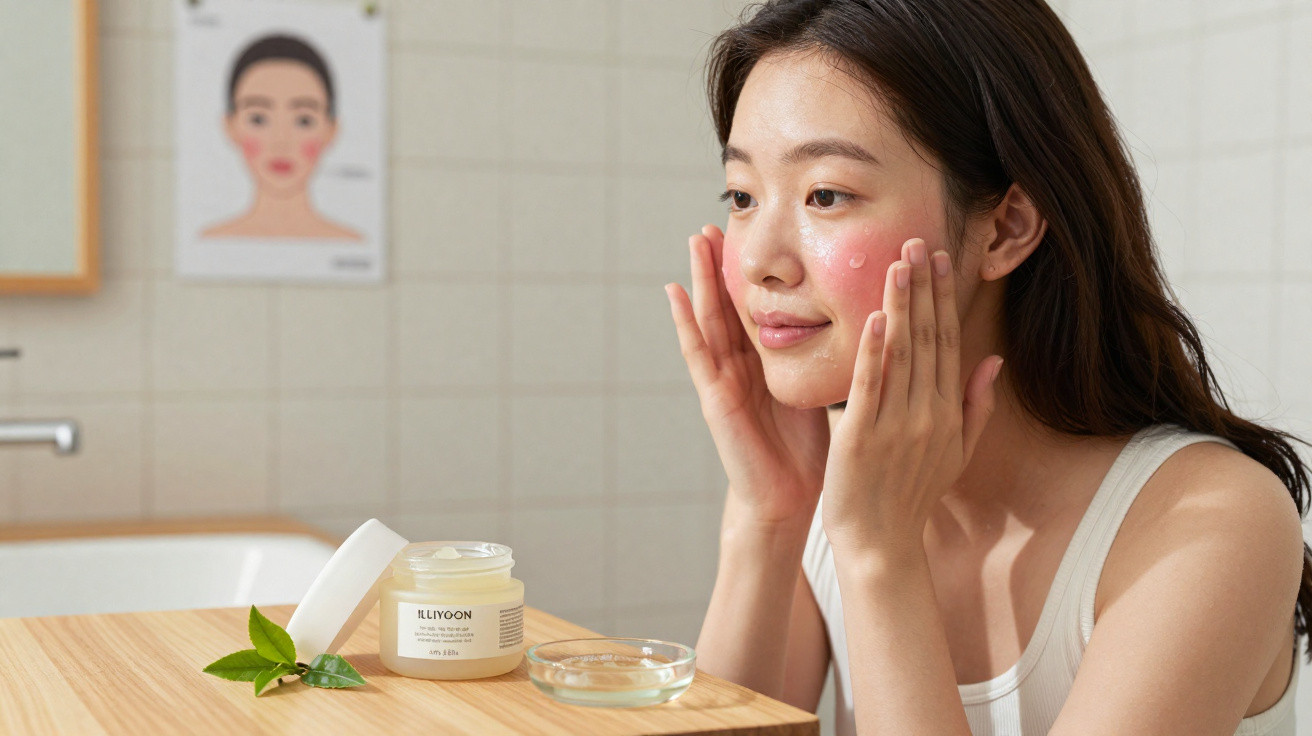
If skin responds quickly with redness, stinging or spells of dryness, a "repair month" can be worthwhile. During this period, keep strong ingredients such as retinol off the routine. Use simple formulas with ceramides, panthenol and hyaluronic acid instead. The aim is to calm the barrier so that anti-ageing ingredients can be tolerated better again later.
When wrinkles and blemishes appear together
Many people over 30 know this issue: early fine lines alongside persistent congestion and spots in the T-zone. Lightweight fluids containing the following can help:
- gentle glycolic acid or salicylic acid,
- niacinamide for sebum regulation,
- non-comedogenic oils, if the formula contains oils at all.
The key is to apply active ingredients over the T-zone only, while protecting the cheeks with mild, barrier-strengthening products. This can reduce blemishes without overworking dry areas.
Mature combination skin: focus on firmness
From the mid-forties onwards, loss of firmness becomes more prominent. Mature combination skin benefits from creams that combine peptides, retinal or other collagen-stimulating ingredients with a fresh texture that is not overly dense. Anti-pollution complexes can help minimise damage from exhaust fumes and particulate matter, which may visibly accelerate the ageing process.
Common mistakes that can make combination skin look older
A great deal of damage comes not from one "wrong" ingredient, but from habits. Frequent pitfalls include:
- Overly harsh cleansing: foaming products with a high surfactant content do remove oil, but they can irritate the barrier. Skin then responds with more shine alongside greater tightness.
- Using too many powerful ingredients at once: retinol, fruit acids and high-dose vitamin C may sound appealing in theory, but are often too much in practice. The result is irritation rather than an anti-ageing effect.
- The wrong sunscreen: heavy, very rich sun creams can easily lead to blemishes on combination skin. Modern mattifying fluids now offer effective protection without a greasy sheen.
- Failing to adapt to the season: what works perfectly in summer can be drying in winter, and vice versa.
Practical ways to assess skincare products
Anyone faced with dozens of jars in a chemist or pharmacy can use a few rules of thumb:
| Packaging claim | What it means for combination skin |
|---|---|
| Gel, fluid, lightweight, oil-free | Usually good for the T-zone and often suitable as a base product for the whole face |
| Rich, intensely nourishing, balm | Better used sparingly on the cheeks and dry areas only |
| Non-comedogenic | Less likely to cause blocked pores and blackheads |
| Sensitive, reactive, tolerant | Suitable when the skin becomes irritated quickly |
| Retinol, retinal, AHA/BHA | Anti-ageing specialists – introduce gradually and monitor tolerance |
It is also useful to apply new products on only a few evenings each week at first. This makes it easier to judge whether the skin responds positively or tends towards dryness and redness.
Why the T-zone shines – and what really helps
A shiny forehead is not simply caused by "too much cream". Sebaceous glands often naturally produce more sebum in this area. Heat, stress, hormonal fluctuations and harsh cleansers can intensify this further. Constantly stripping away oil sends the skin one message: "It is too dry." Many glands respond paradoxically by producing even more oil.
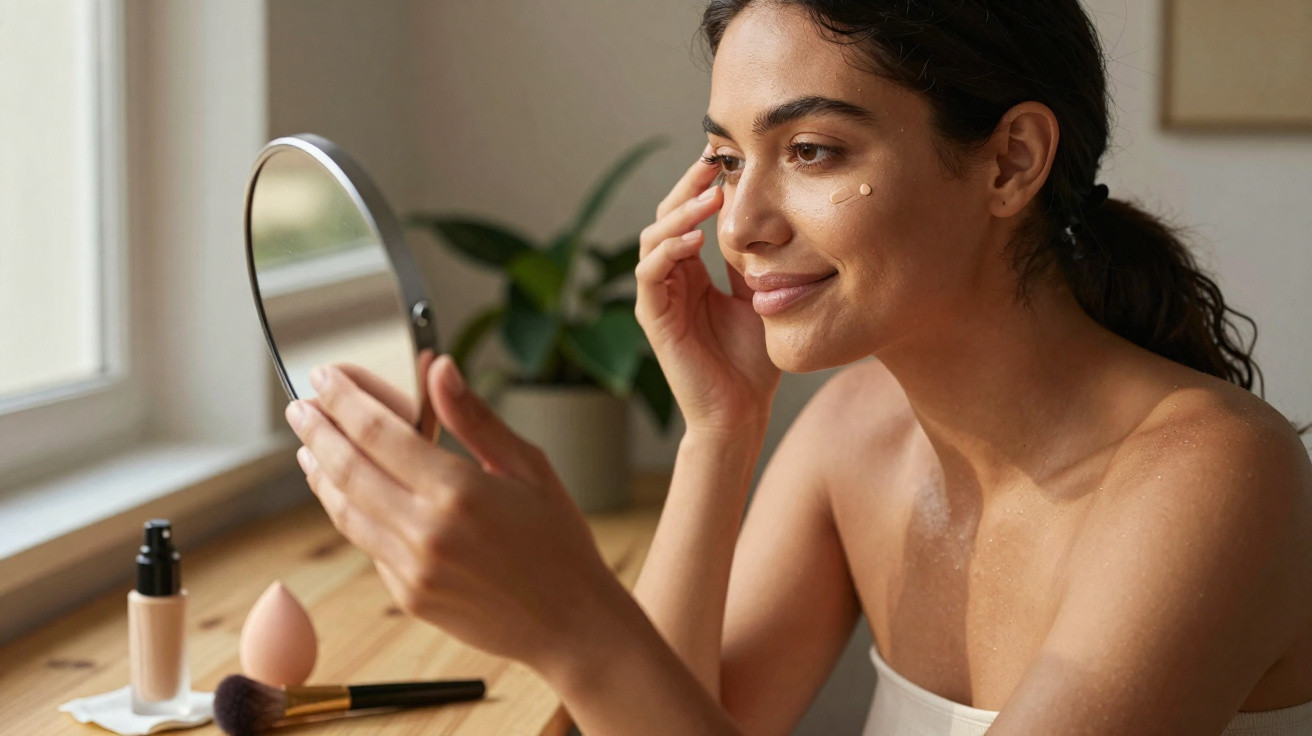
A gentler strategy works better: mild cleansing followed by lightweight hydration, without omitting the T-zone when applying gel creams. Mattifying primers or powders should then be the finishing touch, not the foundation of the routine. This keeps the complexion balanced for longer and allows anti-ageing ingredients to work undisturbed.








Comments
No comments yet. Be the first to comment!
Leave a Comment