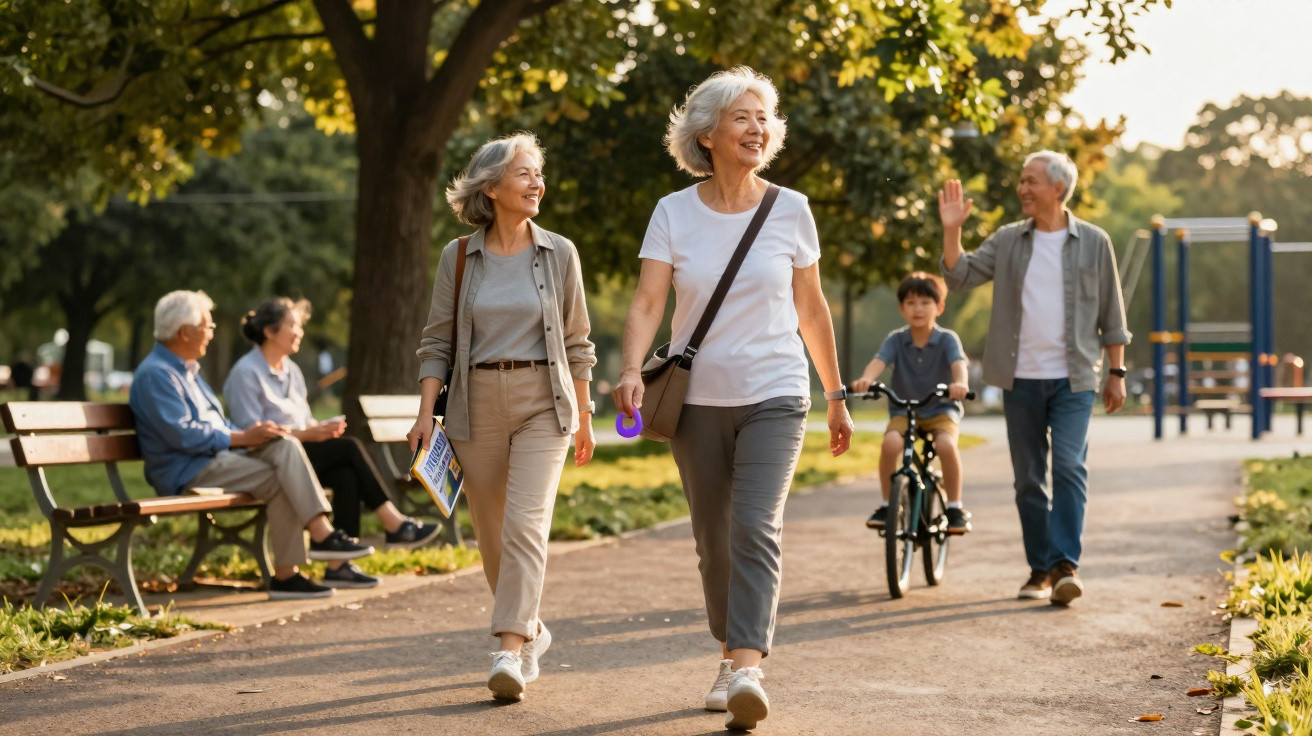
A birthday at this age can mark the beginning of a surprisingly fit, independent stage of life.
People in their early 70s have often finished working and seen their children leave home. That can suddenly raise an important question: how can I keep both my body and mind healthy now? The encouraging answer is that neither extreme sports nor restrictive diets are necessary. Seven practical everyday habits can help you remain mentally alert, physically mobile and emotionally resilient at 70.
Stay gently active rather than overdoing it
Worn-out knees, an aching back or a temperamental circulation can lead many older people to assume that sport is no longer for them. In fact, the reverse is true: the body still needs movement, although the form it takes may change. The goal is not personal bests, but consistency.
“The most important rule at 70: it is better to move a little every day than to overdo it completely once a week.”
Walking – the overlooked everyday hero
Walking is the simplest and often the most effective form of activity. It requires no specialist kit, no membership and no complicated routine. For older adults, as few as 4,500 steps a day can help keep joints, muscles and circulation in good condition. Anyone who manages more can be pleased, but does not have to.
Practical ways to fit more steps into daily life include:
- getting off one stop earlier and walking the rest of the way
- setting aside time every day for a regular walk around the block
- taking the stairs instead of the lift, where the joints allow it
- doing small errands on foot rather than by car
Gentle aqua exercise and more for sensitive joints
People dealing with knee or hip problems can benefit greatly from exercising in water. Water cycling classes, or aqua cycling, are a popular option. The buoyancy of the water reduces strain on the joints while still making the muscles work hard. Gentle swimming or games in the pool can also maintain fitness without placing too much stress on the body.
Making smart use of everyday movement
The physical effort involved in ordinary household tasks is often underestimated. Gardening, cleaning the home and carrying out minor repairs all count as physical activity. Regular planting, sweeping, fixing things or clearing out cupboards quietly works on balance, strength and mobility.
“Staying active every day protects muscle mass – and therefore independence in everyday life.”
Being active outdoors is ideal. Sunlight supports the production of vitamin D, which in turn helps the bones and immune system. Just 20 to 30 minutes outside, avoiding the intense midday sun, can bring noticeable benefits.
Keep an eye on weight – in both directions
At 70, the aim is no longer to achieve a beach body or become a bodybuilder. What matters is maintaining a weight that allows comfortable movement and does not place excessive strain on the heart, joints and metabolism.
What body mass index indicates
One straightforward tool is body mass index (BMI), calculated using weight and height. The following ranges provide guidance:
| BMI value | Meaning |
|---|---|
| below 18.5 | possible malnutrition |
| 18.5 to 25 | normal range |
| 25 to 30 | overweight |
| 30 to 40 | obesity |
| above 40 | severe obesity with high risk |
If the figure is substantially too high, combining more everyday activity with a calorie-conscious yet nutrient-rich diet can help. A very low result, on the other hand, may point to an unnoticed illness or insufficient calorie intake. In that case, it is important to address the issue specifically, ideally with medical support.
“Too much weight makes every movement harder; too little weight weakens muscles and the body’s defences.”
Train the brain like a muscle
Being fit at 70 involves more than climbing the stairs without becoming breathless. An alert mind matters just as much. Challenging the brain builds mental reserves and can help people remain independent for longer.
Everyday ideas for mental fitness
Brain training does not need to feel like being back at school or facing exam pressure. Plenty of small activities can keep the grey matter engaged:
- reading books, newspapers or magazines, ideally across a wide range of subjects
- completing crosswords, Sudoku or logic puzzles
- watching thought-provoking films and television series, then discussing them with others
- playing board games and card games with friends or grandchildren
- making time for concerts, readings or theatre visits
There are now also digital activities and games designed specifically for older people, which stimulate concentration, reaction time and memory.
Learning something new – a powerful boost for the mind at 70
Taking on entirely unfamiliar subjects can give the brain a substantial lift. This could mean a language course, learning a musical instrument, a computer class at a senior community group, or an online seminar about history or photography. Curiosity matters more than speed.
“Learning is the best brain training – no matter how many birthdays you have celebrated.”
Social closeness as protection for the soul
No fitness programme can compensate for a mood that remains low over the long term. Emotional wellbeing has a direct effect on sleep, motivation, appetite and life expectancy. People who feel lonely tend to decline more quickly, both physically and mentally.
Nurture friendships and neighbourly connections
Regular contact brings routine, distraction and reassurance. A chat in the communal hallway, a standing coffee date with friends, a regular table at a club or a senior group at the local community centre can all make everyday life more stable.
Fixed routines can be particularly useful, for example:
- a card-game group every Tuesday
- a walk with a neighbour every Thursday
- a shared restaurant visit once a month
Involve family actively
Those with children and grandchildren should make a conscious effort to care for these relationships. Shared meals, birthday celebrations and small outings bring people closer together. Visiting adult children, helping with babysitting or assisting with homework can also provide a great deal of satisfaction.
“People who feel needed and that they belong generally stay healthy for longer.”
Take regular GP check-ups seriously
Even the fittest 70-year-old can develop conditions that are barely noticeable at first. High blood pressure, blood sugar issues, irregular heart rhythms and cancers can cause very few symptoms for a long time.
People who see their GP regularly have a better chance of identifying problems early and treating them effectively. A comprehensive health check once a year helps to assess risks and adjust medication. Important areas include:
- cardiovascular health
- blood count and metabolic values
- checks of sight and hearing
- risk of falls and osteoporosis
Do good – and strengthen yourself
After finishing work, many older people feel that they are “no longer needed”. Volunteering can fill that gap remarkably well. Sharing experience with others can bring both appreciation and a sense of purpose.
Possible areas for voluntary work include:
- tutoring pupils or supporting apprentices
- helping at a sports club or with children’s groups
- keeping people who are alone company in a care home
- helping at food banks, clothing banks or social projects
“Those who help others often strengthen themselves most of all – emotionally and physically.”
Do not postpone enjoyment
Perhaps the most important point is this: enjoyment is still allowed. More than that, it belongs firmly within any health programme. Hobbies, passions and small eccentricities keep everyday life lively and provide energy.
Whether it is travelling, painting, dancing, photography, singing in a choir or building a model railway in the cellar, regularly making time for personal interests reduces stress and supports the immune system. Retirement does not mean standing still; it offers a new freedom to shape each day yourself.
How the building blocks reinforce one another
These habits rarely work in isolation. Instead, they support one another. People who move more often sleep better and are more inclined to seek social contact. Those who volunteer automatically walk more, exercise their brain and tend to feel emotionally steadier. Learning new things makes people more likely to connect with others – and so it continues.
That is precisely the opportunity at 70: even modest changes in everyday life can trigger a chain of positive effects. A daily walk, a new games evening or a course at an adult education centre can gradually create a life that feels easy, active and surprisingly young.














Comments
No comments yet. Be the first to comment!
Leave a Comment