
Instead of spending money on pricey luxury scrubs, more and more beauty fans are turning to a plant-based exfoliant from Aroma‑Zone and simply mixing their own face and body scrub at home. The twist: it’s just one single, very finely milled raw ingredient, completely free from perfume, colourants and fillers - yet the community raves about visibly more glow and softer-looking pores.
Why our skin loses its glow
Before getting into the DIY scrub, it helps to understand why complexions start to look dull in the first place. Over time, almost any skin can appear lacklustre, regardless of how expensive the moisturiser on the bathroom shelf might be.
- Dead skin cells: They cling to the surface and make the complexion look uneven.
- Clogged pores: Sebum, make-up and dirt build up and leave skin looking rough.
- Stress: Ongoing stress raises cortisol, which can slow down skin renewal.
- Dryness: Dehydrated skin feels coarse and bumpy, and reflects light less well.
- Central heating and air conditioning: Both continually dry out the very top layer of skin.
When the surface is uneven, any foundation can look patchy, highlighter seems to disappear, and even well-cared-for skin can look “grey”. That’s exactly where a mechanical exfoliant helps: it lifts away that older layer so fresher cells can come through.
“A good exfoliant doesn’t just make skin softer - it mainly restores light reflection and makes the complexion look more awake.”
The plant-based Aroma‑Zone exfoliant: what it is
At the centre of the trend is an organic plant powder made from the seeds of rosehip (wild rose). At Aroma‑Zone, it’s sold as “Exfoliant végétal Poudre de Rose Musquée Bio” - a pure, additive-free powder that can be mixed into different bases.
The concept is simple: rather than buying a ready-made scrub that often relies on preservatives, fragrance and even plastic micro-particles, you use this one powder and blend it with whatever suits your skin - from jojoba oil to shower gel. That way, you can fully control the intensity, texture and where you use it.
How the powder works on skin
The fine grains mechanically buff away flaky, dead skin while also stimulating microcirculation. Many users say their pores look smaller and their overall skin texture appears more even.
On the review platform Beauté Test, the product sits at around 4 out of 5 stars, based on nearly a hundred user reviews. People particularly praise:
- visibly softer, smoother skin
- a fresh, “awake” complexion
- a more refined-looking pore appearance
- strong value for money
“Many users describe that a small amount mixed into their facial cleanser is enough to smooth the skin and ‘revive’ the complexion.”
How to mix the exfoliant for face and body
It can sound like a bit of DIY at first, but in everyday use it’s surprisingly straightforward. Essentially, you only need two things: the powder itself and a suitable carrier base.
Quick exfoliation for the face
For an express face scrub, put a teaspoon of your usual cleanser - or a plant-oil base - into the palm of your hand. Add a small pinch of the powder (a little really does go a long way), then briefly mix it together.
Common bases for the face include:
- a gentle cleansing gel without harsh surfactants
- jojoba oil or almond oil
- aloe vera gel for a cooling feel
- ghassoul (Moroccan lava clay) mixed with a little hydrosol
Massage the paste in with light circular movements, avoid the eye area, and rinse off with lukewarm water after 1 to 2 minutes. For most people, two uses per week is more than enough.
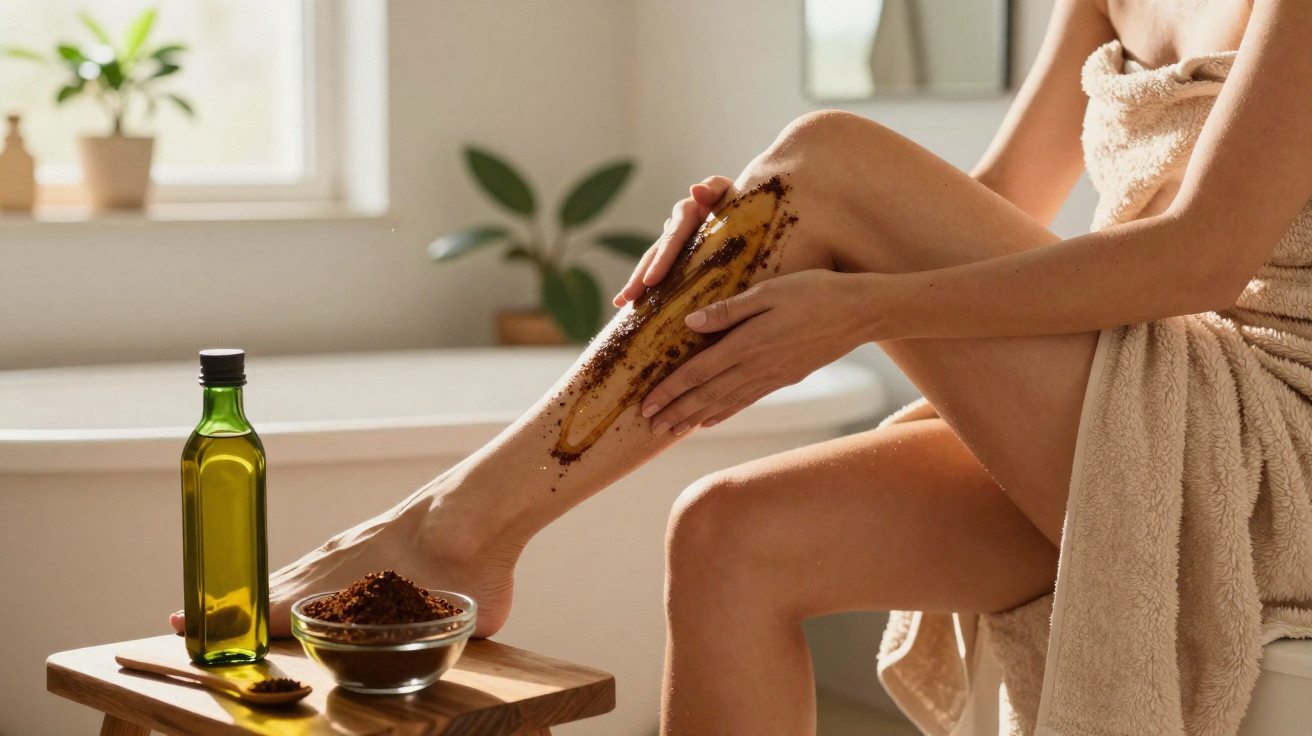
Body scrub in the shower
On the body, many prefer something a bit more robust. Here, the powder is often added to:
- neutral shower gel
- body oil, for example coconut or sesame oil
- a homemade oil-and-sugar scrub, boosted further by the powder
Spread the blend over damp skin and massage in with circulation-boosting movements - for instance on the upper arms, buttocks or thighs. Then rinse thoroughly, wash any residue from the shower floor, and apply body lotion after drying.
“One advantage of the powder approach: a single product works for face, body, hands and even rough heels - you just adjust the amount.”
What users report: softer skin, refined-looking pores
The reviews on Beauté Test read like notes from a small personal experiment: women swap out expensive scrubs for the powder and compare results. Many say their skin feels noticeably softer without becoming red or over-sensitised - as long as they get the dosage right.
A recurring theme is that pores look more refined after a few uses, the complexion appears more even, and make-up settles less into dry patches. Especially around the nose and chin, users report fewer blackheads, provided they work exfoliation into their routine regularly.
There’s also an appeal for bargain hunters: some compare the Aroma‑Zone powder directly with luxury brands. One user writes, in essence, that she switched from a high-end scrub from a well-known house to this product - without feeling she lost much in terms of results. On top of that, many reviews mention the pack lasts surprisingly long, because you only need a small amount each time.
Where the limits are
The idea isn’t completely without drawbacks. Several reviewers criticise the packaging in pouches or jars. The powder is less convenient to measure out than a tube product, and you often need a spatula or spoon to take it out while keeping it dry.
A second issue is the extra step in the bathroom. Instead of simply opening a cap, applying a scrub and closing it again, you have to mix it first. If your mornings run to the minute, you may be more likely to reach for a ready-made product during those periods. That’s why many users save the DIY scrub for evenings or weekends.
How often does exfoliation make sense – and for whom?
Even though the texture is relatively fine, it’s still a mechanical exfoliant. Sensitive skin can become irritated quickly if you exfoliate too often or apply too much pressure.
| Skin type | Recommended frequency | Note |
|---|---|---|
| Normal / combination skin | 1–2 times per week | Massage gently; don’t scrub hard |
| Dry skin | every 7–10 days | ideally mix with oil or a richer base |
| Oily, congested skin | 1–2 times per week | pair with a mild gel; moisturise afterwards |
| Sensitive / thin skin | max. every 10–14 days | use a very small amount; stop immediately if it stings |
If you’re prone to rosacea, intense redness or inflammatory acne, it’s best to speak to a dermatologist beforehand - or only use mechanical scrubs very rarely and very gently. In these cases, mild chemical exfoliants with PHA or low-strength AHA acids may be easier to tolerate.
More glow: what helps alongside exfoliation
An exfoliant can do a lot, but it can’t do everything. For lasting radiance, day-to-day habits matter more than many people realise.
- Reduce stress: Small routines such as walks, yoga or deliberate phone breaks can help skin indirectly via hormonal balance.
- Don’t forget to drink: Having water or unsweetened tea throughout the day supports skin from within.
- Sun protection: UV exposure can make the complexion look uneven and dull over time. Daily SPF helps slow down pigmentation and fine lines.
- Antioxidants in your diet: Colourful fruit and vegetables provide protective compounds that help skin cells fight free radicals.
The combination is what makes it interesting: when you exfoliate regularly but gently, you create a smoother surface. Serums with vitamin C, niacinamide or hyaluronic acid can then work more effectively, because they’re not sitting on top of a thick layer of dead cells.
“Exfoliation isn’t a miracle cure - but in a well-planned routine, it acts like an amplifier for everything that comes afterwards.”
For many users, the appeal of the Aroma‑Zone powder is exactly that sense of control over their routine. They know every ingredient, set the intensity themselves, and save money at the same time. Whether the product ends up in a chic glass jar on the bathroom shelf or tucked away in a drawer with DIY tools depends on whether you enjoy the small ritual - but the reviews suggest the effort pays off for plenty of faces.









Comments
No comments yet. Be the first to comment!
Leave a Comment