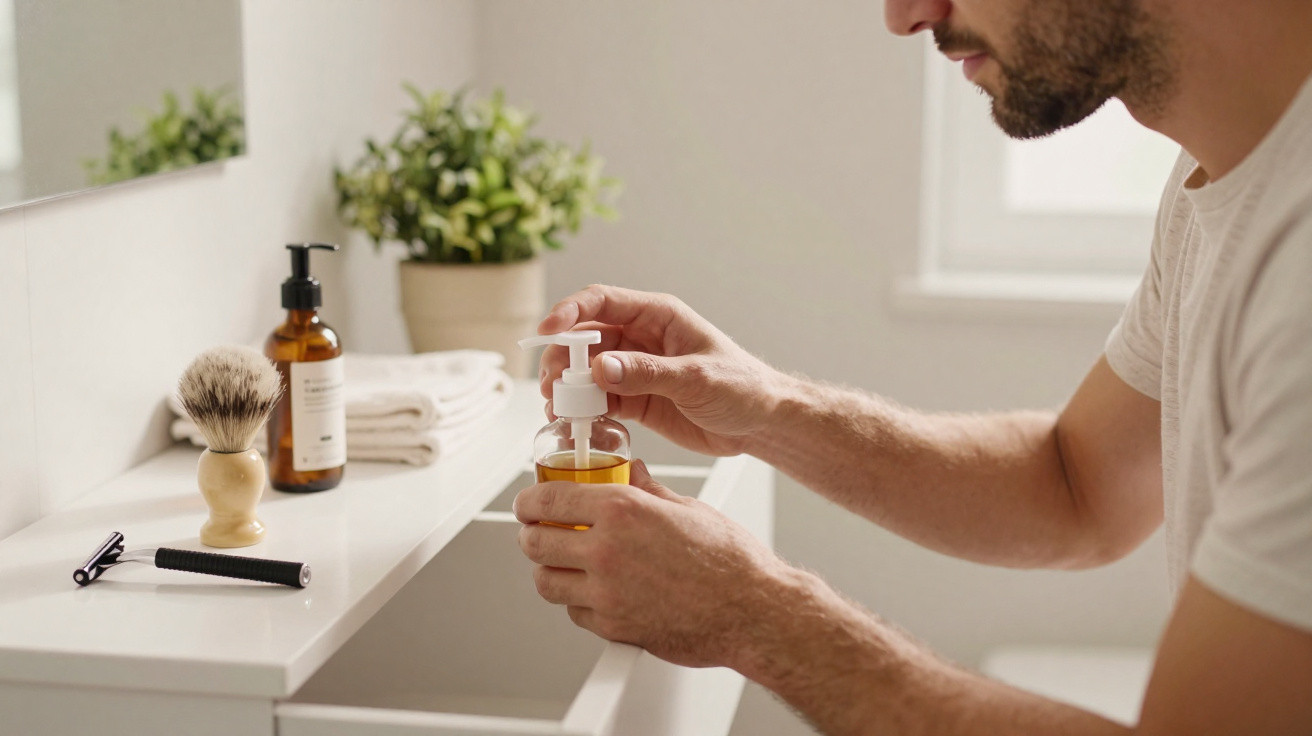
A brisk splash of aftershave, the familiar sharp sting of alcohol, and the skin beneath your beard stubble suddenly feels two sizes too small. You may dismiss it as “the price of being a man”, or assume a proper aftershave is meant to hurt. Then, for the rest of the morning, you are scratching your jawline in a meeting while acting as though you are simply concentrating.
For many men, that sore, taut sensation beneath the beard shadow is so commonplace that they no longer challenge it. There may be red areas across the neck, small bumps tucked beneath the stubble, or dry flakes visible in the light. The bathroom bottle may look traditional and masculine, but the skin underneath is telling a different tale.
What if that fresh, invigorating splash is gradually damaging the most sensitive skin on your face?
Why alcohol beneath beard stubble turns into a daily battle for your skin
The skin under beard stubble differs from the skin across your cheekbones. It has just been shaved, is covered in microscopic cuts, and is partly concealed by short, coarse hairs that rub against collars, pillows and your hands throughout the day. Applying high-strength alcohol over it is like scattering salt across a road full of potholes. It may appear harmless from a distance, but the harm quietly accumulates.
That first burst of freshness can feel strangely compelling: the cold tingle and instant sensation of being awake. However, the sting is an urgent signal from your skin that its protective barrier is being stripped away, layer by layer and day after day. Once you recognise that your neck is constantly a little inflamed and your jawline always feels tight by the evening, it is difficult to ignore.
The scenario is familiar: you leave the shower, shave quickly, slap on aftershave and rush out. There is no time to consider what is taking place beneath three-day stubble. Your face, however, keeps track.
Ask men with sensitive skin what follows an alcohol-based aftershave and the account is much the same, whatever their accent. Mark, 33, believed he had “permanent razor burn.” His neck looked like a map of tiny red spots, particularly in the areas where his beard grew thick and curly. He changed blades, tried gels and shaved with the direction of hair growth. Nothing made much difference. The change that finally helped was giving up the potent alcohol splash his father had used for years.
After two weeks with a mild, alcohol-free balm, the flare-ups along his jaw began to settle. The itching beneath his stubble became less intense. His girlfriend spotted the difference before he did: “Your neck doesn’t look so stressed anymore.” He had not realised how thoroughly he had normalised discomfort until it began to fade. One small adjustment to his routine gave his skin room to recover rather than forcing it to defend itself continually.
Dermatologists encounter the same pattern in their clinics. Men arrive concerned about “ingrown hairs” or “razor bumps” and leave with an entirely different explanation. Alcohol-based aftershaves do more than disinfect: they evaporate rapidly, taking moisture with them and disturbing the skin barrier that blocks irritants. Beneath short beard stubble, where hairs are already pressing into the skin and follicles are under strain, that drying effect is severe.
The more sensitive your skin is, the greater the cost. Your face may react with redness, micro-inflammation and, at times, a low-level swelling that only becomes apparent when your jaw feels thicker or rougher to the touch. That irritation makes every following shave harsher and every subsequent splash more painful. It becomes a cycle that seems like “my skin is just like that” when the reality is “my routine keeps attacking it.”
The alcohol-free routine that respects beard stubble and sensitive skin
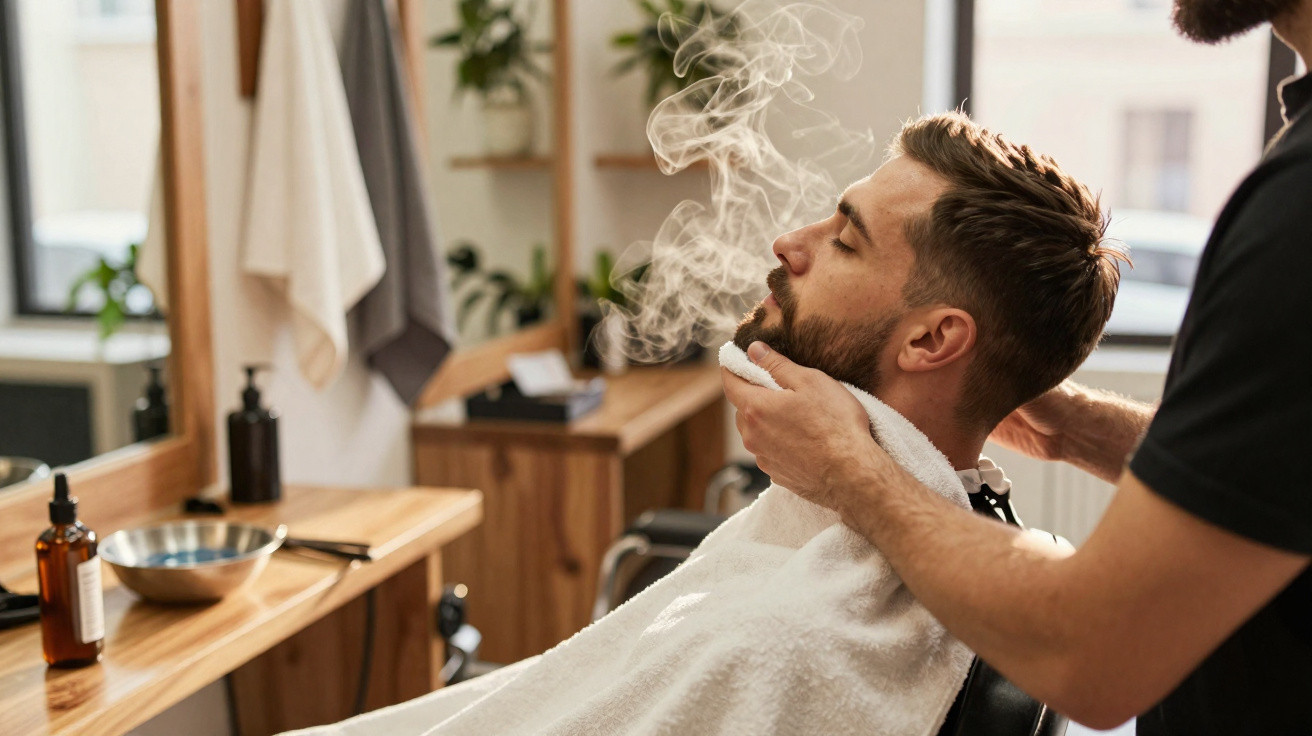
For sensitive skin under stubble, the most useful change is remarkably straightforward: remove the daily alcohol shock and replace it with a calming, hydrating step. Begin immediately after the final razor stroke. Rather than reaching for the bottle that smells like a 1950s barbershop, rinse gently with cool, rather than icy, water to remove foam and loose hairs. Use a clean towel to pat the area dry instead of rubbing it and scraping freshly shaved skin.
Next comes the crucial step: use a fragrance-free, alcohol-free aftershave balm or lotion, preferably containing ingredients such as glycerin, aloe vera, niacinamide or panthenol. Leave it for a minute before touching the beard area or beginning to style it. That brief pause allows the skin to absorb what it needs. It may feel less macho than a burning splash, but it is far more grown-up than acting as if your face is not irritated.
Many men with sensitive skin assume they are shaving incorrectly, when the real problem is sitting quietly on the bathroom shelf. The usual errors build on one another: applying far too much product, selecting aftershave solely for its fragrance, or using the same alcohol-heavy formula year-round when winter air is already drying the skin. Then stress, diet or “bad luck” gets blamed for redness along the beard line that will not disappear.
There is also a tendency to fight the problem instead of calming it. If skin feels sore, use a stronger astringent. If there are breakouts beneath stubble, apply more disinfecting splash. The face is left in survival mode, never properly settled. Let’s be honest: nobody really does this every day, spending ten peaceful minutes in the bathroom following a slow, perfect ritual. The realistic aim is more modest: make one or two sensible swaps that sting less and support healing, even on hectic mornings.
Once you speak with men who have made the switch, a clear pattern appears.
“The day I stopped chasing that ‘burn = clean’ feeling was the day my skin finally stopped fighting me.”
This sort of experience is not about expensive products. It is about ending a quiet allegiance to grooming habits that do not return the favour. A few practical guidelines can make a considerable difference:
- Pick aftershave balms labelled “alcohol-free” or “low alcohol”, ideally fragrance-free if your skin is reactive.
- Patch-test new products on a small area near the neck for 24 hours before using them everywhere.
- After shaving, use lukewarm or cool water; very hot water worsens redness and dryness.
- Trim or shave in the direction of hair growth in the most sensitive areas, particularly the neck.
- On non-shaving days, continue to moisturise the skin beneath your stubble; dryness does not take a day off.
These small changes may sound rather unremarkable on paper. On your face, they can feel like room to breathe.
Rethinking how masculine skincare should feel
Alcohol-based aftershaves are supported by an understated cultural script. The sting is marketed as evidence of masculinity, while the sharp fragrance acts like invisible armour. Yet an increasing number of men are quietly moving away from that idea, particularly those whose skin reacts strongly beneath the beard shadow. Selecting a gentle product does not make you fragile; it means refusing to treat pain as proof.
When you begin to regard the skin under your stubble as something to protect rather than punish, other adjustments often follow. You may try shorter, less aggressive shaves. You may notice which days your neck is calmer and identify what you did differently. Friends or partners may say your face looks less tired, even if your schedule remains unchanged. These are small signs that your skin finally feels listened to.
This is not about throwing out every old-school bottle in your bathroom. It is about asking one simple question every morning: “Does this actually help my face, or just my image of what a man’s routine should be?” There is still room for fragrance, ritual and that satisfying finish after a shave. There is also room for less redness, less stinging and less background irritation lingering beneath your beard stubble. The choice is sitting in your hand.
| Key point | Detail | Why it matters to the reader |
|---|---|---|
| Alcohol dries and irritates | High-strength aftershaves remove moisture and compromise the skin barrier beneath stubble | Helps explain why redness and burning repeatedly return |
| Sensitive areas need gentler care | The neck and jawline, with their short hairs, are already strained by shaving and friction | Explains why these areas react first and most severely |
| Gentle routines work better | Alcohol-free balms and cooler water soothe, hydrate and help prevent long-term irritation | Offers a practical, realistic way to feel better day after day |














Comments
No comments yet. Be the first to comment!
Leave a Comment