The woman standing before the mirror pauses with a hairbrush in her hand. Beneath the bathroom light, silver catches at her roots - not drab or weary-looking, but unexpectedly bright. She moves closer, intrigued and faintly doubtful, as though her reflection had developed an entirely new character overnight.
Her stylist has been mentioning “silver gloss”, a sheer, shining veil intended to make her scattered greys look purposeful: a colour choice rather than something to conceal. She is undecided. She thinks of the box dyes tucked beneath the basin, rushed Sunday evenings before the working week, and towels marked with dye.
Outside, photographs of grey-haired models, stylish editors and women in their 50s laughing on café terraces, their hair lit like moonlight, appear on her phone. Something within her moves, ever so slightly.
Perhaps the story is no longer “I’m going gray”.
Perhaps the new story is “I’m glowing silver”.
Grey hair after 50: when the change becomes visible
There is a particular morning when grey hair no longer seems like a handful of stray strands and begins to register as a true colour. You notice it in a lift mirror or a shop window and suddenly see its texture, light and contrast. It is not simply ageing; it has structure.
After 50, the hair fibre changes too. It becomes drier, more porous and less even from roots to ends. This is why the familiar chestnut or chocolate brown shade can abruptly appear flat or “wig-like”. As grey growth shows through, the effort of camouflage can become tiring.
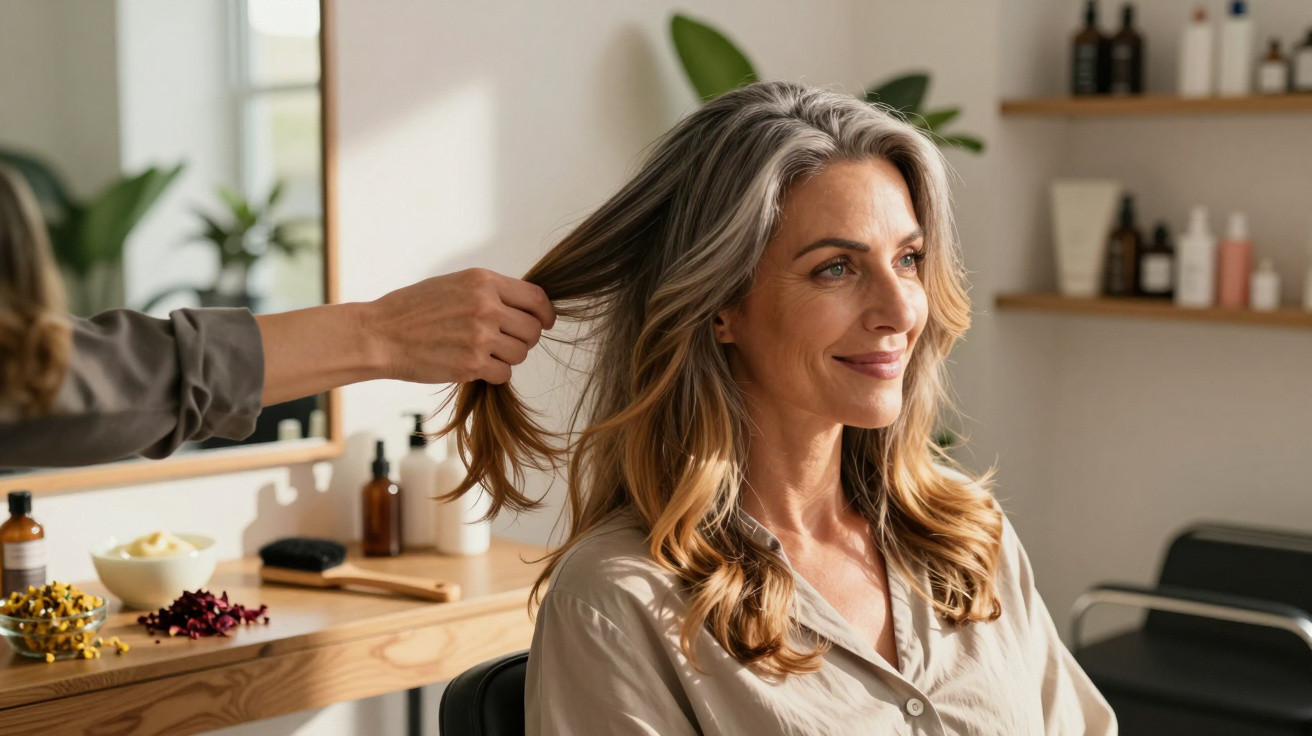
Then there is the growing social-media trend: striking “steel” bobs, frosted pixie cuts and long, pearly waves. It is called “silver gloss”, and it looks remarkably contemporary. The longstanding fear of going grey encounters a fresh, radiant alternative.
Consider Claire, 56, who spent years trying to recreate her former brunette colour. Every three weeks she returned to the salon, heavy-eyed and scrolling through her phone beneath fluorescent lights while an opaque dye was applied across her scalp. She did not dislike the outcome, yet it always felt slightly wrong: too dark, too dense, too “not her”.
Her shift came one summer, when sunlight caught her roots by the sea. Her grey was neither yellow nor sad-looking; it appeared soft and almost icy. Her colourist proposed a gradual transition, using a silver gloss toner rather than another all-over, full-coverage dye. Two hours later, she looked neither “younger” nor “older”. She simply looked like Claire in high definition.
The compliments were not, “You don’t look your age”. Instead, people said, “Your hair is amazing”. That distinction matters more than people tend to acknowledge.
There is a straightforward reason behind the change. As skin evolves - becoming lighter, more translucent and sometimes more marked - heavy blocks of very dark colour around the face can make features appear harsher. Grey, by contrast, reflects light. A subtle silver gloss increases reflection, softens yellow tones and creates the soft-focus finish phones attempt to imitate with filters.
Stylists refer to “tone-on-tone respect”. Rather than fighting grey, they work in harmony with it. The purpose is not to erase the passage of time, but to calibrate it. This is why a properly applied silver gloss can feel unexpectedly youthful while still embracing age.
It is not so much about concealing the years as learning how to control light. Light can be unforgiving when resisted, but generous when it is used well.
What “silver gloss” means and how to request it
“Silver gloss” may sound like the name of a lipstick shade, but at the salon it generally describes a semi-permanent or demi-permanent toner containing cool, pearly or smoky pigments. It sits over existing grey, boosts shine and adjusts the tone gently, without creating a dense, helmet-like layer of colour.
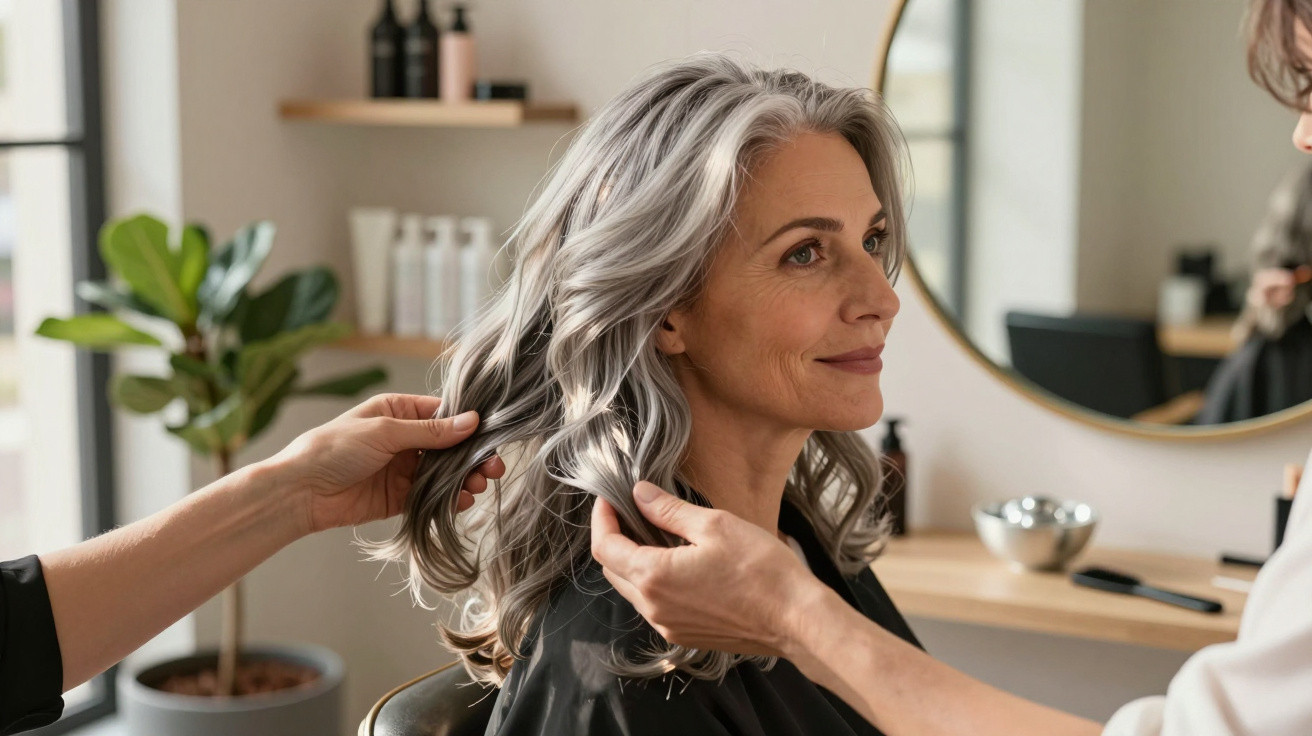
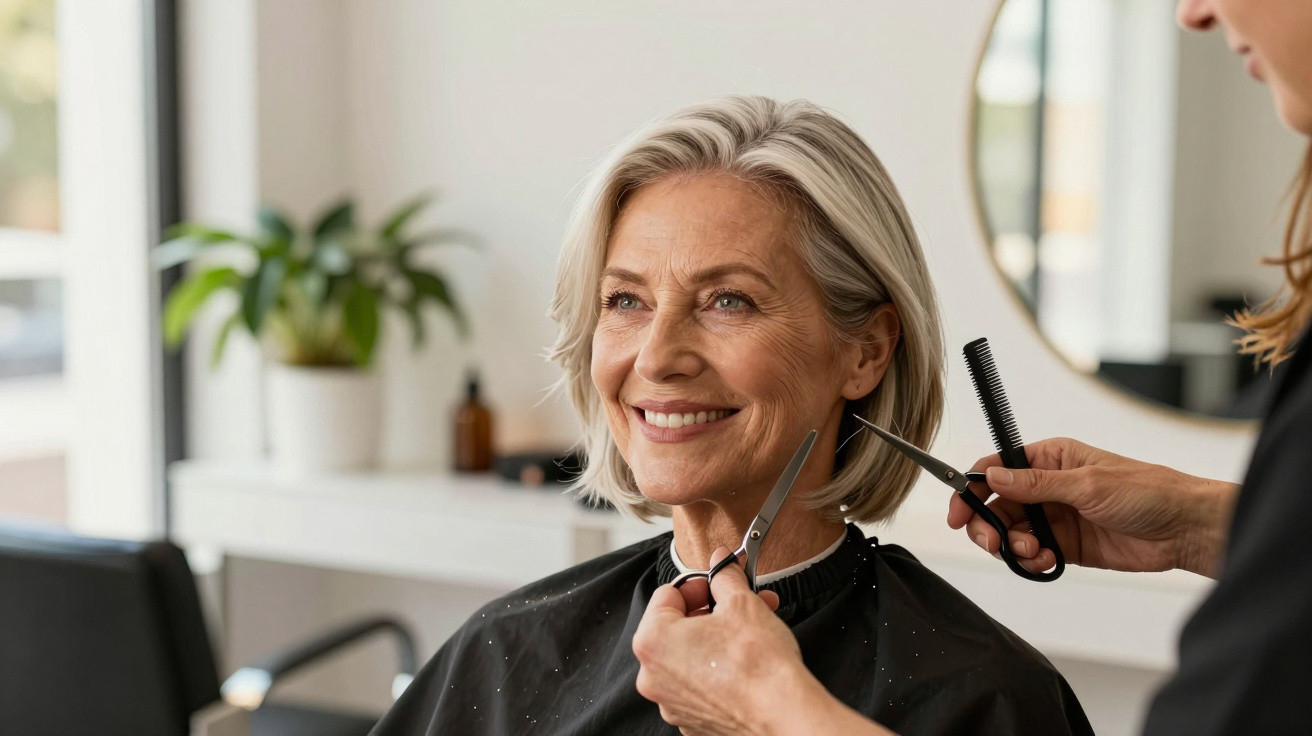
At the basin, with freshly washed hair, the colourist distributes this milky or violet-toned gloss through the lengths. After 10 to 20 minutes, yellowish reflections are softened, natural white looks clearer and the darker strands appear more integrated.
The transparency of the hair remains. That is its central appeal: your grey, but refined; your silver, but enhanced. One lustrous layer instead of a decade of complete coverage.
The usual mistake is arriving at the salon and saying, “I want to go gray,” only to walk out with a flat, uniform silver that looks more like cosplay than naturally lived-in hair.
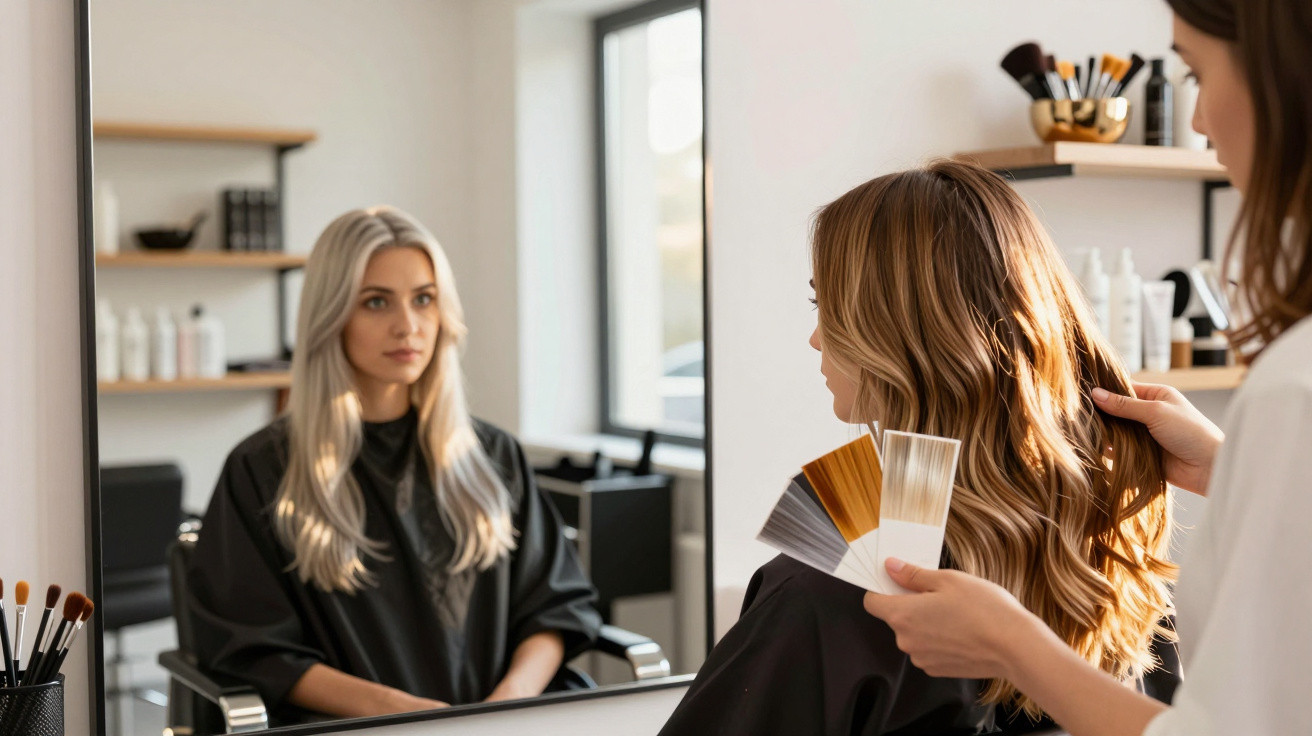
A more useful request is: “I want to keep my gray and enhance it with a cool, luminous gloss that blends everything softly.” Then bring pictures - not filtered images, but realistic examples of texture: noticeable roots, depth at the nape and lighter framing around the face.
Most people recognise that moment of nodding at the salon mirror even though the colour is not quite right. Next time, use terms such as “pearl”, “smoky”, “transparent” and “not too opaque”. Your colourist needs your language just as much as they need your confidence.
Realistically, no one manages this perfectly every day.
We purchase purple shampoos and miracle masks, and then ordinary life takes over. It is therefore useful to keep the approach simple: one considered colour decision and an easy maintenance routine.
“Gray hair used to be what we fixed,” says Anaïs, a Paris-based colorist who now specializes in silver transitions. “Now it’s the starting point. The gloss is just there to make it look intentional, polished, and alive.”
- Use a gentle, sulphate-free shampoo once or twice weekly to preserve the gloss and prevent the fibre from drying out.
- Switch to a violet- or blue-toned shampoo every 7–10 days to reduce yellow tones without making the hair lilac.
- Apply a nourishing mask every week, concentrating on the mid-lengths and ends, so silver hair does not appear frizzy or fragile.
- Use a heat-protection spray or cream before blow-drying or styling with heated tools, particularly if lightening was part of your gloss service.
- Book a gloss refresh every 6–10 weeks, depending on how rapidly your hair loses its tone and shine.
Silver gloss: a statement beyond “looking younger”
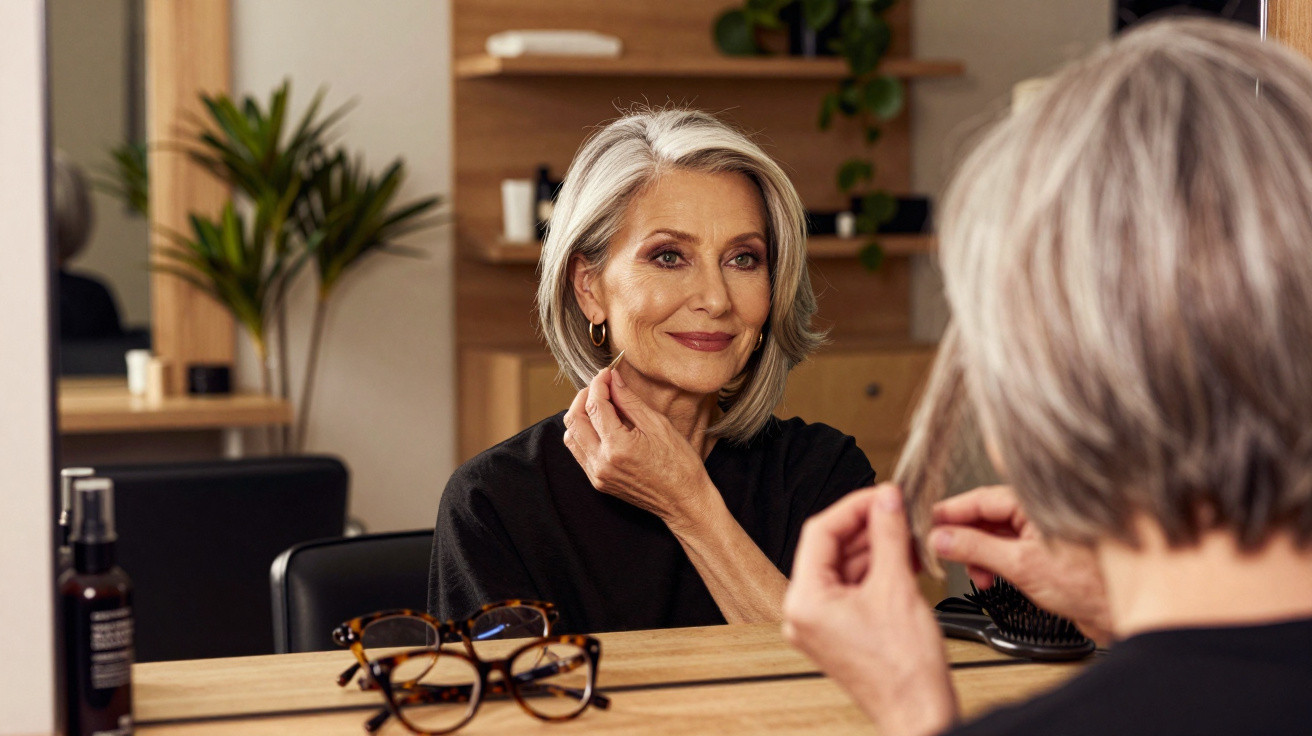
When a woman over 50 enters a room with luminous silver hair, something understated happens. People are not entirely sure where to place her on the timeline. She belongs neither to the “still dyeing” group nor to the “let it grow and see” group. Instead, she appears to be curating her age rather than denying it.
For many women, silver gloss is a modest act of resistance against the unspoken rules about “keeping up”. It says: I am not claiming to be 35. I am investing in the version of myself that exists today. And that version has sparkle.
The change often extends into other decisions: more daring glasses, a stronger lipstick shade and softer clothes chosen for comfort rather than simply because they are considered “slimming”. The hair becomes the outward sign of a quiet personal realignment.
| Key point | Detail | Value for the reader |
|---|---|---|
| Silver gloss respects natural grey | Uses translucent, cool-toned products that enhance rather than cover | Gives a modern, luminous look without harsh regrowth lines |
| Low-pressure maintenance | Refresh every 6–10 weeks, with simple home care (gentle shampoo, occasional purple wash) | Reduces salon fatigue and colour anxiety while keeping hair polished |
| Fits changing skin and features | Softens contrast around the face, reflects light, avoids “block” colour | Makes features look fresher and more defined without chasing youth |







Comments
No comments yet. Be the first to comment!
Leave a Comment