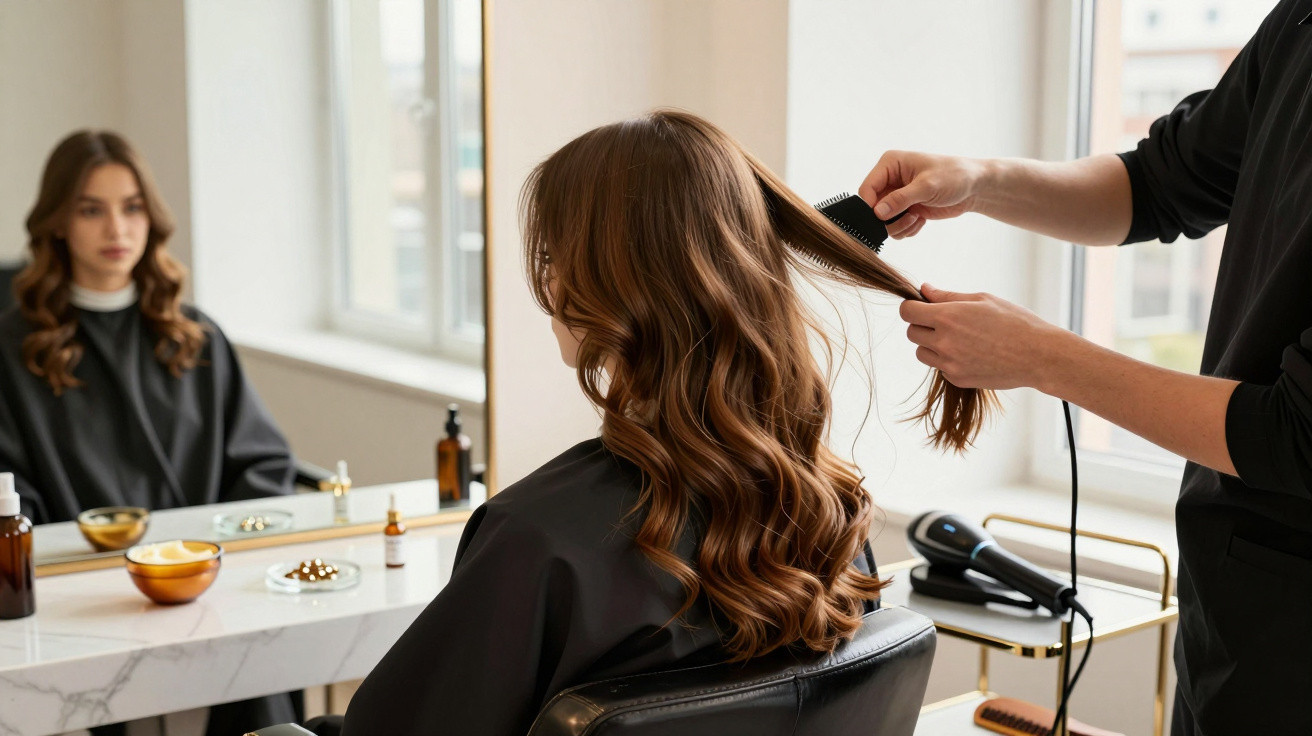
In salons from Paris to New York, a new smoothing service is discreetly taking over from the age of pin-straight hair and chemical-heavy treatments.
Hair professionals are enthusiastic about “nanoplasty”, a process said to smooth hair, reinforce it and enhance shine without the harsh chemicals that made Brazilian blowouts so controversial.
From Brazilian blowout to nanoplasty: what is changing
For over a decade, the Brazilian blowout has been a popular answer for people tired of frizz, curls or straightening their hair every day. Its appeal was straightforward: poker-straight hair for months, with little need for styling.
Its drawbacks were equally apparent. Numerous formulations used formaldehyde or related substances that give off fumes when heated with straighteners. This repeatedly prompted health concerns among clients and salon workers alike.
Nanoplasty arrives as a smoothing treatment that sells itself less as a chemical shortcut and more as an intensive repair ritual with a straightening side effect.
Instead of fitting neatly into the “chemical straightening” category, nanoplasty is presented as a middle ground: part intensive treatment and part long-lasting smoothing service.
What nanoplasty does to the hair
Nanoplasty products typically combine amino acids, vitamins and collagen. These ingredients are already used in haircare to help strengthen the hair fibre, support elasticity and coat compromised cuticles.
Salon procedures state that the active mixture is intended to move past the outer cuticle into the cortex - the internal part of the hair shaft responsible for its shape and strength. It is there that the treatment claims to work in two ways: loosening the hair’s natural pattern while reinforcing its structure.
The stated goal is not just straight hair, but hair that feels softer, looks shinier and breaks less, while staying smoother for four to six months.
In contrast with many conventional straightening systems, nanoplasty treatments sold in Europe and North America highlight that they contain no formaldehyde or similarly aggressive ingredients. That does not necessarily make them “100% safe” or “100% natural”, but it represents a noticeable change in how smoothing treatments are marketed.
A softer-looking alternative to ultra-straight hair
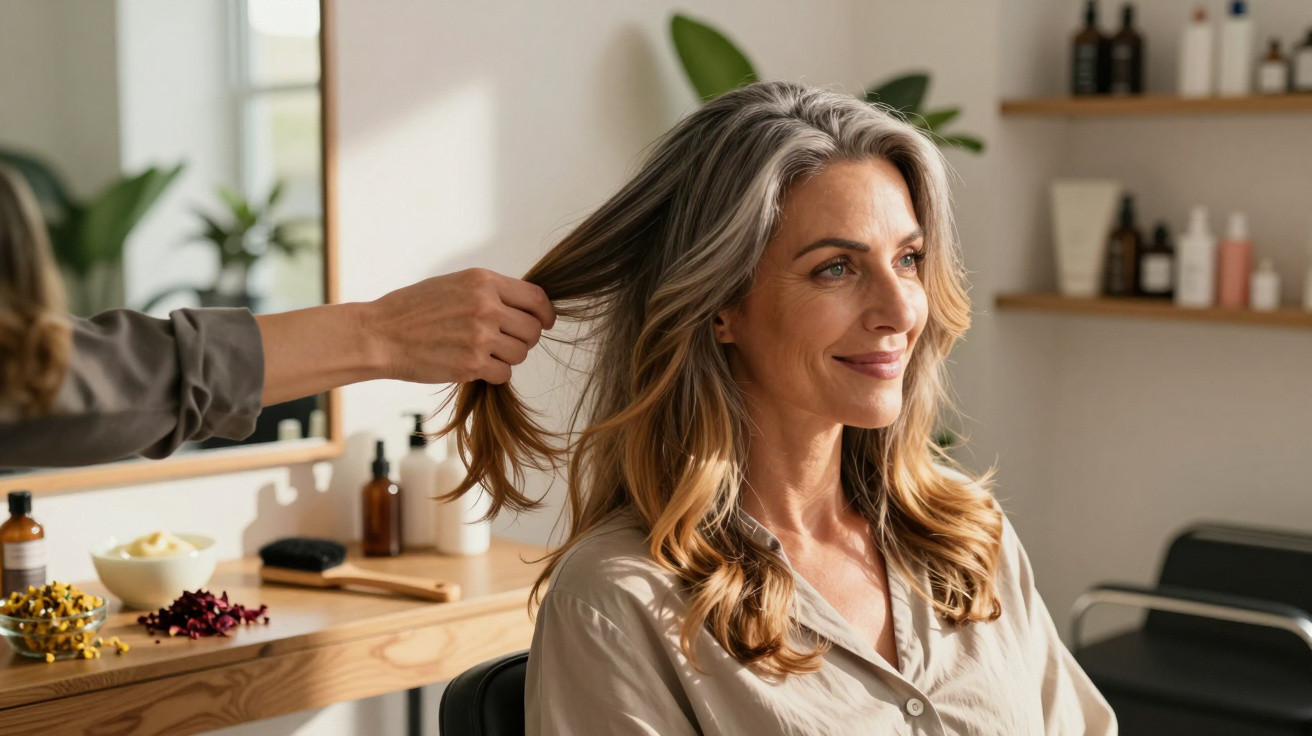
The finished look is one of the treatment’s key attractions. While older services could leave hair stiff and stick-straight, nanoplasty is marketed as allowing it to retain some movement. Waves are relaxed rather than pressed completely flat.
This result often appeals to people who dislike the “straw-like” appearance created by intensive straightening: reduced frizz, less root volume, yet some body and shape through the lengths.
For many clients, it can also reduce their everyday reliance on straighteners, which can themselves cause significant dryness and breakage when used at high temperatures each morning.
Who nanoplasty suits - and who should be cautious
Stylists commonly recommend nanoplasty for:
- wavy or frizzy hair that expands in humid conditions
- curls that the client routinely straightens using heated tools
- long hair with dry, porous lengths
- hair weakened by frequent colouring or highlights
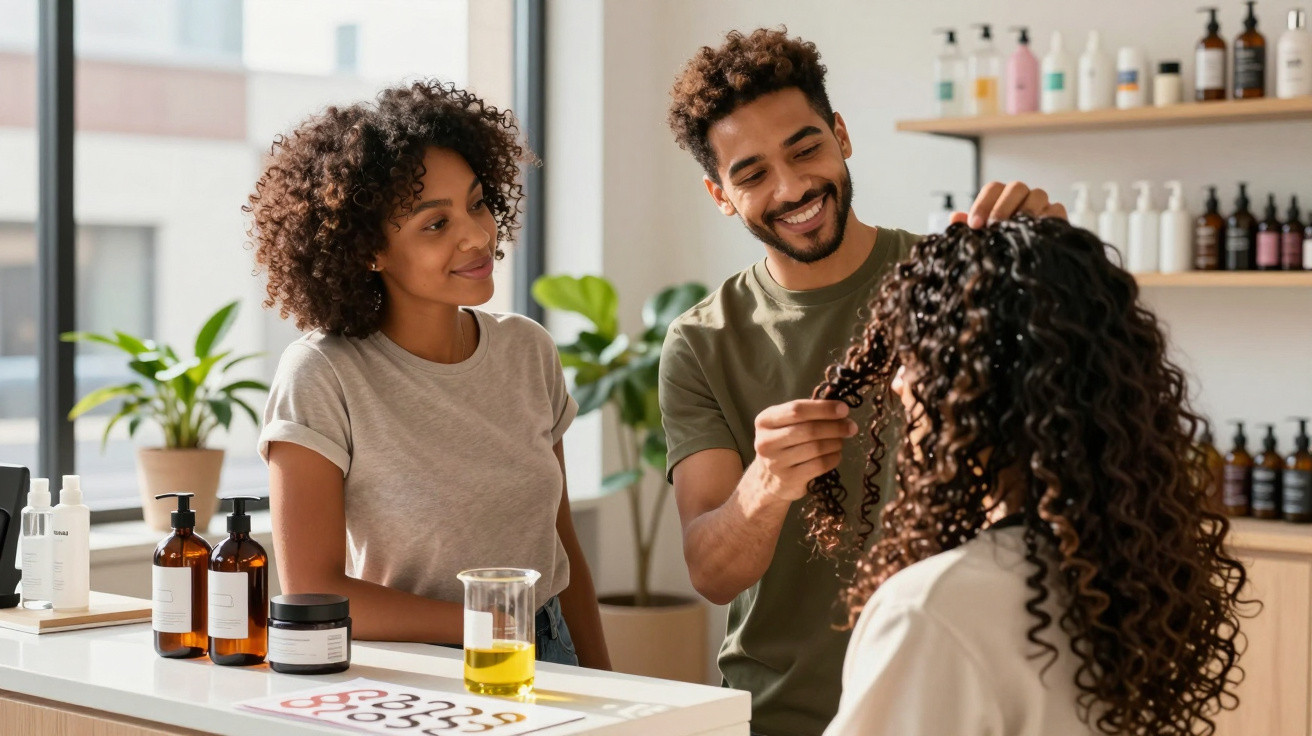
Those with very tight curls or coils may achieve more of a relaxed texture than a glass-smooth, straight finish. For some, this is preferable, as it softens the texture while retaining part of the curl pattern.
Anyone with exceptionally fragile or chemically over-processed hair should still take care. Although the formula may be less harsh, the straightening stage uses temperatures above 200°C, which can place additional stress on already weakened hair.
How a salon nanoplasty appointment works
Nanoplasty is not a quick wash-and-go extra. At most salons, this service requires several hours in the diary.
| Step | What happens |
|---|---|
| 1. Clarifying wash | The hair is shampooed to remove oils, silicone and styling build-up. Conditioner is not applied. |
| 2. Application | The nanoplasty formula is worked through section by section, from roots to ends, to ensure even coverage. |
| 3. Processing time | The product remains on the hair for 40–60 minutes, based on its length, thickness and texture. |
| 4. Rinse and blow-dry | The hair is lightly rinsed and then blow-dried in preparation for straightening. |
| 5. Flat ironing | Individual sections are repeatedly passed through straighteners heated to approximately 220–230°C, sealing in the active ingredients. |
Following the appointment, clients are generally advised not to wet their hair, sweat heavily or tie it tightly for two to three days. This “setting” stage enables the treatment to settle fully along the hair shaft.
The aftercare phase often decides whether the result lasts closer to four months or stretches nearer six.
How long nanoplasty lasts and how to maintain it
Most salons state that results last from four to six months. The actual duration depends greatly on hair type, washing frequency and the products used afterwards.
Shampoos high in sulphates may remove the treatment more quickly. Powerful clarifying shampoos, sea water and regular swimming in chlorinated pools can also reduce the duration of the smoothing result.
Many stylists recommend moving to mild, sulphate-free shampoos and nourishing conditioners, as well as heat-protection sprays if heated styling tools continue to be used.
Nanoplasty vs Brazilian blowout vs “hair botox”
The beauty sector now has several services with similar-sounding names. These terms can be difficult for consumers to distinguish, particularly when marketing makes the differences less clear. Broadly speaking:
- Brazilian blowout: a traditional, long-lasting straightening service, historically associated with formaldehyde-based formulations in certain markets.
- Hair botox: primarily a deep-conditioning service intended to fill and smooth damaged cuticles, offering only limited straightening.
- Nanoplasty: positioned between the two, promising significant smoothing with a more treatment-focused, less chemical-heavy approach.
In reality, formulations and terminology differ considerably between brands and countries. Anyone with allergies, asthma or a sensitive scalp should ask the salon directly about ingredients, fumes and heat settings.
What “amino acids” and “collagen” actually do
Promotional material for nanoplasty frequently focuses on amino acids and collagen. They are not miracle ingredients, but each has a defined function.
Amino acids form the basis of keratin, hair’s principal protein. When used topically, they may help support hydration and flexibility, making strands less prone to snapping when exposed to tension or heat.
Collagen, by comparison, works mainly on the surface of the hair. It can create a coating that feels smoother and looks shinier, and may lessen the rough texture that contributes to frizz. It does not “rebuild” the hair from scratch, but it may make damaged lengths appear more even and glossy.
For many clients, the real change is not scientific jargon, but the simple experience of hair that brushes out easily, dries faster and needs less daily work.
Potential risks and questions for your stylist
Despite its gentler positioning, nanoplasty remains a chemical salon service combined with extremely high heat. People susceptible to scalp irritation, migraines caused by product fumes or allergic reactions to cosmetic ingredients should approach it carefully.
Before making an appointment, useful questions include:
- Does the product give off any fumes during ironing, and how is the salon ventilated?
- Is the formula free from formaldehyde and related compounds?
- What minimum gap is advised between colour services and nanoplasty?
- How many times will straighteners pass over each section?
- Which aftercare products are suitable, and which products should be avoided?
Cost is another consideration. As it is a specialist treatment that may take several hours, nanoplasty is often among the more expensive salon services, particularly for very long or thick hair.
Real-life situations: who may benefit most
For somebody with shoulder-length, naturally wavy hair that becomes frizzy whenever it rains, nanoplasty could mean being able to leave home with air-dried hair that still appears polished. Their hair retains some wave, but without a halo of flyaways.
A busy parent who previously spent 30 minutes with straighteners each morning may find that their routine becomes a fast brush-through and a spray of heat protector for the occasional styling adjustment.
Conversely, someone who enjoys wearing their curls most of the time but wants easier straightening now and then may favour a gentler option such as hair botox, which aids repair without changing the texture so dramatically.
For anyone weighing up a smoothing service, nanoplasty provides another salon option: one focused less on rigid, ultra-straight hair at any cost and more on managing frizz, shine and styling time, while considering the long-term condition of the hair fibre.






Comments
No comments yet. Be the first to comment!
Leave a Comment