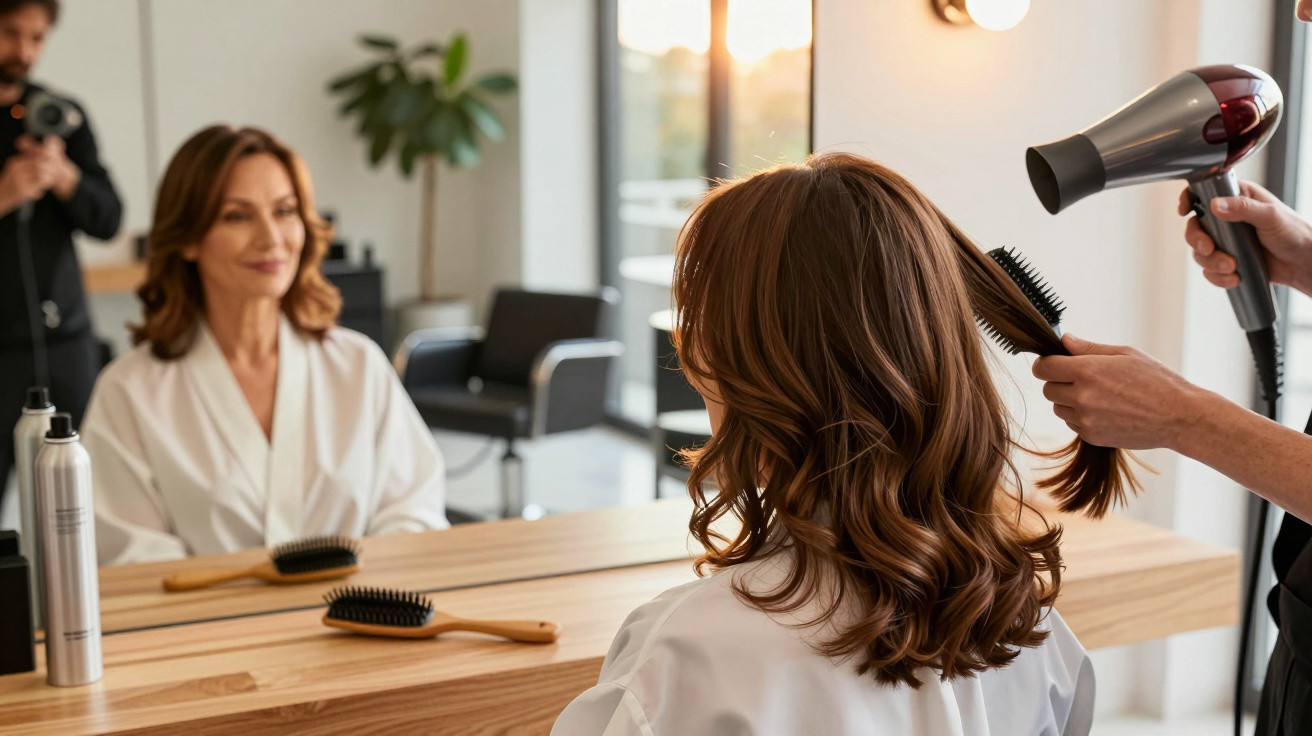
Many women reach the same point: what was once a full head of hair starts to look tired, volume disappears as the day goes on, and even a careful blow-dry barely lasts. Rather than endlessly trying new styling products, hairdressers recommend one clear solution: choose a cut that makes fine hair look more intelligent, not harder fought for.
Why fine hair behaves so differently after 50
Hair texture changes over time. Hormones fluctuate, circulation in the scalp decreases and past care mistakes add up. The outcome is broadly the same: each individual hair becomes finer, looks limper and breaks more easily.
- Blow-dried styles lose their shape more quickly.
- Roots are more likely to sit flat against the scalp.
- Long lengths visually pull the hair downwards.
- Thinning at the temples or along the parting becomes more noticeable.
Many women instinctively think: do not cut it, every centimetre matters. Yet this is precisely what can make the issue worse. Long, fine hair simply hangs flat, appears see-through and draws attention to every sparse area.
Hairdressers stress: it is not the quantity of hair that matters, but how cleverly the cut and length make use of the hair that is there.
The best haircut idea for fine hair after 50
When fine hair needs to look fuller, livelier and more contemporary, professional stylists repeatedly recommend the same approach: a precisely shaped layered cut, or a considered soft Layer Cut.
The principle is simple: the hair is not cut to one uniform short or long length. Instead, different lengths are created to support one another. This makes the overall outline appear fuller, even though there is no additional hair in reality.
How a layered cut creates the look of volume
With fine hair, volume is most visible where more “mass” is gathered together. A skilfully created layered cut is designed to achieve exactly that:
- The lengths are trimmed slightly so they do not drag the hair down.
- The top sections are given soft layers that sit over the lower sections.
- Transitions remain smooth, preventing a stringy or wispy appearance.
- Fine hairs that continually snap are neatly removed, helping to reduce split ends.
The result is a compact yet lively overall shape. Hair sits better, looks thicker and has more bounce.
A modern layered cut gathers the hair you have instead of “losing” it in extra length – making it a secret weapon for fine hair after 50.
Length: excessive length takes away, the right shorter length gives back
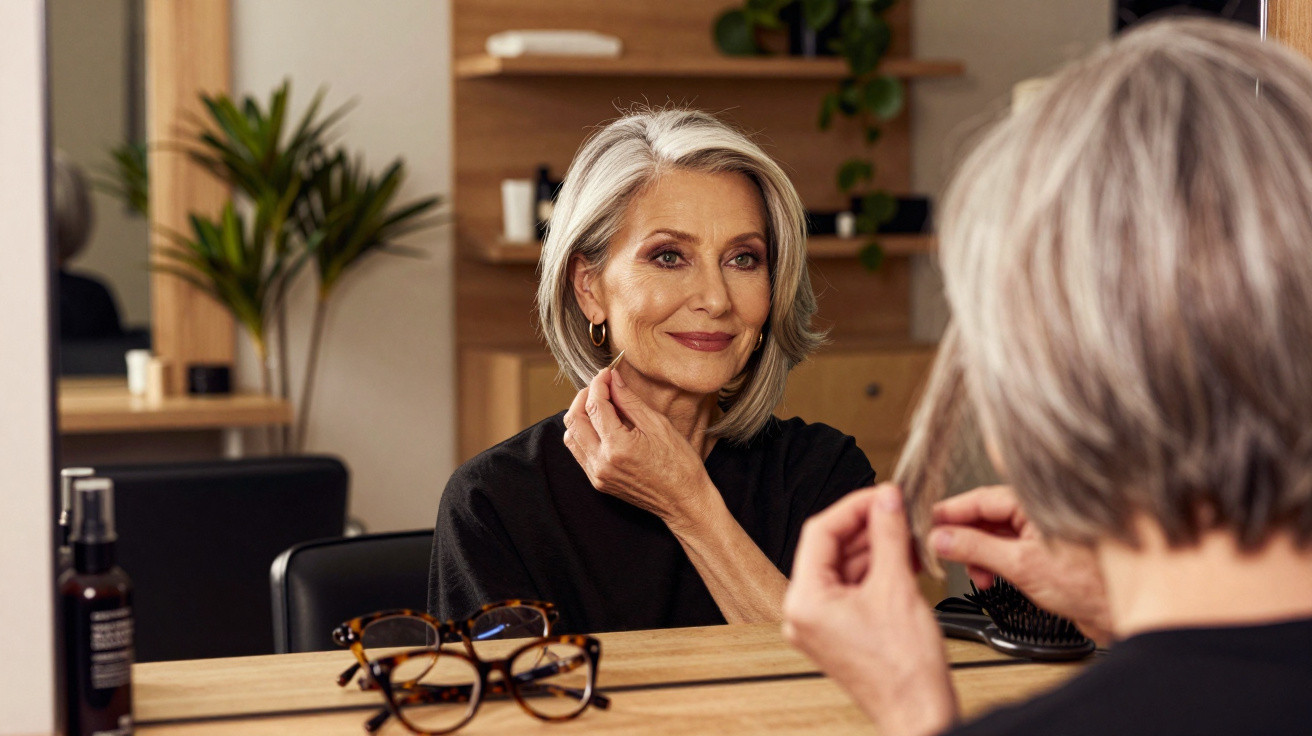
The ideal cut for fine hair after 50 is rarely extra-long. Most hairdressers work somewhere between chin length and just above the shoulders. Volume is easier to control within this range.
| Option | Features | Who is it suitable for? |
|---|---|---|
| Layered long bob | Roughly collarbone length, soft layers and plenty of movement through the ends | Anyone who does not want to part with long hair completely |
| Layered bob | Between the chin and shoulder, layers around the head, with an optional fringe | Ideal for fine hair with a little volume at the back of the head |
| Short, soft Layer Cut | Shorter at the nape, longer sections on top and plenty of texture | For bold looks that emphasise facial features and create a more youthful effect |
The common thread across all these options is this: no more endlessly long, blunt lengths. In their place is a controlled shape that concentrates volume and lifts the hair.
How the cut frames the face flatteringly after 50
From the age of 50 onwards, facial features change too: skin loses some firmness, lines become more visible and contours soften. The right haircut can make a considerable difference here.
- Layered sections around the face soften sharper lines around the jaw.
- Light, wispy pieces across the forehead can visually reduce the appearance of fine lines.
- Slightly greater volume at the crown creates a lengthening effect and can look more youthful.
- Soft waves frame the face and take severity out of the expression.
A cleverly placed layered cut works not only for the hair, but also for the face – like a soft filter in motion.
Styling: getting the most from the best cut
Even the best Layer Cut depends on how it is styled. Out of habit, many women with fine hair do exactly the wrong thing: they straighten everything until it is sleek and rigid. This only intensifies the flat effect.
More waves, less “ironing board”
Hairdressers clearly favour movement over ruler-straight lines:
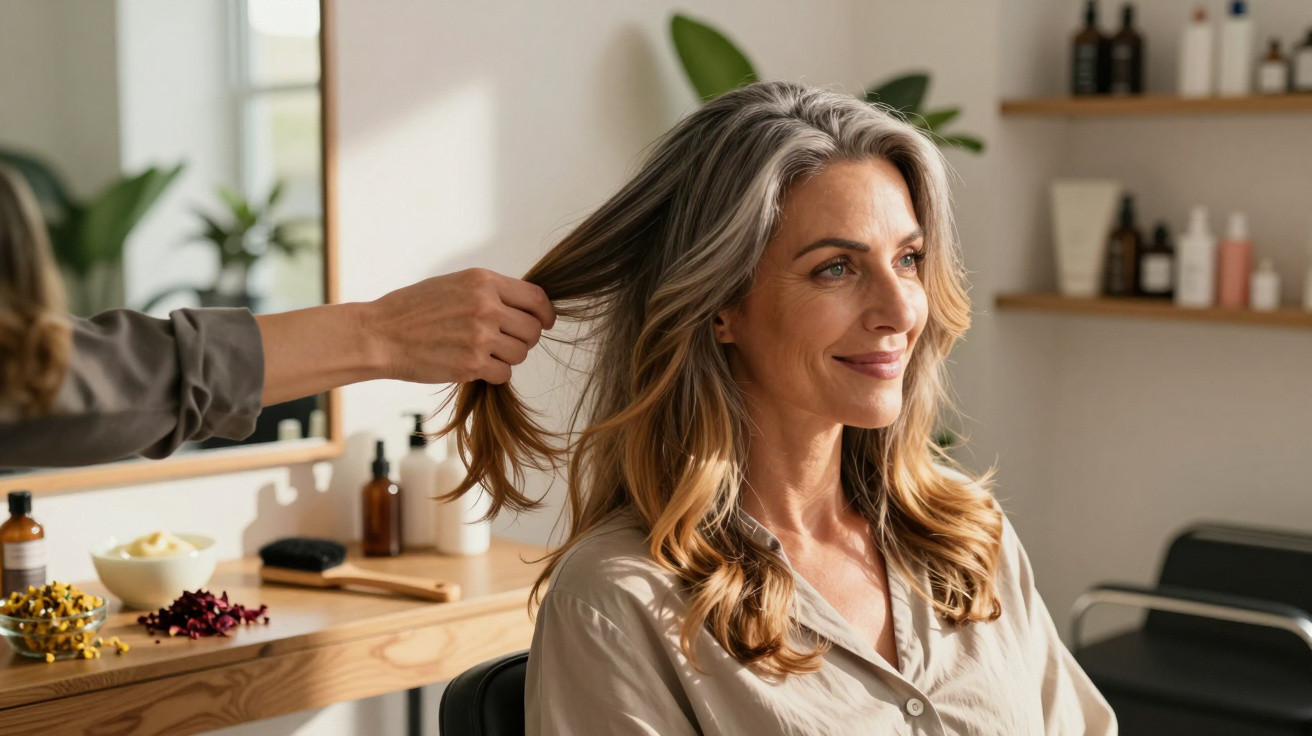
- Wavy styling: loose waves made with a curling wand, straighteners or foam rollers immediately add more volume.
- Soft curls: large, gentle curls look fuller than tight corkscrew curls.
- Undone finish: do not style every strand perfectly; a little relaxed imperfection looks youthful and dense.
An extremely sleek style remains the enemy of fine hair. It reveals every sparse patch, every fine strand and every flat area.
Blow-dry like a professional: the roots matter
Direction is crucial when blow-drying. Anyone who always dries from top to bottom effectively presses the hair onto the head. A better method is to:
- Begin drying the hair upside down until the roots are almost dry.
- Lift individual sections with a round brush and blow-dry against the direction of growth.
- Finish with a brief blast of cool air to “set” the volume.
Volume is created at the roots, not the ends – anyone who works there needs less hairspray and fewer tricks.
Lightweight products – powerful results
Fine hair reacts badly to products that are too rich. Thick creams, oily serums or intensive masks applied at the roots can make everything collapse immediately.
- Mousse: a small amount of styling mousse in damp hair provides hold without stickiness.
- Texturising spray: sprays with a sea-salt or volumising effect add grip and a fuller feel.
- Root-lifter: dedicated root sprays gently raise the hair at the scalp.
Richer care is better reserved for the mid-lengths and ends. At the roots, a lightweight volumising range is enough. This keeps the crown airy while the lengths remain glossy.
How often should fine hair after 50 be cut?
Fine hair hardly forgives neglected ends. Breakage and split ends make strands look even thinner. Hairdressers therefore advise having it trimmed at least every six to eight weeks.
This helps to keep:
- the layers clearly defined
- the ends sealed and compact
- the shape fresh and volume easier to style
Anyone who sacrifices a few millimetres regularly gains more visible fullness than any lost length could be worth.
A realistic scenario: from a long ponytail to a smart Layer Cut
Imagine a woman in her mid-50s who has worn a thin, long ponytail for years. The ponytail itself is fairly narrow, the ends are see-through, and the roots are oily because she has been using oils in an attempt to create shine.
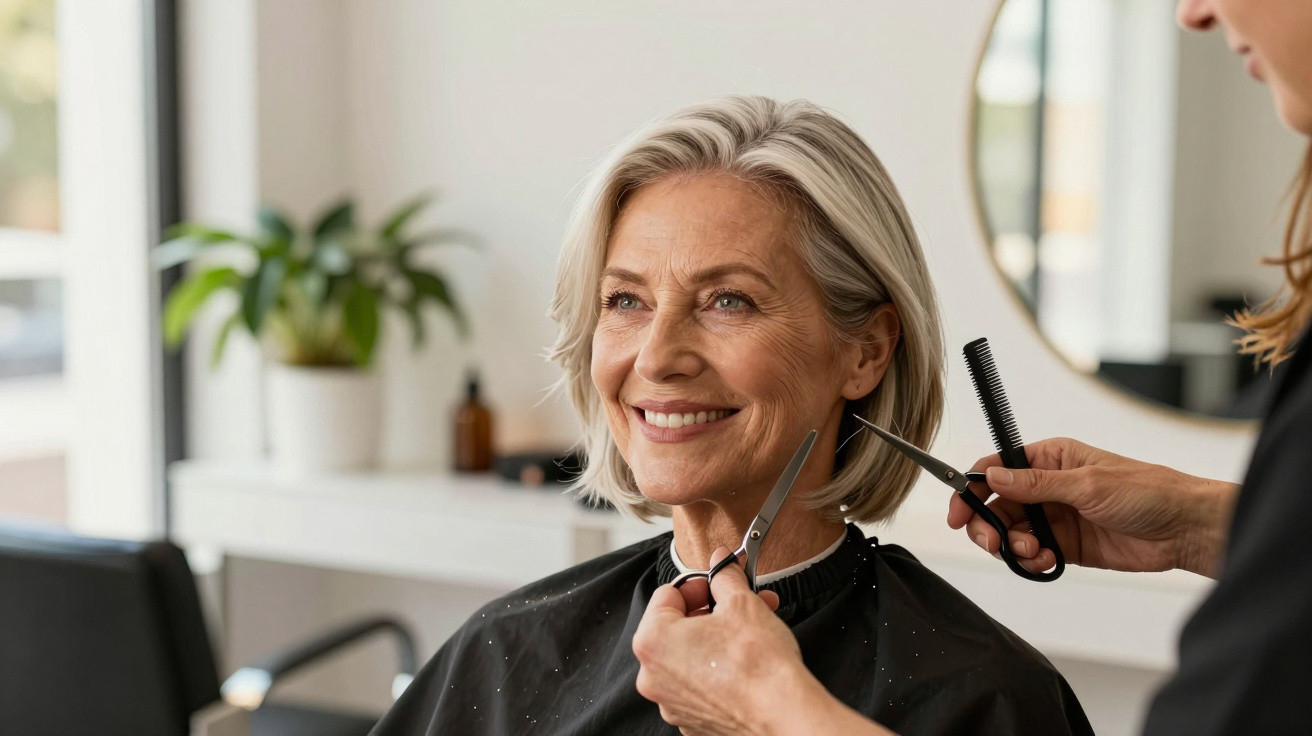
She opts for a shoulder-length, soft layered cut with gentle waves. The hairdresser removes around ten centimetres of length, adds delicate layers at the crown and around the face, then blow-dries the hair using a round brush and works in a lightweight texturising spray.
The change in the mirror can often be surprisingly striking: the hair is genuinely shorter, yet clearly looks fuller. The face appears more open and alert, while the cheekbones stand out more. This example shows how strongly the right cut can affect confidence psychologically.
Risks and limitations: when a hairdresser should look more closely
Not every change in hair after 50 is purely cosmetic. Severe thinning, round bald patches or dramatic hair loss may have medical causes, such as hormonal disorders or nutritional deficiencies.
In such situations, a good haircut alone is not enough. An experienced hairdresser is more likely to recommend seeing a dermatologist before making a radical change. A Layer Cut can provide visual support, but it cannot replace a diagnosis.
Bonus: colour techniques that make the best cut look even better
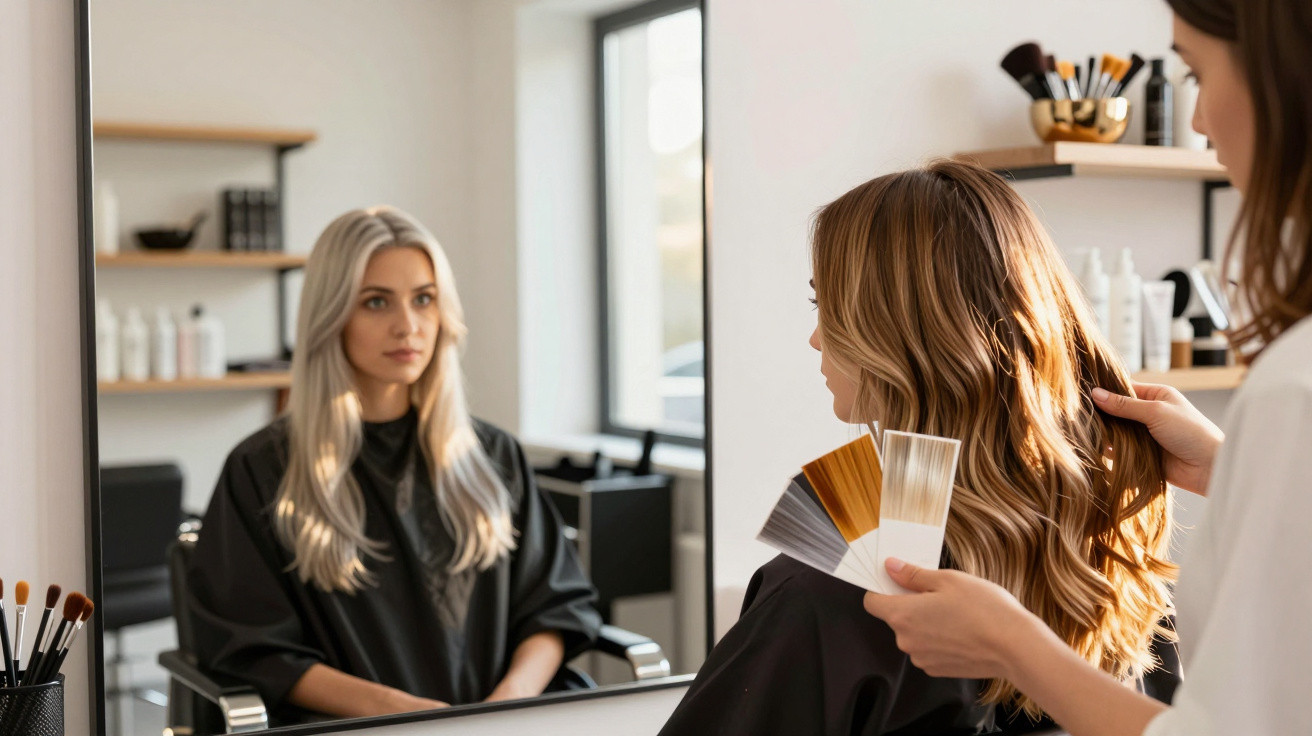
Colour has a major impact on the perception of fullness. Pale, cool tones can quickly make fine hair appear transparent. Soft, multi-dimensional colouring tends to work better:
- Fine highlights in similar shades add depth and structure.
- A slightly darker root area with lighter ends makes hair look denser at the scalp.
- Grey hair can look shinier and smoother with glossing treatments.
Combined with a well-placed layered cut, this creates a look that does not try to be 30, but presents 50-plus as modern, polished and self-assured.








Comments
No comments yet. Be the first to comment!
Leave a Comment