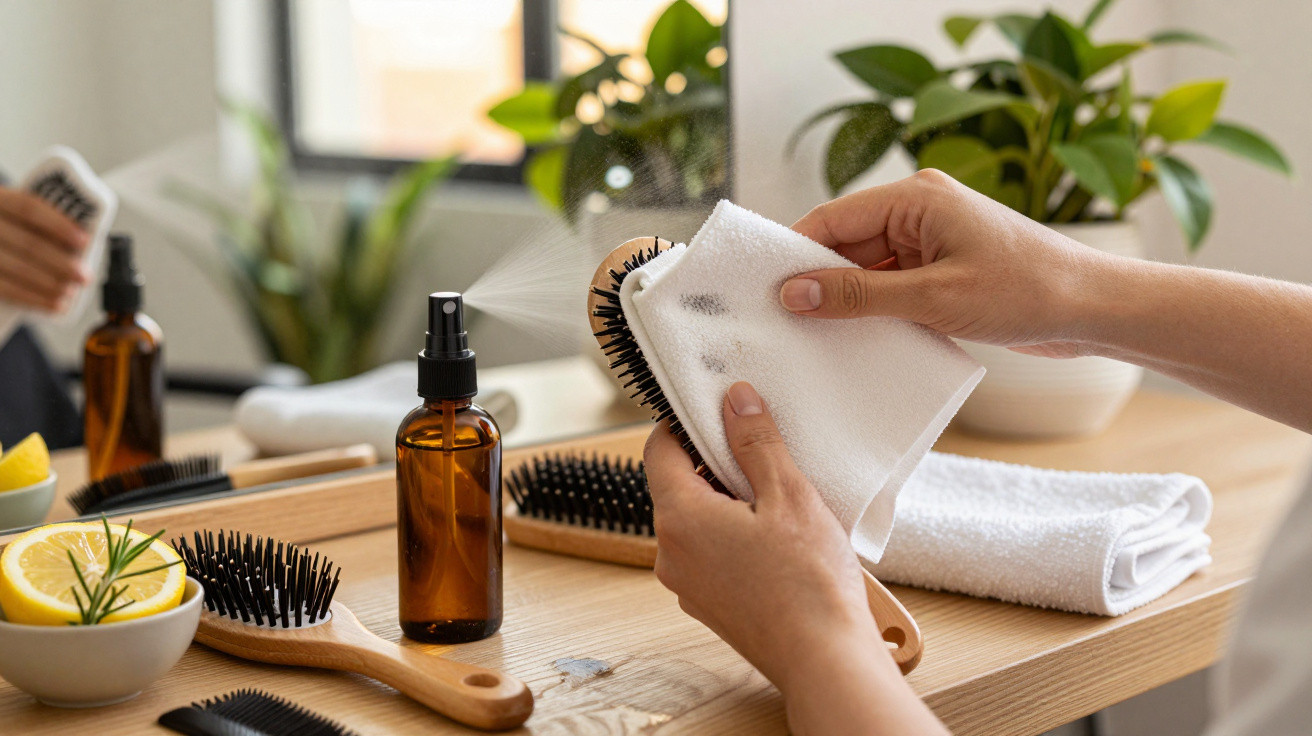
Hairbrushes hold onto far more than shed strands. Natural oils, styling sprays, dust and fluff combine into a grey coating that makes bristles look dull and pulls at the scalp. Immersing a brush may seem sensible, but it can ruin handles, loosen cushioning and distort wooden backs. Hairdressers use another approach.
With music playing softly and the floor scattered with cut hair, a senior stylist arranges a line of weary brushes on the rear counter. Rather than submerging them in a basin, she picks up an amber spray bottle carrying a faint tea tree and vinegar aroma. She gives each brush two brisk sprays, then works over it with a small toothbrush as carefully as if shining footwear. The grey residue comes away in rolls. After a swift microfibre-cloth wipe and a cool burst from the hairdryer, the bristles shine as though hairspray had never touched them. No soaking, swelling or fuss. One bottle and ten minutes leave every tool immaculate. No water bath or mysterious chemicals: simply a low-key professional trick anyone can use, beginning with ingredients already in your cupboard.
The grime your hairbrush conceals - and why salons do not soak
Inspect a frequently used brush closely and a pale ring will be visible around the bristle roots. It is sebum blended with styling-product residue and daily dust. If it remains, the build-up tugs at hair, reduces shine and transfers odours from roots through to ends.
Submerging the brush can seem the natural answer, but it causes wooden handles to expand, adhesive to lift and moisture to seep beneath paddle-brush cushions. Hairdressers don’t soak brushes - ever. Their working tools cannot risk softened bases or a warped bristle bed.
There is a scientific reason, too. Oils repel ordinary water and cling to nylon and natural boar bristles like a light varnish, meaning a soak merely redistributes the coating. A mild acid in a spray disrupts that bond immediately, while a small amount of gentle surfactant raises the released grime so it can be wiped off properly. There is no need to immerse the brush.
The natural mixture used by hairdressers - and how to apply it without soaking
Salon professionals often rely on an uncomplicated spray: 1 part distilled white vinegar, 1 part warm water, 1 teaspoon of mild plant-based shampoo, and 5–6 drops of tea tree oil. Add everything to a spray bottle and shake it. First remove caught hairs using a tail comb, spray both sides of the bristles, leave it for 60–90 seconds, then clean the base and bristle rows with a soft toothbrush. Wipe it with a microfibre cloth and finish with a brief blast of cool air. Job done: spotless.
A few common mistakes are simple to avoid. Too much essential oil leaves behind a coating, so use it sparingly. As hot water may loosen the adhesive in brush pads, keep the water warm instead. Avoid spraying into the ventilation holes of cushion brushes; mist the bristles, then work from the edges. We have all seen a treasured boar-bristle brush turn dull and sticky overnight. This method is how to restore it.
Regularity matters less than finding a workable rhythm. Weekly cleaning is ideal, though nobody honestly does it every day. Spending two minutes after a styling-heavy day is better than tackling a major clean once in a blue moon.
“Vinegar, a touch of gentle shampoo, and tea tree - that combo cuts through product, kills the stink, and keeps the pad dry,” says Mia, a Shoreditch stylist who cleans forty-plus brushes a week.
- Easy ratio: 1:1 vinegar to water, with a teaspoon of mild shampoo and a few drops of tea tree.
- Essential tools: a tail comb to remove hair, a soft toothbrush for the base and a microfibre cloth to wipe it down.
- Drying tip: a 30-second cool blast protects wood and cushions from creeping moisture.
- For persistent hairspray: mist again, leave for another minute, then brush diagonally across the rows.
- Sensitive to fragrance? Replace tea tree with eucalyptus or one drop of lemon.
Why this hairbrush mixture works - and which brushes benefit most
As vinegar is mildly acidic, it releases the mineral debris that binds oils to bristles and reduces the stickiness of hairspray. The small amount of shampoo acts as a helpful bouncer, enclosing the loosened dirt so it lifts away during wiping. Tea tree gives a fresh, green fragrance while helping to keep unwanted smells under control. It’s the speed that surprises people. Spray, wait, scrub, wipe: finished.
Boar-bristle brushes gain the most from this method. They dislike soaking because water expands the base and leaves bristles taking ages to dry. Cushion paddle brushes also suit a routine without immersion. For round ceramic barrels, spray, scrub and wipe: no water caught beneath vents and no rusty inner cores. Nylon detangling brushes and wet brushes cope well with it, too.
The sensory difference is clear from the first pass through your hair. A freshly cleaned brush slides and lifts rather than squeaks and snags. Blow-dries set more quickly because residue is no longer battling the heat. Your scalp feels fresher, while the bristles appear new again. Pass on this tip and someone will send you a smiling photo the following morning.
Your hairbrush, your ritual - keeping it fresh without the faff
Routines last when they are quick and pleasing to do. Store the spray beside your hairdryer, keep the toothbrush in the same container as the tail comb, and leave a folded microfibre cloth near the mirror. Two sprays, a minute to wait and a brief scrub: it can feel almost meditative.
Clean brushes on days when you have used lots of hairspray or dry shampoo. Leave it until another time after air-drying or a product-free day. If you are settling down for the evening, swap tea tree for lavender. Include children’s brushes in the ritual and they may actually use them more often. Every few months, also inspect each brush base for loose bristles or split cushions; these quick checks prevent useful tools reaching landfill and save your money.
Not every “natural” recommendation fulfils its claims. This one succeeds because it follows the practical, understated approach of working stylists. Their tools must endure, their workstations must remain spotless, and they have limited time. A bottle, a toothbrush and a cloth are the entire cleaning kit. Everything else comes down to habit.
| Key point | Detail | Benefit for the reader |
|---|---|---|
| Mixture ratio | 1:1 white vinegar to warm water + 1 tsp mild shampoo + 5–6 drops tea tree | A straightforward recipe to mix in two minutes |
| No-soak method | Spray, wait 60–90 seconds, scrub with a toothbrush, wipe, cool-dry | A quick process that safeguards wooden handles and cushions |
| Brush types | Ideal for boar-bristle, paddle, ceramic barrel, and nylon detanglers | Understand what works without putting favourite tools at risk |









Comments
No comments yet. Be the first to comment!
Leave a Comment