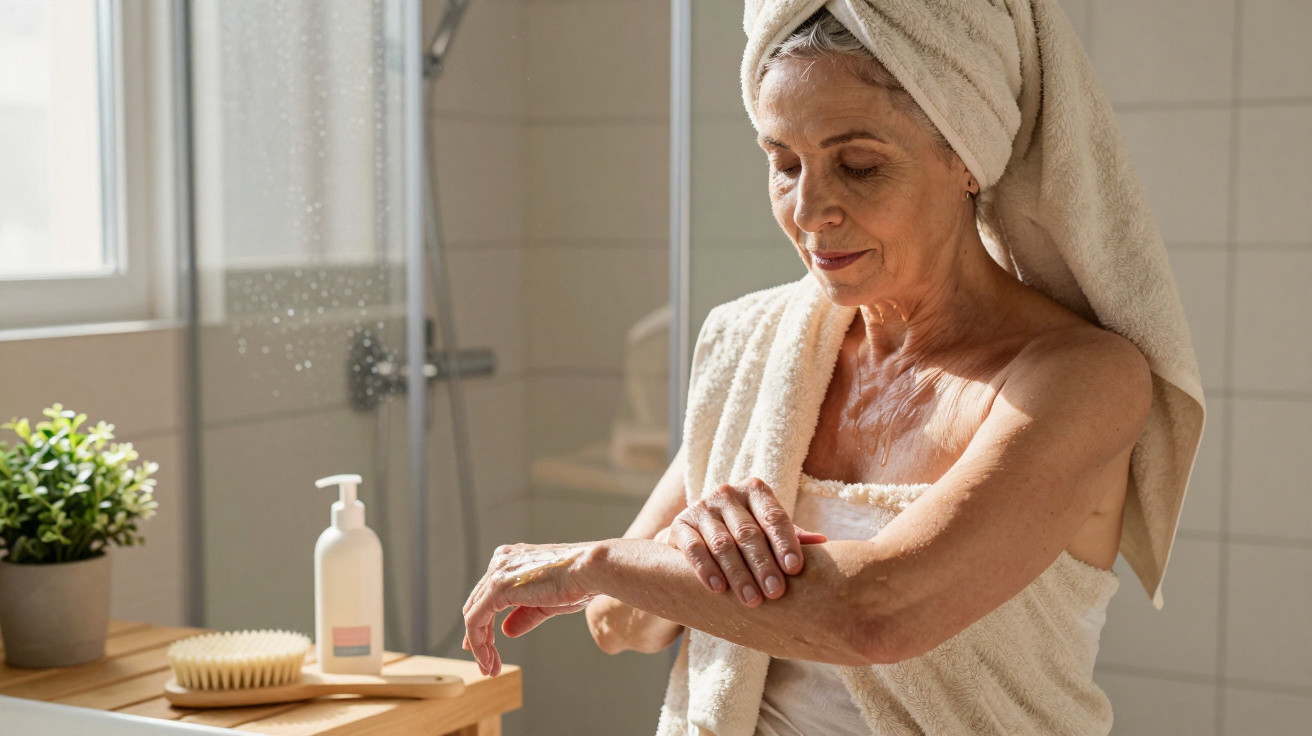
She reaches for the same orange shower gel she has used for 20 years, with its faint grapefruit scent and reminder of hotel holidays. Her movements on the tiles are more measured now, but the routine has not changed: hot water, plenty of lather and a thorough scrub that “makes her feel really clean”.
Later, she tells her daughter that her skin “itches for no reason” and that her legs become flaky beneath her tights. She puts it down to getting older, central heating or “winter skin”. Her dermatologist sees another cause: the shower routine that suited her at 40 is gradually undermining her skin at 70.
That is the surprise that almost nobody over 65 expects.
Why your 30-year shower routine stops working after 65
Most of us see showering as simple and harmless: water, soap, finished. At 25, that is nearly the case. Skin recovers quickly, oil glands are highly active and the protective barrier restores itself overnight. By 65, however, the very same shower may act like slow-motion sandpaper.
Dermatologists put it plainly: after 65, skin is thinner, drier and more delicate, rather like tissue paper folded one time too many. Hot water removes lipids more rapidly, while strong shower gels take away the limited natural oils that remain. So a “good long scrub” does not only lift dirt; it wears down the barrier that keeps bacteria, irritants and inflammation at bay.
At this stage, shower habits should be less about feeling squeaky clean and more about preserving what the body can no longer repair so easily.
A London dermatologist describes a familiar winter pattern. A new patient in their late sixties or seventies comes in with itchy arms, red cracked shins and sleep interrupted by scratching. They are sure they have an allergy or “some weird rash”. They have changed washing detergents, started wearing cotton pyjamas and slept with the windows open.
But when she asks about bathing, the answer is strikingly similar: a daily shower, very hot water, foaming gel all over the body and energetic rubbing with a flannel or sponge. Many shower twice daily because it “wakes them up”. Others feel ashamed of missing a wash, as though personal hygiene were a moral standard they are not meeting.
Following the dermatologist’s advice, they switch to showering every other day, reduce the water temperature and moisturise within minutes of towelling off. Within two weeks, the “mystery rash” begins to clear. There is no miracle cream involved, only a new approach to getting under the shower.
The biology behind this change is straightforward, if slightly disconcerting. As we age, the skin’s outer layer, known as the stratum corneum, becomes thinner and retains less moisture. Oil glands become less productive, leaving the skin’s natural “moisturising film” uneven. Collagen and elastin also diminish, making skin less able to tolerate heat and friction.
In these circumstances, lengthy hot showers with plenty of soap amount to daily micro-aggressions. Surfactants in shower gels dissolve oils that ageing skin cannot replenish quickly. Heat speeds up this effect while raising transepidermal water loss. In time, persistent dryness can contribute to eczema, infections and even small splits that cause pain with every step.
Dermatologists are not saying “stop showering”. Their advice is to treat 70-year-old skin as you would a favourite silk shirt: carefully, briefly and respectfully.
New rules of the shower after 65: what dermatologists actually recommend
The advice that most surprises people may sound almost radical in a culture obsessed with always being fresh: many adults over 65 do not require a full-body shower every day. Targeted washing can be more effective. This means quickly cleansing the “hot zones” every day - underarms, groin, feet and skin folds - while having a full shower every second day, or every third day if skin is particularly dry.
When you do shower, aim for brief and warm rather than prolonged and scalding. Five to ten minutes in comfortably warm water is better than 20 minutes in a self-created steam room. Replace foaming gels with fragrance-free, pH-balanced cleansers, applying them only to areas that sweat or are visibly dirty. Arms and legs frequently need nothing more than water.
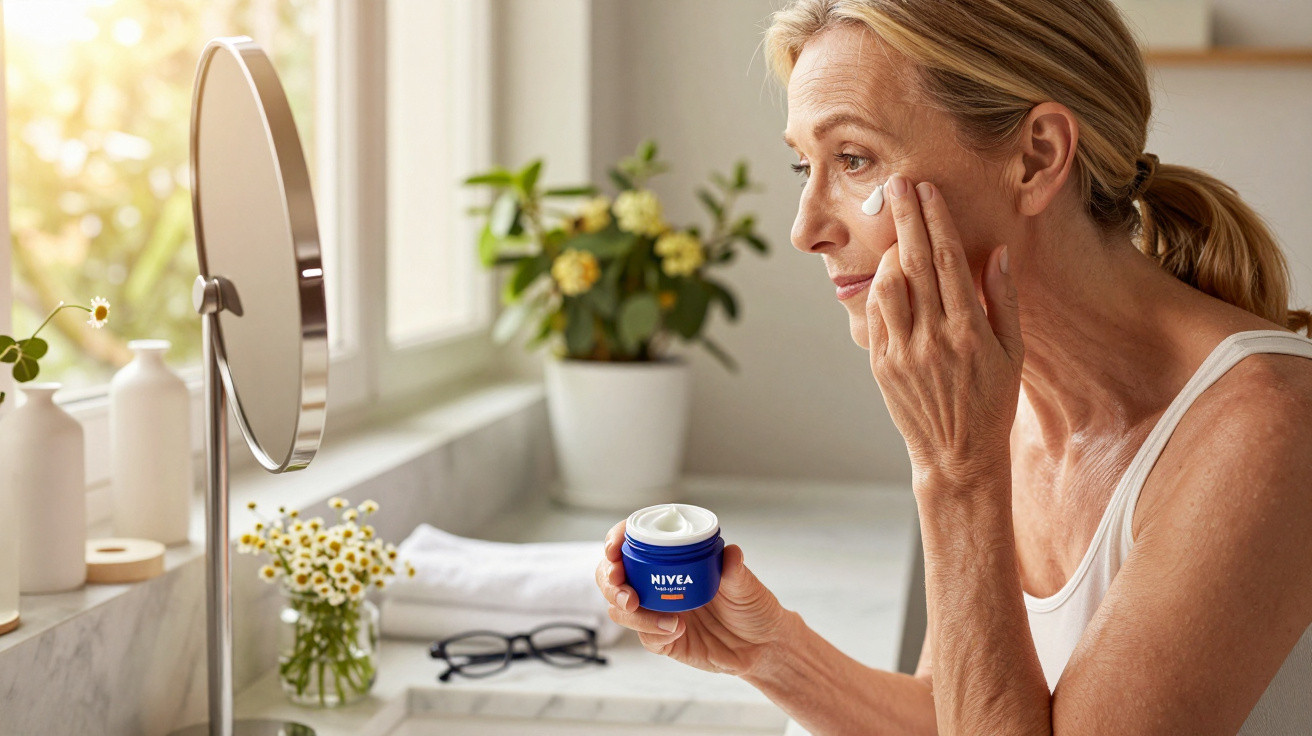
Next comes the understated key step: use a rich, unperfumed moisturiser within three minutes of leaving the shower. This short period helps lock in the moisture absorbed by the skin.
In practical terms, the routine could be as follows. Step into water that is pleasantly warm but not hot enough to make your skin turn bright red. Wet your hair if necessary and apply a mild shampoo to the scalp, rather than the entire hair length. Put a small quantity of cleanser into your hands instead of onto an abrasive sponge, then wash the underarms, groin, beneath the breasts, between the buttocks and the feet. Nothing more is needed.
Rinse thoroughly, press the skin dry with a soft towel rather than rubbing, and then sit down for a moment. Apply one pump of cream to each leg, each arm and the torso, as well as the back if you can reach it or someone can assist. It feels slow the first week, then it turns into a quiet ritual, like making tea.
Many older people feel awkward admitting that long showers leave them exhausted or that they worry about falling. Instead, they keep going and tell nobody. A lighter routine adapted to their needs is not a failure; it is a sensible strategy.
Dermatologists often discuss these habits with unexpected sensitivity. They understand that they are dealing with more than skin: they are also touching memories of work, youth, seduction and dignity. One senior dermatologist told me:
“When I ask an 80-year-old to change how they bathe, I’m not giving a beauty tip. I’m asking them to rewrite a piece of their identity. So I go slowly, and I explain why every step matters.”
What are the principal errors she encounters? Believing that extra soap means greater cleanliness. Dismissing the tight, itchy sensation after a shower. Choosing strong fragrances “because they smell clean”. Avoiding moisturiser because “I never used that before and I was fine”. Let’s be honest: at first, nobody really manages this every day. For most people, it takes weeks before these new actions feel automatic.
- Use lukewarm rather than hot water, and limit showers to under 10 minutes.
- Select mild, fragrance-free cleansers instead of harsh antibacterial soaps.
- Moisturise from neck to toes within three minutes of drying yourself.
- Wash folds and areas that sweat heavily every day; wash the whole body less frequently.
- Fit a non-slip mat and grab rail so that shorter showers feel safer rather than hurried.
Rethinking “clean” after 65: less friction, more kindness
The word “clean” carries considerable weight. It can evoke instructions from childhood, hospital odours, school-day mornings and factory shifts. People raised with shared bathrooms or restricted access to water can feel almost guilty about missing a daily full wash, as if they are going backwards in life. That feeling remains in the body long after the skin itself has changed.
When dermatologists recommend showering less often, some patients interpret this as being told to become less respectable or to care less for themselves. In fact, the reverse is true. Adjusting shower habits after 65 means paying closer attention to what the skin is telling you. Red areas, nighttime itching and the sensation that your legs are two sizes too small for your body are signals, not personal failings.
We do not often discuss the isolation caused by these private difficulties. Painful, dry skin may lead people to avoid swimming pools, summer clothing and sometimes even intimacy. At first, sharing these small details with a GP, partner or friend can feel uncomfortable. Yet this is often how gentler new routines begin to spread among relatives and friendship groups.
There is also a health consideration that extends far beyond comfort. Delicate skin is more likely to tear during a fall. Small fissures near the ankles or between the toes can provide entry points for bacteria. For people with diabetes or circulation problems, every minor wound can develop into a serious complication. A gentler shower routine lowers these risks quietly, day after day.
For carers, adult children and partners, these details matter as well. Helping an older relative involves more than medicines and medical appointments. It may mean discreetly replacing their shower gel with a milder version, turning down the water temperature or suggesting a shower stool while framing it as “saving energy” rather than “being old”.
At a deeper level, changing shower habits after 65 involves accepting that the body now follows new rules. They are not inferior rules, simply different ones. Just as we update a glasses prescription, modify our exercise or reconsider driving after dark, we can reshape our relationship with water, soap and time beneath the spray.
There is no need to transform everything overnight. Tomorrow, you might simply lower the temperature slightly. The following week, you could try moisturising while the skin remains a little damp. A month later, you may notice that the red patches have eased and that you are sleeping more soundly. Most genuine changes begin exactly this way: quietly, in the bathroom and without an audience.
| Key point | Detail | Benefit for the reader |
|---|---|---|
| Adapt shower frequency | Move to a full shower every 2–3 days, with targeted daily washing | Reduces dryness, itching and the fatigue associated with personal care |
| Make the water, timing and products gentler | Use lukewarm water, shower for less than 10 minutes and choose mild fragrance-free cleansers | Protects the weakened skin barrier after age 65 |
| Moisturise immediately afterwards | Apply a rich cream within 3 minutes of showering | Retains water in the skin and helps limit cracking and irritation |










Comments
No comments yet. Be the first to comment!
Leave a Comment