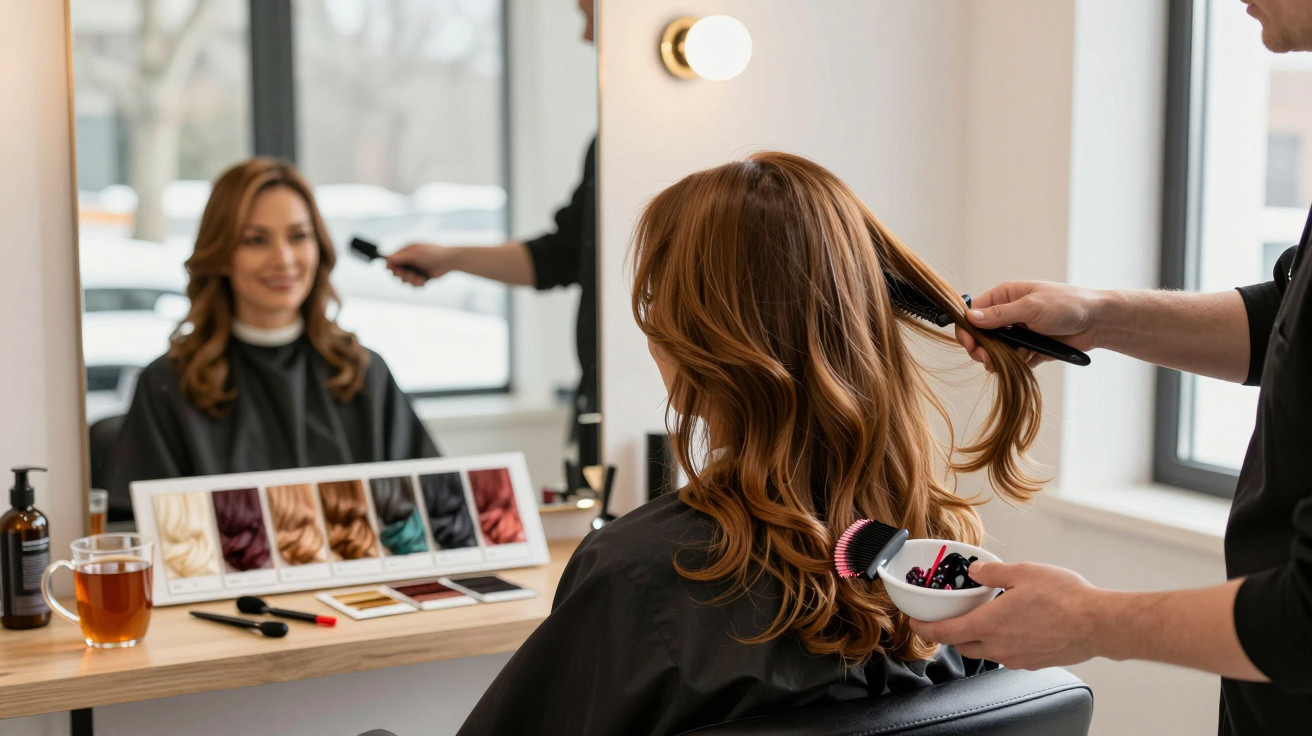
Winter’s ideal shade adds softness and warmth, delivers convincing shine, and makes regrowth appear less obvious.
When the weather turns colder, hair can appear cooler, complexions paler, and grey roots more noticeable along the parting. UK colourists are seeing a clear direction for 2025: natural root depth, ultra-fine light pieces through the lengths, and high-gloss finishes that catch indoor lighting. The focus is straightforward-conceal grey effectively, brighten the face, and sidestep demanding maintenance routines.
Winter 2025 hair colour trends
This winter’s palette centres on subdued neutrals with a refined, costly-looking result. These colours resist brassiness while retaining dimension beneath office LEDs and pub lights.
- Mushroom brown: a cool-neutral brunette combining slate and taupe tones to soften grey regrowth.
- Smoked caramel bronde: warm ribbons layered over a gentle brown base, brightening the complexion without an orange tinge.
- Oat milk blonde: a light beige shade with subtle ash notes, created for fine hair needing lift rather than yellow tones.
- Glossy espresso: a rich brunette with sheer shine that works particularly well with a root shadow for easier maintenance.
- Winter copper: a softened ginger with cinnamon lowlights, offering a vibrant yet sophisticated version of red.
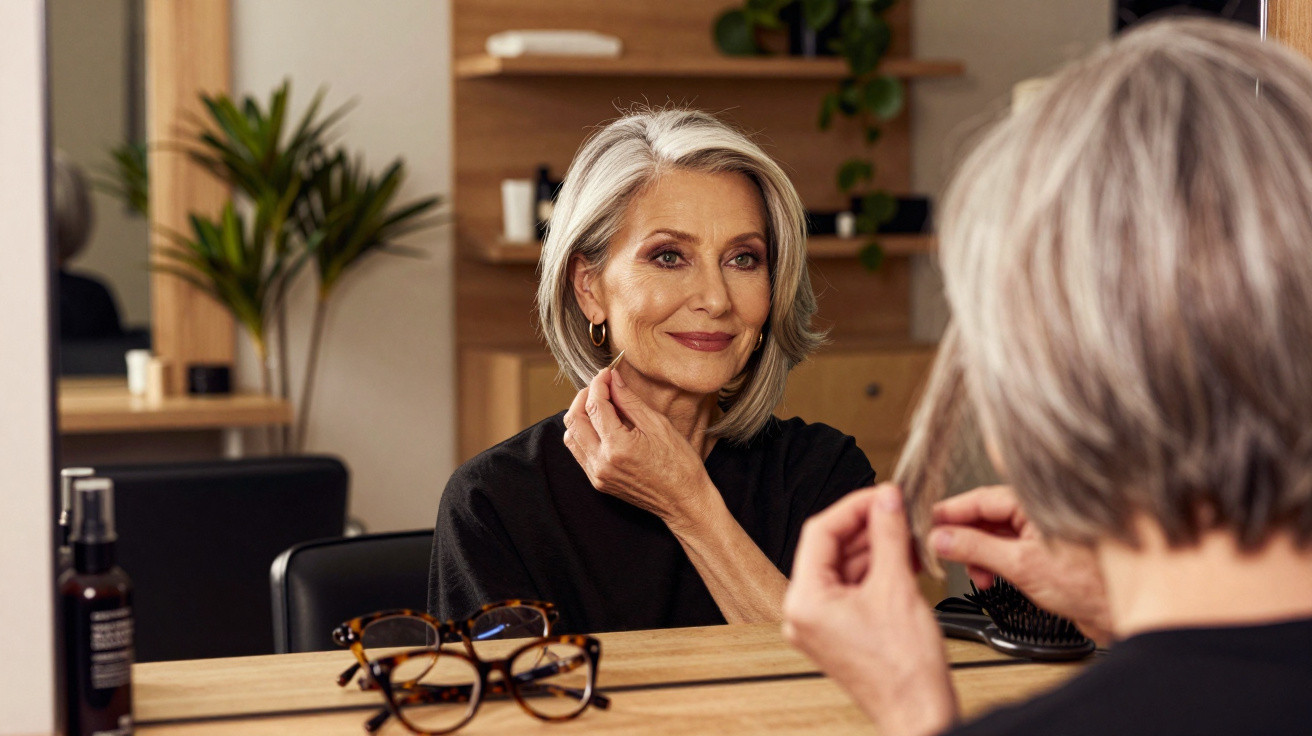
- Salt-and-pepper blending: cool foils and lowlights that embrace natural silver while giving it a more polished appearance.
“Neutral-to-cool undertones rule winter 2025. They mute brass, flatter sallow skin, and soften the line where grey starts.”
The fastest shade for disguising grey
Mushroom brown is the strongest choice for most people. Its depth is close to that of natural grey hair, quickly reducing contrast at the roots. Pair it with a root shadow and micro-babylights, and silver strands merge into the overall colour. For warmer complexions, smoked caramel bronde achieves a similar effect with a touch of honey.
Hair colour techniques that create a younger look
Root shadow with diffused highlights
A root shade one to two levels darker than the mid-lengths removes stark lines and allows longer gaps between appointments. Request babylights around the face and crown, with broader, softer woven sections below. This creates visible movement rather than stripy colour.
Glossing and bond care
A demi-permanent gloss closes the cuticle, refines the tone, and creates slip without a long-term commitment. Bond-building treatments offer protection during lightening, helping the ends remain smoother and stronger; this improves light reflection and gives a fresher appearance on camera.
Two-minute grey rescue
Keep a tinted root spray or powder at home for use between appointments. Opt for a slightly ashy shade. Its cool cast resembles natural scalp shadow and conceals silver more effectively than warm-toned pigments.
“The quickest anti-ageing trick is shine. Healthy reflection lifts the face more than lifting the base by a full level.”
Matching your shade with skin and eye tone
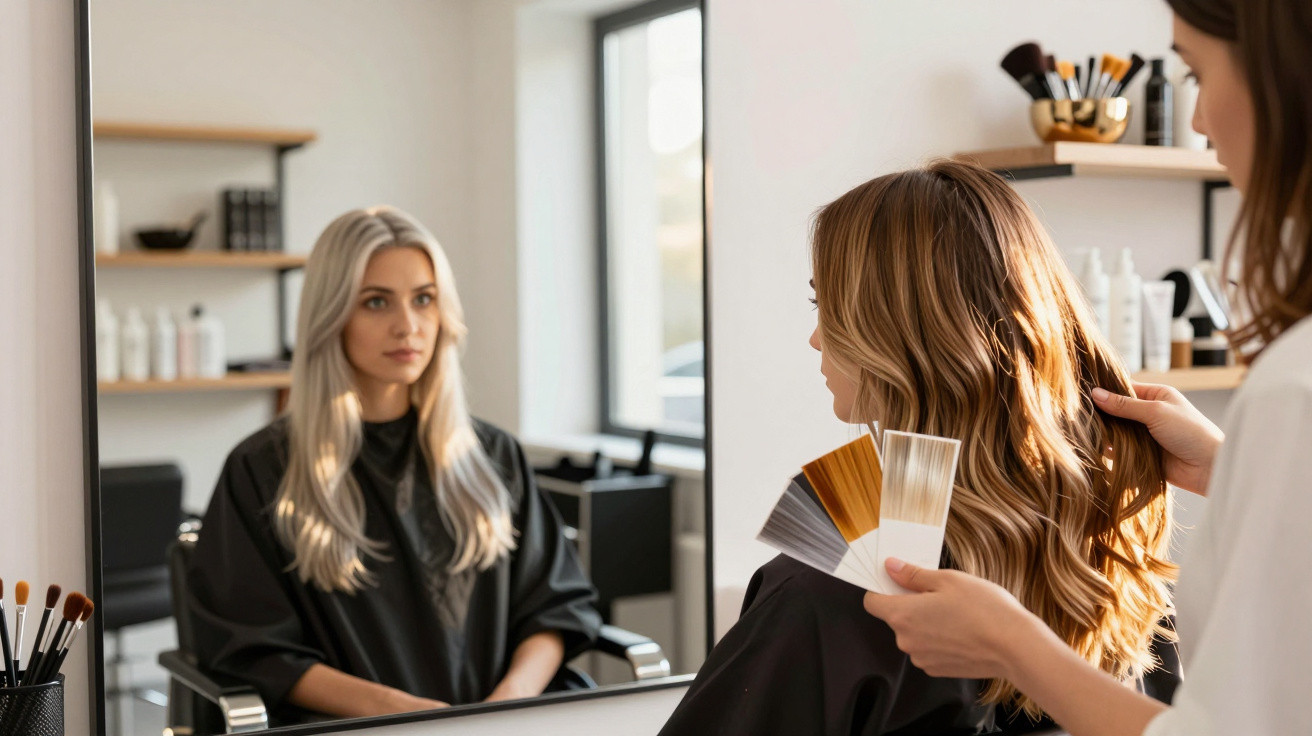
Achieving colour harmony matters more than following every trend. These straightforward checks can help identify the most suitable undertone.
- When veins appear blue or purple, select cool neutrals such as mushroom brown, oat milk blonde, or cool chocolate.
- When veins look green, choose gentle warmth, including smoked caramel bronde, winter copper, or chestnut.
- If your veins appear mixed, stay neutral with beige blonde, taupe bronde, or glossy espresso finished with a beige glaze.
- Caramel and copper ribbons enhance green or hazel eyes, while ashy beige and pearl lights flatter blue eyes.
Grey coverage: permanent colour versus blending
Complete coverage can still be right for anyone with more than 60% grey who prefers a uniform finish. However, many people now favour blending-using lowlights and lighter pieces to interrupt regrowth while retaining depth around the face. In winter’s lower light, coverage can look more intense; moving from block colour to a blend can often remove one salon visit.
| Shade | Undertone | Grey strategy | Maintenance | Best for |
|---|---|---|---|---|
| Mushroom brown | Cool-neutral | Blends greys via similar brightness | 8–12 weeks with root shadow | Olive or cool skin, fine to medium hair |
| Smoked caramel bronde | Soft warm | Camouflages salt strands with honey ribbons | 8–10 weeks | Warm skin, hazel or green eyes |
| Oat milk blonde | Beige-cool | Toners mute yellow, greys blend into beige | 6–8 weeks toner | Fair skin, lighter natural bases |
| Glossy espresso | Neutral deep | Strong coverage with demi topcoat | 6–8 weeks for roots | Dark bases, thick hair needing polish |
| Winter copper | Muted warm | Distracts from grey via saturation | 4–6 weeks toner | Neutral to warm skin, freckles |
| Salt-and-pepper blend | Cool | Enhances silver, reduces harsh contrast | 10–14 weeks | Over 50% grey, low-fuss styling |
Cuts and styling that showcase colour
Blunt collar-length cuts and weighty layers may leave the ends looking sparse. Instead, request subtle internal layers and a neat dusting of the perimeter. A side part can soften visible grey at the hairline. Using a round brush or large Velcro rollers adds height at the crown, keeping light moving across the highlights.
Winter care routine for shine
- Wash hair less frequently, using a colour-safe sulphate-free shampoo alongside a weekly intensive mask.
- For cool shades, use purple or blue shampoo every second week; for warm shades, use it once a month.
- Use heat protection whenever you blow-dry. Winter air dries out cuticles more rapidly than summer air.
- Sleep on silk or sateen, as friction reduces gloss and causes toner to fade sooner.
Salon or at-home colour: cost, time and safety
Across the UK, a blended brunette with a root shadow costs approximately £90–£160, depending on location. A full head of highlights generally costs £130 to £220. At-home demi-permanent glosses are £10–£25 and revive tone for four to six weeks.
Carry out a patch test 48 hours before every colour service. Those sensitive to PPD or related dyes may experience a reaction even after years without problems. Choose an ammonia-free demi for glossing, and leave high-lift colour or strong bleach to a professional able to assess bonds and porosity.
“Patch test every time. Winter dryness increases scalp sensitivity, and reactions rise when skin barriers run low.”
Quick choices for different lifestyles
- Low maintenance: mushroom brown with a root melt and minimal babylights.
- Brightening without bleach: smoked caramel ribbons applied over a natural base.
- Maximum gloss: espresso with a clear or violet-tinted glaze.
- A graceful move towards grey: salt-and-pepper blending with cool lowlights.
Further context for choosing winter hair colour
Consider value as well as hue. Grey strands have a high value, meaning they are light. When the overall colour is similarly valued-such as taupe bronde over a medium base-the eye no longer notices regrowth so readily. This one adjustment can often make maintenance feel half as demanding, even if appointments remain equally spaced.
Before booking, try a simple test: divide your hair at the parting and apply a little cool-brown eyeshadow to the roots on one side, then warmer caramel on the other. Look at both under indoor LEDs and beside a window. The side that blends more naturally with your complexion indicates the right undertone. It takes little effort but can save money and salon time during colder months, when diaries become busy.








Comments
No comments yet. Be the first to comment!
Leave a Comment