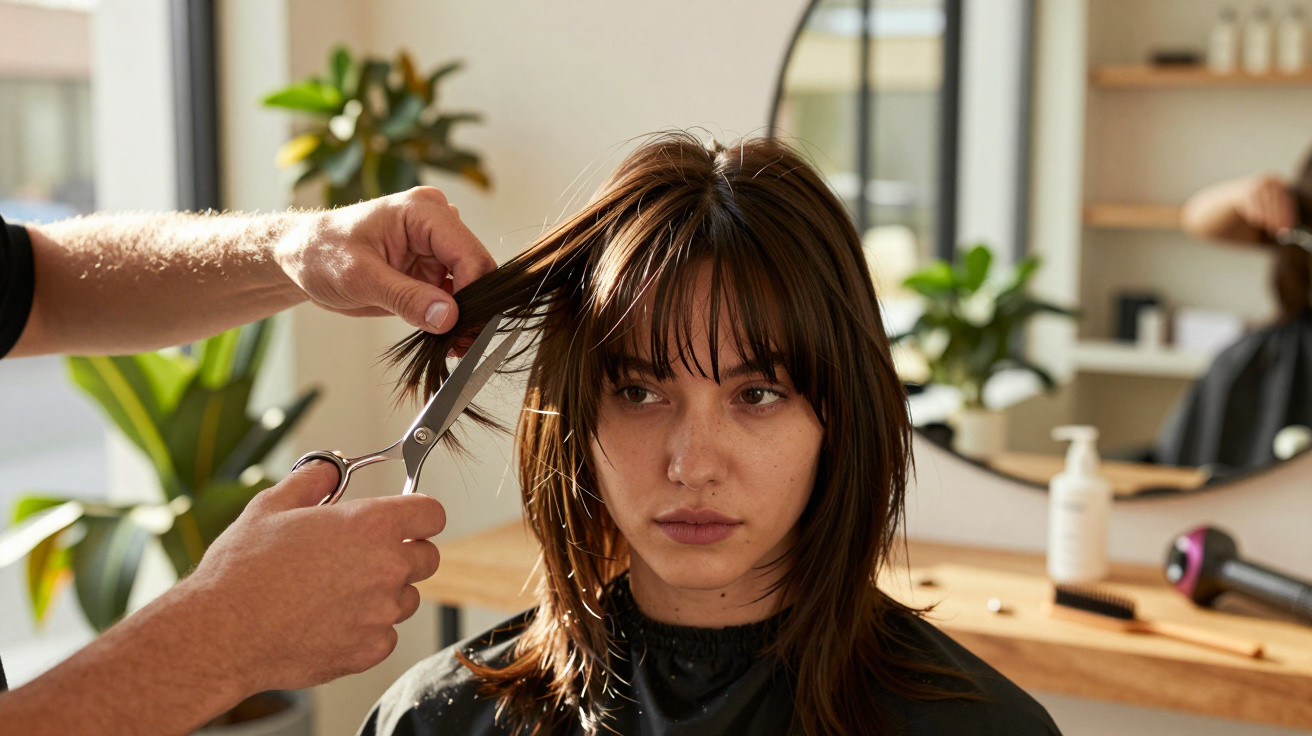
Soft outlines, fragmented lines and a fringe that refuses to stay perfectly in place are steadily appearing in salon chairs for 2026.
Hair trends this year are becoming less rigid: texture is being embraced, cuts are more relaxed, and an emerging fringe style is changing the usual expectations.
What the shattered fringe really is
Also known as a deconstructed fringe, the shattered fringe is a response to the dense, solid section of hair that many people imagine when they hear “bangs”.
Rather than forming a blunt, uninterrupted curtain over the forehead, it is intentionally fragmented. Its ends are sliced, notched and textured to create a light, airy finish with softly separated pieces.
The shattered fringe is soft at the edges, irregular in length and full of tiny gaps that let your skin and brows show through.
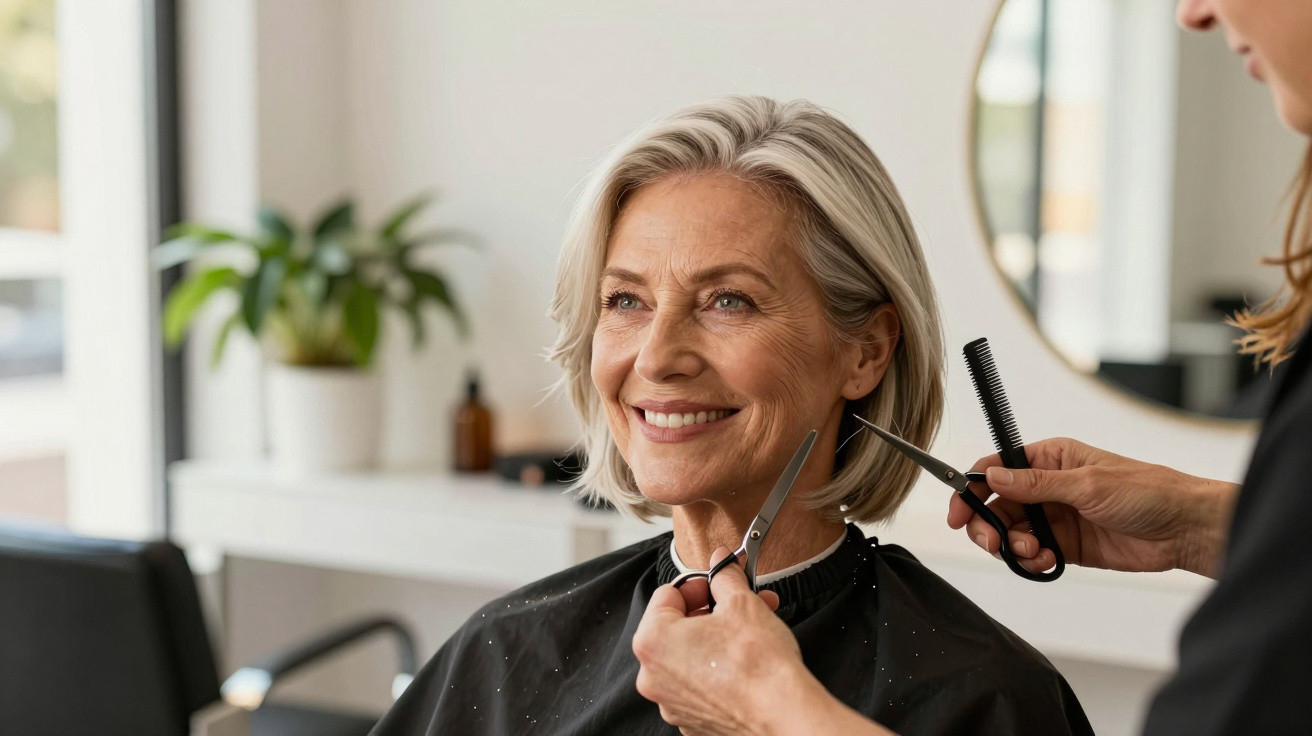
Hairdressers create the effect by using point cutting, feathering scissors or a razor on small sections, ensuring the result appears natural instead of precisely uniform.
The finished style feels contemporary and easy-going. It draws attention to the eyes without overwhelming the face, while moving naturally rather than resting in a helmet-like shape.
How it differs from familiar fringe styles
The shattered fringe lies somewhere between a traditional fringe, curtain bangs and gentle layers, without fitting completely into any one of those categories.
- Compared with a blunt fringe: it has less density, more visible gaps and no sharp horizontal edge.
- Compared with curtain fringe: it is not neatly divided through the centre, as sections fall in varied directions.
- Compared with a wispy fringe: it remains substantial enough to alter the appearance of your face shape, while never becoming a dense block.
Its fragmented construction gives the style its name. The fringe appears to have been carefully “shattered” into tiny sections, producing an almost unplanned look despite the deliberate cutting involved.
If your current fringe looks like a ruler could have drawn it, it is not shattered – this trend is all about controlled imperfection.
Why the deconstructed fringe defines 2026
Hair trends for 2026 are turning away from immaculate, demanding styles. After years of precise bobs, mid-length hair is returning; pixie cuts are being made gentler as “air pixies”; and colour is gaining understated dimension through glossing and delicate light lines, rather than relying on bold balayage alone.
The shattered fringe suits this move particularly well. It offers a way to update the face without sacrificing significant length. Reworking the front section can make a long style or mid-length cut feel entirely refreshed.
It also provides a softer way for many people to experiment with their identity. Instead of making a dramatic cut that may take time to grow out, the style allows for a change that can be refined every few weeks.
Who the shattered fringe suits best
As its shape can be tailored, the shattered fringe can work with many face shapes. The key considerations are the placement of the longest sections and the amount of density retained.
| Face shape | Why it works | Stylist tips |
|---|---|---|
| Round | Reduces the appearance of fullness and brings attention to the eyes and cheekbones. | Keep the central pieces shorter and the sides slightly longer to create length. |
| Heart-shaped | Softens a wider forehead while emphasising the upper cheeks. | Place light sections around the temples to offset a narrower chin. |
| Long | Makes the face appear shorter without introducing a severe line. | Choose a length from mid-forehead to brow-skimming, with dispersed strands. |
| Square | Soft, uneven ends soften the effect of pronounced jaw angles. | Keep the outer sections longer and more feathered to blur the edges. |
The more precisely your face shape and features are analysed, the more tailored and flattering the shattered fringe becomes.
How different hair types respond
Although every texture behaves differently, this trend is notably versatile.
Straight and gently wavy hair
On straight hair, the shape of a shattered fringe is especially visible. The notched ends stand out clearly, allowing you to opt for either a soft brow-covering veil or a marginally shorter style that skims the eyes.
With loose waves, the result feels even more naturally worn-in. The hair’s natural bends help the small sections separate, adding movement with minimal styling effort.
Curly and very curly hair
This texture requires more care. Curls lift once cut, which can make the final length harder to anticipate.
Those with tight curls can still try a shattered effect, but it works better as face-framing layers than a strict fringe line.
For this reason, many stylists choose to cut curly hair when dry, as they can judge its exact spring. If you have coily hair and are certain you want a fringe, expect a consultation and a gradual build-up of the shape over two or more appointments.
How to request a shattered fringe at the salon
Although “shattered fringe” is becoming more widely used, your hairdresser may not say it every day. Being specific can prevent a result that is either too weighty or too subtle.
- Take along two or three photographs that show the amount of texture you prefer.
- Explain that you want a light, piecey fringe with uneven ends rather than a blunt edge.
- Specify how much of your forehead you are happy to cover.
- Discuss your normal styling routine so the cut suits your everyday habits.
The best shattered fringes are built around your laziness level: the less time you want to spend styling, the lighter and more effortless the cut should be.
Styling a shattered fringe every day
A major appeal of the trend is its forgiving nature. Light waves, cowlicks and even a little frizz can enhance the overall effect.
Most stylists advise drying the fringe before the rest of your hair, even when you intend to let the lengths air dry. Directing it from side to side with a brief blast of a hairdryer stops it from drying into a stiff, fixed position.
Your fingers can then handle most of the styling. Use a very small amount of lightweight cream, mousse or styling powder to separate individual pieces. Steer clear of rich oils and heavy waxes, which can cause the strands to stick together.
Think of the finish as “unstyled on purpose”: separated, slightly uneven and soft enough to push out of your eyes.
Maintaining the style without frequent trims
Its uneven outline allows a shattered fringe to grow out more smoothly than a blunt one. If you are content with a looser shape, you may be able to leave six or even eight weeks between salon appointments.
At home, maintain the texture by:
- Choosing a gentle volumising shampoo to prevent weighed-down roots.
- Blotting the fringe area with a towel instead of rubbing it.
- Reviving it in the morning with a mist of water or dry shampoo, then reshaping it using your fingers.
Trimming it yourself can be tempting, but small errors are highly visible at the front of the face. If you do decide to try, only trim separate strands vertically into the ends instead of cutting straight across.
What “shattered” means in hairdressing
In salon terminology, “shattering” is not the same as cutting randomly. It describes the intentional breaking up of a solid shape to make it appear lighter and more fluid.
Stylists use methods including:
- Point cutting: positioning the scissors vertically and cutting into the ends.
- Slide cutting: softly running the blades along the hair to take away bulk.
- Razor work: shaping soft, frayed edges with a razor.
These approaches remove weight while preserving length, which makes them particularly effective around the face.
Who should reconsider the style
Although the shattered fringe is adaptable, it will not be the best choice for everyone. Anyone with a very oily forehead may find that every type of fringe becomes greasy quickly, whatever the cut. People who are particularly conscious of their hairline may favour a longer, face-framing option that can easily be swept back.
Those who prefer perfectly sleek, glass-like hair may also find the look disappointing. The style works best with movement, while extremely straight finishes created with flat irons can make its fine ends seem thin rather than romantic.
Pairing the shattered fringe with other 2026 hair trends
This fringe works especially well with mid-length cuts that fall at the collarbone or just below the shoulders. Its shattered front texture reflects the soft layers through the rest of the hair, creating a flowing, gentle silhouette.
It can update a traditional bob too. A chin-length or shoulder-skimming bob gains an immediately less severe appearance with a shattered fringe, particularly when finished with loose bends or a soft blow-dry instead of a pin-straight result.
With pixie cuts, a shattered micro-fringe acts as an in-built accessory, highlighting the eyes and cheekbones without the need for elaborate styling.
A practical way to experiment with your image
For people wary of major transformations, the shattered fringe is a manageable way to experiment. Your overall length remains intact, yet your face looks different in photographs and your everyday mirror routine feels renewed.
The trend can also be a gentle introduction to changes in personal style. Once you have become accustomed to seeing your features in a new frame, adjusting your colour, adding layers or changing your parting may feel easier.
Think of the shattered fringe as a small, strategic risk: enough change to feel new, not so much that you no longer recognise yourself.








Comments
No comments yet. Be the first to comment!
Leave a Comment