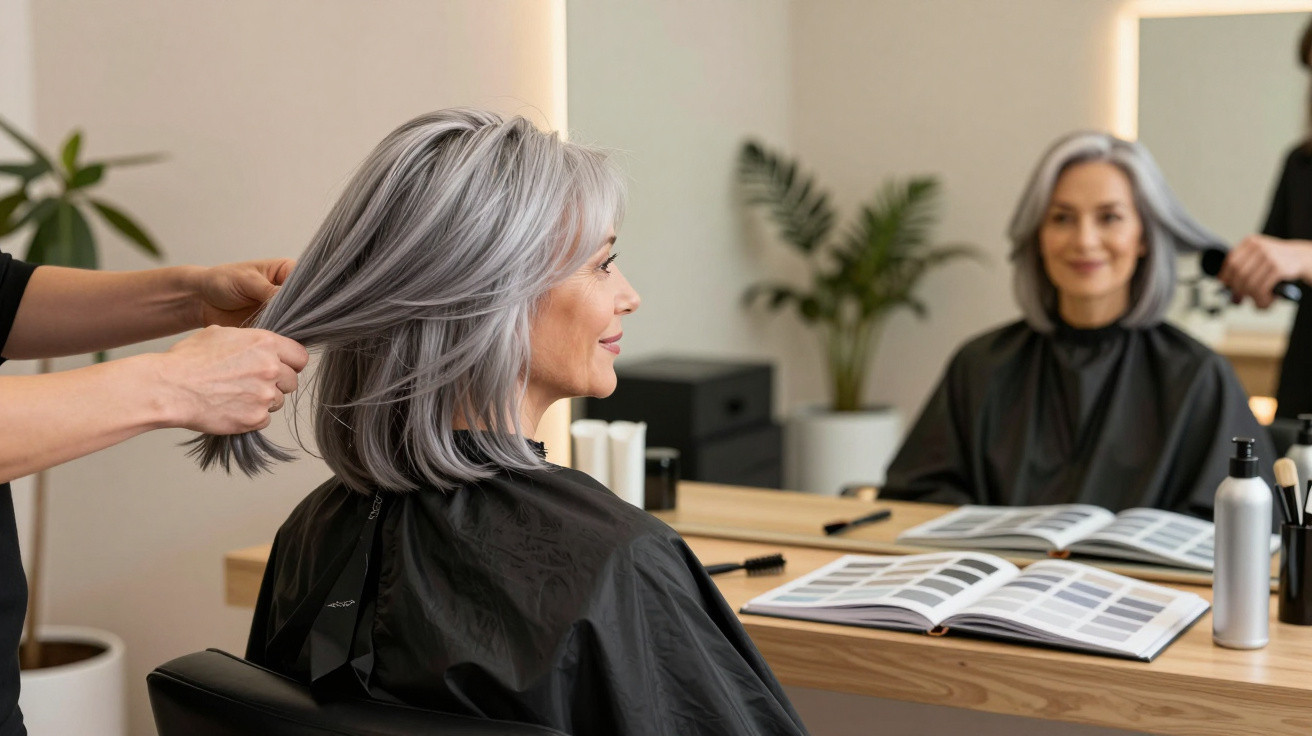
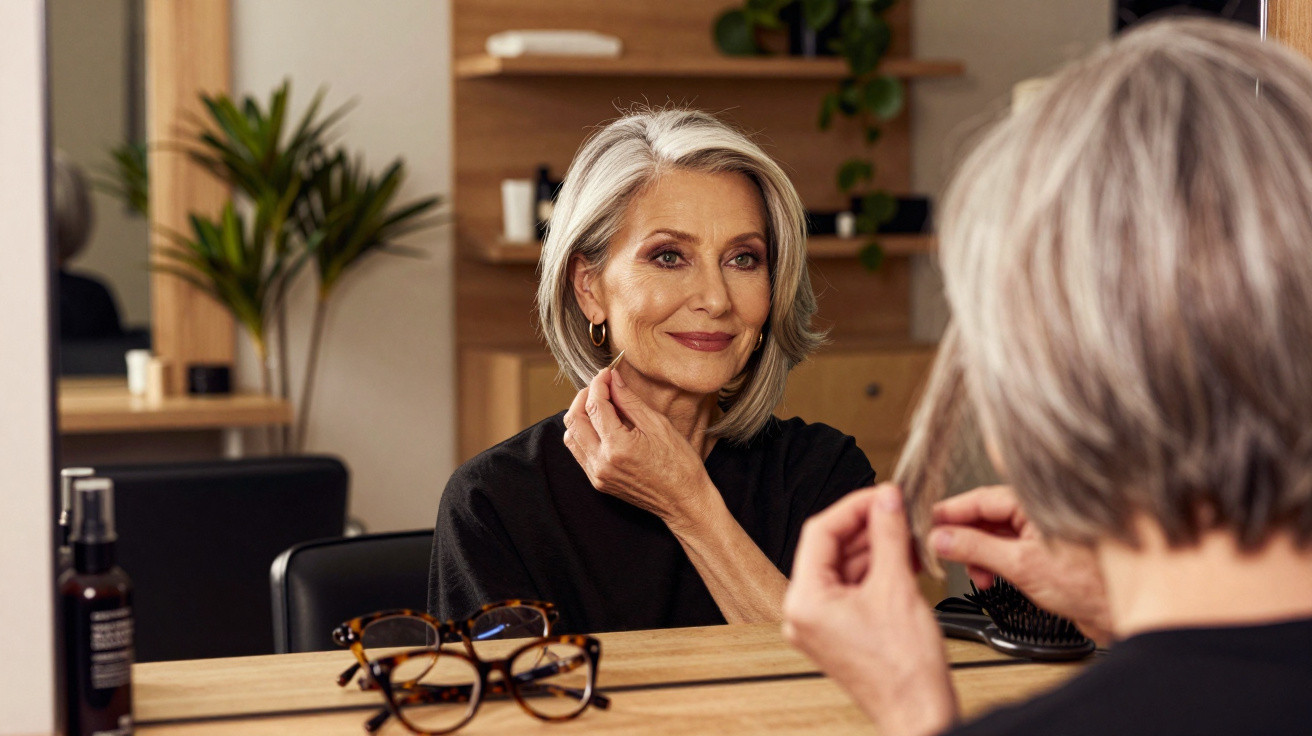
Grey hair no longer needs to be concealed; it can be refined, brightened and styled to work in your favour.
As increasing numbers of people aged over 50 allow their natural salt-and-pepper colour to come through, hairdressers are discreetly changing how grey hair is cut, toned and maintained. Rather than removing the silver, the aim is to make it glossier, smoother and more flattering around the face, without the commitment of permanent all-over colour.
Grey is fashionable, but no one wants lifeless grey
Hairdressers in Europe and the United States report the same shift: clients now want to enhance their natural grey rather than disguise it. However, when hair first becomes fully grey or noticeably salt-and-pepper, many people find it looks dry, lacklustre or faintly yellow.
Hair gradually loses pigment with age, while moisture and lipids also decline. This is why white strands may feel rougher and reflect less light than younger hair.
Modern grey hair is all about contrast, shine and movement – not about pretending you never went grey.
Rather than trying to reverse time with dense colour, today’s most popular methods rely on understated adjustments: selective lightening, soft glosses, more considered cuts and nourishing care routines.
Three salon techniques that make salt-and-pepper hair look younger
Grey blending: softening the divide between previous colour and fresh grey
Grey blending is now salon shorthand for a gentler, gradual move towards natural silver. Its purpose is straightforward: soften the distinction between coloured hair and white regrowth, so it no longer resembles a severe root line.
In practical terms, a colourist will usually:
- lighten selected strands through the lengths to break up concentrated old colour
- apply cool or neutral shades in a gloss that harmonise with your existing grey
- maintain gentle contrast, allowing old dye to grow out without a striking “bar” at the roots
For someone in their 50s or 60s with white patches at the temples and deeper hair colour at the back, grey blending can make the overall effect appear deliberate rather than accidental. It also introduces movement, which can immediately brighten the face.
Gray blending doesn’t hide your grey; it makes the transition look chic instead of “mid-regrowth”.
Smoky silver: creating a cool, metallic grey finish
For people whose hair is already predominantly white, “smoky silver” is a popular enhancement. It combines crisp, cool shades with gentle charcoal depth, rather like a subtle smoky eye effect for the hair.
The process commonly includes:
- cancelling yellow or brassy sections with a cool toner
- layering a sheer wash of silver or steel tones to create a metallic lustre
- retaining a number of darker strands to prevent a flat, even-looking finish
Hairdressers favour this option because it suits a broad variety of skin tones, from very fair to deep. Darker anthracite touches frame the face and help prevent the hair from making the complexion look washed out, as plain white hair sometimes can.
A smoky silver finish is often easier to maintain than classic blonde, and it looks intentional rather than “just grey”.
Face-framing highlights: immediate brightness around the complexion
If a full-head service feels too daunting, face-framing highlights offer a low-commitment approach that can refresh salt-and-pepper hair in one appointment.
The method is simple: the colourist lightly lifts and tones only the pieces surrounding the face. This brighter section works almost as though it were built-in lighting for your features.
For grey hair, these highlights are generally soft and cool, allowing them to merge with existing silver rather than appear streaky. They can:
- add warmth to a complexion that looks tired
- bring focus to the eyes and cheekbones
- make an uncomplicated cut appear styled with minimal effort
Face-framing highlights are a strategic tweak: the overall look stays natural, but your face suddenly looks better rested.
The 2025 haircut that flatters grey hair most
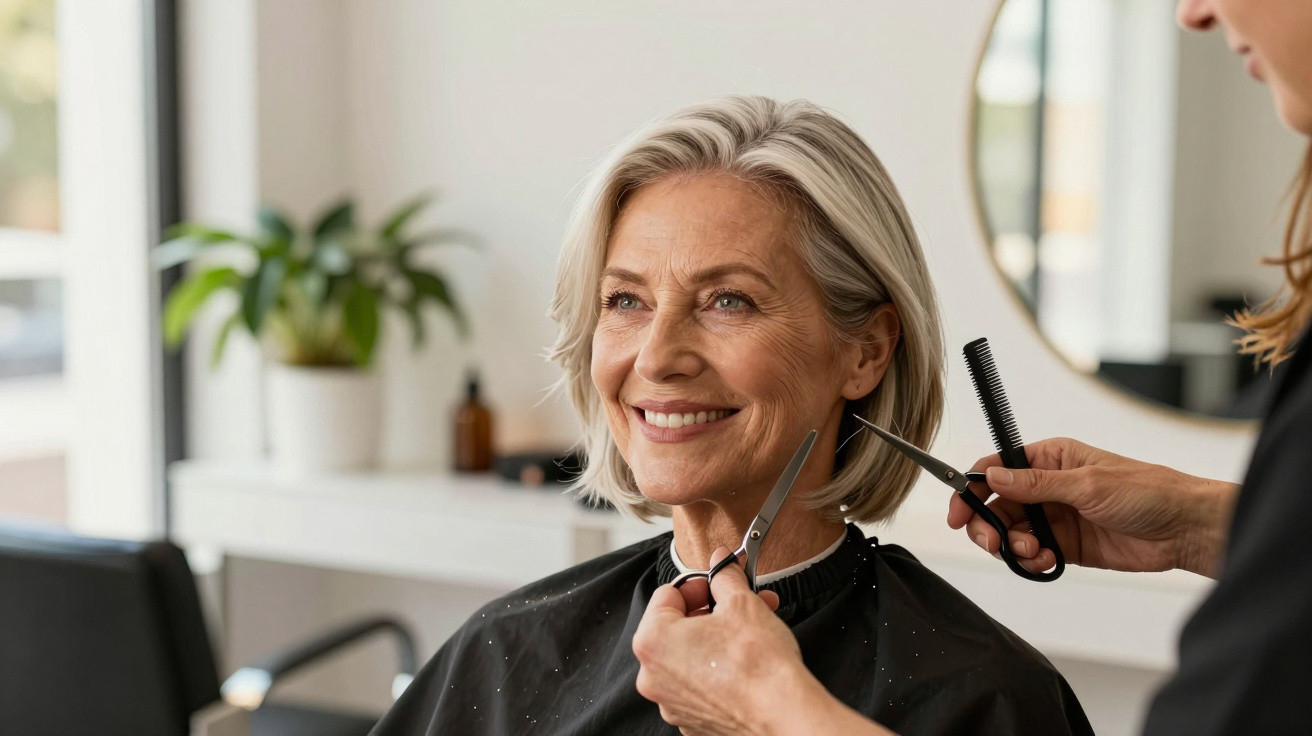
Colour techniques can only achieve so much when the cut is working against them. For grey hair, experts increasingly favour layered silhouettes over blunt, weighty outlines.
Layers introduce movement and let natural light reflect from the silver strands, helping them stand out. They also disrupt solid areas of darker hair, which may pull the face downwards.
Hairdressers currently highlight three cuts as especially flattering for salt-and-pepper hair:
| Cut | Why it works on grey |
|---|---|
| Layered bob | Gentle layers show off every variation of grey and avoid a “helmet” effect. |
| Textured pixie | Short, choppy sections create a sporty, energetic look while emphasising metallic shine. |
| Mid-length with curtain fringe | The fringe draws attention to the eyes, while longer layers keep the hair from appearing flat. |
It is not grey hair itself that tends to age the face, but a dense, uniform shape. For example, a rigid, one-length bob without movement can look severe. A softer contour with some height at the crown will usually feel fresher.
Movement is more rejuvenating than colour: a layered grey cut can look younger than a flat, dyed one.
Care rituals that restore shine and softness to grey hair
Grey hair often requires greater protection than coloured hair, rather than less. Without natural pigment, the hair fibre is more exposed and can be more vulnerable to sunlight, pollution and heat styling.
Hairdressers advise basing your routine on hydration and repair, instead of using heavy styling products that can leave hair weighed down.
Key ingredients that support grey hair
- Ceramides: help close the cuticle while reducing frizz and rough texture.
- Keratin: reinforces fragile hair and helps limit breakage through the mid-lengths and ends.
- Hyaluronic acid: increases hydration, so grey hair appears supple rather than wiry.
- UV filters: guard against sun-related yellowing and dullness.
A standard routine for someone in their 50s with salt-and-pepper hair could include:
- a mild hydrating shampoo two or three times weekly
- a nourishing conditioner at every wash, concentrated on the lengths and ends
- a weekly treatment mask containing strengthening or moisturising ingredients
- a leave-in spray or cream before blow-drying to protect against heat and pollution
- purple or blue shampoo from time to time to neutralise yellow tones, rather than at every wash
Think of grey hair as fine cashmere: it can look luxurious, but only if you treat it with care.
How to discuss your grey hair goals with your stylist
Many people still settle into the salon chair, say “do what you like”, then leave feeling a little disappointed. Clear wording is particularly useful with grey hair.
You may hear these terms at the salon:
- Gloss / glaze: a transparent, semi-permanent colour that boosts shine and modifies tone without dense coverage.
- Toner: a product applied after lightening to neutralise unwanted warm or yellow hues.
- Lowlights: darker pieces placed through the hair to create depth when it has become overly uniform in white.
- Balayage: hand-painted lightening that produces a soft, naturally grown-in result.
One useful way to guide your stylist is to explain how you want to feel, rather than naming only the colour you would like. For example: “I want my grey to look brighter and more polished, but I don’t want to hide it,” or “I’d like less contrast at the roots while my old colour grows out.”
Real-life scenarios: from fully coloured hair to confident salt-and-pepper
Picture someone who has dyed their hair dark brown for decades and now has a pronounced band of white roots every four weeks. Rather than applying another full-head colour, a stylist could recommend grey blending: several lighter pieces through the previously coloured hair, a cool gloss to unite the tones, and a layered cut that makes the colour variation appear purposeful.
Someone else whose hair is already largely white but who feels washed out may choose smoky silver once or twice yearly. Cool metallic tones give the hair definition without the high-maintenance commitment of going blonde. Combined with a textured pixie, the result can look crisp and fashion-forward, rather than like “giving up” on colour.
These options also bring additional benefits: fewer harsh chemicals against the scalp, fewer urgent root appointments, and a less pressured relationship with ageing. The principal concern is usually dryness when lightening is excessive, which is why hairdressers emphasise gradual changes and robust aftercare.
Letting grey show doesn’t mean stepping out of the salon. It means using the salon differently – for polish, not disguise.
For anyone thinking about making the transition, the most realistic route is often a succession of small changes across a year: a more effective cut, a more nourishing routine, then subtle colour services that honour the natural pattern of salt-and-pepper hair. Gradually, the grey you once wanted to conceal can become the feature that receives compliments first.











Comments
No comments yet. Be the first to comment!
Leave a Comment