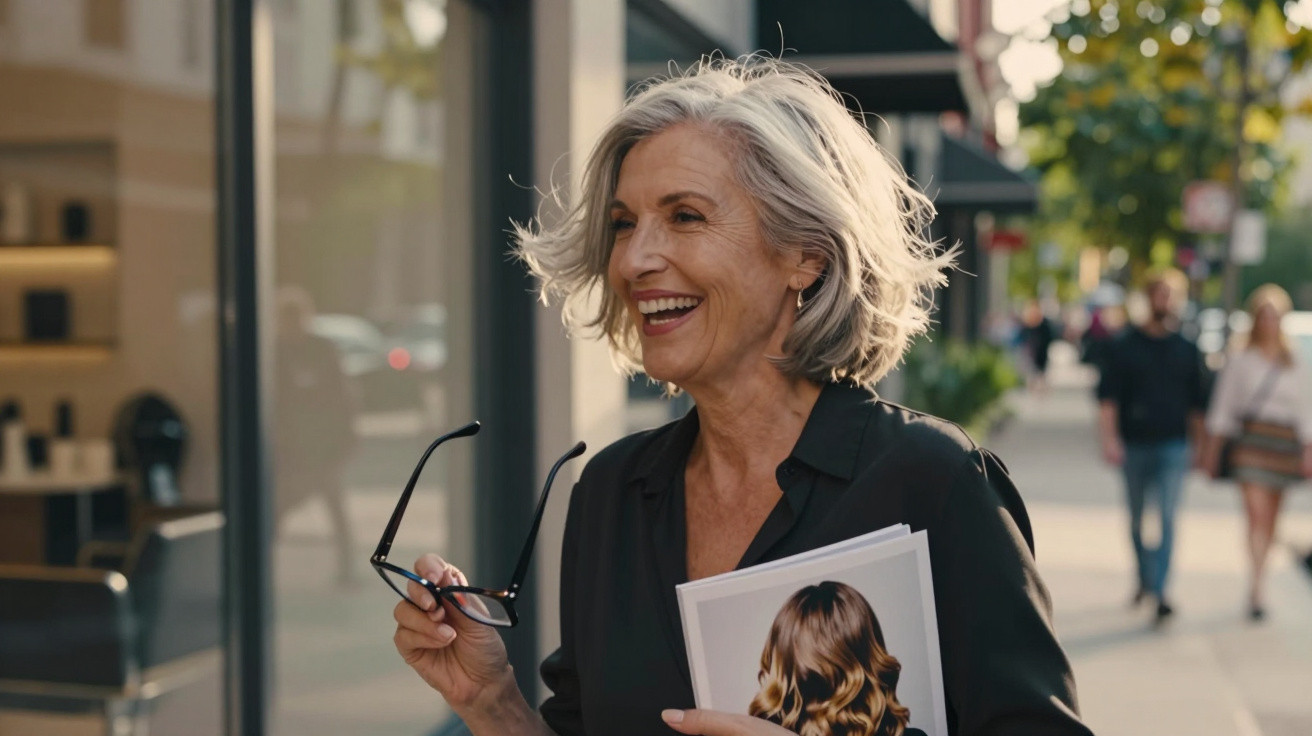
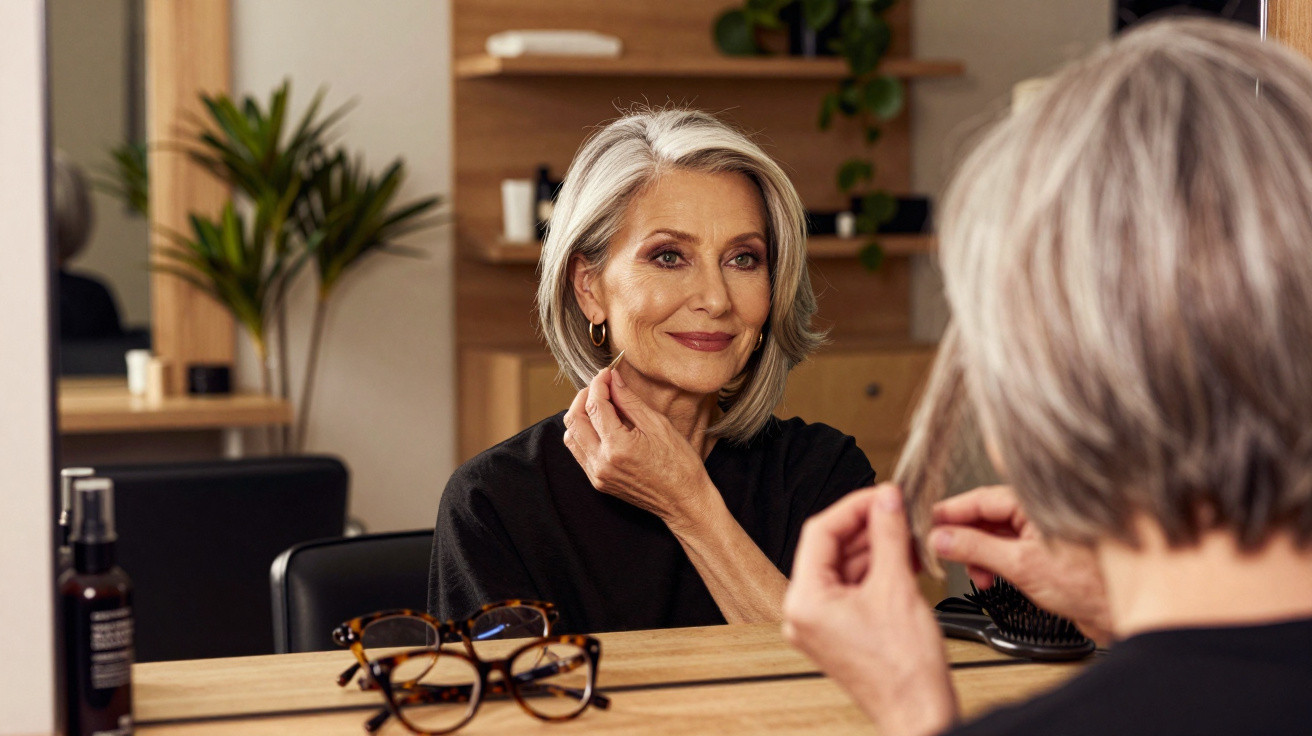
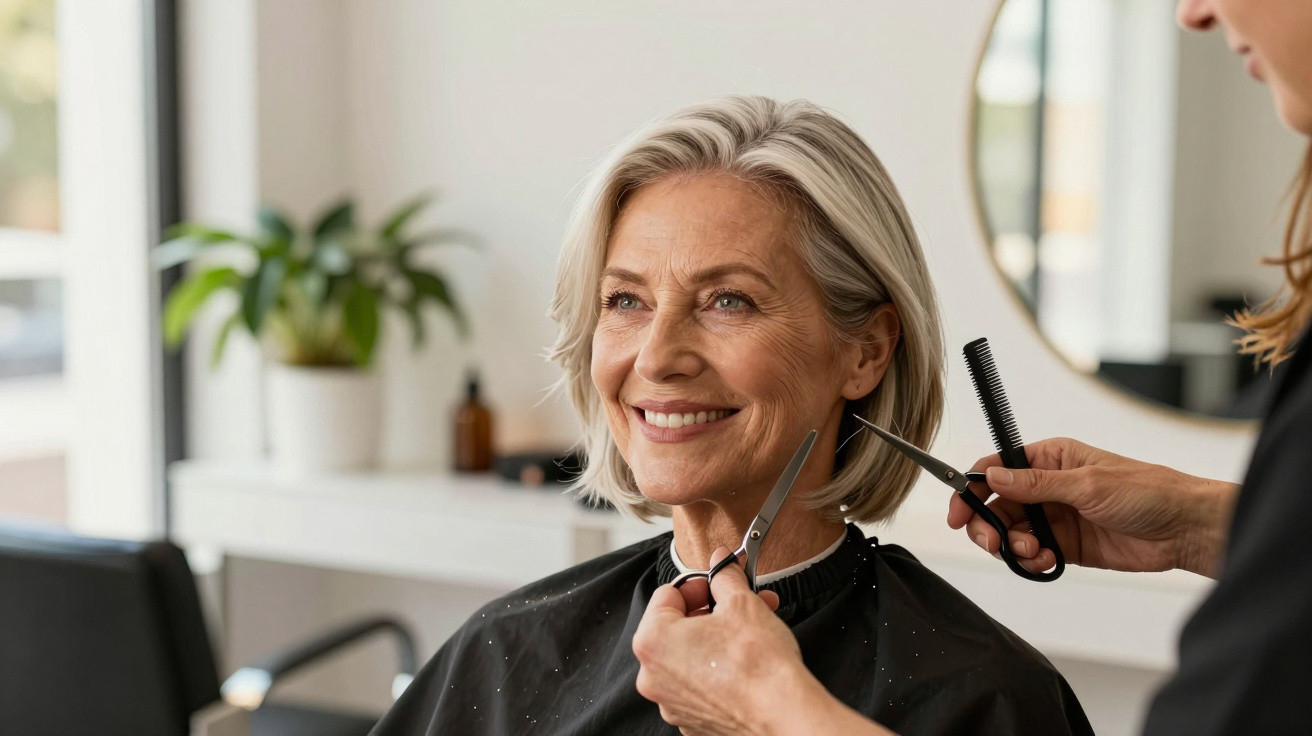
The woman facing the salon mirror is 67, with silver roots showing through her overgrown bob. She winds a limp, weary-looking section around her finger and lets out a sigh. “My hair used to be huge,” she tells the stylist. “Now it just… lies there.” The stylist smiles, raises the ends and replies evenly: “Let’s give you a cut that does the heavy lifting.” The scissors begin their work. Fine snippets drift to the floor like confetti. Ten minutes later, the same woman is sitting a touch taller. Her cheekbones are more defined, her eyes seem livelier and her hair suddenly looks… fuller. Not younger. Better.
The way women over 60 approach their haircuts has been quietly changing.
Why short hair is quietly transforming after 60
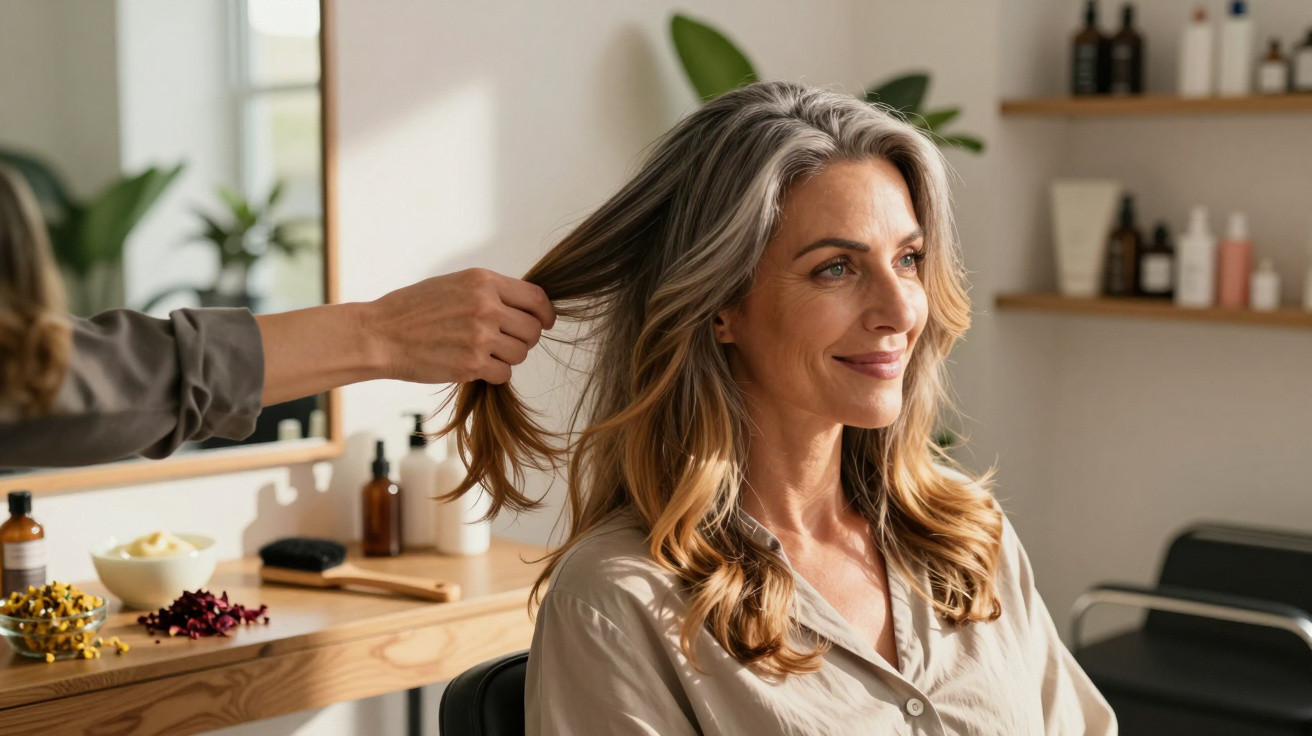
Spend a weekday morning in any lively salon and you will hear women over 60 repeat the same concern: “My hair has gotten so thin.” Hairdressers encounter it constantly. Hormones shift, hair density reduces, and the dependable shoulder-length style you have worn for two decades can abruptly stop flattering you. Long, fine ends may look transparent against the neck. The crown loses its lift. After 30 minutes of styling, the hair can be flat again by lunchtime. This is the point at which contemporary short haircuts begin to feel less daunting and more liberating.
A stylist in Paris told me about a 72-year-old client who held onto her longer hair “because my husband loves it.” Her hair was fine and flyaway, and she wore it in a low ponytail most of the time because “it never looks good down.” Eventually, her stylist proposed a gentle, layered pixie that followed the head shape and created lift at the crown. They removed 20 centimetres in one appointment. From the salon chair, she sent her daughter a selfie. Seconds later, the response arrived: “Mum, you look 10 years younger and like YOU again.” Her husband, incidentally, loved it as well.
There is a straightforward reason short styles suit thin hair so effectively. With fine, longer hair, every strand has further to fall, which means gravity takes over. The ends gather together and reveal more of the scalp. Reducing the length instantly makes the existing hair appear more concentrated. Strands rest nearer each other, so the overall effect reads as “fuller”, even though no additional hair has appeared. Strategic texture and layers then create support. Rather than battling with mousse and a weary round brush, you have a cut designed like an architectural framework to retain volume.
Short haircuts for women over 60 that create the look of fullness
Hairdressers experienced with fine, mature hair frequently begin by asking: “Where do you naturally get a bit of lift?” They then shape the haircut around that area. One dependable option is a contemporary pixie-bob, left slightly longer around the ears and nape, with concealed layers through the crown. This lets hair be softly directed forwards or swept to one side, giving the appearance of greater density around the face. The cropped shag is another strong choice, combining delicate broken layers, a little fringe and texture that feels effortless rather than overly “set.” Both styles take away the heavy lengths that pull hair down while preserving fullness where fine hair can still provide it.
For years, many women over 60 ask for “just a trim”. Gradually, the silhouette loses its shape, the ends become finer and the haircut turns into a compromise. We’ve all been there, that moment when you look at an old photo and realize your current hair has quietly deflated. A London colourist told me that scissors, rather than hair dye, produce the most dramatic changes in her salon. A client may arrive with a lifeless chin-length bob and say, “My hair is hopeless.” The stylist gives her a short, squared-off shape, modest graduation at the back and a light, airy fringe. She walks out touching her hair every few seconds, amazed that it still has movement.
Most stylists will offer one blunt truth if you ask them candidly: thin hair doesn’t benefit from being “kept” long just because it always has been. Giving up outdated length is usually less about age than it is about hair texture. Shorter forms make techniques possible that do not work on stretched, delicate hair: point cutting for softness, undercutting to remove weight from dragging sections, and micro-layers that add elevation without making the outline “frizzy”. The difference lies in millimetres. A fringe finishing at the eyebrow rather than halfway up the forehead. Pieces at the sideburns brushing the cheekbone rather than the jaw. Such small refinements pull attention upwards, away from crown thinning and towards the features you want to emphasise.
How to speak to your stylist - and what to avoid completely
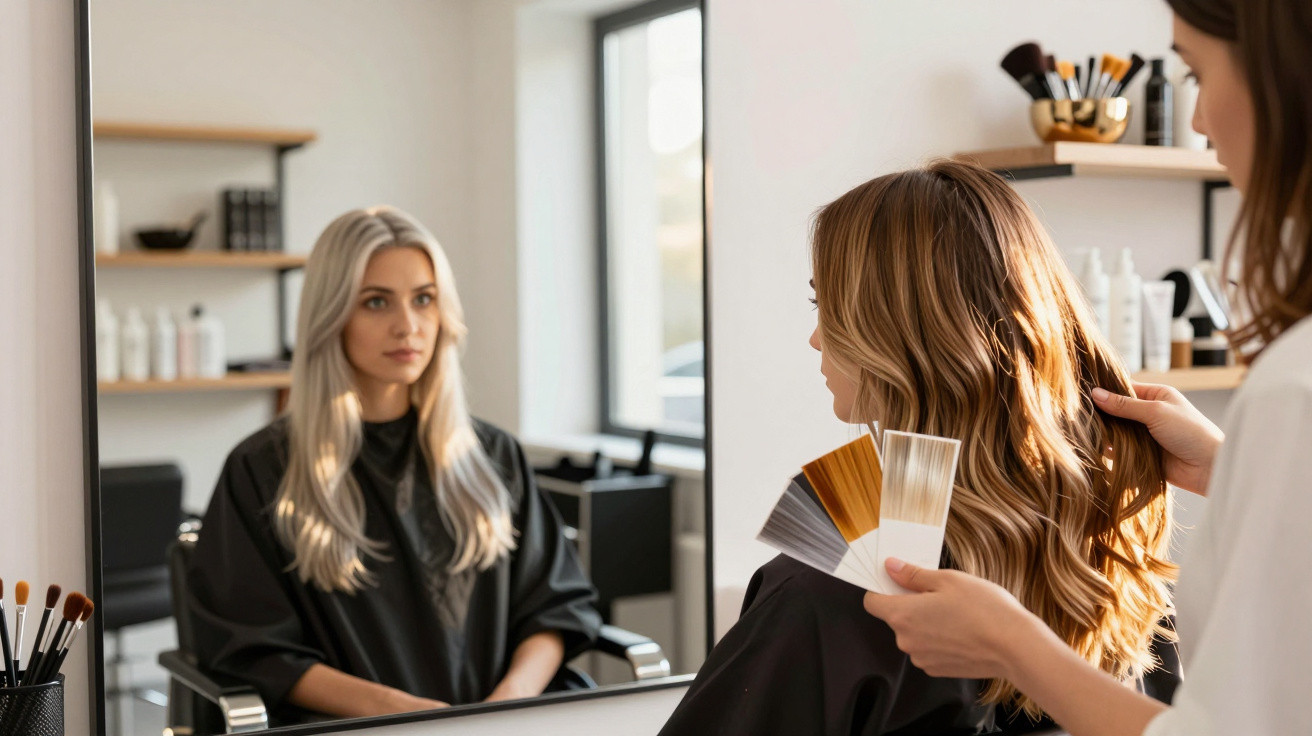
Women whose hair looks thicker as they leave the salon tend to share one habit: they explain their lifestyle, rather than only describing their desired appearance. A capable stylist will ask, “How often do you blow-dry? How does your hair sit on day two? Do you wear glasses?” For thin hair, aim for a shape that settles into some form when air-dried, rather than a style reliant on 30 minutes with a round brush. Take photographs, certainly, but choose them well. Find images of women near your age with a similar hairline. Indicate the volume, fringe or overall outline that appeals to you, rather than focusing on the celebrity in the picture.
Trying to create thickness with a blunt, weighty cut is the biggest error for fine, ageing hair. It may suit a 12-year-old with dense hair, but on a 65-year-old with fragile strands, a severe line can hang like a curtain and expose every less-dense patch. Another familiar mistake is saying, “I don’t want it too short,” and then leaving with a style barely changed from the one you arrived with. A considerate stylist may challenge that gently: “If we keep this length, you’ll keep this flatness. Are you ready to feel lighter?” Realistically, nobody follows an elaborate routine every single day. Your styling regimen must suit your actual life, not the idealised version you promise to begin on Monday.
“After 60, haircuts aren’t about rules,” says Milan stylist Laura Conti. “They’re about strategy. You work with what the hair still loves to do, and you stop fighting what it can’t do anymore.”
- Ask for soft, internal layers, rather than choppy, obvious ones. They provide lift without frizz.
- Avoid razor cutting on extremely fragile hair; scissors create neater edges and cause less breakage.
- Retain a little softness around the ears and nape to ensure the style grows out elegantly.
- Think about a light fringe or side-swept bangs to conceal thinning at the front.
- Apply a pea-sized quantity of volumising mousse; extra product only weighs fine hair down.
Letting your hair tell a different story after 60
When women over 60 try shorter styles, the most striking change is not merely the apparent volume. It is the adjustment in posture and the new ease in the way they move. They stop constantly touching their hair because it falls where it ought to. They spend less time at the bathroom mirror and more time heading out. The right modern short haircut does not announce, “I gave up.” Instead, it quietly communicates, “I’ve edited.” You retain what energises your face and remove what pulls it down.
Some women embrace striking, sculpted pixies that showcase their silver texture. Others favour gently layered bobs that skim the jaw and pair beautifully with bold earrings or glasses. There is no single ideal cut for “women over 60”. There is your hair as it is today, your lifestyle this year and your willingness to change right now. When you sit in the chair, the question that matters is not “How old am I?” but “What story do I want my hair to tell from here on?”
| Key point | Detail | Value for the reader |
|---|---|---|
| Choose structure over length | Short, layered styles concentrate thin hair to create a fuller appearance | Understand why long, wispy cuts flatten your profile |
| Discuss lifestyle, not only style | Describe your routine, tools and patience truthfully | Receive a cut that works on busy, low-effort days |
| Use millimetre changes wisely | Refine the fringe, side sections and crown height with subtle adjustments | Lift features and draw attention from thinning areas without drama |







Comments
No comments yet. Be the first to comment!
Leave a Comment