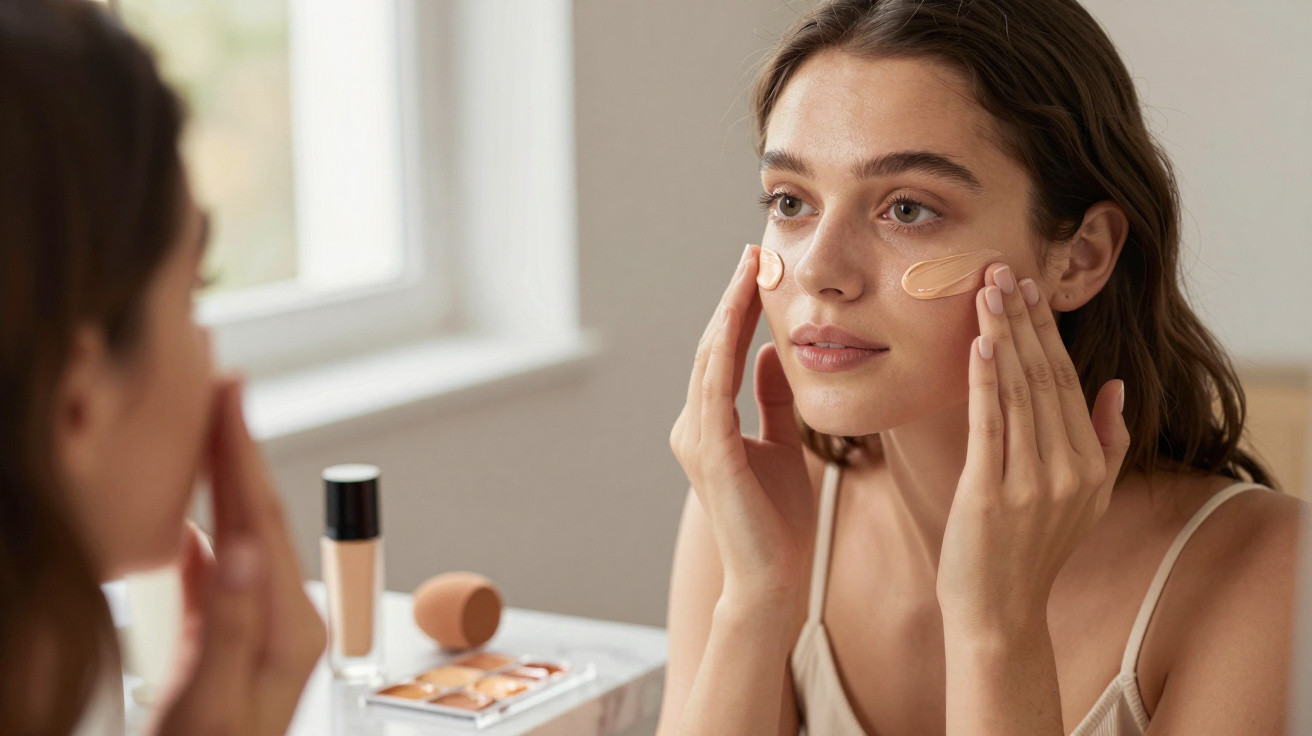
It’s 2 PM, and you glimpse yourself in a bathroom mirror. The foundation you meticulously put on this morning is now resting on your skin like icing on a stale cake. It has broken apart in places, leaving unmistakable lines around your nose and mouth. Your T-zone resembles an oil spill, yet other patches look dry and flaky. You wonder how makeup that appeared flawless at 7 AM became this textured disaster by lunchtime. The most frustrating part? You used costly foundation and followed every tutorial you could find. Still, you look as though you applied your makeup with a butter knife.
Clearly, there is a missing part of the formula.
The Real Cause of Your Cakey Foundation Problems
Your foundation is not the issue – what happens beneath it is undermining your whole makeup look. When makeup goes wrong, most people blame the foundation formula, but the explanation is far more straightforward. Without the right preparation, even the priciest foundation will let you down before midday. Your skin continually produces oil, sheds dead skin cells and responds to environmental conditions.
Last month, makeup artist Sarah Chen carried out an informal study involving 50 clients. She used the same foundation on one half with their normal routine, while the other half received a particular primer technique. The results were dramatic – 90% of the primer group kept smooth coverage for more than 12 hours. The control group? Their makeup had completely broken down by 3 PM, with caking, separation and the dreaded orange-peel texture we all know too well.
The science behind it is genuinely interesting. When foundation is applied to unprepared skin, it has nothing to adhere to beyond whatever natural oils and moisture are already present. During the day, your skin continues its normal processes – generating sebum, losing hydration, and expanding and contracting as temperatures shift. With no proper barrier in place, foundation literally moves around, collects in fine lines and oxidises unevenly. It’s like trying to paint a wall without primer.
The Double-Layer Primer Technique Nobody Talks About
Here is the approach that can change everything: the double-layer primer technique. Begin with a light layer of hydrating primer, then allow it to absorb completely – that means 3-4 minutes, not 30 seconds. Next, use a second, different primer designed for your particular concerns: pore-filling, mattifying or colour-correcting. This forms several barriers between your skin and foundation.
We have all done it – hurried through the morning routine and put foundation over primer that is barely dry. Honestly, nobody waits the full suggested time every day. Yet this stage can make or break the entire result. If primer has not fully set, it combines with foundation and creates that unwanted cakey texture. In effect, your foundation becomes diluted and unstable.
Professional makeup artists rely on this layering approach, although they seldom reveal the details.
“I’ve been using the double-primer technique for fifteen years, and it’s the difference between makeup that lasts 6 hours versus 14+ hours. The key is matching primer types to skin zones – mattifying where you’re oily, hydrating where you’re dry.”
These are the essential primer pairings that genuinely work:
- Hydrating base + pore-filling top for normal to dry skin
- Mattifying base + colour-correcting top for oily, uneven skin
- Smoothing base + grip-enhancing top for textured or mature skin
- Barrier base + illuminating top for dull or tired-looking skin
Why This Transforms Your Entire Makeup Routine
When you master this method, your foundation will perform very differently. It goes on more evenly, blends with a more natural finish and can genuinely look better as the day goes on rather than deteriorating. You will need fewer touch-ups, feel more self-assured and enjoy how your makeup appears in afternoon light. Best of all, you can wear foundations you once considered “too cakey” for your skin.
Your makeup routine shifts from controlling damage to creating real enhancement. Consider all the times you have avoided close-up photographs or felt self-conscious when your foundation started breaking down during significant occasions.
This small technical adjustment removes those worries entirely, giving you the confidence of knowing your makeup can look as good at dinner as it did at breakfast.
| Key point | Detail | Value for the reader |
|---|---|---|
| Double-layer primer method | Use two different primers, allowing full absorption time between them | Foundation remains fresh 14+ hours without caking |
| Skin preparation timing | Wait 3-4 minutes between primer layers and before applying foundation | Stops the mixing and dilution that creates cakey texture |
| Zone-specific primer matching | Apply different primer types to different facial areas | Tackles several skin concerns at once for a flawless finish |









Comments
No comments yet. Be the first to comment!
Leave a Comment