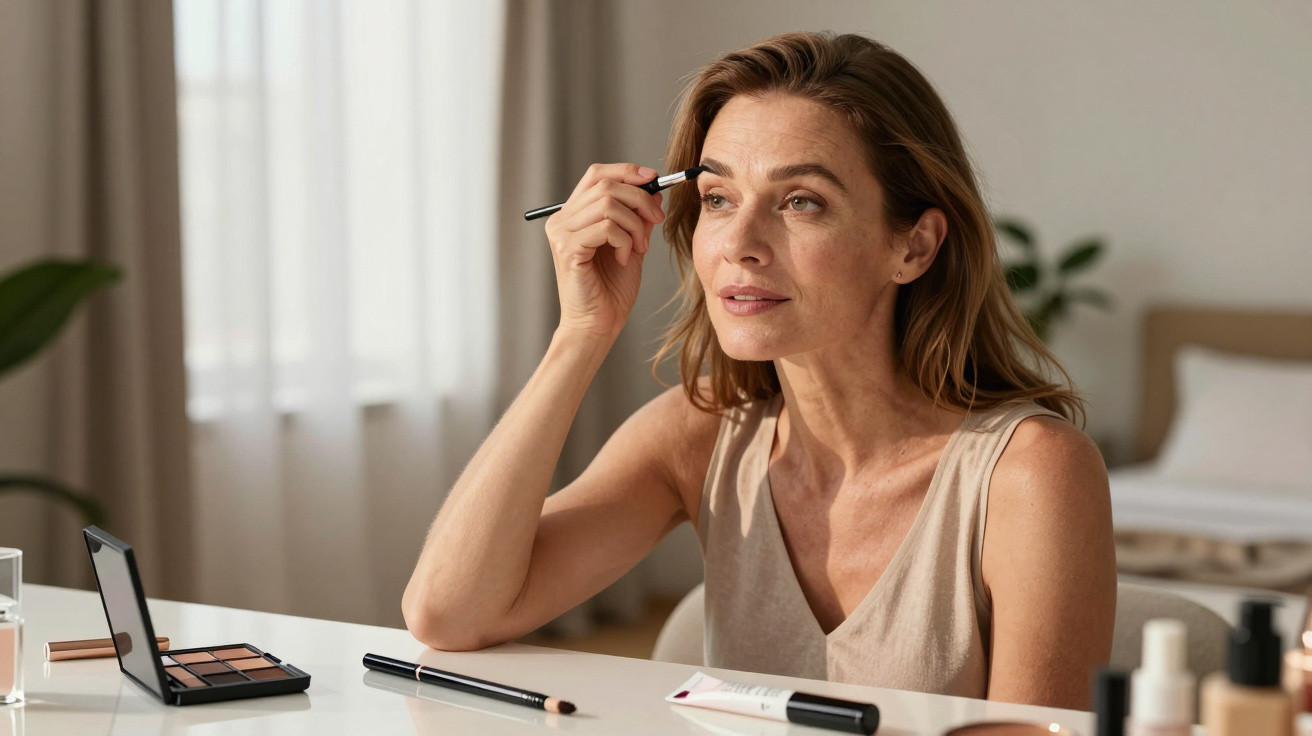
As eyelids become heavier over the years, the whole eye area can look tired – but a few well-chosen techniques can make a significant visual difference.
From around the age of 50, many women notice that the upper lid increasingly covers the mobile part of the eyelid. Eyeshadow disappears, eyeliner smudges and the eyes can appear smaller. Rather than opting for drastic procedures, skilful make-up techniques can give the eyes a surprisingly lifted appearance – provided they are tailored to this particular eye shape.
Why upper eyelids start to droop after 50
As we age, the skin around the eyes loses elasticity and collagen. Since eyelid skin is exceptionally thin, it is among the first areas to give way. This can mean that:
- the firmer skin above the mobile lid drops lower;
- the crease of the eyelid is barely visible;
- eyeshadow settles into fine lines;
- eyeliner and mascara transfer more quickly.
“Anyone who does not adapt their make-up routine to their changing eye shape often unintentionally emphasises the tired expression even more.”
The good news is that a few changes to technique, product choice and application order can noticeably open up the eyes – without surgery, using make-up alone.
Trick 1: Prepare the upper lid – powder instead of a slipping surface
Before applying any colour, the upper lid needs a smooth base with enough grip. Eye cream on its own is rarely sufficient, as it can make products slide around more easily.
Step-by-step application:
- Apply a thin layer of lightweight, fast-absorbing eye care and allow it to sink in fully.
- Add a very fine layer of eyeshadow primer or liquid concealer across the upper lid.
- Immediately dust translucent powder over the whole lid with a small, soft brush, until the skin feels silky rather than tacky.
This straightforward step visually softens the appearance of fine lines and stops eyeliner and colour from settling into creases. For heavily hooded eyelids in particular, it does much of the work.
Trick 2: The “smart” eyeliner technique that visually lifts the eye
A classic eyeliner flick that sweeps upwards at the outer corner often does not work at all on strongly hooded lids. If you pull the skin taut to draw it, the finished line can look broken and jagged once the face relaxes.
How to apply eyeliner correctly on hooded eyelids
Instead of stretching the skin, keep the eye in its natural shape. It may feel unfamiliar at first, but it is considerably more effective:
- Place the pencil or brush directly along the lash line and use short, fine strokes to work from the inner corner outwards.
- Avoid making the line too thick through the inner third of the eye, as this makes the eye look smaller.
- At the outer edge, begin by marking a small dot just below the fold of skin.
- Starting from this dot, gently join the line to the eyeliner along the lashes.
“The crucial trick: the tip of the eyeliner does not sit in the middle of the crease, but just below it – so it remains visible and acts like a small optical lift.”
If you are less steady-handed, sketch the line first with a soft kohl pencil instead of liquid eyeliner, then lightly blur the edge with a fine brush. This is more forgiving of mistakes and gives a more natural-looking result.
Trick 3: Use eyebrows as an “invisible lift”
Hooded eyelids naturally draw attention downwards. Well-shaped brows can counteract this and make the face appear noticeably more youthful. Many women underestimate how strongly the brow line influences their overall expression.
How to shape brows that lift the eyelid
The make-up artist whose advice this article is based on stresses that much of the work is actually done on the brows rather than on the eyelid itself.
A useful method:
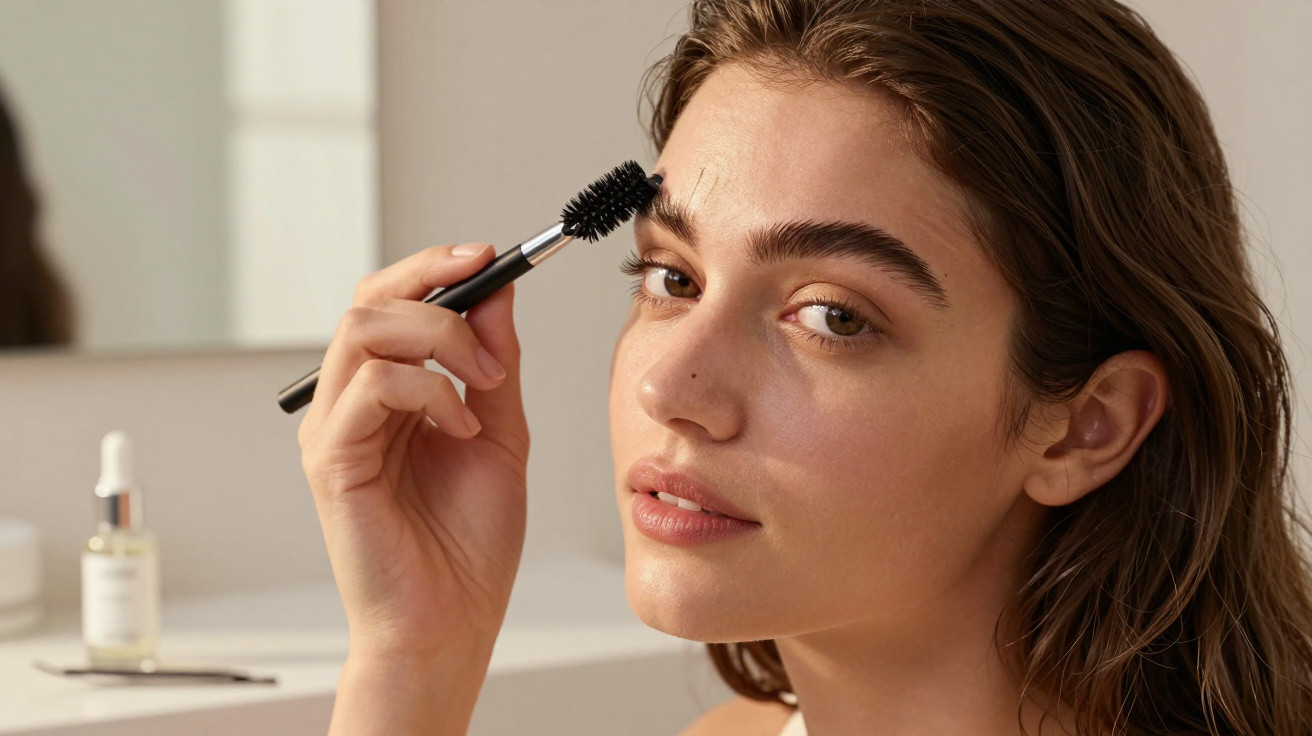
- First brush the brows downwards to reveal the upper outline clearly.
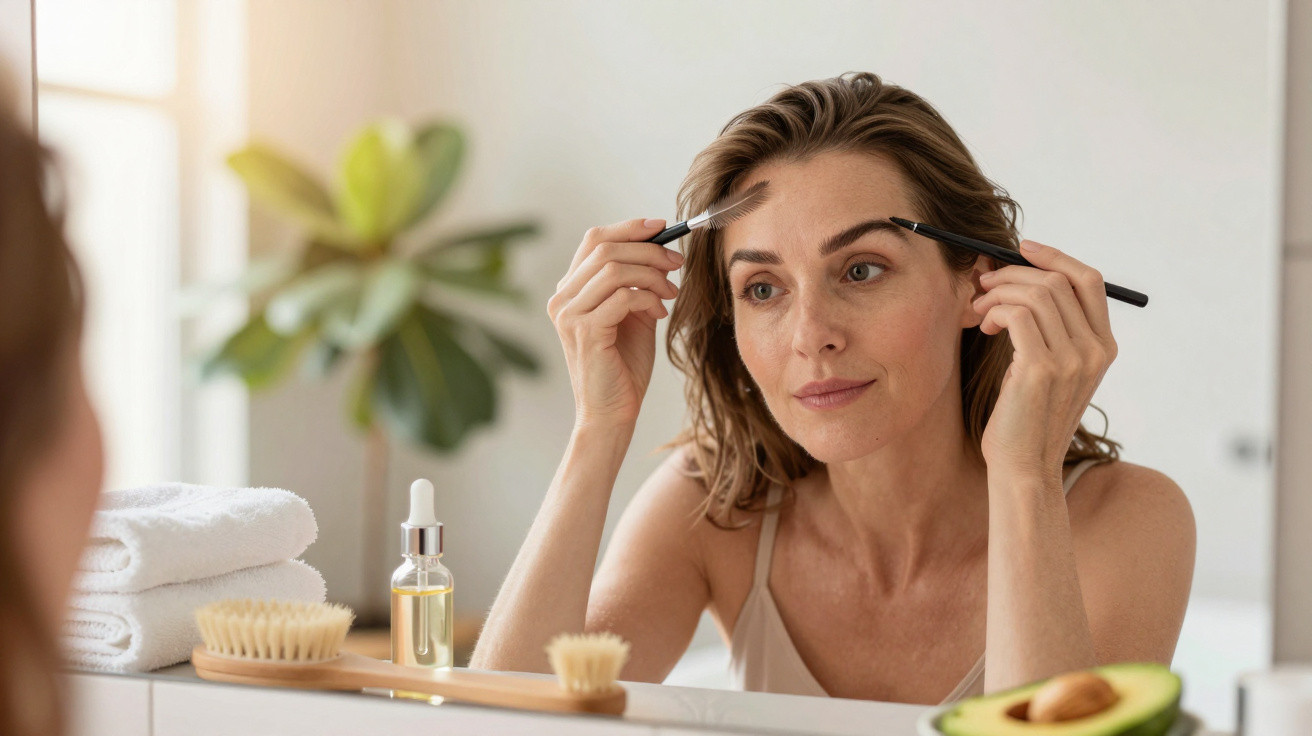
- Use a fine eyebrow pencil to fill gaps along the top line and lift the arch slightly – without making it look artificially overdrawn.
- Then brush the hairs upwards again to reveal the lower edge of the brow.
- Lightly fill in only the areas where hairs are genuinely missing, instead of colouring in the entire brow.
“The more ‘space’ there is between the mobile lid and the brow, the more open and refreshed the eyes appear – even with minimal eye make-up.”
A clear brow gel holds the hairs in an upward position. This creates a visual lift and makes the face look firmer, without using a single brush of eyeshadow.
Trick 4: Position eyeshadow carefully – away from the crease
If you are used to placing dark eyeshadow directly into the eyelid crease, this highlights exactly the issue with hooded skin. The crease sits too low, while the shadow intensifies the upper lid’s “curtain effect”.
Paint the “new eyelid crease” higher up
One professional technique is to visually move the perceived eyelid crease slightly higher.
- A medium matte brown or taupe shade works best.
- With a fluffy brush, apply the colour just above the natural crease – while the eye is open.
- Blend the edge softly upwards so that it creates a gentle shadow rather than a harsh line.
- Keep the mobile lid itself lighter and subtly shimmery to bring it forward.
This “shadow trick” shifts the visual focus of the eye upwards. The lid appears less heavy and the eyes gain depth, without needing much product.
Common mistakes that unnecessarily age the eye area
Some habits from younger years no longer suit a changing eye shape after 50. Avoiding them can instantly make the face look fresher.
- Eyeshadow that is too dark across the whole lid: makes the eye appear smaller.
- Thick black kohl along the lower waterline: reduces the apparent size of the eye and highlights shadows.
- Glitter particles in areas with fine lines: settle into them and make wrinkles more noticeable.
- Heavy, rich cream applied immediately before make-up: causes everything to slip.
- A very rounded brow shape that slopes downwards: reinforces a tired expression.
How much can make-up really “lift” the eyes?
Of course, no eyeliner can replace a medical eyelid correction. Even so, before-and-after images from make-up artists repeatedly show how much the impression can change when shape, colour and light are placed correctly.
The visual effects at a glance:
| Technique | Effect |
|---|---|
| Powder base on the upper lid | Make-up lasts longer and fine lines are less noticeable |
| Letting eyeliner finish below the crease | The eye appears longer and slightly lifted |
| Raised brow line | More “space” above the eye and a more youthful-looking gaze |
| Darkening the area above the natural crease | Overhanging skin visually recedes |
How often should you practise the new techniques?
Anyone who has applied make-up in the same way for decades will need a little patience. It is sensible to try the new steps calmly on a day off – without time pressure or the expectation that “it has to be perfect”.
It can be useful to check the eye in the mirror after every step with a normal facial expression, rather than only with raised brows or while looking upwards. This lets you see straight away how the effect will look in everyday life.
When medical advice is appropriate
In some cases, the upper lid droops for more than cosmetic reasons and can genuinely restrict the field of vision. Anyone who notices that their eyelashes are interfering with their sight or that their upper field of vision has become significantly smaller should consult an ophthalmologist or dermatologist.
They can determine whether surgical tightening is medically indicated, or whether non-invasive options such as specialist anti-ageing cosmetics, laser treatment or radiofrequency may be suitable first. Even then, good make-up techniques remain a valuable tool for supporting the result.
Anyone who incorporates the four make-up tricks described – preparing the lid, strategically placed eyeliner, shaping the brows and rethinking the eyelid crease – into their daily routine can achieve a noticeably fresher, more alert-looking gaze with manageable effort, even if the upper eyelids have felt increasingly heavy for years.








Comments
No comments yet. Be the first to comment!
Leave a Comment