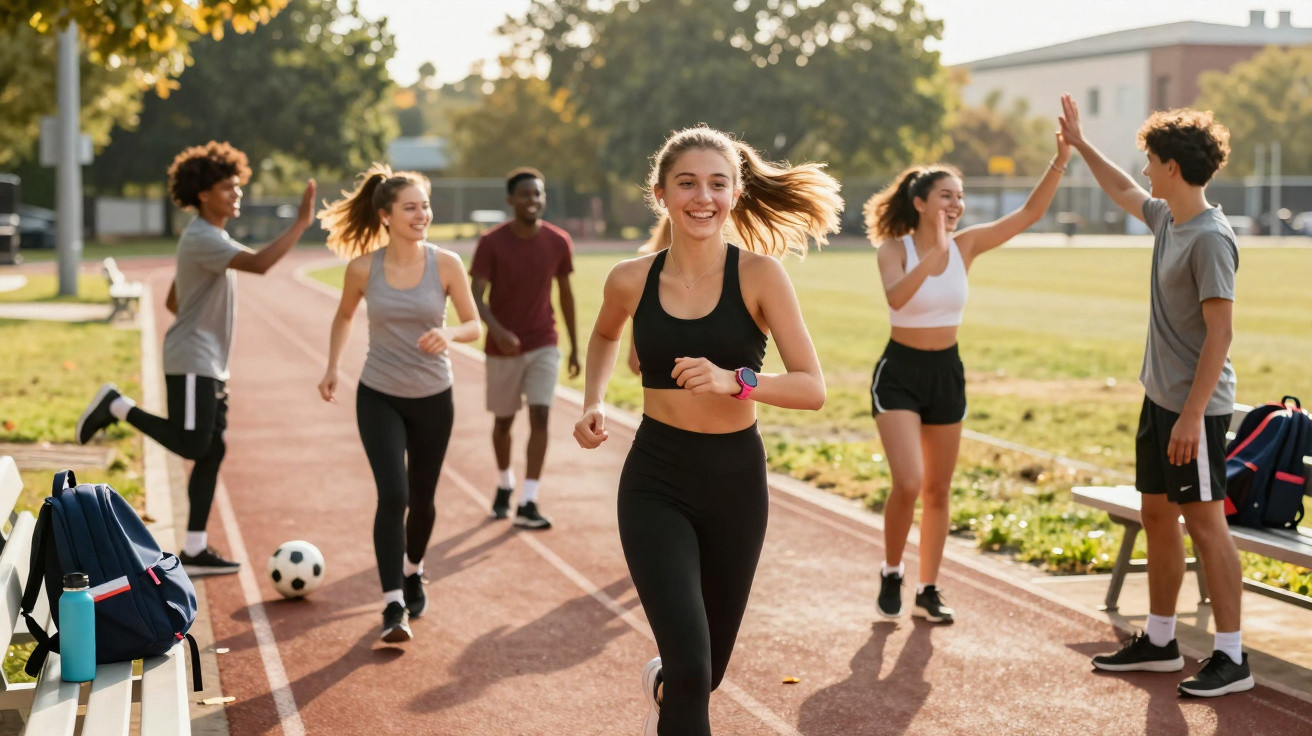
Teenage experiences can leave lasting marks on adult life. Sleep routines evolve, eating habits change, and self-confidence can either grow or diminish. Patterns around exercise also take root, frequently without young people realising it at the time.
Some teenagers remain active almost effortlessly. They take part in after-school sport, ride bikes with friends, dance, swim, or simply like being on the move.
Others gradually drift away from physical activity as adolescence becomes more demanding, competitive and socially complex.
A recent Australian study indicates that the key issue may not be the number of hours teenagers exercise each week. Instead, it may hinge on something much more individual: what exercise represents to them.
Why exercise motivation matters
The researchers found that teenagers who regard physical activity as enjoyable, sociable and beneficial for their wellbeing are more likely to be fitter at 17 than those motivated chiefly by pressure, rewards or competition.
The findings also suggested that these views begin influencing health at an unexpectedly young age.
Led by Flinders University and the University of Notre Dame Australia, the research tracked more than 1,000 adolescents for three years using data from the long-running Raine Study.
Early emotions shape fitness
Participants completed questions about physical activity when they were 14 and again at 17.
The researchers aimed to establish what teenagers expected to get from exercise and whether they thought those benefits were achievable.
After three years, aerobic fitness was assessed in a laboratory cycling test known as the PWC170.
The resulting pattern was hard to overlook.
Positive views improve fitness
Teenagers who connected exercise with pleasure, friendship and health were fitter by later adolescence.
“When adolescents see physical activity as enjoyable, social and good for their health, they are more likely to develop lasting fitness into later adolescence,” said Professor Mandy S. Plumb, who is based at Flinders’ Rural and Remote Health NT.
Most notable was the apparently early influence of these attitudes.
By the age of 14, many adolescents had already formed emotional links with exercise that continued to affect them years afterwards.
Enjoyment keeps teens active
For teenagers of both sexes, one motivation was repeatedly placed above nearly all others: fun.
Researchers say this is important because enjoyment encourages people to return. Teenagers are unlikely to persist with activities that seem tiring, humiliating or emotionally draining.
Yet adolescence often turns exercise into precisely that kind of experience.
Fun turns into pressure
A child casually kicking a football with friends may later find themselves in an environment of rankings, selection pressures, demanding training schedules and fear of failure.
An activity that once seemed playful can gradually start to feel like a job.
The researchers observed this change as well. While enjoyment remained important to teenagers at 17, many no longer expected physical activity itself to be enjoyable.
That disconnect may help explain why participation commonly falls in later adolescence.
Social bonds encourage movement
During the teenage years, exercise is seldom separate from everything else. It is closely bound up with friendship, belonging and social identity.
The study showed that time with friends and a feeling of social connection continued to be powerful motivations throughout adolescence.
This is understandable in everyday teenage life. One teenager may keep attending dance lessons because their close friends are there.
Another might give up sport after feeling left out in a team setting.
For adolescents, physical movement is often a social activity before it is one focused on health.
The researchers cited earlier research indicating that teenagers are more likely to remain active when exercise provides a sense of connection and acceptance.
Health goals are important
Boys and girls alike consistently placed “keeping fit and healthy” among the most important advantages of physical activity.
However, the findings indicate that internal motivations carry more weight than external rewards.
Teenagers who exercised because it helped them feel healthier generally had better long-term fitness outcomes than those driven mainly by trophies or pressure from other people.
The researchers connected this finding with self determination theory, which suggests people are more likely to sustain behaviours when their motivation comes from personal values rather than external control.
Put simply, teenagers continue with activities they truly want to do.
Appearance becomes more important
For both boys and girls, appearance grew more important as adolescence continued.
According to the researchers, this reflects typical psychological development. Older teenagers are more conscious of social comparison, body image and the way peers see them.
“As teenagers get older, they become more aware of their bodies and how they are perceived by others, which is why appearance becomes more influential in later adolescence,” said Professor Plumb.
Although social media was not a focus of the study, it may heighten this experience. Today’s teenagers grow up amid constant visual comparison.
Exercise can readily change from an enjoyable activity into something associated with insecurity or self-criticism.
Girls experience exercise differently
Among the most distinct findings were the differences between boys and girls.
For boys, higher fitness was often associated with competition and winning. Competitive settings appeared to motivate many boys in a positive way.
Girls displayed a very different pattern. Girls with higher fitness were more likely to value enjoyment, supportive settings, health and weight management.
The study also observed that many girls gradually leave highly competitive organised sports during adolescence. Some instead move towards activities including yoga, dance or walking.
“One-size-fits-all approaches don’t work, particularly for girls during adolescence,” said Professor Plumb.
Fear changes behaviour
One result was particularly concerning. Girls who were afraid of being judged or ridiculed while exercising were significantly less fit at 17.
“Fear of judgement can directly reduce participation in physical activity, leading to poorer long-term fitness outcomes,” noted Professor Plumb.
This fear may emerge in understated forms: sarcastic remarks in sports lessons, anxiety about appearance, or the feeling of being watched while exercising.
With time, such experiences can lead teenagers to abandon physical activity completely.
The researchers associated lower participation with embarrassment, bullying, body image worries and insufficient emotional support in exercise environments.
Competitive pressure reduces participation
Competitive settings may inadvertently worsen the issue.
Earlier studies cited in the paper found that many adolescents stop taking part in sport because of pressure to win, severe coaching approaches and diminished enjoyment.
Adults often presume that competition naturally motivates teenagers. In practice, excessive pressure can have the reverse outcome.
For many adolescents, particularly girls, feeling accepted may be much more important than performance.
Rethinking youth exercise
The results have relevance beyond school sport programmes.
Cardiorespiratory fitness in adolescence is strongly associated with cardiovascular health later in life. This means teenagers’ experiences of exercise can shape adult wellbeing for decades.
“What teenagers believe about physical activity at 14 continues to shape their fitness several years later,” said Professor Plumb.
Supportive spaces help teenagers
The researchers argue that schools, parents, coaches and community organisations should foster settings in which teenagers feel at ease, included and emotionally safe.
“Programs that prioritize fun, friendship and feeling healthy may be more effective than those focused on competition or performance alone,” said Professor Plumb.
“Reducing pressure, bullying and overly competitive environments could help more young people stay active throughout adolescence.”
Ultimately, the study highlights something remarkably straightforward: teenagers remain active when movement feels emotionally positive, rather than only physically beneficial.














Comments
No comments yet. Be the first to comment!
Leave a Comment