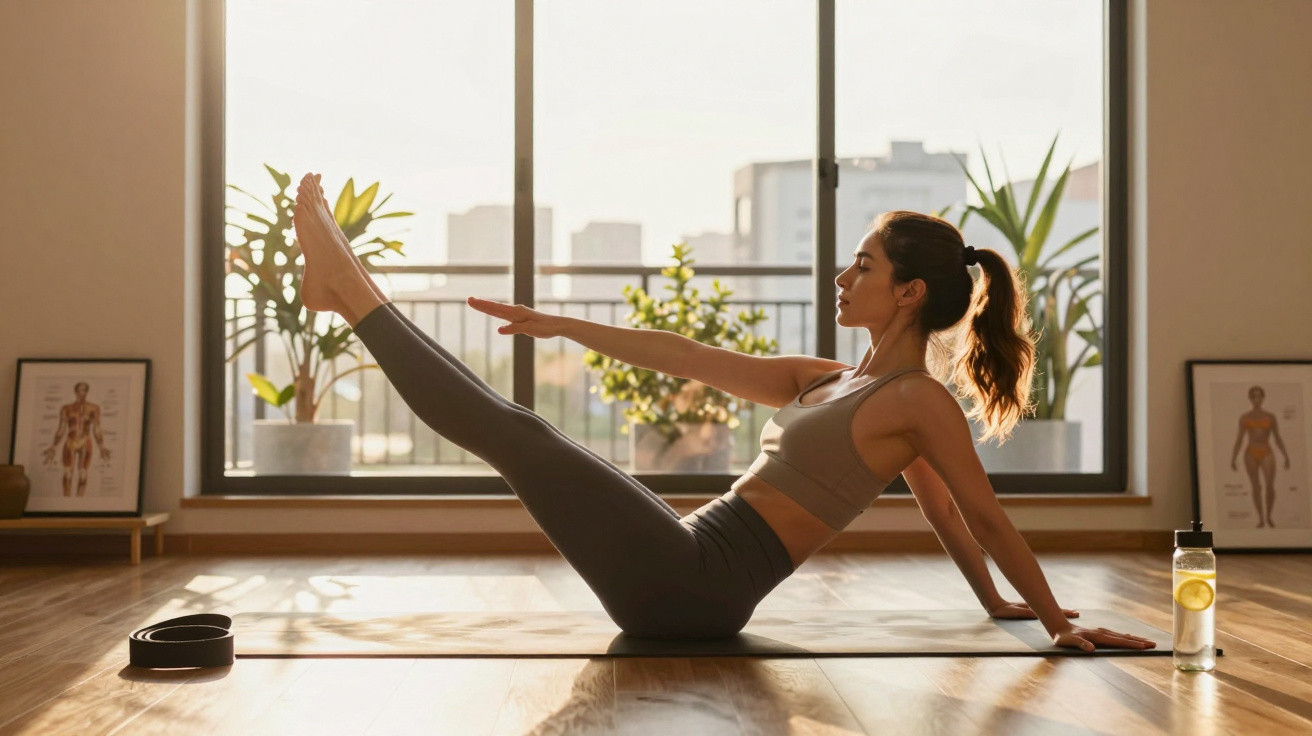
Many people only notice it when getting up from the sofa becomes difficult or their knees complain on every flight of stairs: ageing does not begin on the calendar, but in the joints and muscles. One particularly simple Pilates move is receiving growing attention from coaches and doctors because it can slow several age-related processes in the body at once – and fits easily into everyday life.
Why targeted movement affects biological age
Without exercise, people over 50 lose measurable muscle mass and strength every year. At the same time, bone density declines, joints become stiffer and balance worsens. Together, these changes raise the risk of falls, pain and needing help with daily tasks.
“Regular, functional movement can set our biological age back by years – not on paper, but in everyday life.”
Doctors increasingly refer to “functional age”: How easily can you rise from a chair? Can you carry shopping bags? Can you climb stairs without stopping? These seemingly ordinary tests often reveal more about actual fitness than any number on an identity card.
This is exactly where the Pilates approach comes in. Rather than focusing solely on visible muscles or peak performance, it prioritises the quality of everyday movements. A classic example is the bodyweight squat, known in fitness terminology as the “Bodyweight Squat”.
Bodyweight Squat: the everyday movement we constantly need
In essence, we squat throughout the day: sitting down, standing up, getting out of a car and using the toilet all rely on the same movement pattern. If that ability is lost, a vicious circle can develop quickly: you move less, decline further and become increasingly dependent on assistance.
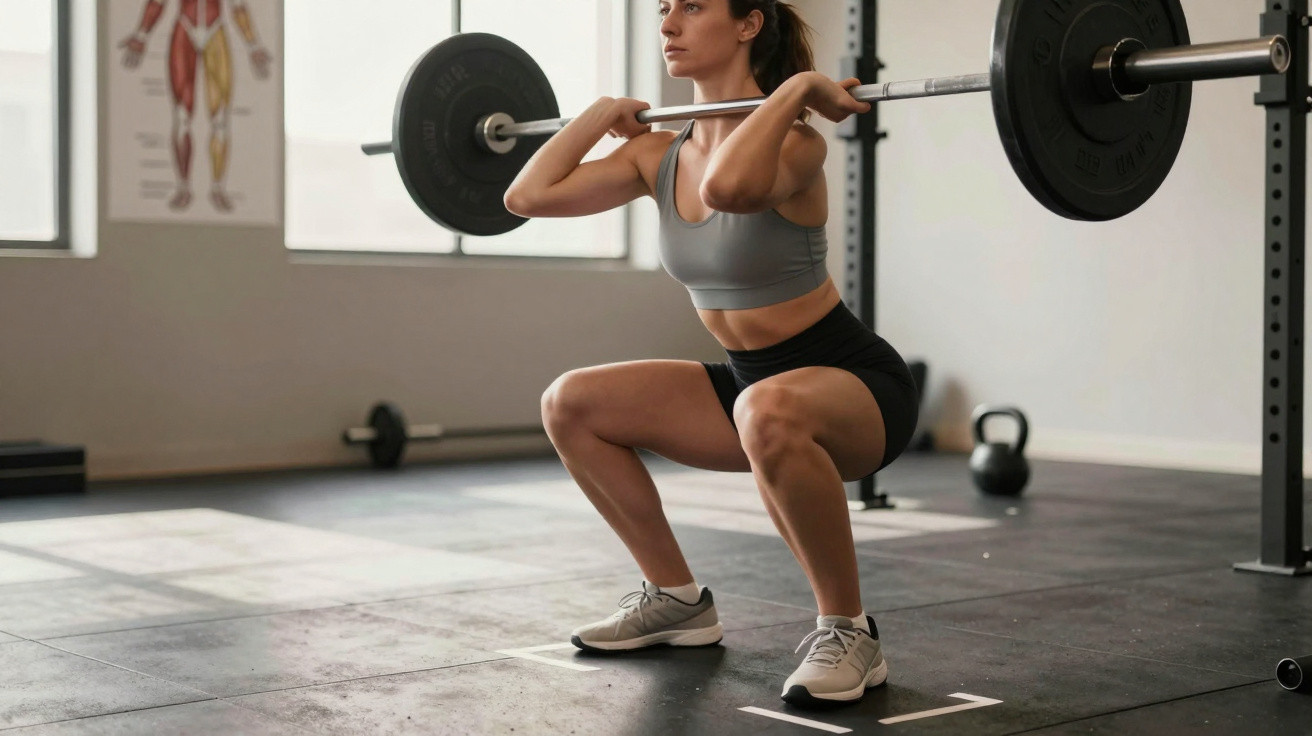
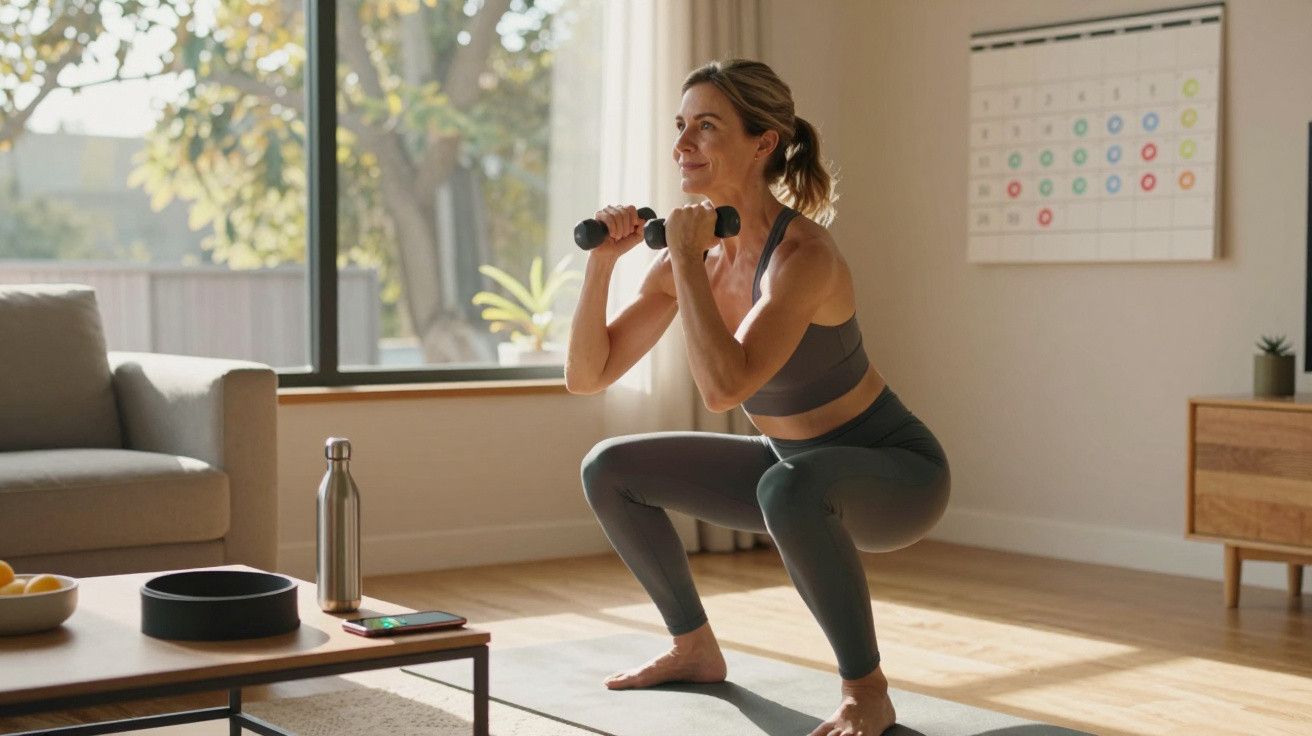
The Bodyweight Squat used in Pilates training practises this essential movement in a controlled, safe way. It works the thighs, buttocks, core and deep postural muscles, while also stabilising the hips, knees and ankles.
“Anyone who can still squat down and stand back up easily at 70 has a much greater chance of remaining independent for longer.”
Sports coaches now use this exercise specifically with people in their 50s and 60s to preserve independence, strength and mobility for as long as possible – and therefore delay the need for care.
How to perform the Pilates Squat step by step
Correct technique is crucial. Particularly later in life, precision matters more than speed. The following guide is aimed specifically at beginners aged around 50 and over.
Set up your starting position
- Stand tall with your feet roughly hip-width apart.
- Distribute your weight evenly across both feet, keeping your heels firmly on the floor.
- Keep your pelvis and spine as neutral as possible: avoid both an exaggerated lower-back arch and a rounded back.
- Let your arms rest loosely by your sides to begin with.
- Look ahead rather than down at the floor.
Lowering phase
Begin the movement by breathing in through your nose:
- Gently engage your abdominal area, as though lightly drawing your navel inwards.
- Send your buttocks backwards, as if you were about to sit on an invisible chair.
- Bend your knees and ankles, keeping the knees as much as possible above the feet rather than allowing them to collapse markedly inwards.
- If you feel unsteady, extend your arms forwards to help maintain your balance.
- Only lower as far as your joints allow without pain. A small range of movement is entirely sufficient at first.
Returning to standing
Breathe out slowly as you rise:
- Press both feet actively into the floor.
- Straighten your knees and hips together.
- Keep your torso upright without leaning backwards.
- If your arms were extended, allow them to return loosely to your sides.
“Three sets of 12 to 15 repetitions, on three to five days each week, are ideal. Rest periods of 45 to 60 seconds between sets are enough.”
How to check that your Squat technique is correct
Anyone who has done little exercise so far, or who has a history of knee or back problems, should pay attention to several key points. A quick self-check in front of a mirror can be helpful.
| Problem | How to spot it | Simple correction |
|---|---|---|
| Heels lift off | Your heels leave the floor as you lower down. | Reduce the depth of the movement and place your feet slightly farther apart. |
| Knees collapse inwards | Your knees drift towards the centre or inner edge of your feet. | Think consciously about the outer edges of your feet and guide your knees slightly outwards. |
| Rounded back | Your upper body folds forwards and your shoulders drop forwards. | Lift your breastbone, look ahead and gently engage your abdominal muscles. |
| Knee or back pain | You experience sharp or intense pulling pain during the movement. | Reduce the range of movement, ensure you are on a stable surface and seek medical advice if symptoms persist. |
Why Pilates helps protect the body as it ages
The Pilates method places strong emphasis on controlled breathing, body awareness and activating the deep core muscles. This combination is precisely what makes it so valuable for older adults.
- Kind to the joints: Movements are smooth and controlled, without sudden loading.
- Strengthens the core: A stable torso reduces strain on the back and knees with every step.
- Improves posture: Many exercises lengthen the spine and lessen improper loading.
- Builds better balance: Small holding tasks within the exercises also train balance.
Combining Pilates Squats with other foundational exercises, such as the bridge, an easier version of the side plank or simple heel walking, creates a complete mini-workout. It requires very little equipment and can be done easily at home.
How to fit the Squat comfortably into your daily routine
For many people, the challenge is not lack of motivation but everyday life: appointments, family and tiredness. Even so, the Bodyweight Squat can be incorporated almost anywhere.
- Do 10 squats in front of the bathroom sink after each time you brush your teeth.
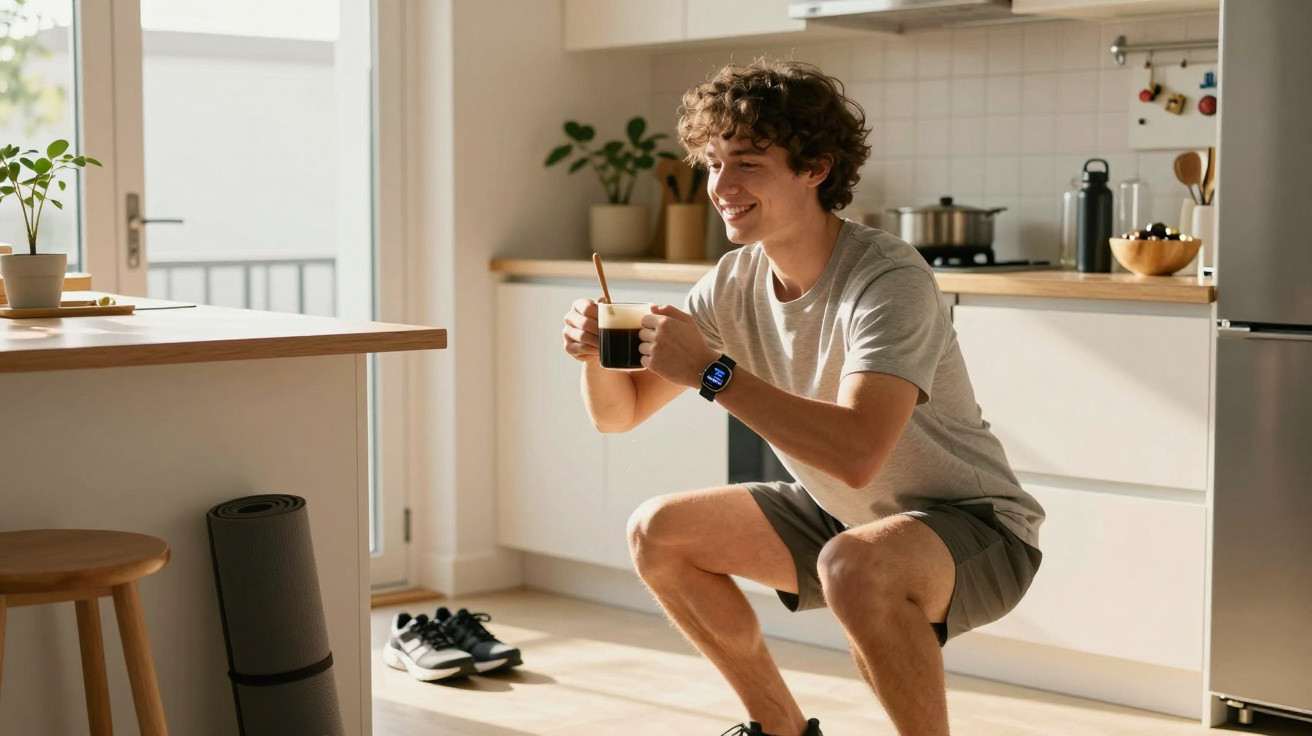
- Complete one set in the kitchen while the coffee brews.
- Use every television advert break for 15 to 20 repetitions.
- On difficult days, do just 5 repetitions – the important thing is to maintain the habit.
“Consistency matters more than perfection. A few well-executed repetitions every day are better than an intense workout once a week.”
Who should take care – and when to involve a doctor
People with recent knee or hip injuries, severe osteoarthritis symptoms or those recovering from surgery should seek medical advice before starting. Squats can often be adapted, for example by using:
- support from the back of a chair or a handrail,
- a shallower depth, so that the knees bend less,
- a slower pace, focusing on stability rather than the number of repetitions.
Anyone who repeatedly experiences severe pain during the exercise, burning or stabbing sensations in the joints, or dizziness should stop and have the cause assessed. Muscle soreness is normal; sharp pain is not.
How to enhance the effect with other activities
The daily Pilates Squat acts as a kind of foundation. Its effects on age-related processes can be strengthened further by combining it with gentle endurance sessions, such as:
- brisk walking,
- cycling at a moderate pace,
- swimming or aqua fitness,
- taking the stairs instead of the lift.
Adding short sessions of further strengthening exercises twice a week also sends the body a clear message: “I need these muscles.” The body responds by slowing breakdown processes and increasing repair mechanisms.
Ultimately, one simple truth remains: we cannot stop ageing, but we can influence how it feels. A precisely performed Pilates Squat takes only a few minutes, yet at best it can preserve independence and quality of life for many additional years – and that is exactly why this small daily move is worthwhile.

Comments
No comments yet. Be the first to comment!
Leave a Comment