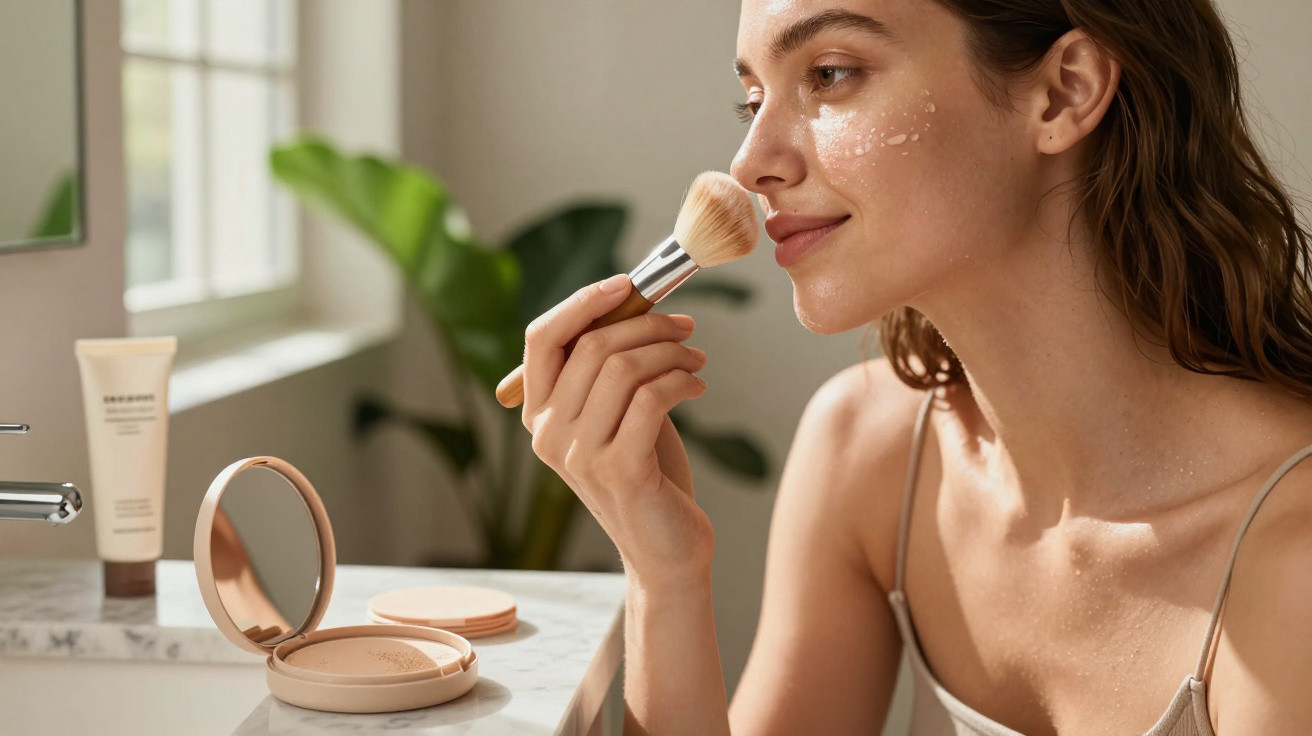
More and more people are turning their backs on heavy foundations, clogged pores and lengthy make-up routines. Instead, they are choosing products that combine skincare with cosmetics. That is precisely where a new pharmacy powder comes in: it promotes natural ingredients and is reportedly sold in France every 20 seconds. But what is behind it, and can a powder like this genuinely replace traditional make-up?
Skincare rather than a thick layer: what makes this powder different
The trend is moving away from heavy coverage and mask-like finishes. The maker of this much-talked-about skincare powder deliberately describes it as “Soin-Make-up” – a blend of skincare and colour cosmetics. Its compact powder formula is intended not only to conceal shiny areas, but also to care for the skin at the same time.
The skincare powder promises an even, matte complexion for up to eight hours – using pigments of natural origin.
Its formula is designed to be exceptionally fine. Rather than settling into fine lines or pores, the particles are meant to sit over the skin like a delicate veil. This creates a softly blurred finish that disguises minor blemishes, redness and enlarged pores without looking overly made-up.
A pharmacy bestseller
Pharmacies may often seem like a rather no-nonsense place to buy cosmetics, but dermocosmetic brands are increasingly thriving there. Within a short time, this skincare powder has risen to the top of sales rankings for complexion-refining powders in this setting. According to the manufacturer, one unit is sold every 20 seconds.
At €18.90, the product is clearly aimed at shoppers prepared to pay a little more for skin-friendly pharmacy formulas, without wanting to move into the luxury price bracket.
Which ingredients make the difference?
The formula is more noteworthy than the packaging. The brand combines conventional make-up pigments with active ingredients more commonly found in skincare.
- Mica: A mineral ingredient that reflects light for a subtle glow, without a glittery finish.
- Zinc PCA: Often used for oily or blemish-prone skin because it helps regulate sebum production.
- Upcycled rice starch: Absorbs excess oil and helps noticeably reduce shine.
- Hyaluronic acid: Retains water in the skin and helps preserve moisture.
- Organic plant oils: Intended to keep skin supple and prevent a tight feeling.
According to the brand, the pigments are 100 per cent naturally sourced. For many people who pay close attention to ingredients and want to reduce synthetic additives, this is an important selling point.
Hyaluronic acid, Zinc PCA and rice starch work hand in hand: less shine, more moisture and a smoother-looking complexion.
What does “non-comedogenic” actually mean?
The powder is labelled non-comedogenic. In other words, its formulation has been selected to minimise the likelihood of ingredients building up in pores or encouraging new blackheads. It is never a guarantee, as every person’s skin reacts differently. Even so, for those prone to blemishes, this claim can be a useful guide when choosing a product.
How to apply the powder for the best results
For a skincare powder to even out the complexion properly rather than appearing patchy, preparing the skin matters almost as much as the product itself.
Step-by-step application
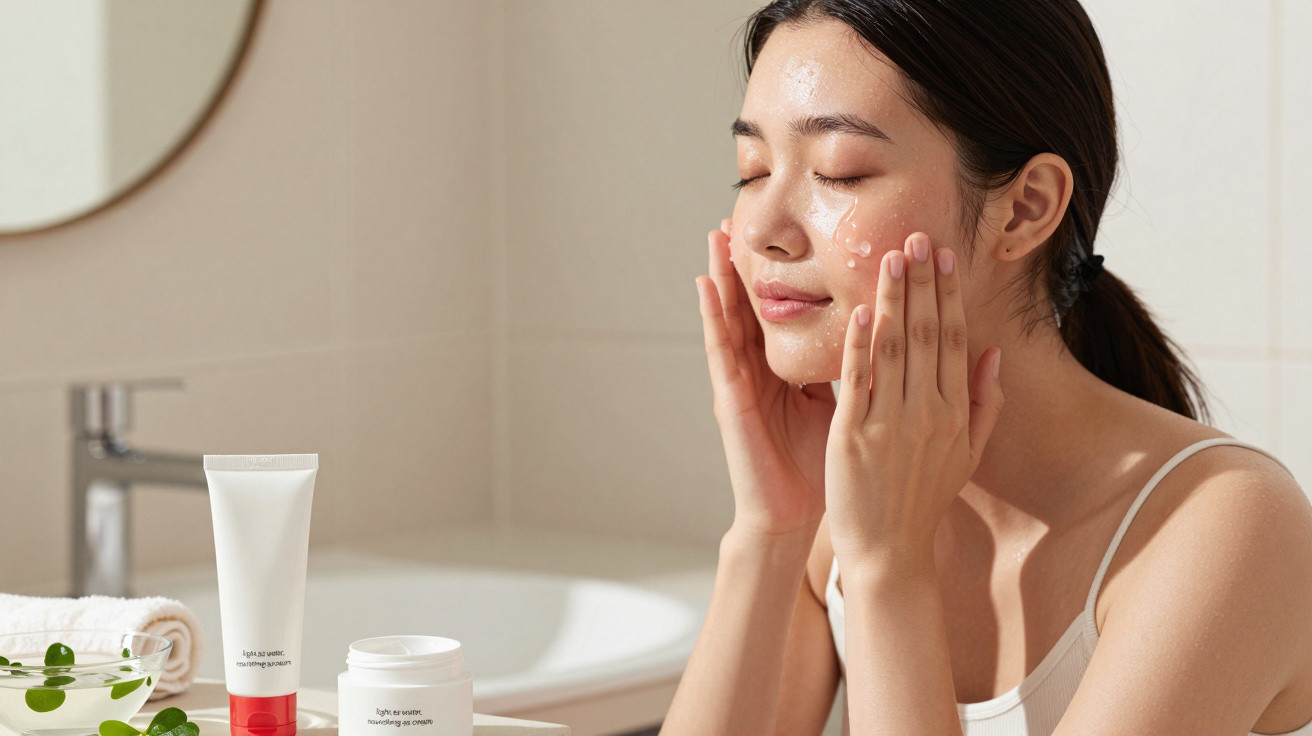
- Cleanse: Thoroughly remove sebum, dirt and any remaining make-up from the face.
- Moisturise: Apply a moisturiser suited to your skin type and allow it to absorb briefly.
- Pick up the powder: Lightly sweep a soft powder brush across the surface.
- Tap away excess: Gently tap the brush against the back of your hand or the edge of the compact.
- Apply: Work from the centre of the face outwards using circular movements.
If you only want to cover selected areas, use the powder precisely where needed: on redness, post-spot marks or across the familiar T-zone of the forehead, nose and chin.
For a “sun-kissed effect”, the brand recommends a warmer shade, applied like bronzer along the cheeks, hairline and bridge of the nose.
How much coverage does it provide?
This skincare powder offers light to medium coverage rather than full coverage. The aim is not an Instagram-filter complexion, but skin that looks naturally even and balanced. Anyone wishing to conceal pronounced redness, pigmentation marks or acne scars can pair it with concealer or build coverage gradually with several thin layers.
What the studies and test results claim
The manufacturer carried out clinical testing to support its claims. Based on its own findings, skin shine was reduced by 47 % immediately after the first application. All test participants reported a visibly more matte complexion, a refined skin texture and an even, natural-looking radiance.
| Promised effect | Measurement or user result |
|---|---|
| Less shine | 47 % reduction after one application |
| Matte-looking skin | Confirmed by 100 % of test participants |
| Smoother texture | 100 % saw a more refined complexion |
| More even tone | 100 % noticed a more uniform colour |
These figures sound impressive, but they come from manufacturer-led studies with a limited number of participants. In everyday use, they offer an indication: people prone to shine and concerned about prominent-looking pores are likely to benefit in principle from a mattifying powder with skincare ingredients.
Who is this powder suitable for – and who may want to avoid it?
With its mattifying effect and moisture-supporting ingredients, the formula is primarily aimed at combination and slightly oily skin. Those with dry skin can use the powder too, but should not neglect their base skincare and may prefer to apply a richer cream underneath.
- Suitable for: Combination skin, a shiny T-zone, mild blemishes and enlarged pores.
- Potentially suitable for: Very dry skin and mature skin with deep lines, although it is best used sparingly in these cases.
- Less suitable for: Severely flaky skin, active inflammation or fresh wounds.
As always, anyone with extremely sensitive skin should check the full INCI list and, if in doubt, test the product on a small patch first – for example, on the side of the neck.
What do “100 % natural pigments” mean in everyday use?
The phrase sounds entirely natural, but in practice it mainly refers to where the colour pigments come from. They may be derived from mineral raw materials or plant sources, then processed so that they spread evenly across the skin. The advantage is that many consumers consider formulas of this kind to be more tolerable and more sustainable.
That does not automatically mean a powder is completely risk-free. Natural ingredients can trigger allergies too. On the positive side, many mineral and plant-based pigments are well researched and have been used in a wide range of products for years.
Refillable packaging for more conscious shoppers
One detail that can easily be missed on a pharmacy shelf is that the powder compact is refillable. On their next purchase, users need only buy the refill rather than replacing the full packaging. This cuts waste and saves money over time, particularly for daily use.
Refill systems are gradually becoming more common in cosmetics. Anyone who wears make-up regularly while also wanting to reduce plastic consumption should actively look out for this type of option when buying new products.
How to incorporate the powder into your own routine
Anyone who currently wears liquid foundation every day can introduce the skincare powder alongside it at first: use powder alone on days off, and stick with familiar foundation on days involving lots of camera or stage time, setting it with a light layer of powder. Over time, it becomes clearer how much coverage is actually needed.
One example of a minimalist morning routine:
- Cleanse with a gentle gel or foam
- Apply a lightweight serum, such as one containing hyaluronic acid
- Use a moisturiser with SPF
- Finish with mattifying powder on the T-zone and over redness
- Optional: add a little blusher or bronzer for a fresher look
This keeps the full make-up routine to just a few minutes, allowing skin to feel breathable while still looking polished enough for the office or a Zoom call.
People prone to blemishes can also use the powder for touch-ups during the day, rather than constantly relying on blotting papers or high-coverage make-up. One thing remains important: clean brushes and sponges regularly to prevent bacteria from building up.









Comments
No comments yet. Be the first to comment!
Leave a Comment