
Rather than the usual lecture about stressed lengths, the stylist suddenly asked which luxury brand was responsible for making my hair shine like that. The truth was not an expensive salon treatment but a straightforward kitchen-cupboard remedy – and it completely changed how I think about conditioner, masks and everything in between.
When my hairdresser mistook my hair for luxury care
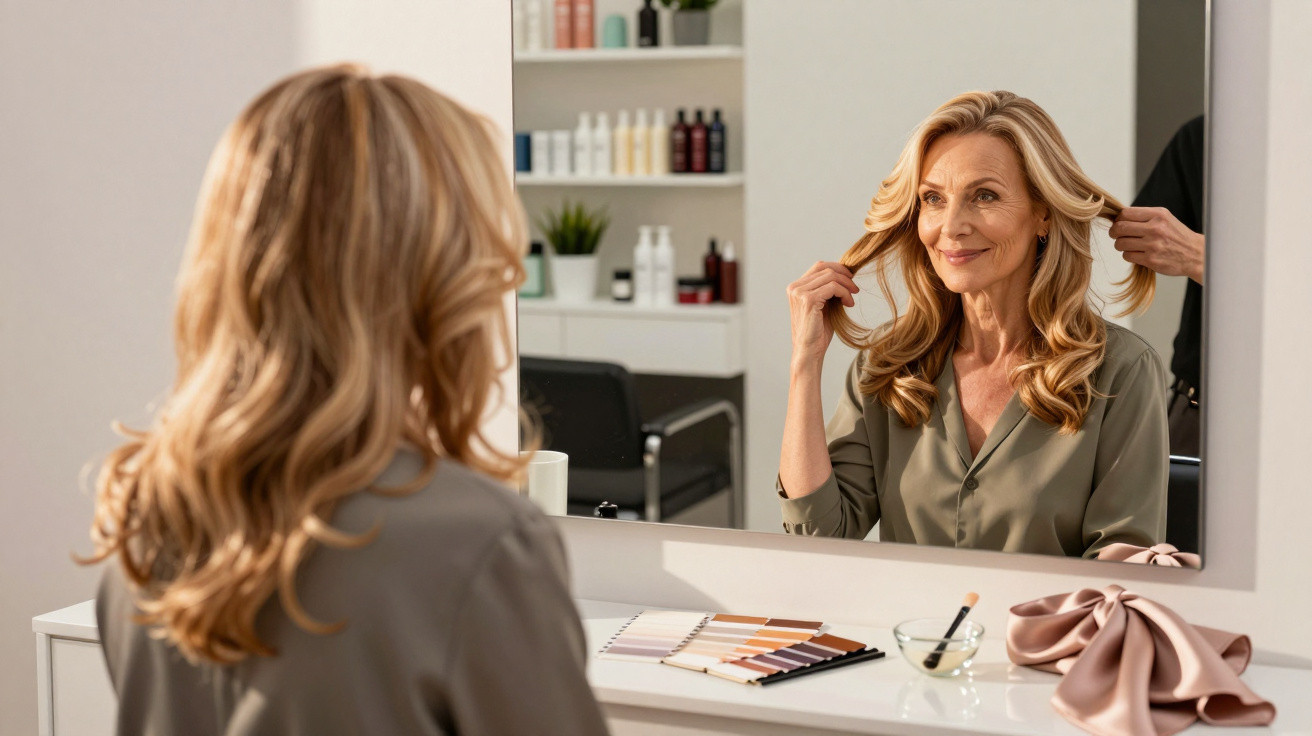
Anyone who visits the hairdresser regularly will know the routine: hair is washed, the ends get a quick inspection, followed by the standard verdict – dry, dull and slightly over-treated. That was exactly what I expected as I sat down at the basin.
Instead, I heard comments such as: “The texture is incredibly smooth, with no frizz at all – like after an expensive salon treatment.” The brush travelled through the lengths without tugging, while the light bounced off the strands almost as if I had just had a professional gloss.
The hairdresser was sure that I had spent money on an expensive premium haircare range – when all I had done was radically simplify my routine.
The moment highlights a problem within the beauty industry: many people assume that a good result must inevitably come with a high price tag. The more it costs, the more “salon feeling” it offers – or so the promise goes. Hair biology works differently, though. Hair does not respond to marketing; it responds to ingredients, pH levels and stress, and it can often cope remarkably well with very simple solutions.
Why conventional conditioners were secretly damaging my hair
Before this experiment, my hair had that typical “over-styled” feel: dry at the ends, oily quickly at the roots, heavy and somehow lifeless overall. Conditioners and masks gave a pleasing result immediately after showering, but over time they caused more frustration than anything else.
The reason lies in many conventional products: they contain silicones and other film-forming ingredients. These coat every hair in what is effectively an invisible plastic layer.
- The shine often looks artificial rather than natural.
- The coating can stop genuine care from reaching the hair fibre.
- Residue builds up with every wash – the notorious “build-up”.
The result is a cycle that makes the issue worse rather than solving it: hair is washed more often because it turns stringy faster, richer masks are used to tackle dry lengths, and the routine becomes increasingly heavy.
The overlooked home remedy: apple cider vinegar instead of conditioner
The solution that surprised my hairdresser so much can be found in most kitchens: apple cider vinegar. It is not an exotic oil or a trend-led serum, but a traditional home remedy that our grandmothers already used for skin and hair.
Apple cider vinegar is made from fermented apples and contains a blend of:
- acetic acid
- minerals
- trace elements
- natural plant compounds from the fruit
On hair, it works like a gentle natural “clarifying rinse”: it removes deposits without stripping away oil aggressively, while smoothing the cuticle at the same time. This combination makes the lengths easier to comb and helps them reflect more light.
Apple cider vinegar acts like a reset for hair that has spent years dealing with silicones, hard water and styling residue.
How apple cider vinegar works on hair
Hard-water limescale: enemy number one
Tap water is very hard in many areas. Every wash leaves tiny limescale crystals on the hair’s surface, resulting in:
- a rough texture
- lengths that look dull
- stubborn hair that is difficult to comb
Apple cider vinegar contains acid that dissolves these limescale particles. Once that film is gone, the hair surface is exposed again – and its shine returns.
pH determines whether hair shines or frizzes
Healthy hair prefers a slightly acidic environment, around pH 4.5 to 5. Many shampoos and tap water have a considerably higher pH. This causes the cuticles along the hair shaft to open, leaving hair feeling coarse and more prone to static.
Diluted apple cider vinegar returns the pH level to its ideal range after washing. The cuticle lies flat, the surface becomes smooth and the lengths shine – all without a silicone coating.
My exact apple cider vinegar routine: the 1-to-4 formula
For this method to work without irritating either the scalp or your nose, getting the ratio right matters. Apple cider vinegar should never be applied neat to skin or hair because it is too strong.
The basic recipe for a shine rinse
- 1 part apple cider vinegar, ideally organic and unfiltered
- 4 parts cool water
This is how I use it:
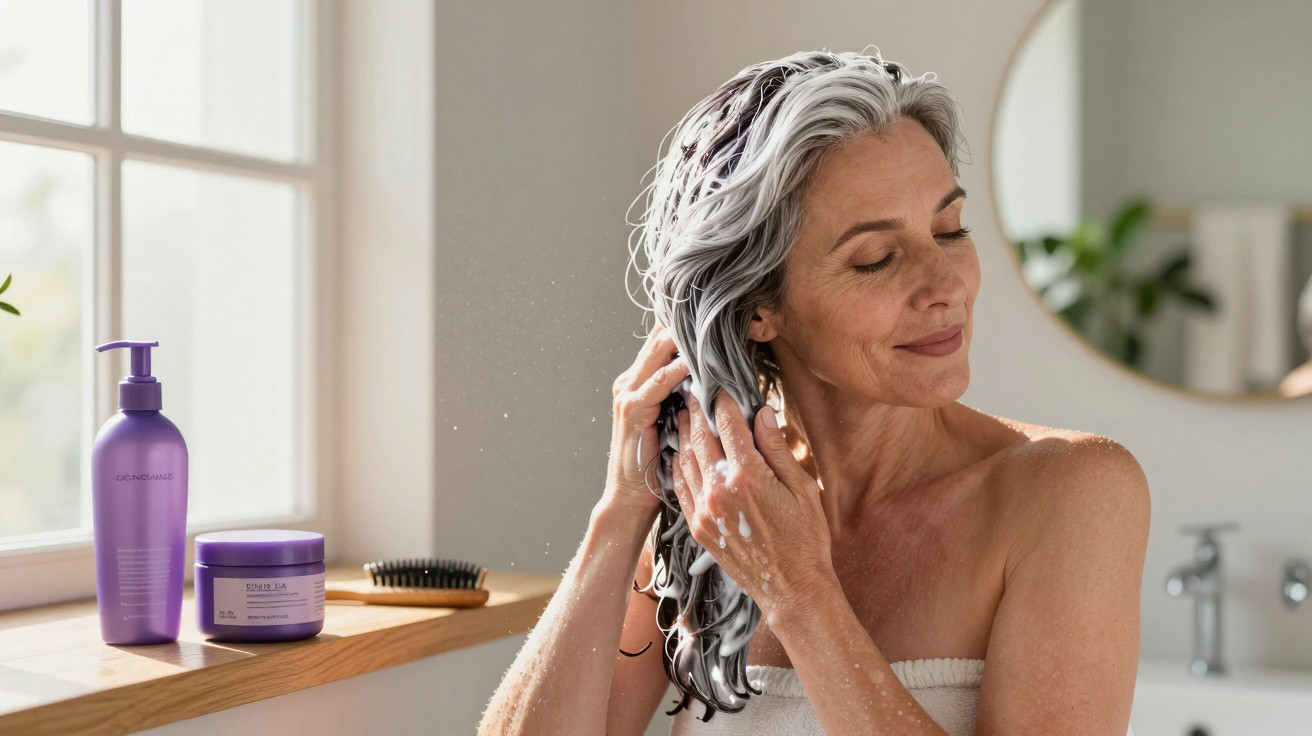
- Wash your hair with shampoo as usual and rinse thoroughly.
- Slowly pour the vinegar-and-water mixture over the scalp and lengths.
- Work it in gently with your fingertips; do not rub.
- Leave it on for around two minutes.
- Finish by rinsing with cool or cold water.
Cold water enhances the smoothing effect by helping the cuticle close further. Once the hair is dry, there is no trace of a vinegar smell.
When diluted correctly, apple cider vinegar smells only while the hair is wet – the shine stays, but the scent disappears.
How often should you use it – and who is this trick for?
For most people, using it once a week is enough. Those with very fine hair or hair that becomes oily quickly can begin with a fortnightly routine and see how their scalp responds.
It may be particularly beneficial for:
- people living with hard tap water
- hair with silicone build-up
- curly or wavy hair that needs more definition and shine
- sensitive scalps prone to rapid irritation or dandruff
Coloured hair generally tolerates the method well, provided the vinegar remains heavily diluted. Anyone with freshly bleached hair or very porous lengths should first test it on a single strand.
Less plastic, lower costs: the everyday benefit
An average person can easily finish six bottles of conditioner or hair mask in a year, without even counting styling products. Many of these bottles are entirely plastic. Apple cider vinegar is often sold in glass bottles and is sometimes available from refill dispensers in zero-waste shops.
| Product | Annual use | Packaging |
|---|---|---|
| Conventional conditioner | approx. 6 bottles | usually plastic |
| Apple cider vinegar (diluted) | 1–2 bottles | often glass |
Compared with specialist haircare ranges, apple cider vinegar costs considerably less – and, because it is diluted, goes an exceptionally long way. People who make the switch often notice a second effect too: the bathroom becomes less cluttered, the routine clearer and impulse purchases in the chemist become less frequent.
What to keep in mind when using apple cider vinegar on hair
Despite its advantages, this approach does not suit everyone without some adjustment. A few considerations are worth noting:
- Sensitive scalps can sometimes react to acid, so dilute the mixture further, to around 1:6.
- If there are open wounds or eczema on the scalp, wait until everything has healed.
- Do not use it daily, as this could put stress on the skin’s natural protective barrier.
- Use apple cider vinegar only, not household vinegar, which has excessively high acidity and contains none of the plant compounds.
If you are unsure, test the mixture first on a clear patch of skin, such as the inside of your elbow. If no irritation develops, there is little reason not to try it carefully on your hair.
Getting more from the trick: combinations and everyday tips
Apple cider vinegar can do more than replace conditioner; it can also form part of a minimalist haircare routine. Paired with a gentle shampoo that does not contain harsh sulphates, it creates a regime that puts noticeably less stress on both scalp and lengths.
Practical everyday examples include:
- After swimming, the vinegar rinse can help dissolve chlorine and limescale residue more quickly.
- Following a day of styling with hairspray, it removes build-up more gently than an aggressive clarifying shampoo.
- For an itchy scalp, its mildly acidic pH can noticeably ease irritation.
Anyone wanting to give their hair extra care can apply a light oil to the ends before washing, such as almond or jojoba oil. Shampoo and the apple cider vinegar rinse follow afterwards. This gives the lengths a balance of oil and moisture without weighing down the hair at the roots.
Above all, there is the satisfying feeling of surprising your hairdresser with hair that looks as though it has just had a luxury treatment – except the real “star” is in the kitchen cupboard and costs less than some takeaway coffees.













Comments
No comments yet. Be the first to comment!
Leave a Comment