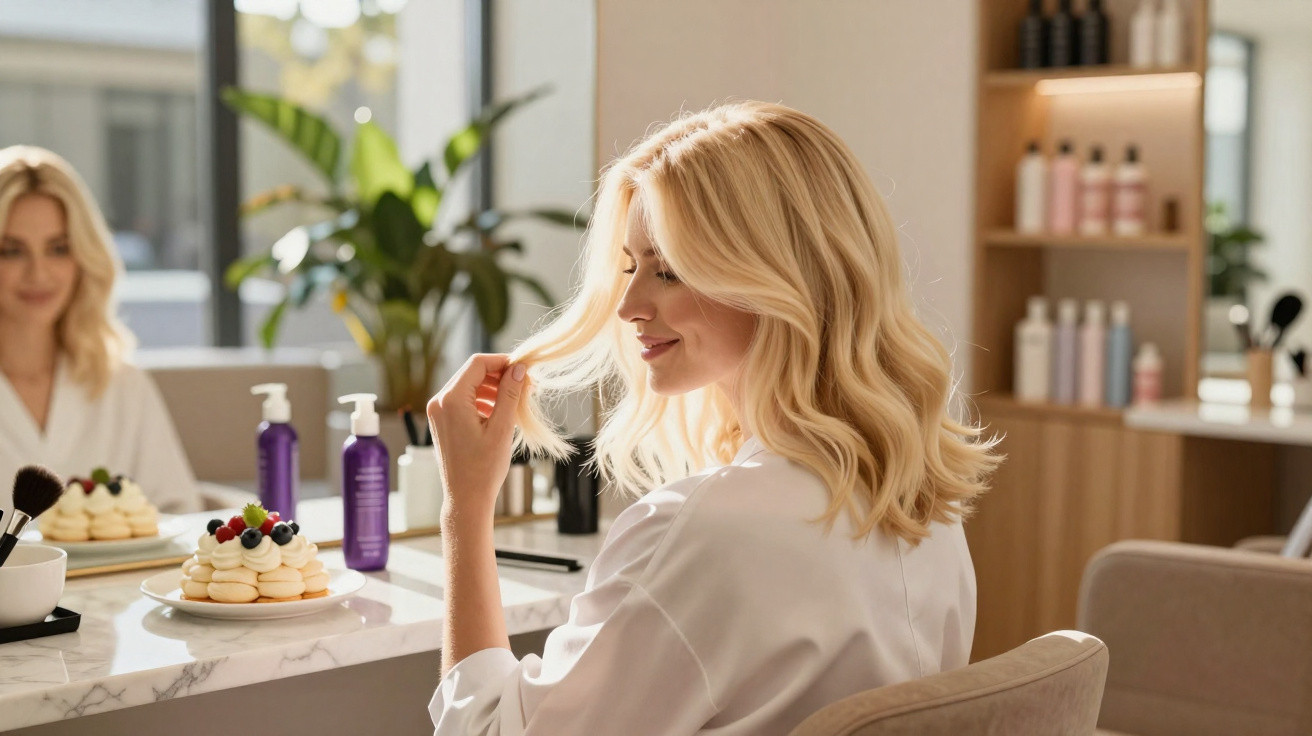
While traditional platinum and gold shades have started to feel too harsh for many, a new blonde trend is moving into focus: “Pavlova Blonde”. Inspired by the airy dessert, this shade combines creaminess, cool shine and a hint of pink, answering the desire for a soft, flattering spring glow.
What the Pavlova Blonde trend shade is all about
Pavlova Blonde is not a loud Instagram blonde, but an exceptionally light, cool shade with subtle undertones. Think vanilla blended with champagne and a touch of strawberry foam. The result is a soft, multi-tonal blonde that looks lively and premium rather than obviously coloured.
“Pavlova Blonde combines cool brightness with creamy lightness and a delicate rosy shimmer – without the typical ‘yellow tinge’.”
This look is defined by:
- a very light, cool base shade
- gentle beige notes instead of stark ash tones
- subtle, powdery pink reflections that may be barely visible depending on the light
- a multi-dimensional colour graduation that gives the hair the appearance of movement
In sunlight, Pavlova Blonde can appear almost translucent; in the shade, it looks calmer and creamier. The colour is particularly effective in photographs: it can make the complexion look fresher and feels modern without being too “loud”.
Who does Pavlova Blonde suit best?
This trend is especially flattering on people with fair skin. Pavlova Blonde works particularly well with:
- porcelain or subtly rosy complexions
- cool or neutral undertones, including rosy, olive and beige
- light eyes, such as blue, grey, green or light hazel
Anyone with naturally ash-blonde or medium-blonde hair can usually achieve this look with less strain than someone starting with very dark hair. For brown or black hair, reaching Pavlova Blonde takes considerably longer and should definitely be left to a professional.
“The lighter the starting hair colour and the cooler the skin tone, the more naturally Pavlova Blonde blends into the overall look.”
That said, the trend is not reserved solely for “Snow Whites”. Those with warm skin tones can pair Pavlova Blonde with softer beige-golden reflections. This creates a kind of “Soft Pavlova” effect that is less icy yet highly flattering.
Soft glamour instead of harsh contrasts
Pavlova Blonde fits seamlessly into the current “soft-glam” aesthetic. Rather than sharp contours, heavy block brows and ultra-matte finishes, the focus is shifting towards:
- gentle colour transitions in the hair
- a glowing complexion instead of full-coverage make-up
- understated, creamy textures on the lips and eyelids
Blonde is no longer worn as a statement colour, but as a soft frame for the face. The pink shimmer in the hair is often echoed in blush and lip colour, creating a harmonious look without appearing overly contrived.
How Pavlova Blonde is created in the salon
If you have previously only experimented with at-home colourants, Pavlova Blonde is a shade for which booking a salon appointment is essential. It is generally created in several stages:
- lightening with bleach or highlights and lowlights
- toning with a cool toner carrying a slight pink tint
- refining the reflections, with more beige, more rosé or a cooler icy blonde finish
Your hairdresser will first assess the hair’s texture, starting shade and overall condition. Intense bleaching can quickly overwhelm the hair, particularly if it has already been coloured or is very dark. In some cases, a gradual process spread over several appointments is recommended.
“Anyone wanting to go from dark brown straight to Pavlova Blonde needs patience – and should expect several sessions and a more demanding care routine.”
Care rules: keeping Pavlova Blonde hair healthy
This light shade only looks refined when the hair is shiny and feels supple. Once it has been lightened, it needs intensive care and a carefully considered routine.
Repairing hair inside and out
Bleached hair can quickly lose strength. To counteract this, the following can help:
- Protein masks, which support damaged structures
- Emollient-rich care containing oils and lipids to maintain softness
- Moisturising care with aloe vera, glycerine or hyaluronic acid
Combining these three elements helps the hair stay flexible rather than becoming straw-like. Allowing a rich mask to work once or twice weekly makes a noticeable difference with Pavlova Blonde.
Using toner, purple and pink shampoos correctly
Cool blonde shades are prone to developing a yellow cast. To maintain their fresh appearance, many people turn to specialist shampoos:
- Purple or silver shampoo: neutralises yellow and orange tones
- Rosé shampoo: intensifies the delicate pink shimmer
These products should not be used every day, as they may dry out the hair. Using them once or twice a week is usually enough. Between washes, choose a gentle, nourishing shampoo without harsh surfactants.
“Less is more: using silver shampoo too often risks a dull, grey veil instead of creamy blonde.”
Heat, styling and everyday life: protecting your new shade
High temperatures are among the greatest enemies of bleached hair. Straighteners and curling tongs used without heat protection, in particular, can quickly cause the structure to break.
- Apply a heat-protection spray before every blow-dry, straightening or curling session.
- Keep temperatures moderate instead of selecting the highest setting.
- Let the hair air-dry regularly to give it a break.
Lightweight oils or serums are ideal as the final step in a care routine. They form a protective film around the lengths, smooth the surface and add shine. With shades this light, every breakage point and dry area is visible, so well-maintained ends are essential.
How often does Pavlova Blonde need refreshing?
Depending on hair growth, roots begin to show after four to eight weeks. Anyone with a pronounced contrast between their natural colour and Pavlova Blonde will need regular root touch-ups. Alternatively, a technique such as balayage or a “shadow root” can work well, leaving the roots intentionally a little darker.
| Hair length | Refresh interval |
|---|---|
| Short hair | every 4–6 weeks |
| Shoulder-length hair | every 6–8 weeks |
| Long hair / balayage | every 8–12 weeks |
The toner itself can also be refreshed between appointments with a glossing treatment alone. This is gentler on the hair structure and restores the rosé shimmer as it gradually fades.
Risks, costs and alternatives
Anyone considering this trend should be aware that Pavlova Blonde is a luxury shade. The combination of elaborate lightening and ongoing care can become expensive. As a rule, the darker the starting hair colour, the greater the cost and time involved.
For severely damaged, very brittle or repeatedly coloured hair, reputable hairdressers often advise a slower approach or a toned-down version. Options include:
- light, Pavlova-inspired highlights only through the top layer of hair
- rosé-blonde glossing treatments on medium-blonde hair
- “Pavlova Brunette” – brown hair with cool, rosy reflections
If you are unsure, start with temporary colourants to see how cool and rosy shades work with your own skin tone. This can help prevent you from feeling “dressed up” after a dramatic salon transformation.
What makes Pavlova Blonde particularly interesting is how easily it can be paired with make-up and fashion: delicate pastel jumpers, rosy highlighters and creamy nude or rosewood lip colours subtly pick up the tone. The result is a cohesive overall look, perfect for anyone wanting a change in spring without turning their entire style upside down.



Comments
No comments yet. Be the first to comment!
Leave a Comment