As we get older, the body changes: metabolism becomes slower, daily life often involves less movement, and the waistline can suddenly seem wider. A flat stomach may then feel out of reach. In these situations, an experienced fitness coach from the US consistently relies on one surprisingly simple exercise – and it is more demanding than it looks.
Why abdominal fat becomes so stubborn after 40
From the age of 40 onwards, the basal metabolic rate slows down. The body burns fewer calories at rest, muscle is lost more quickly, and fat is more likely to be stored around the middle. At the same time, many people spend hours sitting at a desk or in the car, move too little and snack while they work.
- More stress, more cortisol – this encourages abdominal fat.
- Less muscle mass – energy expenditure falls.
- Poor sitting posture – this weakens the core even further.
As a result, the core muscles – meaning the abdominals, lower back and deep stabilising muscles – lose tension. Working on this area can visibly change the entire silhouette.
The exercise recommended by the coach: the plank
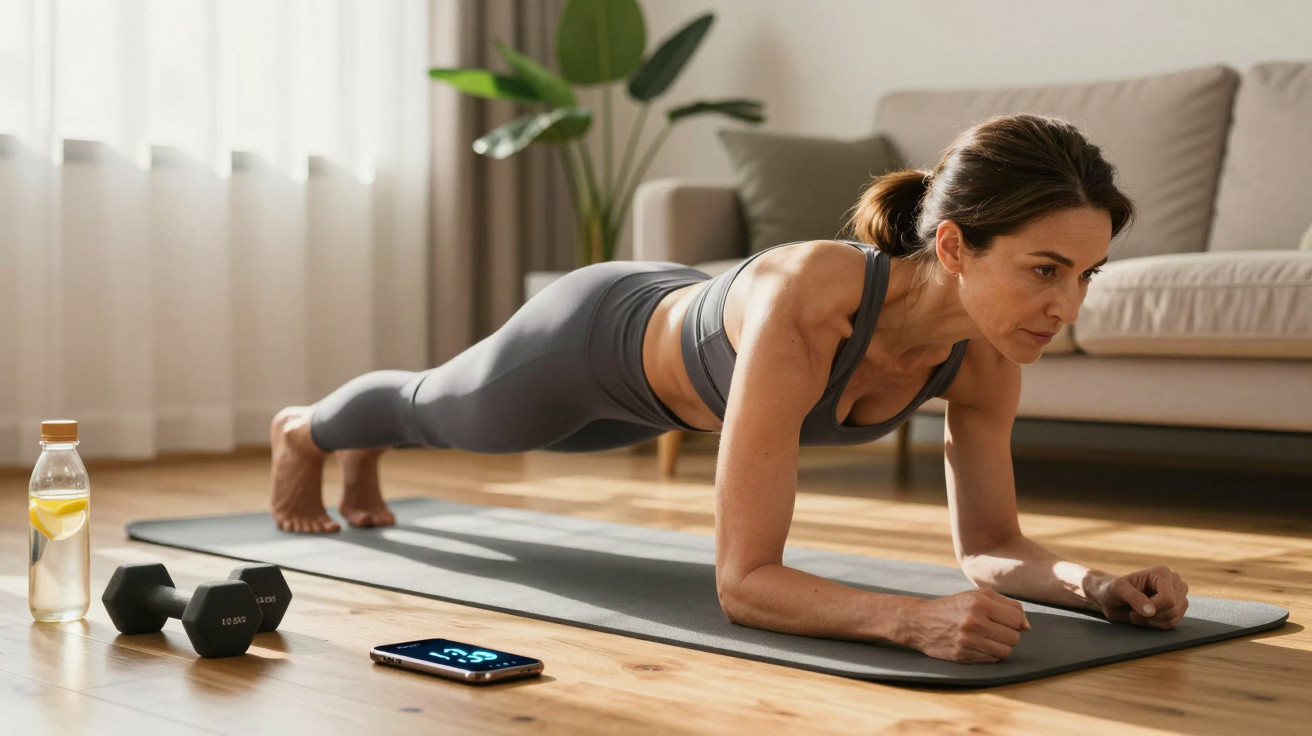
The coach recommends a straightforward but highly effective training tool: the plank, often called a forearm plank. It looks unremarkable: you support yourself on your forearms and toes, while your body forms a straight line. Yet this static position has a major effect on the core.
“The plank activates almost all of the deep core muscles at the same time – with no equipment and possible anywhere.”
It targets more than just the rectus abdominis muscles. It also works:
- the oblique abdominal muscles, for a narrower waist;
- the deep transverse abdominal muscles, which act like a natural corset;
- the muscles running alongside the spine;
- the shoulders, glutes and thighs.
In the coach’s view, this combination makes the exercise an ideal tool for tackling abdominal fat and creating a more defined waist after the age of 40.
90 seconds as the key target: why duration matters
Rather than holding a plank only briefly, the coach advises building up deliberately to around 90 seconds. Over this period, the core must sustain continuous tension. The body learns to remain stable under load instead of collapsing.
“The longer you can maintain the tension with control, the more your core draws in and the better your waist takes shape.”
The crucial point is to maintain correct form throughout those 90 seconds:
- Keep the body as straight as possible from head to heels.
- Draw the stomach in actively, as though gently pulling the navel towards the spine.
- Do not allow the glutes to sag, but do not raise them too high either.
- Keep the shoulders away from the ears and look downwards.
Tolerating this burning tension develops not only strength but also core-muscle endurance. The result is that the middle of the body stays active for longer during everyday life and “supports itself”, rather than slumping inwards.
How the plank affects abdominal fat and metabolism
Naturally, one exercise alone will not make abdominal fat disappear overnight. However, the plank can provide significant support because it combines several effects:
- High muscle activation: Because numerous muscle groups work at once, energy expenditure rises during the exercise.
- Afterburn effect: A strong core slightly increases calorie use at rest, as more muscle mass remains active.
- Improved posture: Standing and walking more upright immediately creates a slimmer appearance, with the stomach protruding less.
- Greater desire to move: A stable core makes other activities, from walks to jogging, more comfortable.
This turns a simple static hold into an important building block for a flatter stomach and a more defined waist – especially when other dieting attempts have proved frustrating.
Building up to a well-executed plank step by step
Anyone who has not exercised for some time should gradually work towards the full 90 seconds. The coach recommends a progressive approach: quality before duration.
| Training level | Duration per set | Repetitions |
|---|---|---|
| Beginner | 20–30 seconds | 3–4 sets with rests |
| Intermediate | 45–60 seconds | 3 sets |
| Recommended target | 90 seconds | 1–2 well-executed sets |
Rest for around 30 to 60 seconds between sets, walking briefly or gently moving the shoulders. This keeps the muscles warm without allowing them to become tense.
Common mistakes that undo the benefits
To get the most from a plank, avoid these typical form errors:
- A sagging back – this puts strain on the lumbar spine and removes tension from the abdominals.
- Glutes held too high – this makes the exercise easier but less effective for the core.
- Shallow breathing – holding your breath causes tension and makes you stop sooner.
- Collapsing shoulders – they should remain stable above the elbows.
One useful tip: if you are unsure, stand sideways in front of a mirror or record yourself once on your smartphone. Small adjustments to the angle and alignment can substantially increase the benefit.
How often to do the plank for visible results
The trainer recommends three to four sessions each week. This can fit into even the busiest diary: a short routine lasting just a few minutes is enough when performed consistently. Ideally, combine plank training with moderate cardiovascular exercise and a reasonably balanced diet.
“Three to four times a week, no equipment, just your body weight – that is how you can build a stable core over the long term.”
Anyone who already has pain in their back or shoulders should check with a doctor or physiotherapist whether they can safely tolerate the load before increasing their training intensity.
More than appearance: what a strong core brings to everyday life
For many people, a flatter stomach is the main objective, but a strong core delivers wider benefits. The spine receives more support, walking becomes more secure and everyday physical demands feel easier. This is particularly relevant for people who sit for long periods or regularly lift heavy objects.
- Less pulling in the lower back during prolonged sitting
- Better balance and a lower risk of falls
- Reduced strain on the hips while walking
- Greater stability during hobbies such as cycling, hiking or dancing
Many people also report that stronger abdominal and back muscles improve their subjective body awareness: they notice their body more consciously again, stand taller and feel more confident when moving.
Practical additions: small habits with a big impact
The plank is particularly effective when it is supported by a few straightforward daily habits. Three factors have a strong influence on abdominal fat and muscle development:
- Sleep: Regularly getting too little sleep encourages cravings and slows recovery. Seven hours is considered a sensible minimum for many adults.
- Movement spread throughout the day: Short walks, taking the stairs instead of the lift and brief stretching breaks at a desk all help keep metabolism more active.
- Protein-rich meals: Enough protein helps preserve muscle mass and keeps you fuller for longer, reducing calorie traps.
Combined with a consistently performed plank routine, these simple changes can help the stomach become noticeably flatter over time and the waist appear more defined – even long after the age of 40.











Comments
No comments yet. Be the first to comment!
Leave a Comment