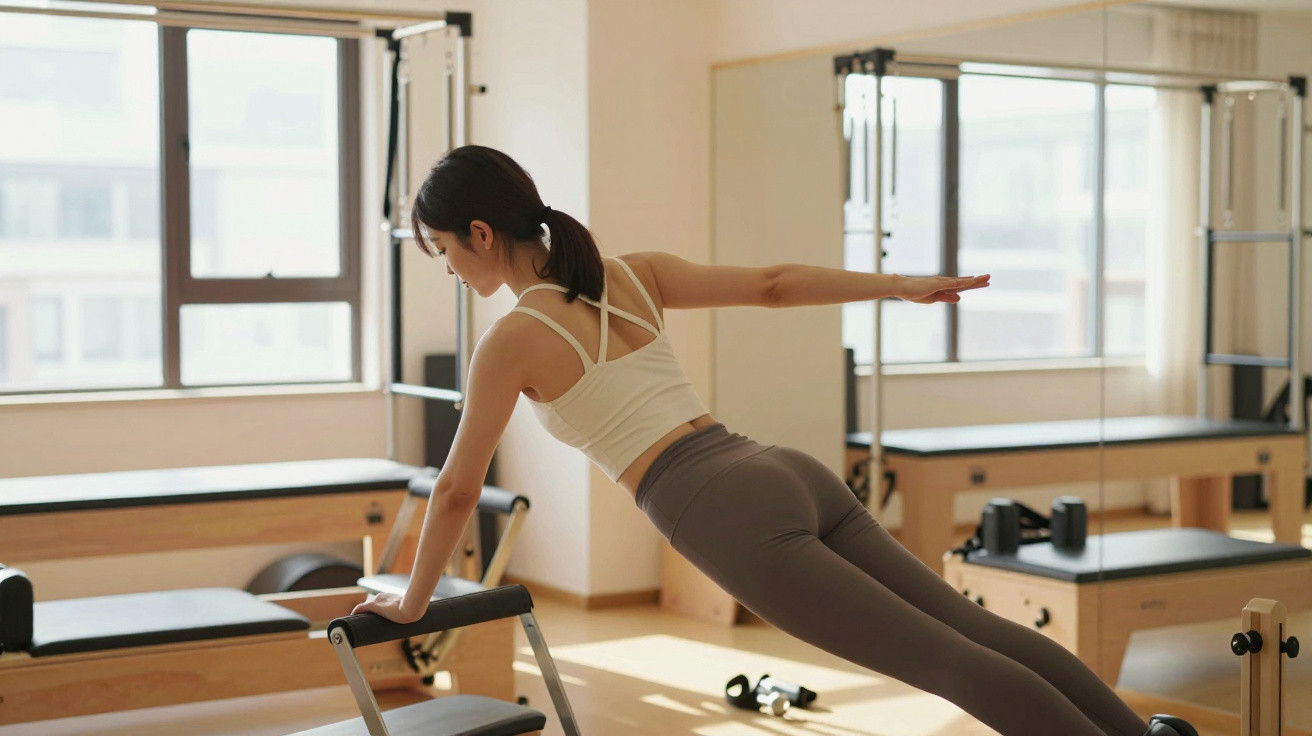
Arm strength training is the most direct way to strengthen the triceps and improve firmness at the back of the upper arms. Pilates supports posture, stability and body awareness, but progressive-resistance exercises provide a more targeted stimulus for building muscle mass and giving the tissues better support.
Why does looseness develop at the back of the arms?
A less firm appearance can result from several factors, including a loss of muscle mass, reduced skin elasticity, ageing, genetics and weight changes. The triceps make up a large proportion of the back of the upper arm and are used in pushing movements and when straightening the elbow.
If these muscles receive little stimulation, they may gradually lose strength and size. Training them can improve muscle definition and make activities such as pushing doors, lifting objects and supporting your body easier, but it cannot alone remove excess skin or localised fat.
What is the best exercise for strengthening the triceps?
There is no single ideal movement for everyone, but a triceps extension with a dumbbell or resistance band is among the most targeted options. Choose a resistance that allows you to move with control, without letting the elbows flare too far out or arching the lower back.
- overhead triceps extensions with a dumbbell or resistance band;
- press-ups with the hands close together and the elbows kept near the torso;
- cable triceps pushdowns, pressing the bar or rope downwards;
- close-grip bench presses for people who already train with weights;
- supported elbow extensions, using a load suited to your fitness level.
The role of Pilates in firmer arms
Pilates can engage the arms and shoulders through planks, weight-bearing positions and exercises performed with springs. It also improves trunk control, shoulder alignment and shoulder-blade stability, all of which are important for performing strength movements more safely.
Its limitation arises when resistance stays low and does not increase as the body adapts. To build strength and muscle mass, the triceps need to be progressively challenged with weights, resistance bands, machines or bodyweight exercises.
How should you organise arm strength training without overloading the shoulders?
Arm strength training can be done twice a week, with rest between sessions. The main priority is to master the technique before increasing the weight, repetitions or number of sets.
- warm up the shoulders, elbows and wrists before exercising;
- select two or three movements for the triceps and upper body;
- perform each repetition slowly, without relying on momentum;
- increase resistance only when you can control the movement;
- stop exercising if you experience sharp pain, tingling or loss of strength.
What can you expect from training for loose arms?
Consistency can improve strength, develop the triceps and gradually enhance muscular appearance. Adequate sleep, a varied diet and sufficient protein intake support recovery, while training the back, chest and shoulders prevents the programme from focusing on only one area.
Resistance training can fill some of the space beneath the skin with muscle, but it does not remove excess skin or allow you to choose precisely where the body loses fat. The most realistic outcome is stronger, more functional arms, with Pilates retained as a complement for mobility, posture and body control.















Comments
No comments yet. Be the first to comment!
Leave a Comment