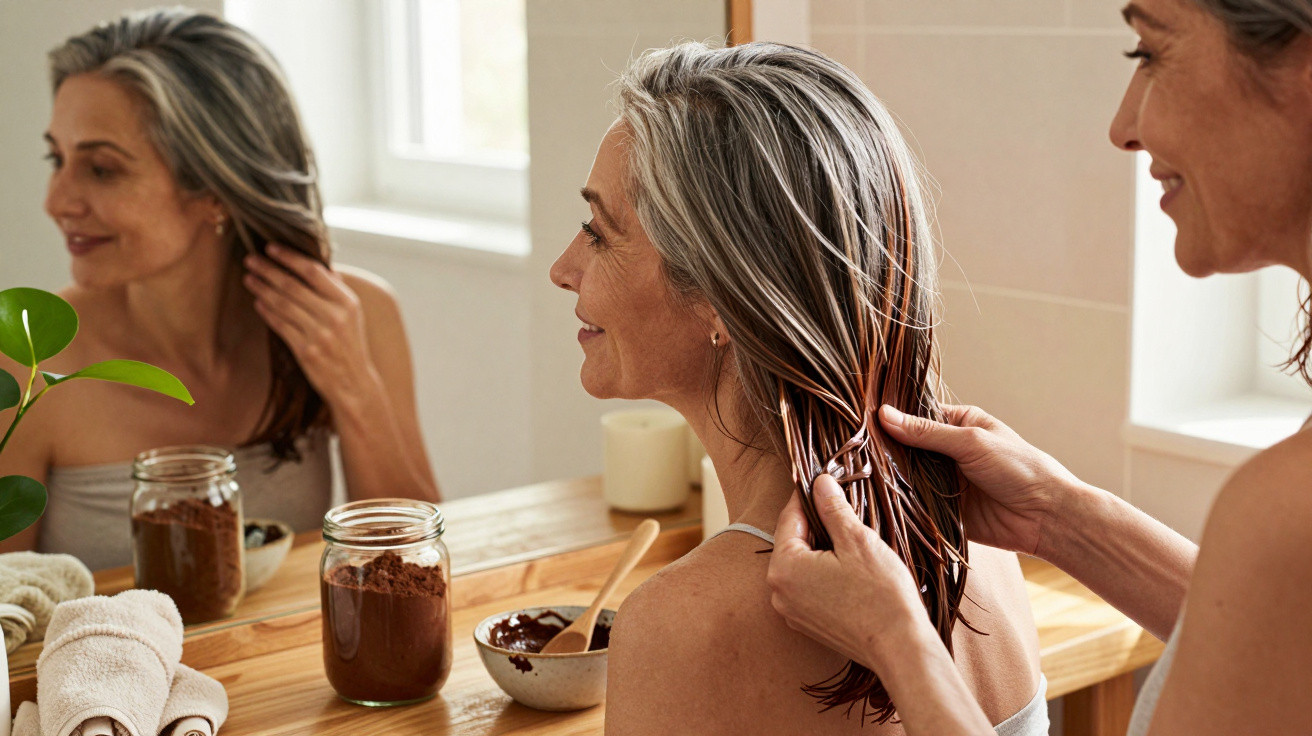
The subject is gaining ground in bathrooms. Conventional dyes are losing favour. An affordable, plant-based home method is attracting people who want highlights without damaging their lengths.
Why a natural alternative is appealing
Permanent colour treatments can tire the scalp. They oxidise the hair fibre and dull shine with repeated washing. They also require regular touch-ups, which can weigh on the budget. Their odours are another factor putting off an increasing number of consumers.
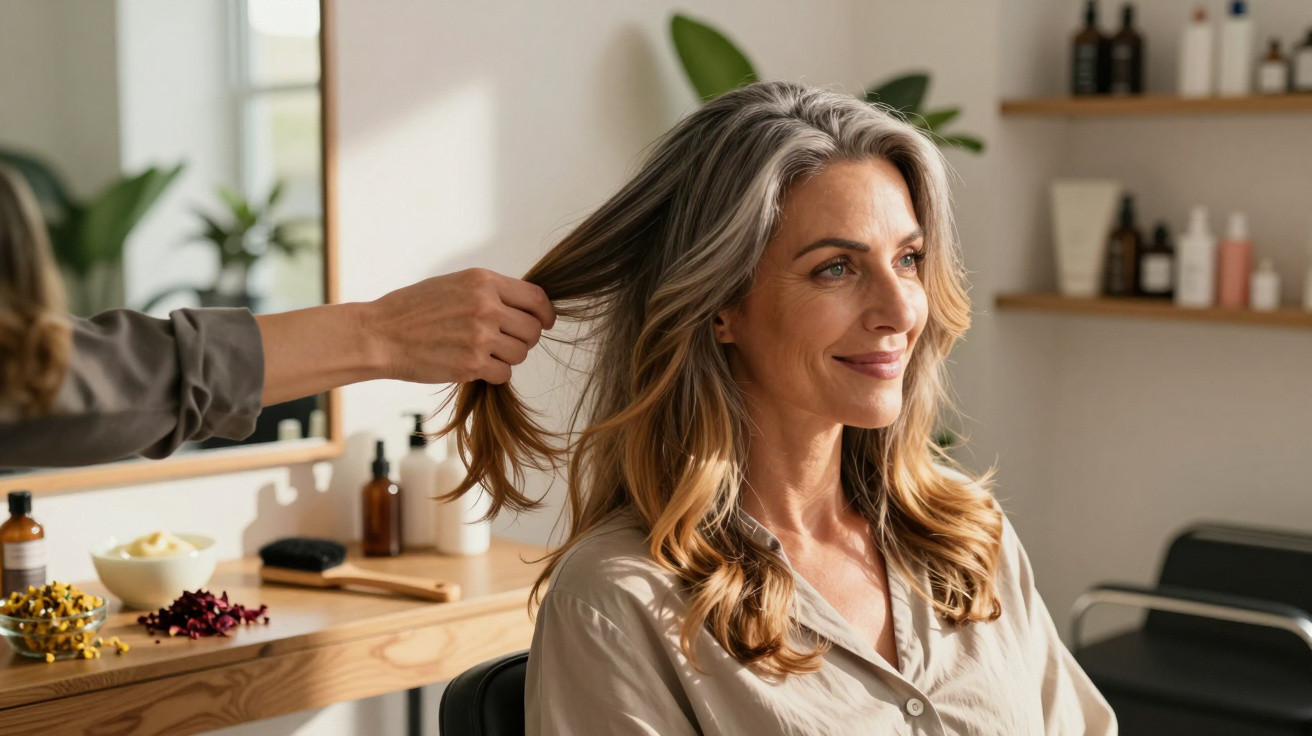
Hair trends are moving towards quick, adaptable options that require less technical know-how. People are embracing their silver strands, while looking for a subtle veil of colour to soften the contrast. Cocoa meets these needs. It delivers a warm highlight and nourishing care in a single step.
“A realistic aim: soften the contrast of grey hair, nourish the fibre and enhance shine, without a helmet-like effect.”
Cocoa: more than a colourant
Unsweetened cocoa powder provides rich brown pigments. These pigments sit on the surface of the cuticle. They do not lighten the hair. Instead, they coat it and blend its highlights.
Cocoa contains flavonoids that counter oxidation. Magnesium supports stressed roots. Iron and zinc contribute to the strength of the lengths. Theobromine gently stimulates microcirculation in the scalp. Its remaining lipids help make the fibre more supple.
The result is unlike permanent hair dye. It does not last for long. The finish looks natural and changes gradually. Hair retains its movement and shine.
“On grey hair, cocoa creates a light chocolate brown that breaks up the metallic look and softens facial features.”
How to apply cocoa without mistakes
Ingredients and quantities
- 3 tablespoons of pure, unsweetened, 100% cocoa powder
- 2 tablespoons of plain yoghurt or 1 tablespoon of honey
- 1 tablespoon of lukewarm water or a very strong coffee infusion
- Optional: 1 teaspoon of a light oil (argan or grapeseed) for added softness
Mix until the paste is smooth and coating in texture. Adjust the water amount to achieve a consistency that does not run.
Key steps
- Wash your hair with a gentle shampoo. Towel-dry it, leaving it slightly damp.
- Use a brush to apply the mixture to silver areas. Comb through to distribute it evenly.
- Cover with a shower cap. Add a warm towel to encourage the colour to take.
- Leave on for 30 to 60 minutes, depending on the desired intensity.
- Rinse thoroughly. Finish with a lightweight conditioner free from heavy silicones.
Tips for a more intense result
- Replace water with a coffee or black tea infusion for deeper highlights.
- Add a pinch of cinnamon to warm the tones. Carry out a strand test first.
- Use a light rinse of diluted vinegar to smooth the cuticle and lock in shine.
| Processing time | Expected effect | Estimated longevity |
|---|---|---|
| 20–30 min | Light warm highlights | 2 to 3 washes |
| 45 min | Subtle chocolate brown | 3 to 5 washes |
| 60 min | Stronger highlight on grey strands | 4 to 6 washes |
“Recommended frequency: one application every two weeks to maintain the shade and shine.”
Which hair types suit cocoa for grey hair?
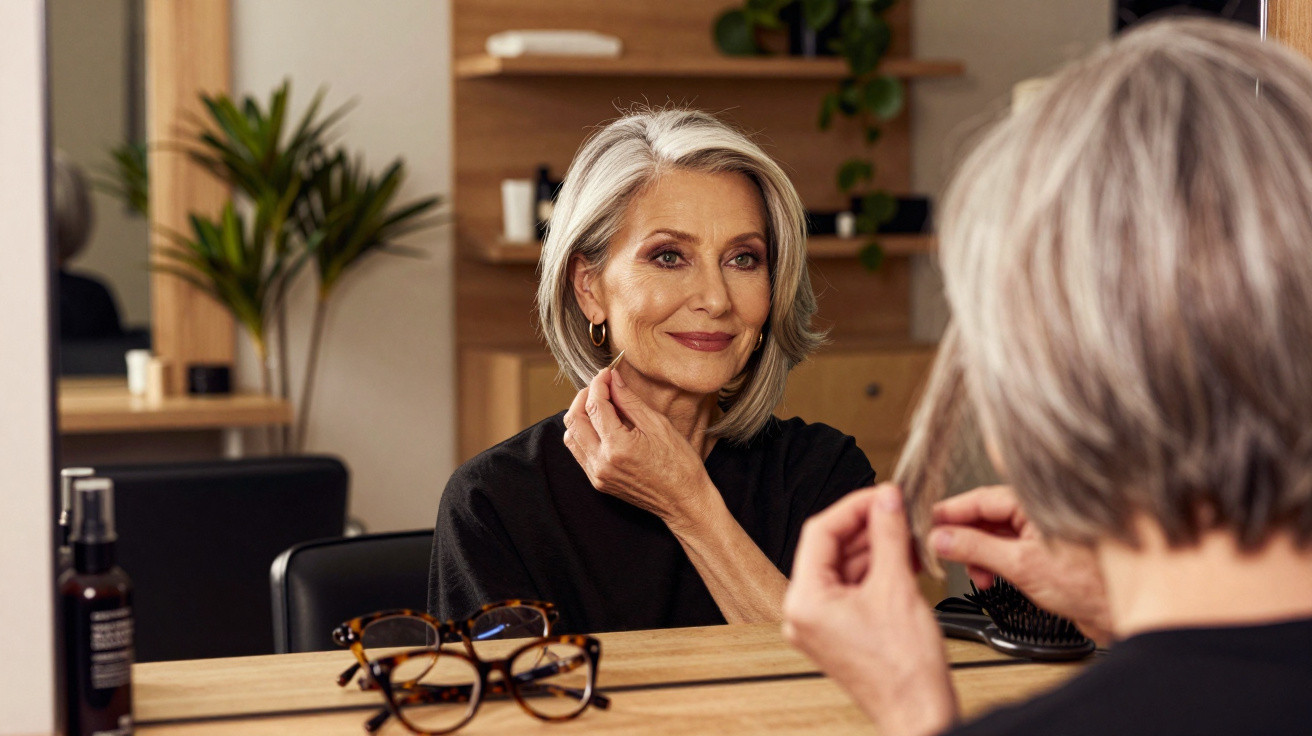
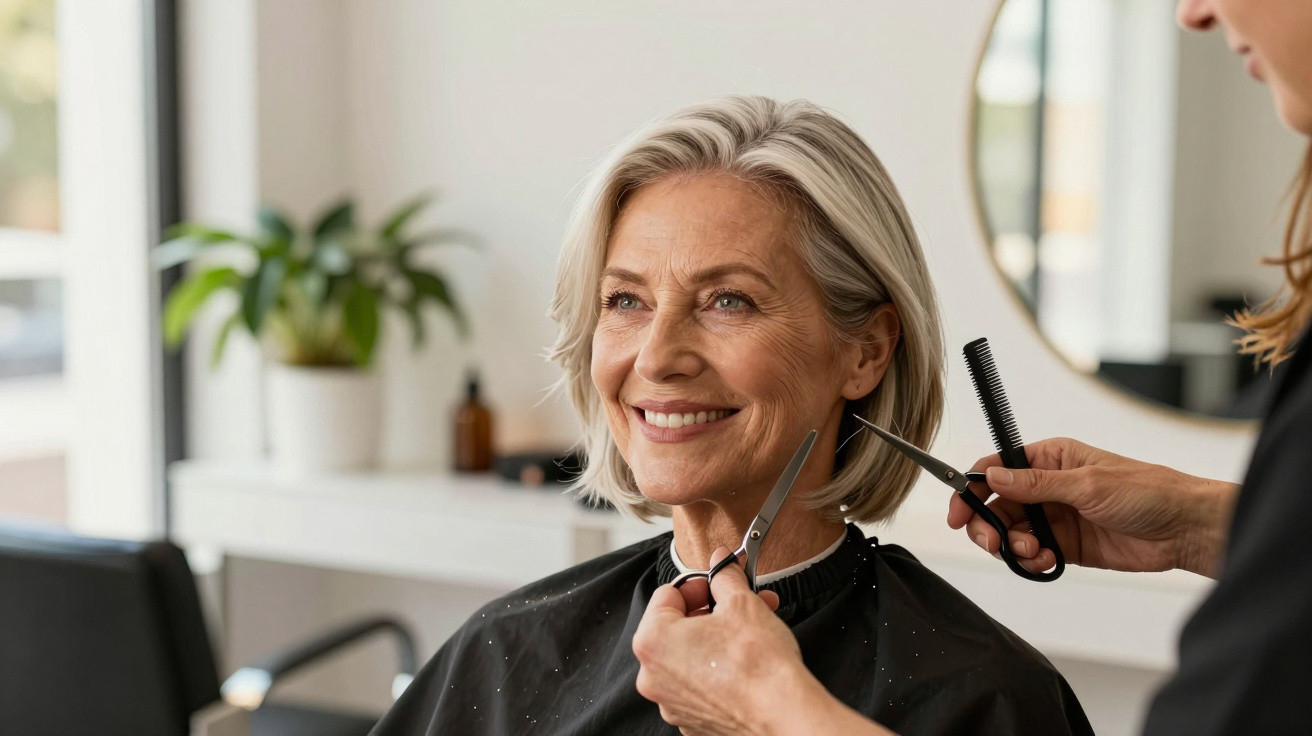
Grey hair: the pigments adhere well. The result is soft and flattering around the face. Strands take on a sheer cocoa tone.
Blonde or light brown hair: the highlight leans golden with a hint of mahogany. The outcome will not be ashy.
Brown and black hair: the effect is mainly visible on white areas. The rest of the hair becomes shinier. Repeated applications subtly build depth.
Curly or coily hair: the formula nourishes and defines curls. The mask must not be allowed to dry on the fibre. Adding oil prevents a stiff, crunchy finish.
Chemically treated hair: wait 2 to 3 weeks after colouring or bleaching. Alkaline residues interfere with how natural pigments take.
Safety considerations and limitations
Carry out a patch test 48 hours before application. Cocoa is generally well tolerated. Some scalps may react to honey or spices.
Avoid contact with the eyes. Shield the skin around the hairline with a balm. Rinse the shower straight away to prevent staining.
Cocoa does not cover 100% of grey hair in the way permanent dye does. It softens and tones. It does not alter the natural base colour.
Results depend on porosity. Very smooth hair absorbs less, while porous hair takes on more pigment but releases it quickly during washing.
Cost, impact and expectations
Average cost per application: €0.60 to €1.50, depending on the quality of the cocoa and selected ingredients. The price of a salon visit often exceeds €40 for a toner.
The environmental footprint is lower. No ammonia goes down the drain. There is less plastic packaging. Basic, accessible ingredients reduce waste.
Satisfaction is rising among people seeking a natural-looking result. Expectations should remain realistic. The finish is short-lived and requires light maintenance.
“Cocoa works like a beauty filter: it softens contrast around the face and revives the skin’s radiance.”
Advanced application method for a precise result
Strand test: separate a section at the nape of the neck. Apply the paste for 45 minutes. Rinse and dry it. Examine it in daylight. Adapt the recipe according to the result.
“Cocoa gloss” method: combine 1 part cocoa with 2 parts conditioner. Leave on for 15 minutes after washing. This creates a quick effect, ideal between two longer applications.
Improving longevity: shampoo less often. Use a gentle shampoo with a pH of 5.5. End every wash with a cool rinse to seal the cuticles.
Useful alternatives and combinations
- Coffee and black tea: deepen brown tones. They slightly counter yellowing in grey hair.
- Sage and rosemary: provide a lightly cool-toned glaze. They add fragrance and invigorate the scalp.
- Neutral henna: strengthens the fibre without a pronounced red tone. It gives hair more body.
- Low-strength henna + cocoa: for a high proportion of grey hair, this pairing provides better coverage with a controlled warm highlight.
- Walnut husk: produces a deeper brown. Test it on a strand because of the risk of staining.
Going further
Example maintenance plan: week 1, apply cocoa for 45 minutes. Week 2, use a cocoa gloss for 15 minutes. Week 3, take a break and use hydrating treatments. Week 4, carry out another 45- to 60-minute application if needed.
Strategy to avoid regrowth lines: concentrate the paste at the temples and along the parting. Blend it through the lengths during the final 5 minutes of processing. This prevents pigment build-up.
For hair that is 50% grey or more: combine cocoa with a more covering plant-based toner, such as a very diluted henna gloss. The shade remains light, while coverage becomes more even.
For a “rested” facial appearance: focus on the sections framing the face. Warm highlights at the temples and forehead soften the face shape and brighten the complexion.






Comments
No comments yet. Be the first to comment!
Leave a Comment