
But the people who truly stay young do one thing differently above all else.
Anyone who knows people in their mid-60s or even 70s who look as though they are a decade younger often wonders which serum or miracle treatment is behind it. The answer is sobering, yet liberating: it is far less about fighting wrinkles and much more about quietly giving up the habits that make the body age prematurely.
Biological age: Why your body has a different date of birth
Researchers now make a clear distinction between two measures of age: chronological age and biological age. Chronologically, your passport records your actual year of birth. Biologically, the question is how old your cells, organs and tissues truly are.
The difference between the two can become substantial. To a large extent, that gap is shaped not by genes but by everyday life and habitual behaviour. Anyone who constantly battles ageing while continuing to live as before is, metaphorically speaking, swimming against a powerful current – then wondering why their strength is fading.
“People who look noticeably younger in their 60s have usually not done more – they have simply maintained fewer destructive routines.”
Internal accelerators: Sugar, alcohol and convenient cheap food
How sugar stiffens collagen and makes skin sag
One of the biggest internal saboteurs is consistently high sugar consumption. This does not mean the occasional slice of cake, but the daily combination of sweetened drinks, snacks, ready-made foods and “hidden” sugar in sauces and baked goods.
A process known to specialists as glycation then takes place in the body. Sugar binds to proteins such as collagen and elastin, two key supporting structures in the skin. This creates what are known as “Advanced Glycation Endproducts” (AGEs). They make collagen rigid and brittle, leaving skin looser and wrinkles more pronounced.
Dermatologists vividly refer to this as “sugar jowls”. The phrase gets to the heart of it: it is not just time but, above all, prolonged exposure to sweetness that pulls tissue downwards.
Alcohol: A small shortcut with a major ageing effect
Alcohol also acts as an accelerator. Studies show that regular drinking, and particularly heavy drinking in bouts, raises biological age. Over the years, what may seem like a small lead of several months annually adds up to a clearly visible difference in the face and in how the body feels.
The familiar signs are easy to recognise: flushed skin, a puffy face, poor sleep and tired-looking eyes. Someone who appears almost “worn out” by their late 50s often carries years of liquid stress with them – even if the quantities do not initially seem dramatic.
People who age more slowly eat more mindfully – without dogma
People who look remarkably fresh later in life rarely follow a complicated dietary formula. They simply cook for themselves more often, choose highly processed products less frequently and instinctively notice how they feel after eating.
- Less ready-made pizza, more fresh ingredients
- Fizzy drinks and sweetened juices as an exception
- Enjoying alcohol deliberately rather than drinking it “on the side”
- Regular meals instead of constant snacking
Over the years, these seemingly unremarkable choices work like a quiet anti-ageing programme – without an added bill at the chemist.
Stress and sleep: The invisible pair that costs decades
When constant stress wears away the ends of cells
Chronic pressure from work, family or financial worries leaves visible marks. Not only in facial expressions, but deep inside the cells. Researchers have observed that sustained psychological stress shortens so-called telomeres – the protective caps at the ends of our chromosomes.
Shorter telomeres indicate accelerated ageing across all cell types. On top of this, stress drives up inflammatory processes in the body. The immune system remains permanently active, tissues suffer and regeneration slows. Many people who have gone through an extremely demanding period appear suddenly older afterwards – and that impression can be demonstrated in the laboratory.
Poor sleep deprives the body of repair time
Stress drains more than your mood; it also takes away sleep. When it is difficult to settle down, the body loses the hours in which its repair programmes operate: cells are renewed, DNA damage is repaired and hormones are rebalanced.
Studies associate persistent sleep problems with shorter telomeres, more cellular damage and faster epigenetic ageing processes. Put simply: too little sleep, or sleep that is constantly shifted, sets the internal clock to “fast-forward”.
People who look strikingly fresh at 65 do not usually sleep endlessly. They are simply consistent:
| Habit | Effect on ageing |
|---|---|
| A fixed bedtime | A steadier body clock and better regeneration |
| An evening routine without a flood of screens | Deeper sleep stages and less overthinking |
| Not sacrificing sleep for work or television series | Skin that looks younger over the long term and more energy |
“People who respect sleep look more alert in the long run – even with grey hair.”
Movement and sun: The visible external levers
Why sitting all the time makes the body age early
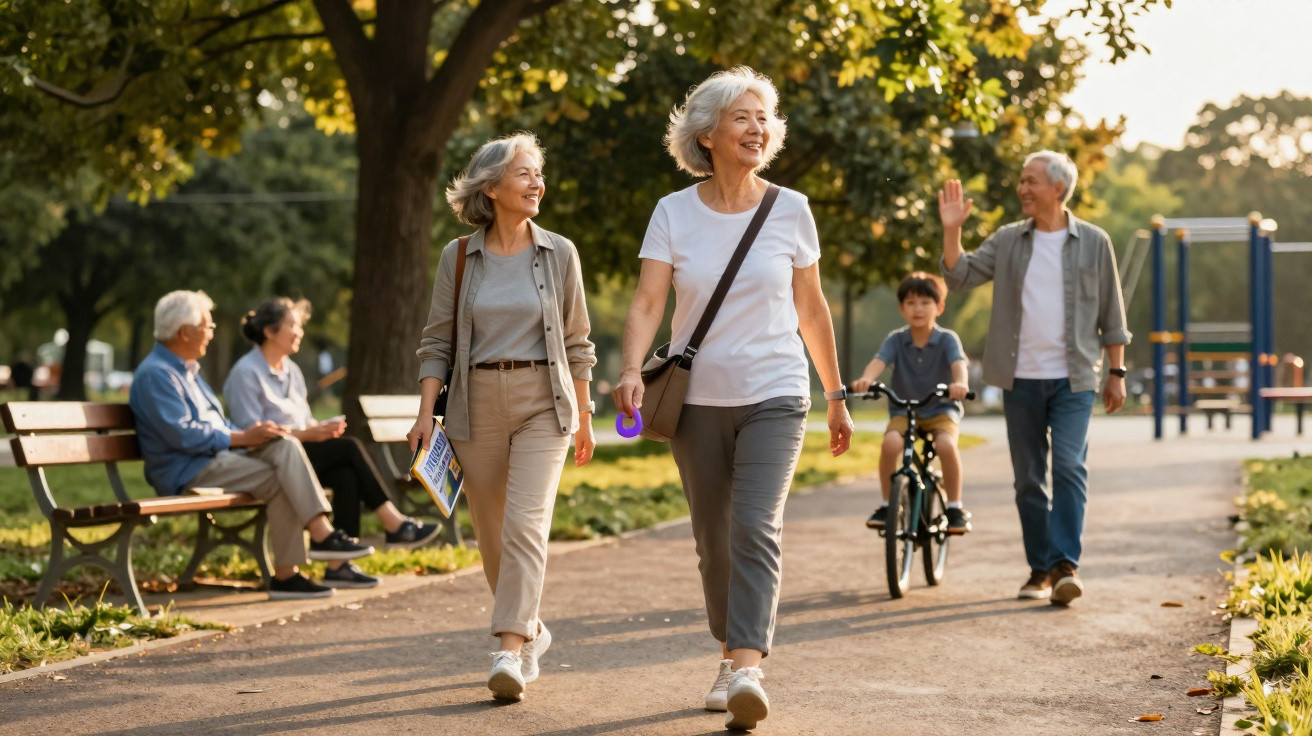
On the outside, too, the people who remain young are mainly separated from those who decline rapidly by one thing: movement. Studies clearly show that regular activity lowers biological age, while inactivity is one of the strongest drivers of ageing.
Importantly, this is not about marathon times or gym selfies. The real long-term winners are those who never completely stop moving:
- Daily walks, including in bad weather
- Gardening that involves bending, carrying and stretching
- Cycling, swimming and light strength training
- Walking for everyday journeys rather than taking the car every time
These routines keep muscles active, support a resilient heart and circulation, and train balance. Someone who still naturally climbs stairs at 70 not only tends to look younger but is also more independent in daily life.
Sunshine: A friend to your mood, an enemy to your skin
The greatest single external factor in skin ageing is UV radiation. It breaks down collagen fibres, encourages pigmentation marks and causes tiny injuries that accumulate over decades. A direct comparison makes this apparent: areas of skin rarely exposed to sunlight often look much smoother than the face or hands.
People who have younger-looking skin later in life are generally not afraid of the sun, but they are forward-thinking:
- Using sunscreen regularly, not just on beach holidays
- Choosing shade in the midday sun instead of taking the full force of it by the lake
- Wearing a cap or hat in strong sunshine
These measures cost little, yet they make an enormous difference over the decades – with fewer wrinkles, fewer marks and a lower risk of skin cancer.
Less is more: The principle of opting out of bad habits
Taken together, the research makes healthy ageing look like compound interest: small, consistent steps pay off enormously over time. The noticeably youthful people in their 60s and 70s generally do not have a secret luxury routine.
“They have simply quietly removed what was constantly harming their bodies – and done so early enough.”
The key levers can be reduced to a few points:
- Significantly less sugar and fewer highly processed foods
- A moderate, conscious approach to alcohol
- Identifying sources of stress and setting boundaries
- Treating sleep as non-negotiable
- Moving every day rather than only in phases
- Making sun protection standard rather than exceptional
Practical everyday examples of a “younger” lifestyle
In practical terms, this does not mean building a life made entirely of rules. Small, fixed changes are often enough.
For example, anyone who regularly hits an afternoon slump can try replacing sweet snacks with nuts, fruit and water for two weeks. Many then report steadier energy levels – and, over time, fewer weight fluctuations, which in turn eases the burden on joints and skin.
Rather than collapsing onto the sofa straight after work, a 20-minute walk without a phone creates a clear transition between work and private time. Your heart rate rises slightly, stress hormones fall and your mind becomes quieter – all better conditions for deep sleep.
It is also worth taking an honest look at how you handle stress: Which emails could wait until tomorrow? Which commitments take more energy than they give? People who remain conspicuously youthful do not say yes to everything. They set boundaries, change jobs if necessary or seek help early enough, before they burn out permanently.
Why small adjustments can still achieve a great deal at 50
Anyone already in the middle of it may quickly think: “Too late, the damage is done.” The evidence paints a different picture. Telomeres respond to lifestyle changes, inflammation levels decline, and skin regenerates when harmful influences ease.
Of course, time cannot be turned back. Wrinkles do not disappear completely, and grey hair grows back. But the pace can be slowed and, above all, the gap between chronological and biological age can shrink again.
That seems to make the difference between people who struggle through daily life at 70 and those who, with the same age in their passport, still have energy, alert eyes and a remarkably smooth-looking appearance. They do not fight every wrinkle – they stopped accelerating the ageing process unnecessarily early enough.









Comments
No comments yet. Be the first to comment!
Leave a Comment