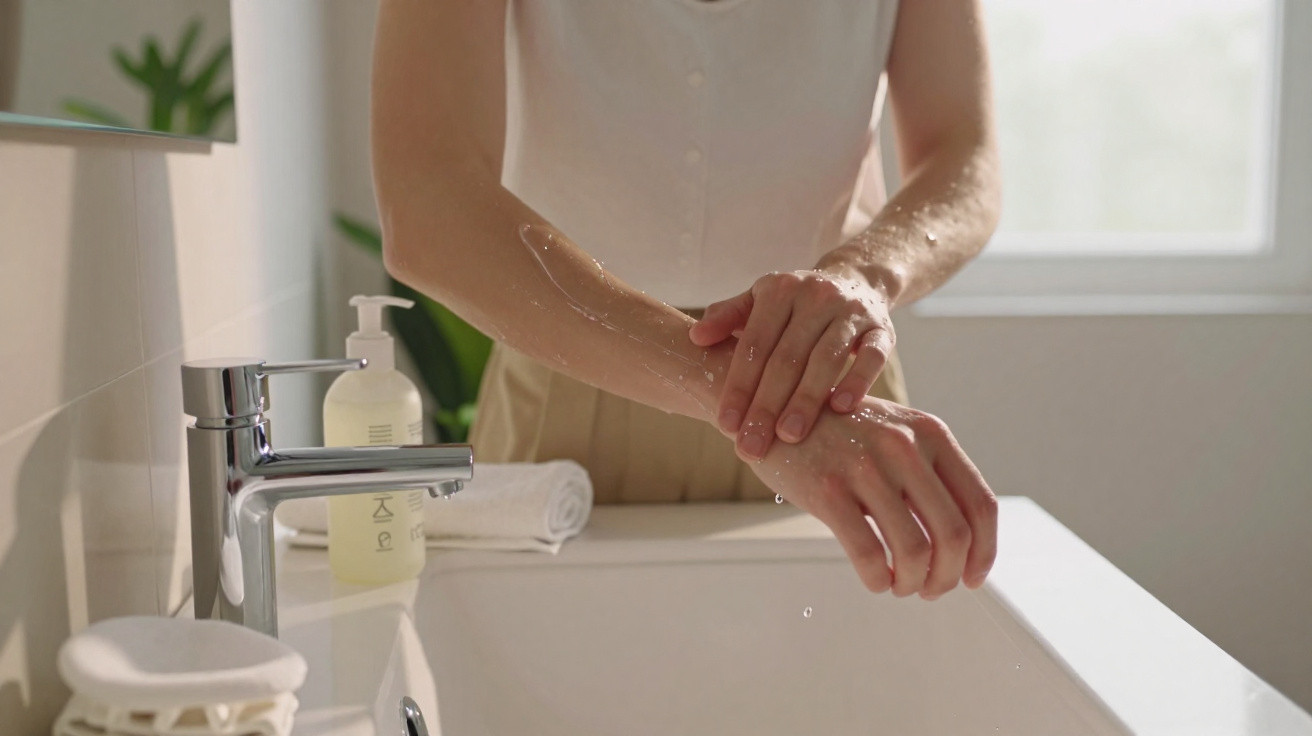
It may sound entirely counter-intuitive, yet you can maintain good body hygiene without ever turning on a tap.
Few things feel better than a properly hot shower - or a cold one, if you are trying to ease muscle soreness - after a demanding training session. As well as stopping you from smelling like a wild animal because of bacteria multiplying on your skin, it is one of life’s simplest pleasures: a chance to unwind, when the day’s worries seem to disappear down the drain with the water.
Yet showers are not available in every circumstance: perhaps you are staying in a high-altitude mountain refuge at 2,400 metres, wild camping, or have just finished an ultra-trail in the countryside. For people committed to strenuous effort, there is a useful secret weapon in such situations: waterless shower gels, also known as “no-rinse” gels. Costing between €5 and €30 depending on the size and brand, they are easy to pack before setting off on an adventure and readily available from supermarkets, chemists and sports shops.
Why your skin does not always need water to get clean
First, let us dispel a common misconception: water is not the active cleaning ingredient in your shower. You have probably seen this yourself when trying to remove a greasy mark from the sofa or rinse oil-covered hands after cooking. Use water alone and you will simply end up with… wet grease. Greasy substances are hydrophobic: they repel water rather than blending into it.
What actually does the cleaning is the surfactant: a molecule found in shower gel with a distinctive make-up. One end binds to oily matter, including sebum and sweat, while the other remains water-soluble. At a sufficiently high concentration, these molecules naturally form micelles - tiny spherical structures that trap impurities at their centre. Water merely carries those impurities away during rinsing; it acts as the carrier solvent that flushes out the dissolved residue.
How waterless shower gels work
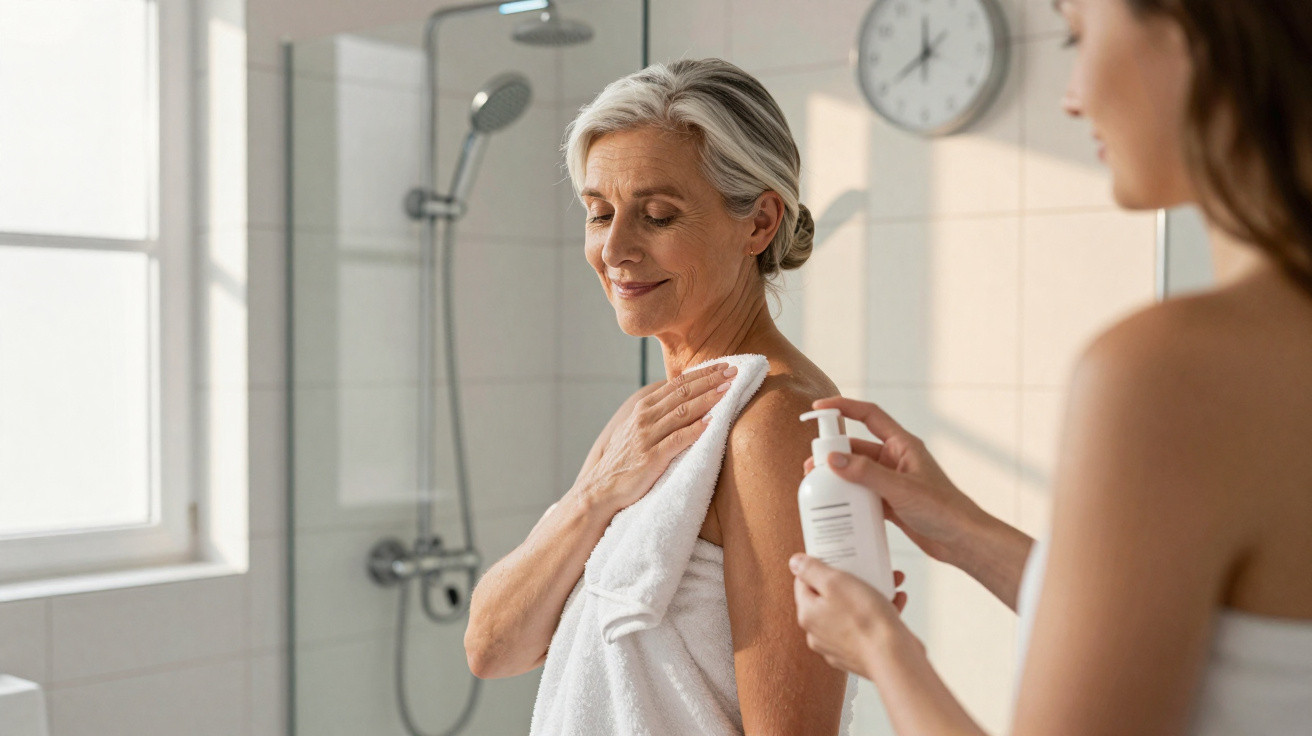
No-rinse gels also contain surfactants, which work by the same principle: they encase organic residue in micelles that remain suspended in the gel. Simply spread it over your skin as you would an alcohol hand gel, then rub your body firmly with a clean towel. The mechanical action of the fabric takes the place of water: its fibres lift away the impurity-filled gel.
These products are therefore highly useful for cleaning yourself in many circumstances, not only after high-intensity sport. If you cycle to work, for instance, you will almost certainly recognise that deeply awkward moment after a 20 km ride in blazing sunshine, when you are left waiting for yourself to dry before going upstairs to see your colleagues. Even if cycling is not your thing, applying a no-rinse gel can freshen key areas without requiring you to improvise a wash over a tiny basin.
Waterless shower gels are not a replacement for washing
That said, do not assume they can replace showers altogether. These gels are excellent stand-ins, but some can eventually leave a thin film of polymers and setting agents on the epidermis. After repeated use, this may disrupt the hydrolipidic film’s balance and block pores. Use them sparingly, unless you particularly want your skin to become as waterproof as oilcloth.
And, honestly, a shower will always be more enjoyable. Beyond removing dirt more effectively, the force of its spray stimulates lymphatic and blood circulation, while exposing your body to water may help reduce cortisol production, the stress hormone. Think of these gels as a practical stopgap - the dermatological equivalent of spraying deodorant over a jumper: it helps in a pinch, but it fools nobody.






Comments
No comments yet. Be the first to comment!
Leave a Comment