The woman in the salon chair studies her reflection as though she is seeing a stranger. Her dark, box-dyed hair is flawless in theory: glossy, uniform and with no grey visible. Yet beside it, her complexion appears more severe, the fine lines stand out and her eyes seem somehow smaller.
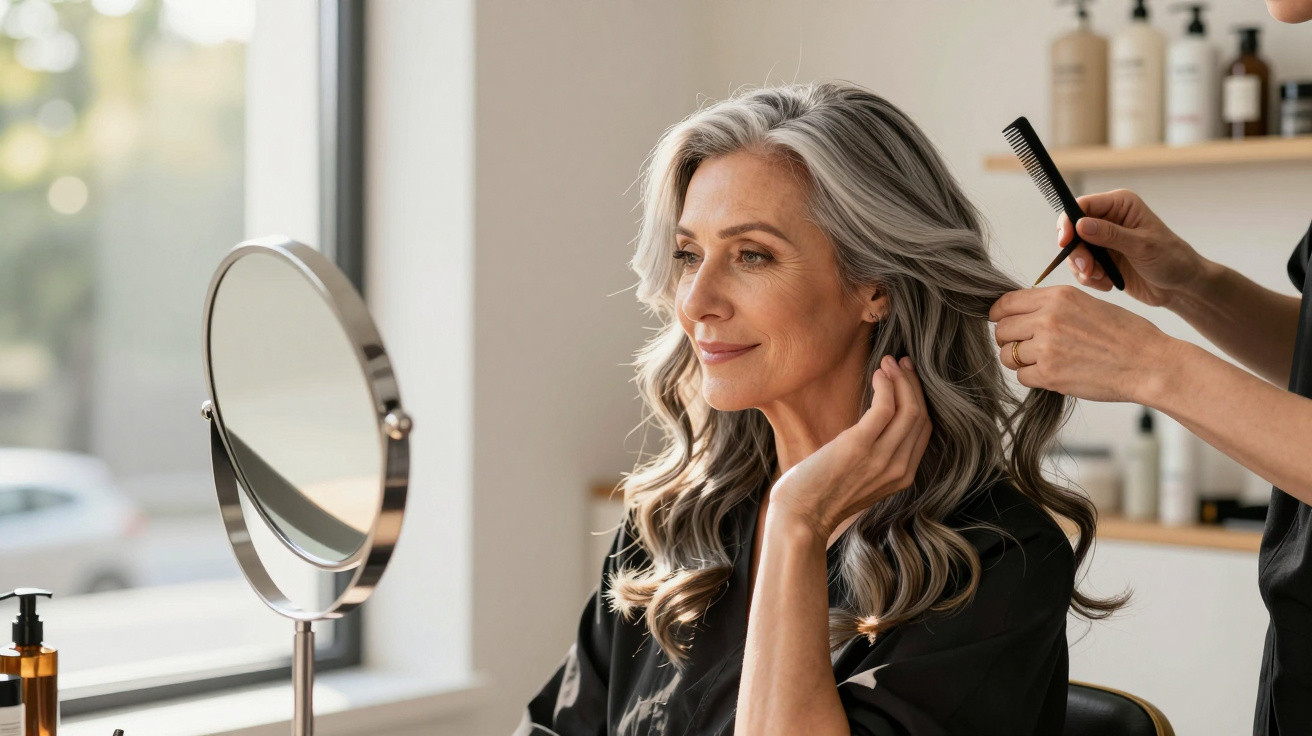
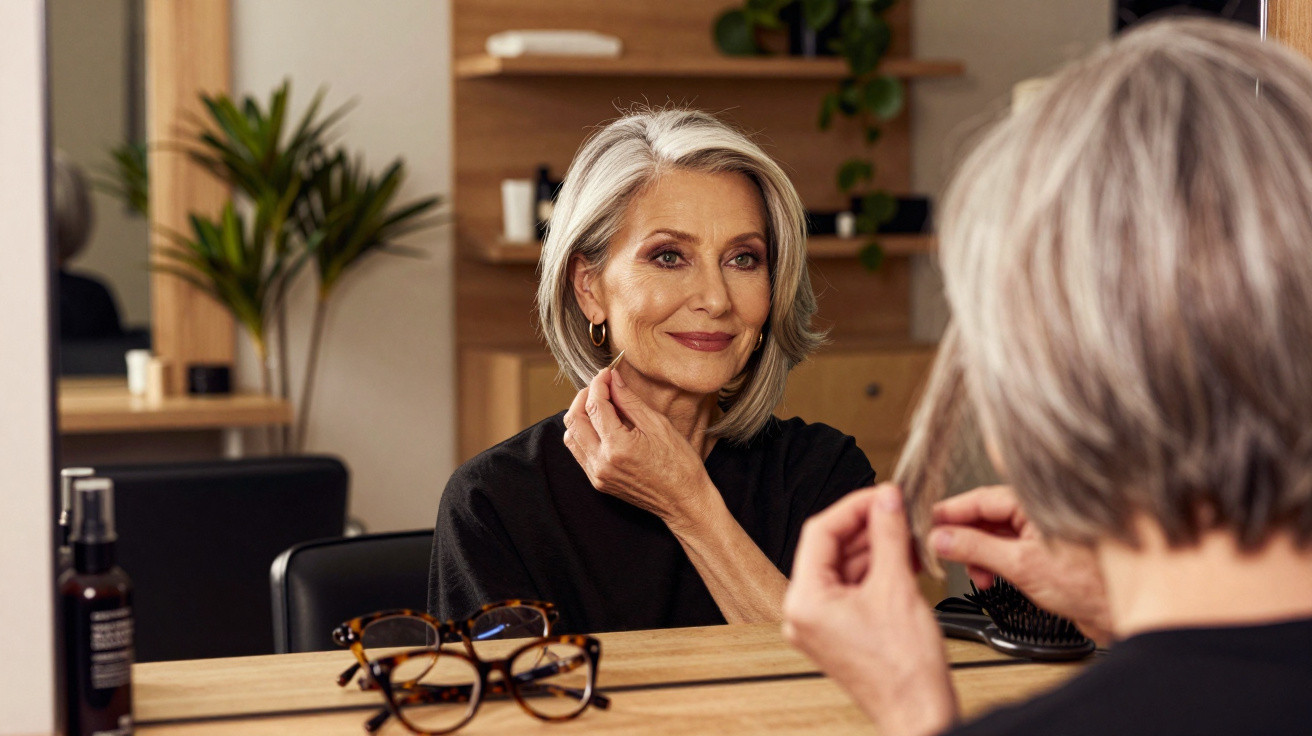
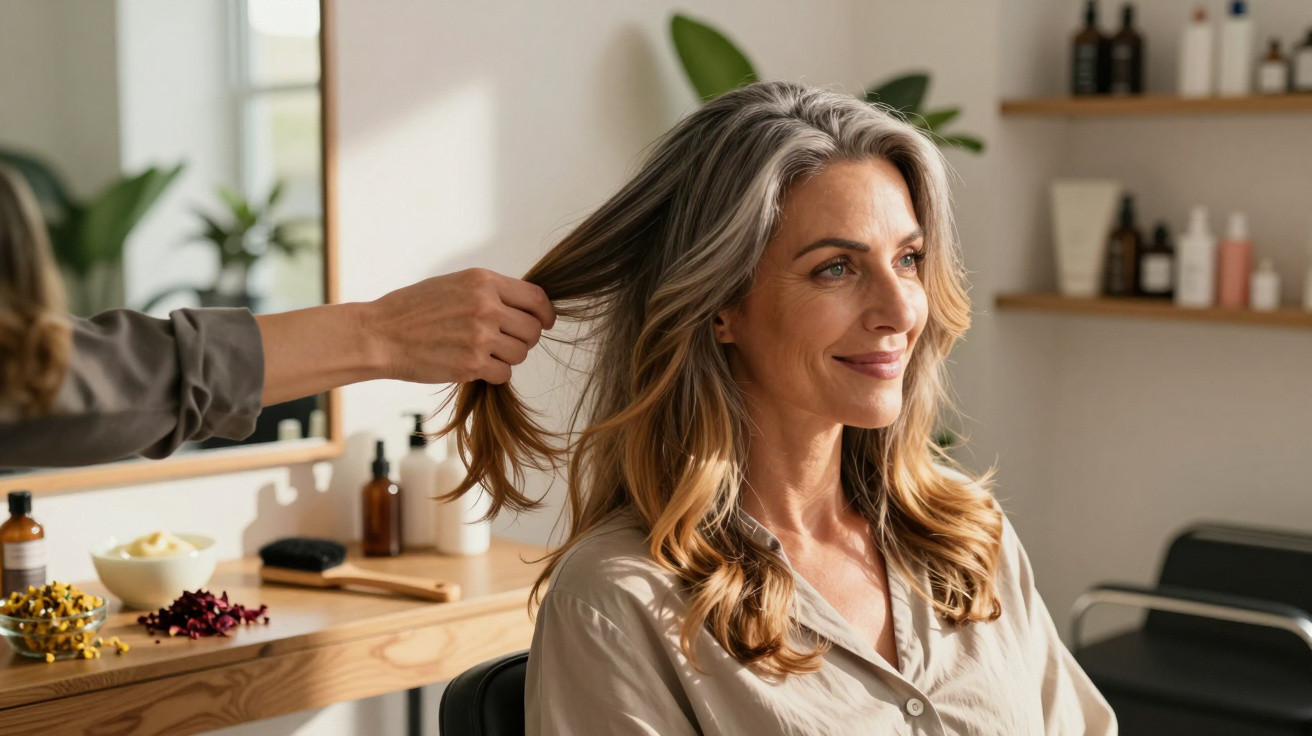
Beside her, a second client is having her foils taken out. Delicate strands of silver flow into ash-blonde and warm brown. Her roots have not been concealed but merged into the colour, and the result feels unexpectedly fresh. She appears… lighter. Not as if she is “trying to be 25”, but brighter, more rested and almost lifted.
The first woman lets out a sigh. “I’m so tired of the grey coming back every three weeks.”
The colourist smiles, speaks more quietly and asks: “Have you heard of grey blending?”
The woman lifts an eyebrow.
Something changes in the mirror.
Why grey blending looks fresher than dark dye
Grey blending is a subtle hair revolution taking place in salons that may not even have an Instagram account. Rather than battling every silver hair, colourists are learning to incorporate them, reducing contrast instead of covering them with colour.
At first, it may resemble another balayage craze. The purpose, however, is different. While a solid dark dye can form a rigid helmet of colour, grey blending allows natural light and variation to remain in the hair.
The effect is that faces appear less stern, hairlines look gentler and grey hair is no longer the enemy. It simply becomes part of the story.
There is a reason an all-over dark dye can make you look older, even when the shade itself is beautiful. Strong, flat colours create a severe outline around the face, particularly at the hairline. Fine lines, shadows and under-eye circles can look more pronounced against such a dense block of darkness.
Grey blending interrupts that outline. Lighter sections and translucent, smoky shades are woven through the natural grey, so the eye no longer focuses on “roots vs lengths”. Instead, it sees dimension rather than damage or “letting yourself go”.
During a busy Saturday at a London salon, three women in their 40s walked out with softer tones and blended greys. All three expressed the same thought in different ways: “I look more like myself.” That is not about fashion. It is about relief.
Technically, grey blending succeeds because it honours contrast. As we get older, our skin naturally loses warmth and pigment. If hair remains unnaturally dark, that mismatch becomes more obvious. This is why a colour that looked incredible at 25 may feel “too much” at 45.
By lightening some sections and toning others, colourists make the hair work with the skin’s current reality. The result reads as harmony rather than tension. It is a discreet technique that softens the face without acting as though you have never encountered a grey hair.
Put simply, grey blending is not trying to turn back time. It adjusts the lighting.
How to get grey blending right without leaving with stripes
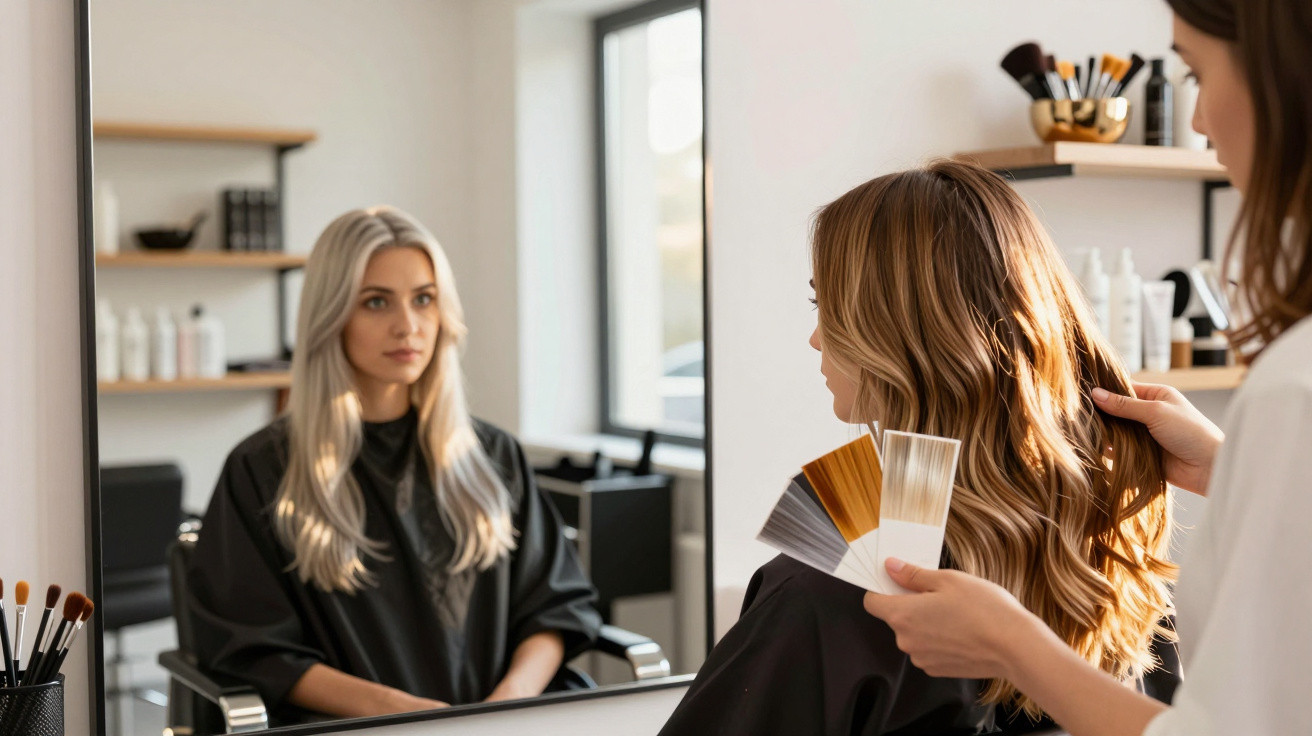
The first stage is not selecting a shade. It is having a candid conversation with your stylist about your intended destination: “fully silver in five years”, “salt-and-pepper chic”, or simply “less root stress”.
A skilled colourist will then assess the pattern of your greys. Are they concentrated around the temples? Spread throughout the hair? Most noticeable along the parting? That pattern provides the plan. Fine foils, small balayage strokes and thoughtfully selected lowlights are applied precisely where the eye naturally looks first.
Rather than viewing grey hairs as something to erase, treat them as existing highlights. The stylist’s role is to enhance them using gentle tones, not battle them with a solid wall of pigment.
The biggest grey blending mistake is lifting the colour too much, too quickly. Going dramatically from dark box dye to cool silver might appear stunning on Pinterest, but on real hair that moves and lives, it can look costume-like.
There is another pitfall: requesting “ash” when your skin has plenty of warmth. Extremely cool shades can emphasise facial redness, making flushing and broken capillaries more apparent. A good colourist will steer you towards neutral or gently warm shades that reflect your own undertones.
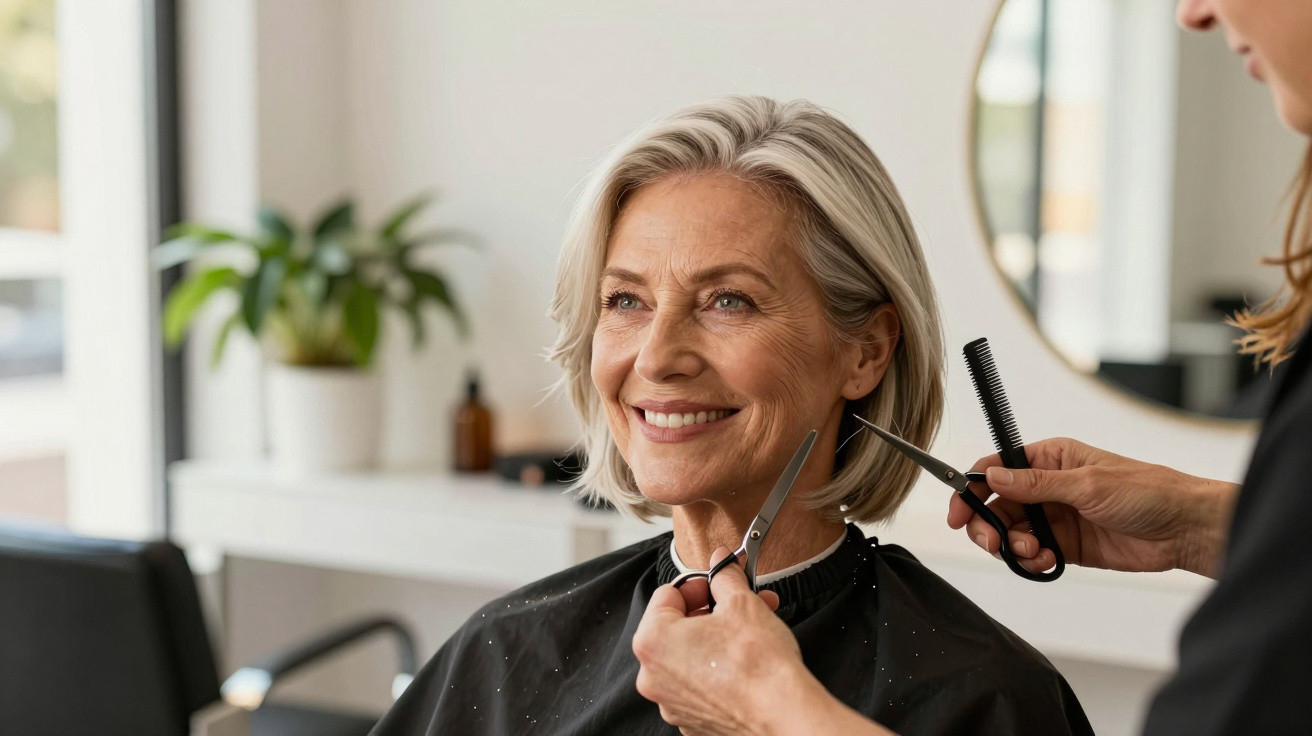
The emotional aspect matters on a personal level as well. Allowing grey hair to show, even when it is blended, can leave you feeling exposed. The right stylist will not roll their eyes or give you a lecture. They will recognise it for what it is: a significant, personal style choice rather than a moral position on ageing.
“Grey blending isn’t about giving up,” says Sam, a London colourist specialising in over-40 clients. “It’s about stopping the fight you were never going to win and choosing something that actually suits your face today.”
For anyone who prefers practical advice, these approaches tend to work best in the salon chair:
- Take photos of hair with a similar texture and amount of grey to yours, rather than only your dream shade.
- Request a transition plan over 6–12 months instead of expecting a miracle in one appointment.
- Be honest about maintenance: salon appointments, budget and what you will genuinely do at home.
- If you feel apprehensive, begin with subtle blending around the front and parting.
- Keep layers uncomplicated; excessive choppiness can make grey hair seem frizzy rather than airy.
Living with blended grey: what changes and what stays the same
The most unexpected thing people mention after choosing grey blending is not their hair itself, but their mindset. Once the harsh regrowth line vanishes, the relentless countdown to the next appointment often disappears with it.
Washing your hair feels different when every new silver strand catching the bathroom light does not cause panic. Work meetings, dates and school runs can all happen without that small voice saying, “People can see your roots.”
Yes, the hair looks softer. But the greater change is how much less mental space it requires.
There is a subtle social impact, too. Friends may say, “You look really well,” without being able to identify the difference. Online, increasing numbers of influencers in their 30s, 40s and 50s are sharing their transition from fully dyed hair to blended silver.
We have all seen a woman with natural salt-and-pepper hair and thought, almost without meaning to, “She looks cool.” Grey blending occupies the space between the reassurance of colouring hair and the boldness of going completely natural grey.
It gives you the chance to test that effortless feeling without diving straight in at the deep end.
At home, the routine is easier than an all-or-nothing dye cycle. You might use tinted shampoo to prevent brassiness, have a gloss every few months and perhaps opt for a root smudge once or twice a year. Let’s be honest: nobody really does all of that every day.
The more significant change is psychological. Rather than chasing “no greys”, you are seeking beautiful texture, healthy shine and a colour that works with your face instead of against it.
For many women, that small shift in perspective is where real youthfulness lies.
Grey blending does not demand attention in the street. It does not make grand claims about anti-ageing or remaking yourself. It simply gives your features room to breathe again. Some people will love that. Others will always favour the certainty of rich, glossy dark dye, and that is equally valid.
What is changing is that the middle ground can finally be seen - and it appears far younger than anyone expected.
| Key point | Detail | Why it matters to the reader |
|---|---|---|
| Grey blending softens contrast | Uses highlights and lowlights to merge greys with existing colour | The face appears brighter and lines look less severe |
| A transition, not a transformation | Works best as a gradual change over 6–12 months | Reduces shock, damage and regrettable cuts or colour choices |
| Maintenance becomes lighter | Fewer root touch-ups, with the emphasis on tone and shine | Saves time, money and the mental load of “root panic” |






Comments
No comments yet. Be the first to comment!
Leave a Comment