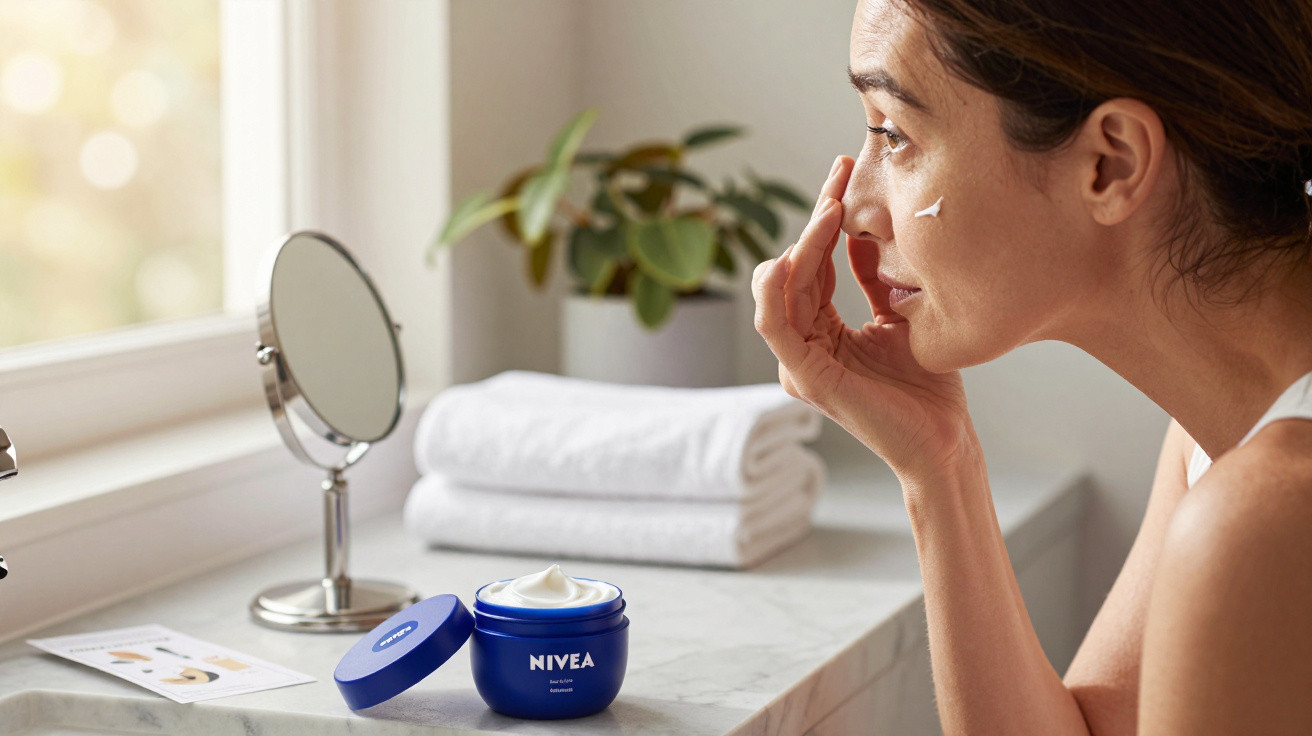
Some people apply it like a secret weapon: wrinkles meet a decidedly old-school approach.
When lines seem pronounced and make-up refuses to sit properly, many turn to Nivea cream. The principle is straightforward: provide intensive moisture, smooth the skin’s texture and make creases appear less noticeable. It can be effective on the surface, although the outcome varies according to your skin type, the formula chosen and the other products in your routine.
What Nivea cream does on the skin
Classic Nivea Creme is a rich, occlusive product. By creating a fine layer across the skin, it seals in water and slows transepidermal water loss. Glycerin and panthenol attract and retain moisture, while lanolin alcohol and waxes help keep it there. As water slightly plumps the skin, fine lines can seem less deep for several hours.
Nivea’s Q10 ranges contain ubiquinone, an antioxidant that can help neutralise free radicals. This is relevant because oxidative stress may accelerate collagen degradation. Its effect is gradual and limited, and improvements in texture may be apparent before any genuine change in the depth of lines.
Moisture plumps. Occlusives hold that moisture in place. Together they blur fine lines, but they don’t rebuild collagen.
Hydration, plumping and the wrinkle illusion
Dry skin tends to crease more distinctly. Adding hydration to its upper layers makes it less rigid, helping to soften the appearance of crow’s feet and smile lines. Make-up also tends to apply more smoothly over a plumper surface, which is why some people use Nivea as an inexpensive primer.
Deeper wrinkles respond differently. They develop as collagen diminishes and elastin becomes less firm. A dense cream cannot fill these indentations; it can only make their edges appear softer. Retinoids, peptides and sunscreen are the products that support structural changes over months rather than hours.
Expect smoothness and glow within minutes; expect change in wrinkle depth only with a full routine over time.
Where Nivea cream works well
- In cold weather and centrally heated homes, it helps protect against dryness and tight-feeling skin.
- Following a gentle acid or retinoid evening, it can lower the likelihood of flaking and irritation.
- Beneath make-up on normal to dry skin, it provides glide and a soft-focus effect.
- Used to seal in moisture on the hands, neck and chest, it can keep delicate areas comfortable.
Where it may not be enough
Those with oily or acne-prone skin may find its consistency excessively rich. Occlusive products can hold in oil and perspiration, potentially causing congestion in certain areas, particularly the T-zone. Fragrance in several Nivea formulas may irritate sensitive, reactive or rosacea-prone complexions. Around the eye area, thick cream can contribute to milia for people who are susceptible to them.
If your skin breaks out or stings with fragrance, choose a fragrance-free moisturiser with glycerin, squalane or ceramides instead.
What you may notice and when
| Effect | Why it happens | Typical timeframe |
|---|---|---|
| Softer feel and surface glow | Humectants draw water; occlusives reflect light | Minutes to hours |
| Fine-line blurring | Epidermal hydration swells corneocytes | Within a day, while skin stays hydrated |
| Improved tolerance to active skincare | Barrier support reduces dryness and flaking | Days to weeks |
| Slight boost in skin firmness (Q10 ranges) | Antioxidant support against oxidative stress | Weeks, with consistent use |
How to use it without fuss
Apply it for maximum hydration
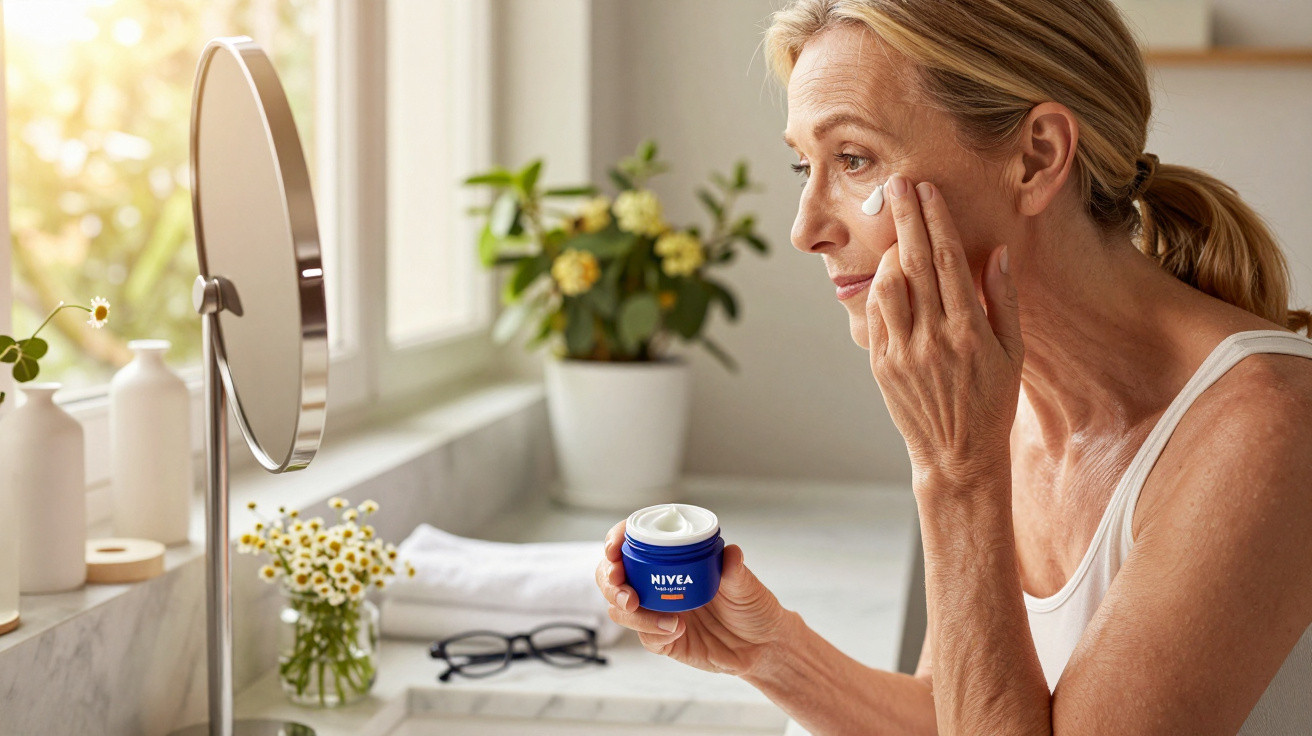
Apply it to skin that is still slightly damp after cleansing. For the face, use an amount between the size of a pea and an almond. Warm the cream between your fingertips, press it onto the skin and then smooth it out. Apply it to the neck and upper chest too if these areas feel tight. In the evening, use it as the final layer of your routine.
Combine it with line-fighting actives
During the day, finish with SPF 30 or above. Sun protection helps stop new lines from developing. At night, apply Nivea after a retinoid or peptide serum. This layering approach can minimise dryness and support the skin barrier while the active ingredients work.
- Morning: gentle cleanse, antioxidant serum, Nivea (thin layer if needed), sunscreen.
- Evening: cleanse, retinoid or peptide serum, Nivea to seal.
Who should patch-test first
Anyone with a fragrance allergy should test it on the jawline for two nights. People prone to acne can begin by applying it only to their cheeks. If closed comedones develop, restrict use to the drier parts of the face. For eyelids, choose a lighter eye gel rather than a heavy occlusive if you are prone to milia.
Price, availability and which Nivea cream to choose
Its affordability and wide availability are part of its attraction. The classic tin lasts a long time and is convenient for travel. For daytime use, a lighter Nivea Q10 day cream with SPF may suit normal skin. At night, richer Creme or a Q10 night version can help counter moisture loss during sleep.
Label details to check
- For hydration, check that glycerin and panthenol appear near the top of the ingredients list.
- Look for fragrance if your skin is easily reactive.
- Choose SPF in daytime products; the blue tin does not contain it.
No moisturiser removes etched wrinkles. It can reduce the look, improve comfort, and help other actives work with less irritation.
Extra context worth knowing
Wrinkle care builds over time. Consider it as a series of layers: daily sunscreen helps protect collagen, retinoids encourage cell turnover, antioxidants help limit oxidative stress, and an occlusive such as Nivea locks in hydration. Together, this approach can create smoother texture and more even-looking tone. The cream acts as the seal rather than the main treatment.
Texture also affects how make-up performs. If foundation pills, use less product and allow ten minutes between application steps. Press powder on gently rather than buffing it in. For beards or stubble, apply the product in the direction of hair growth to avoid clumping. During flights or train journeys where the air is dry, a small amount applied midway through can keep skin supple and prevent a tight, shiny appearance on arrival.
Risks, benefits and a simple trial plan
The potential benefits are clear: reduced water loss, lines that look softer at first glance and greater tolerance of active formulas. Possible drawbacks include breakouts on oilier skin, fragrance sensitivity and milia around the eyes. A seven-day test will reveal most of what you need to know. Apply it each night to damp skin, avoid the T-zone if you clog easily, and note how your make-up performs the next morning.
For more significant changes to wrinkle depth, introduce a retinoid or peptide complex. Keep Nivea as the comforting final layer. This gives you visible daily plumping, while evidence-based actives work on the underlying structure that is not yet visible.









Comments
No comments yet. Be the first to comment!
Leave a Comment