
The woman sitting opposite me in the café has hair that appears to have simply… grown into that shape. It moves softly, without crunchy curls or straightened ends determined to flick out. She repeatedly tucks one side behind her ear, and it settles back like an unhurried wave. It is obvious she has not battled with a round brush at 7 a.m. Her hair has been air-dried, yet it looks polished, deliberate and almost editorial.
All around her, people flick through Reels claiming to reveal “the one product you need” while discreetly holding on to their blow-dry brushes. There is a private envy few of us acknowledge: we want a haircut that looks good when we have done virtually nothing to it.
Not perfectly good. Just… right.
The sort of cut that is forgiving on a Tuesday.
Why some hair looks good without any styling
Once you spot it, it becomes impossible to ignore: people with seemingly “effortless” hair have not merely been favoured by the hair gods. They have a very particular type of cut. The movement appears to begin at the roots, the ends are gently tapered, and the overall shape remains intact even when the weather works against it.
This is a haircut that considers air-drying the standard approach rather than a fallback. Its layers sit where the hair naturally curves. Length provides weight in the places where frizz would usually take over. The cut’s outline frames the face softly instead of creating a severe line. Rather than battling your texture, you are making the most of its laziness.
Hairdressers encounter this constantly: someone arrives with a screenshot of glossy, sleek, blow-dried hair, only to admit that they hardly ever use a dryer. One Paris stylist told me that nearly 70% of her clients now ask outright, “Can this look good without styling?” She smiles because it is an honest question. What they really mean is, “I’m tired.”
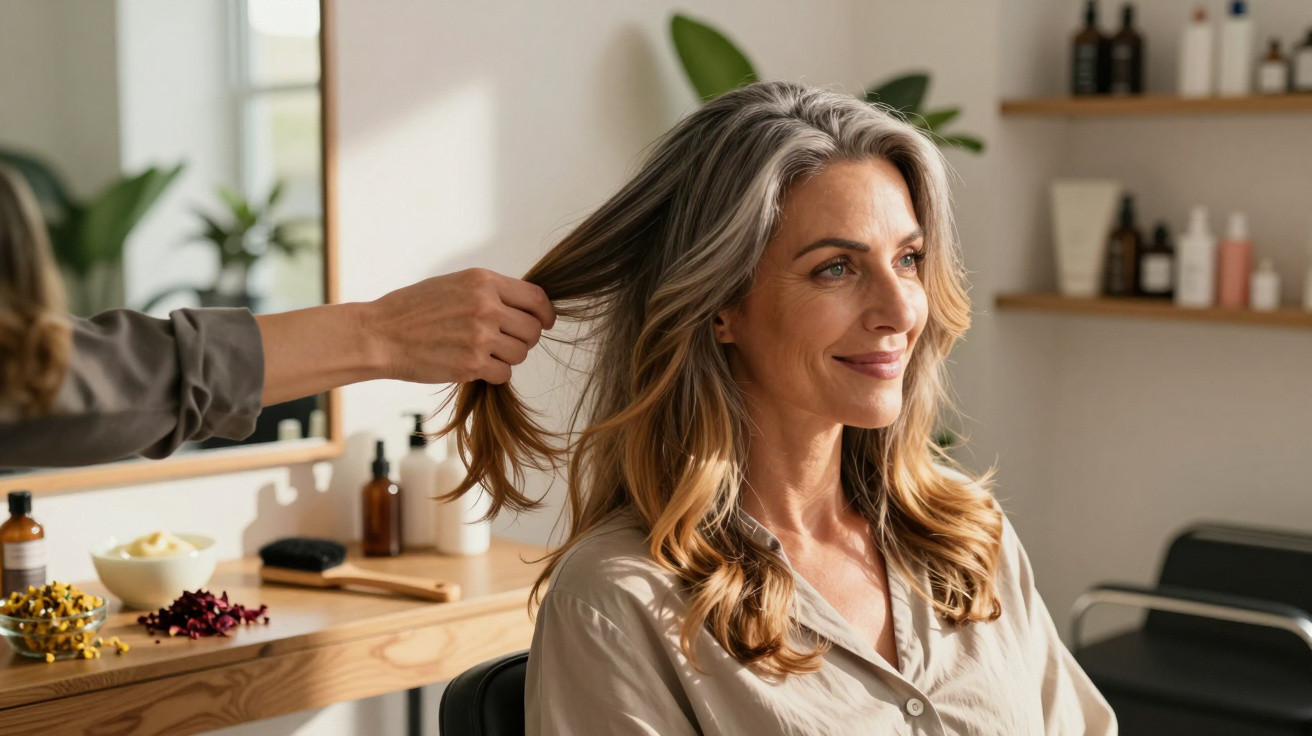
She recalls one client with shoulder-length hair that expanded when left to its own devices. Adding invisible layers beneath the top section and raising the length slightly away from the shoulders transformed it. The hair was the same, as were the products and her life. Yet after showering and allowing it to dry naturally, the ends curved inwards, the volume softened into a gentle halo, and her hair finally suited her routine.
There is straightforward logic behind it. Hair has a default setting: a pattern it will always attempt to return to, whether that is waves, curls, cowlicks or flatness. When a cut disregards that setting and imposes an Instagram-inspired shape, the hair pushes back as soon as the dryer is switched off. If the cut follows your natural pattern, however, the hair settles into place without supervision.
The magic is not found in a miracle product or a secret towel. It comes down to geometry, weight, and the points at which scissors enter and leave a strand. That is the understated technology behind a great haircut.
The air-dried haircut that works with your hair
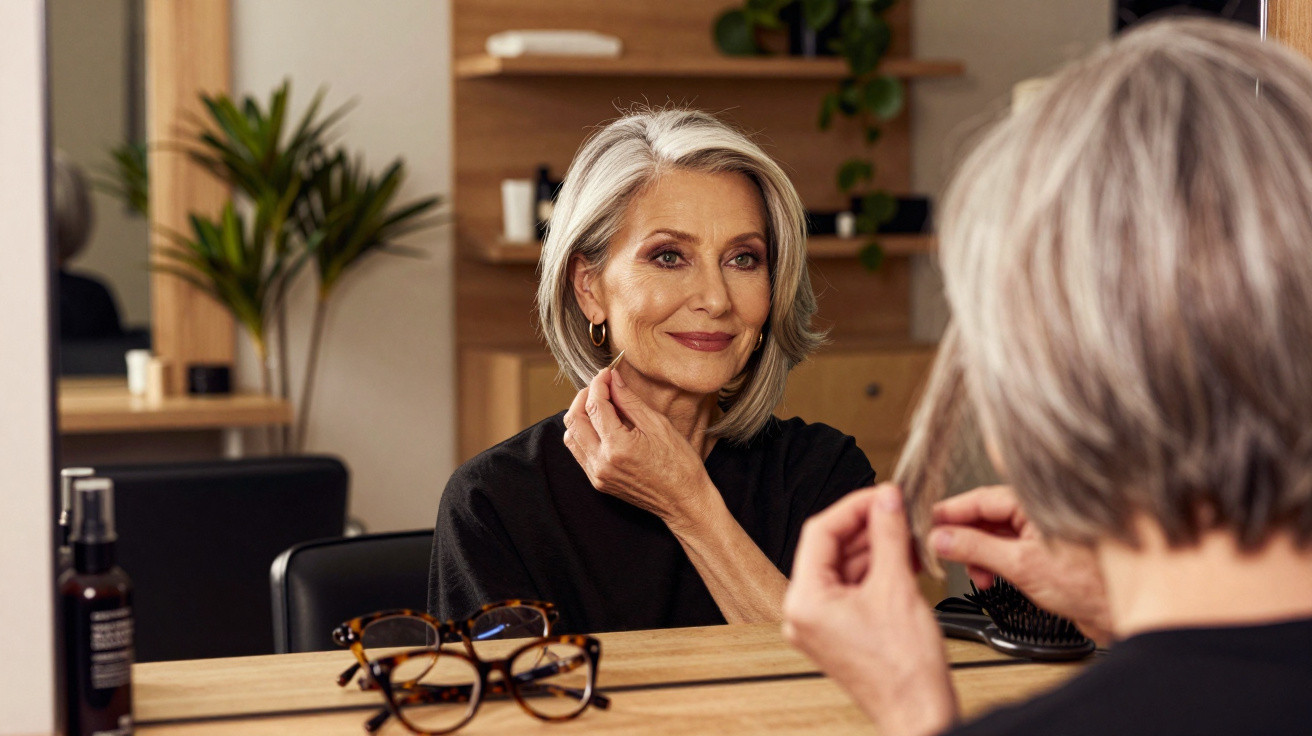
Across different hair textures, the most forgiving air-dry haircut shares one feature: an easy, lived-in silhouette with softened edges. Think of a length from the collarbone to just beyond the shoulders, with subtle layers beginning below the cheekbones and never creating a stark step. On straight or lightly wavy hair, it resembles a long bob with movement. For curlier textures, it is a rounded shape in which curls stack softly rather than forming a triangle.
The key lies in distributing weight. A blunt, weighty bottom line can look stylish when blow-dried, but become bell-shaped when left alone. A handful of thoughtfully positioned internal layers takes away bulk without reducing the hair to frizz. You retain fullness, but with air within it. The hair can fall where it naturally wants to, while the cut’s structure prevents it from becoming unruly.
Imagine a friend who always looks pulled together, even in leggings and a sweatshirt. Her hair may be a tousled lob, with ends brushing her collarbones and sections that naturally flick away from her face. She insists she “did nothing.” You are not entirely convinced, but when you check her bathroom on your next visit… she genuinely has no round brush. There is only a comb, a wide-tooth brush and perhaps a single leave-in cream.
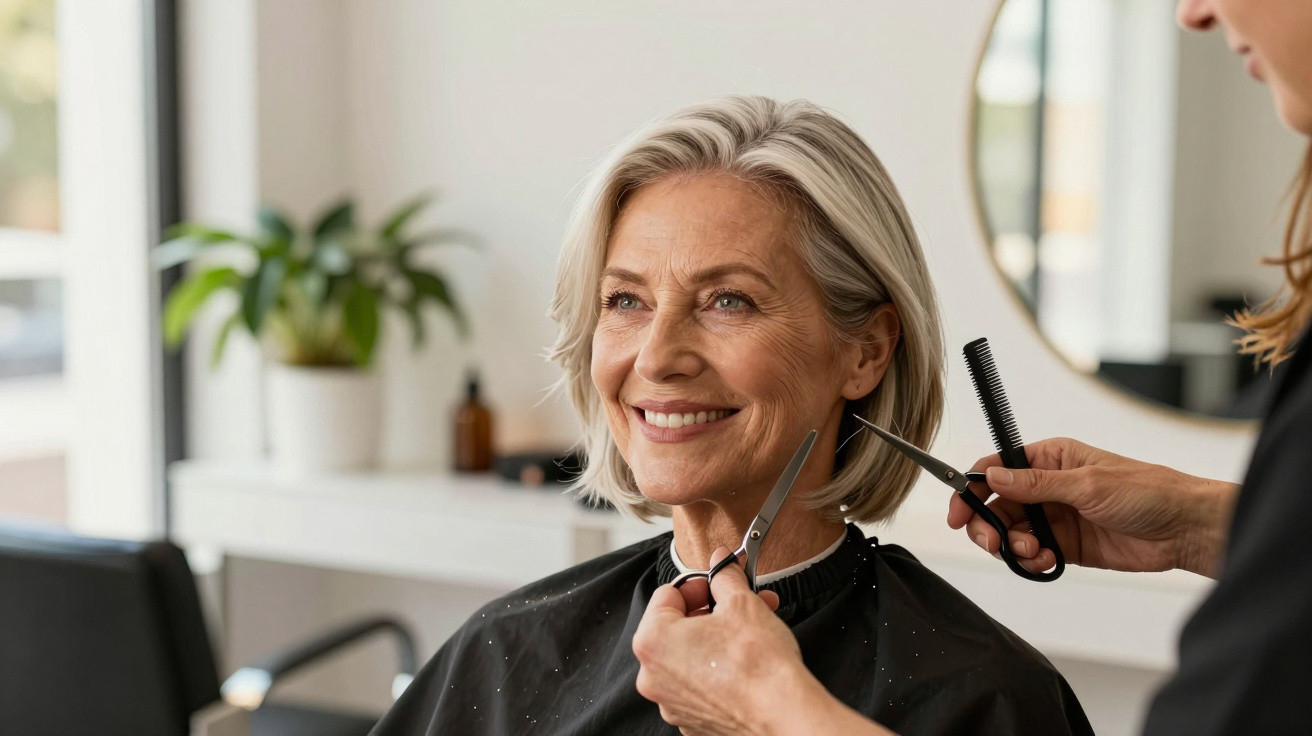
She says her best-ever cut began with the stylist observing her hair as it dried. They sprayed it with water, allowed it to air-dry for ten minutes, then cut according to the way it lifted, sprang and fell. There was no glossy blow-dry reveal. Instead, the hair was allowed to do what it wanted, then edited rather than transformed. That small story reveals a quiet truth about what genuinely works.
Technically, an air-dry-friendly cut accounts for both density and direction. A cowlick at the front? The stylist avoids creating a heavy fringe that will separate the moment it dries. Very fine hair? They steer clear of severe layers that will fall into limp, stringy ends. Coily hair with significant shrinkage? They cut where the curl sits, rather than where the stretched strand extends to.
Let us be realistic: almost nobody does this every day. Most of us wash our hair, squeeze it with a slightly too-rough towel, perhaps work through a product, and then hurry out of the house. A haircut that continues to look intentional in those circumstances has been designed around real life. It is not laziness; it is intelligent design.
How to ask for and maintain an air-dry-friendly haircut
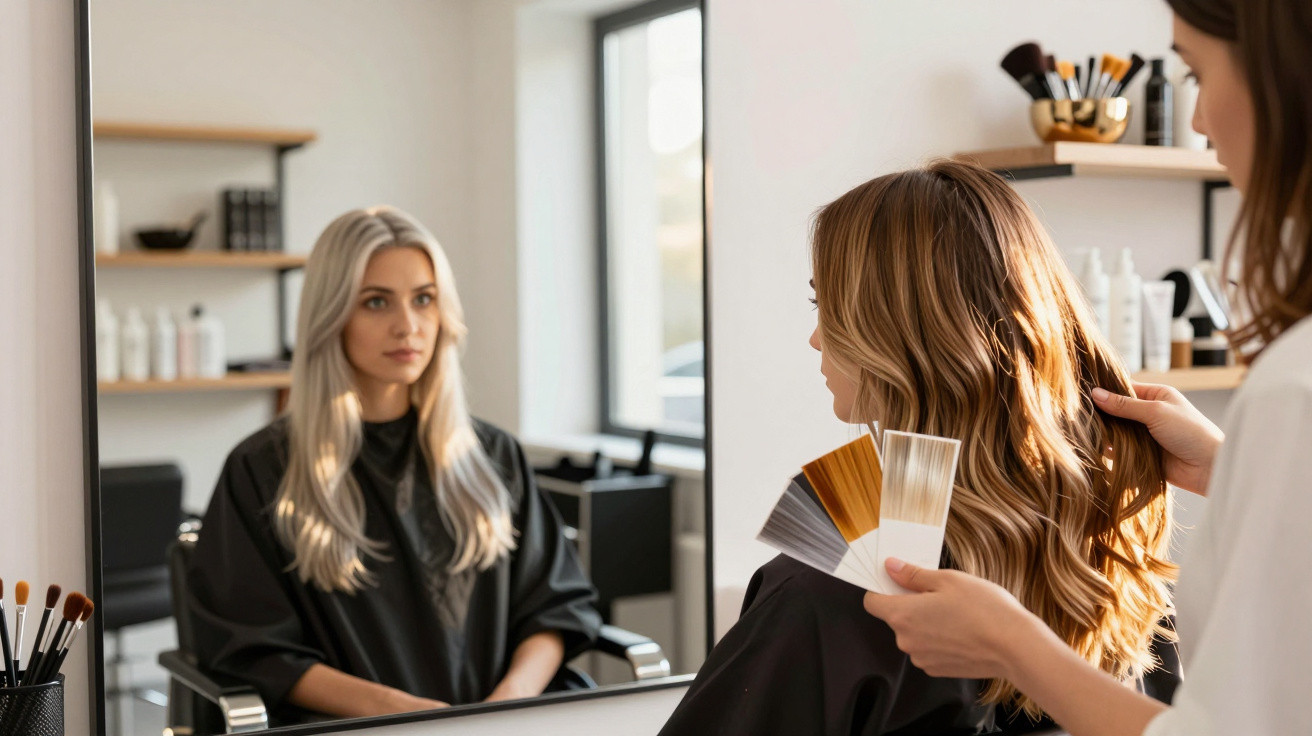
The process begins before the scissors come out. The next time you are in the salon chair, resist automatically saying, “I usually blow-dry it smooth.” Instead, describe what you really do in an ordinary week. “I wash it at night and sleep on it.” “I let it dry in the car on the school run.” “I don’t own a dryer.” This gives your stylist the genuine brief.
Then request a cut that is specifically intended to be worn air-dried. Refer to soft, internal layers rather than chunky ones. Ask for the perimeter to be slightly broken rather than cut razor-straight. If your hair has any wave at all, suggest a length that falls either clearly above the shoulders or well below them, preventing the ends from flicking awkwardly against your jumper.
The biggest error many of us make happens in the bathroom rather than the salon. We rub our hair dry with an ordinary towel as though we are polishing a car. The cut may be excellent, but that friction makes the surface frizzy. Replace the terry towel with an old cotton T-shirt or a microfibre towel. Press and squeeze rather than rubbing.
Another familiar problem is using too much product, and applying it too late. Once hair has begun to dry, creams and gels merely sit on the surface instead of helping to shape it from the beginning. Apply a light cream or foam to soaking-wet hair, with your head tipped forwards. Comb through it once, then leave it alone. The less you interfere with the cut as it establishes its natural pattern, the better the finished shape will look.
“An air-dry cut is like a good pair of jeans,” says London hairstylist Amira K. “If it only looks nice when you stand perfectly still and suck in your stomach, it’s not for real life. I want hair that still looks good when you’re late, sweaty, and running for the bus.”
- Ask for honesty
Tell your stylist that you want hair suited to your real routine, rather than your imagined routine. - Bring realistic photos
Pick reference images where the hair appears soft, slightly fuzzy and clearly not styled with heat. - Observe your natural pattern
Allow your hair to air-dry completely at least once before your appointment, so you understand its true texture. - Protect the cut at home
Use a gentle towel, a wide-tooth comb and no more than one or two products. - Give it two weeks
Hair generally needs several washes to “settle” into a new shape, and you need time to understand its new behaviour.
The quiet confidence of hair allowed to be itself
There is something unexpectedly soothing about watching your hair dry without worrying about how it will end up. You shower, gently pat it dry, warm a little cream between your palms and then… leave it alone. There is no arm workout, no blast of hot air in your ears, and no last-minute panic because one side refuses to cooperate. The cut handles the difficult work.
That does not mean your hair suddenly becomes flawless. It means the way it dries fits with your life. On a good day, it looks purposefully undone. On a bad day, it still looks like you, only with a slightly fuzzier outline. That modest reduction in pressure changes far more than what you see in the mirror.
We have all experienced that moment of seeing someone with easy, natural-looking hair and assuming there is a secret step we are missing. Usually, the “secret” is simply that their haircut was created for air rather than heat. Their stylist cut according to the reality of their texture instead of attempting to sculpt an imagined blowout.
When you begin with that point of view - your routine, your level of patience and your real texture - your entire relationship with your hair changes. You stop forcing it into shapes that fall apart the instant you are caught in the rain. You start asking new questions: not “How do I control this?” but “What kind of cut would let this be beautiful on its own?”
That is the quiet revolution: hair that looks natural when all you have done is step out of the shower and get on with your day.
| Key point | Detail | Value for the reader |
|---|---|---|
| Choose air-dry-friendly shapes | Soft layers, a broken perimeter and lengths that work with your texture | Hair looks intentional without using styling tools every day |
| Speak honestly to your stylist | Describe your genuine routine and request a cut designed around air-drying | Reduces frustration and mismatched expectations after every wash |
| Adjust your drying habits | Gentle towels, minimal handling and product applied to soaking-wet hair | Maintains the cut’s shape and helps keep frizz under control |
FAQ:
- Question 1 What should I tell my hairdresser if I want a cut that looks good air-dried?
- Question 2 Does this kind of haircut work on very fine, flat hair?
- Question 3 Can curly or coily hair really be air-dried without frizz?
- Question 4 How often should I trim an air-dry-friendly haircut?
- Question 5 Do I still need styling products if the cut is right?










Comments
No comments yet. Be the first to comment!
Leave a Comment