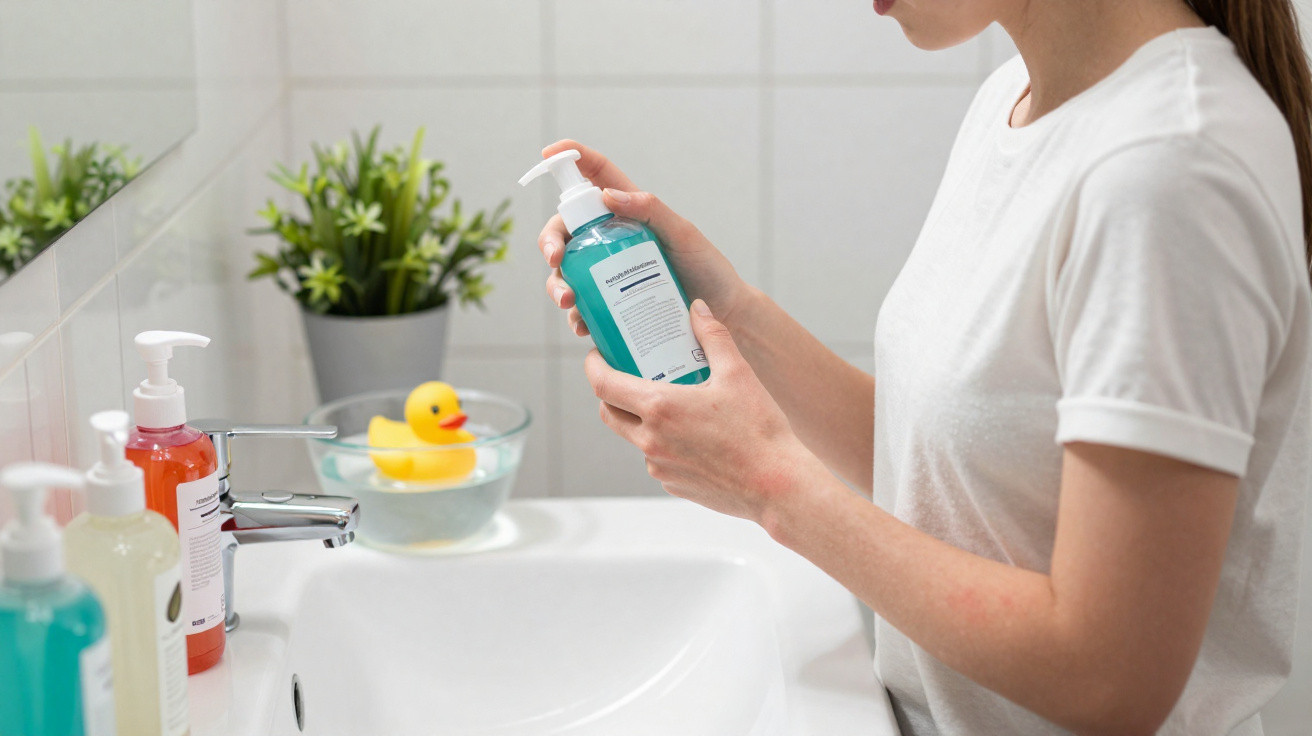
Millions of people in Germany reach for colourful bottles of shower gel every day – yet an analysis by Yuka reveals that many products contain two concerning allergy triggers.
Shelves in chemists and supermarkets are packed with shower gels from familiar brands. Fruity, sensual, “sensitive”, “natural” – the claims are appealing. However, a recent assessment by the Yuka scanning app challenges this feel-good image: hundreds of widely available products contain preservatives regarded as potent contact allergens, which are already banned in certain cosmetics in the EU.
Why shower gel has suddenly come under scrutiny
In many bathrooms, shower gel has almost replaced the traditional bar of soap. The reasons are clear: it smells pleasant, lathers well, is easy to dispense and is often seen as kinder to skin. Many formulations contain mild surfactants, nourishing oils or replenishing ingredients intended to leave skin feeling soft and clean.
It is precisely this sense of care that can make people readily try ever more varieties. Those wanting extra freshness may choose mint; anyone after a holiday feel might opt for coconut or mango. People with sensitive skin may select a “sensitive” version. In the rush of daily life, the ingredient list is rarely examined closely.
Yuka has therefore reviewed thousands of products digitally. Its findings highlighted two long-standing ingredients in cosmetic chemistry that dermatologists have viewed critically for years, hidden behind many familiar product names.
Two preservatives under the spotlight: MI and MCI
The warning centres on two preservatives with unwieldy names: methylisothiazolinone (often shortened to MI) and methylchloroisothiazolinone (MCI). Both belong to the isothiazolinone group and prevent germs from multiplying rapidly in water-containing products such as shower gel, shampoo and liquid soap.
These preservatives protect the product from bacteria, but they can sensitise the skin and trigger severe contact allergies.
The EU has already taken action. MI and MCI have been banned since 2016 in leave-on cosmetics – including creams, body lotions and deodorants that remain on the skin. The reason is that the allergy risk is considered too high.
The position for shower gel is more complicated, as it is rinsed off again after a short period. These substances remain legally permitted in such products provided specified limits are observed. This is exactly where Yuka’s criticism begins: even if contact is brief, the mixture reaches the skin every day, and often more than once a day.
How much is too much? The effect of repeated exposure
A single shower will not generally cause harm. The issue is continuous contact. Someone using the same shower gel morning and evening, alongside a shampoo or hand soap containing MI/MCI, effectively builds up an “allergy account”. At some point, the skin may no longer be able to compensate for this ongoing irritation.
- Daily use over many years increases the risk of sensitisation.
- Using several products containing the same preservatives adds to the overall exposure.
- Already damaged or dry skin usually becomes sensitive more quickly.
How the allergy appears on the skin
Zoé, the toxicology expert speaking for Yuka, outlines typical signs of a reaction to MI and MCI. At first, many of these symptoms seem harmless and can easily be mistaken for “winter skin” or stress.
Redness, itching, small blisters, dry, flaky patches – often in areas where the lather remains longest, such as the neck or legs.
Once a person has become sensitised, even tiny quantities can sometimes provoke a reaction. Contact eczema that develops once may become chronic. The difficulty is that symptoms generally appear some time after showering, so affected people do not immediately associate the cause with their favourite shower gel.
Dermatology clinics have seen a rising number of contact allergies to isothiazolinones for years. Those affected must then consistently avoid every product containing these substances, making shopping a laborious process of elimination.
Pressure on rivers and seas
MI and MCI do not only end up on the skin. After a shower, they go down the drain together with the foam. Wastewater treatment plants can remove these substances only partly. Measurements show that residues reach rivers, lakes and coastal waters.
This may have serious consequences for aquatic organisms. Isothiazolinones have antibacterial properties and are toxic to many microscopic organisms, which often sit at the start of the food chain.
When these preservatives enter waterways, they can harm micro-organisms and in turn disrupt entire ecological balances.
Discharges accumulate particularly in regions with dense populations and high cosmetic consumption. Environmental authorities and researchers have monitored this development with concern for years.
How consumers can identify healthier shower gels
The good news is that people wishing to switch have options. Yuka itself notes that numerous more tolerable products are available, including from well-known brands. Some ranges have already been reformulated and no longer contain MI or MCI.
What to check when buying shower gel
| Aspect | What should you look for? |
|---|---|
| Ingredients | Check the INCI list for “methylisothiazolinone” and “methylchloroisothiazolinone” |
| Claims on the front | Statements such as “free from isothiazolinone preservatives” or “for sensitive skin” may provide an initial indication, but they never replace checking the small print |
| Amount of foam | Use less product – a hazelnut-sized blob is usually enough for the whole body |
| Fragrances | Anyone generally prone to allergies will often be better off with fragrance-free versions |
Apps such as Yuka can be useful for a quick check while shopping, but they do not replace reading the ingredients list yourself. Once people have learned to spot the problematic names, they can usually manage without digital support.
Alternative ways to clean skin without irritants
Many people only realise how strongly their skin had reacted to their previous shower gel after changing products. Those wishing to take a cautious approach can first switch to another range within their preferred brand that uses no isothiazolinones.
So-called syndets, meaning synthetic soaps, and traditional soap bars with short ingredient lists go one step further. They often do not need potentially problematic preservatives because they contain less water and are therefore less prone to contamination by germs.
- Solid shower products without plastic bottles reduce packaging waste.
- Keeping showers short and lukewarm is gentler on both skin and household budgets.
- Avoid strongly scented “power shower gels” if your skin dries out quickly.
Why children’s skin needs particular protection
It is especially worthwhile to inspect bathroom products critically when they are intended for children. Their skin barrier is thinner, their body-surface-area-to-weight ratio is higher, and many children enjoy spending a long time splashing in the bath.
Choosing mild products with clear labelling can reduce the risk of early sensitisation. A neutral cleansing foam without aggressive preservatives is entirely sufficient. Brightly printed bottles featuring cartoon characters may be tempting, but they do not automatically contain skin-friendly ingredients.
How cosmetic trends could change
Pressure on manufacturers is growing. Consumers are paying greater attention to product formulations, apps award ratings, and social media channels rapidly pick up studies and warnings. Many brands are already reformulating established shower gel ranges to replace ingredients that are viewed critically.
Liquid products can rarely do without preservation altogether. The question, then, is which alternatives can be used without creating new problems. Within the industry, attention is turning towards a combination of less problematic preservatives, lower water content and smarter packaging.
Anyone wanting to protect their skin over the long term does not need to become a chemistry expert. Simply reaching for the back of the bottle, checking for two specific terms and treating sweeping promises with some scepticism can often be enough to choose shower gels that place less strain on both the body and the environment.












Comments
No comments yet. Be the first to comment!
Leave a Comment