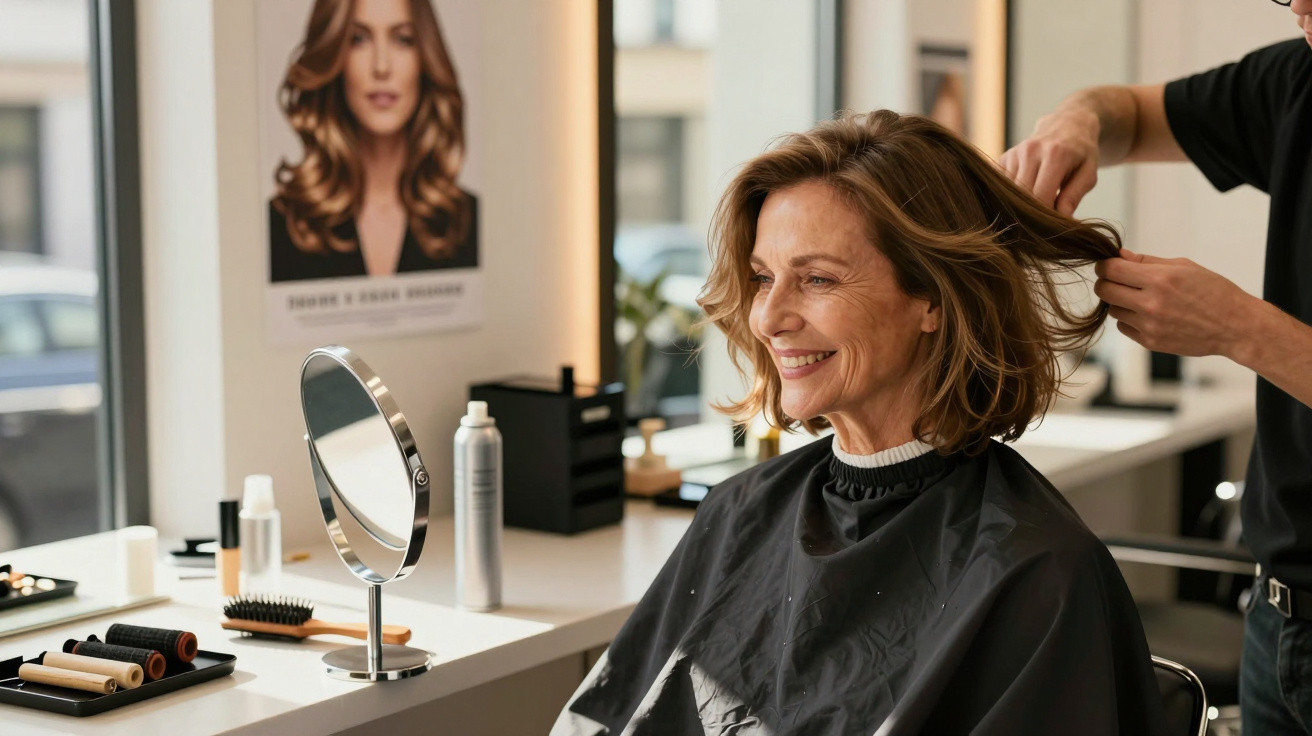
“Granny hair isn’t about age,” a hairdresser source told me.
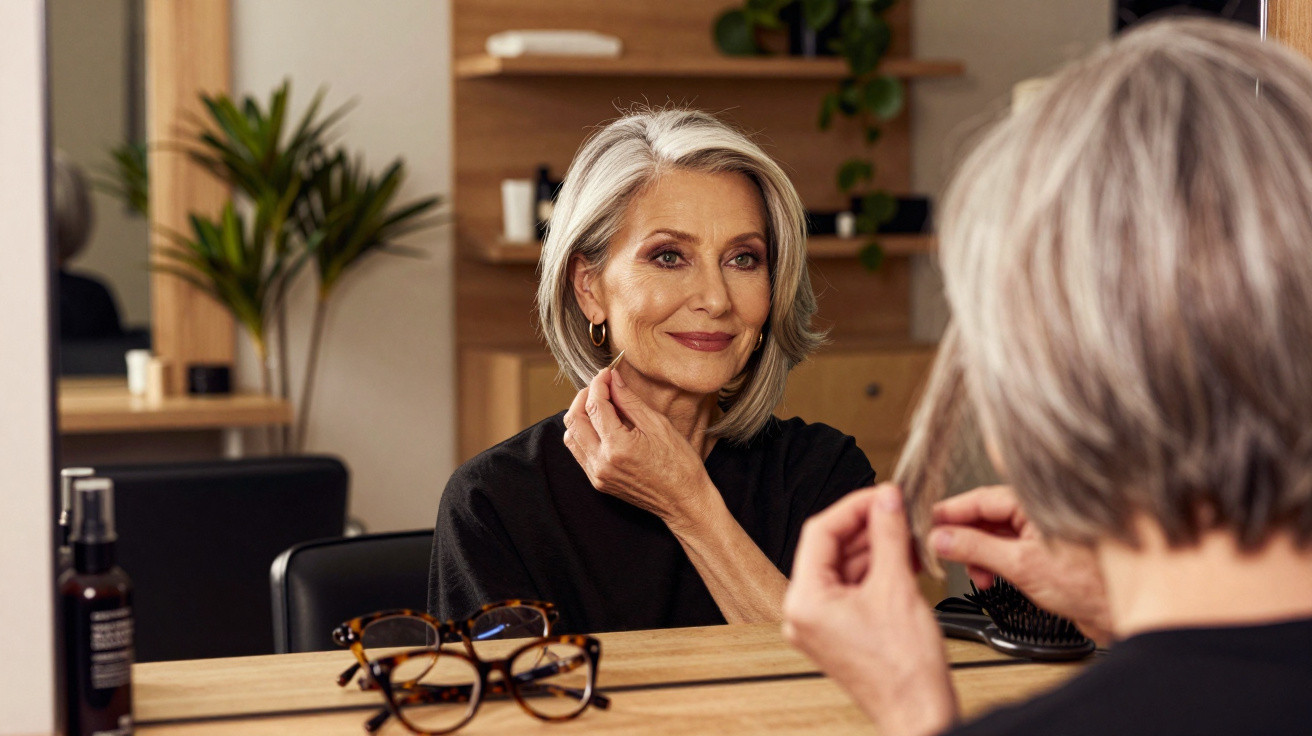
The woman sitting in the salon studied her reflection the way you might look at a person in an old photograph whom you nearly know. Her colour had just been done and her complexion was glowing, yet the mirror was telling her she looked older than she felt. Her hair had been blow-dried into a neat, rigid curve - the style her mother once requested.
The stylist standing behind her, in her mid-40s with a tattoo visible beneath her sleeve, cocked her head. “You know,” she said kindly, “your hair isn’t doing you any favours. It’s a little… granny style.”
The remark lingered. It was not cruel, only honest.
The client laughed awkwardly. “So what makes hair look ‘granny’, then?”
The hairdresser smiled. “Five things I’d love women to ditch after 50.”
What followed was blunt, useful and, oddly, freeing.
1. The immovable helmet-hair blow-dry
“Helmet hair” describes a highly set, rounded style that remains fixed even in a gale. It is sprayed firmly into position, with matching curls and a fringe turned under like a curtain. Seen head-on, it may appear smart; viewed from the side, it can add a decade instantly.
After 50, facial features tend to become softer. Hair that is overly round and rigid can make the entire face seem heavier and more fatigued, rather than enhancing it. The hairdresser’s view was simple: movement equals youth, while stiffness brings immediate ageing.
A revealing clue? If you avoid touching your hair because you fear “ruining the shape”, you may be in helmet-hair territory.
One London hairdresser I spoke to describes it as “wedding guest hair… every single day”. She recalled a 62-year-old client who arrived every Friday for precisely the same round-brush blow-dry: a raised crown, ends curled under and enough hairspray to hold it all in place. It was the kind of look that signified status in the 1980s.
Despite exercising and wearing contemporary clothes, the client felt she looked older than the people she worked with. Following a lengthy conversation, her stylist lowered the crown volume, introduced soft layers and stopped turning the ends underneath. Her hair was dried with gentler tension and more air, before a small amount of cream was scrunched through it.
The difference was startling. Her colour and identity were unchanged, but she now looked like someone who might own a yoga mat rather than hot rollers.
There is a straightforward reason this style can be ageing. Defined, hard outlines draw attention to every line in the face. A stiff, circular shape produces a frame that does not reflect the natural way we talk and move. It can also suggest “high maintenance” in the old-fashioned meaning of the phrase.
You do not need unkempt, beach-inspired hair to look current. A sleek blow-dry can still feel modern when the ends have a little freedom, the crown is not excessively lifted and the finish feels touchable rather than lacquered. Hair that moves with your face makes your expressions look alive again.
Aim for less “TV newsreader 1997” and more “French woman leaving a café after one too many coffees”. You want enough refinement to look polished, without appearing to be wearing a helmet.
2. The severe dark block colour that dulls the face
A further major ageing pitfall after 50 is holding on to the dense, one-dimensional dark brown or black shade you wore at 30. On a small phone display, it can appear striking; face to face, it often produces a severe contrast against paler skin and silver regrowth.
Hairdressers encounter this often. Women worry about appearing “washed out”, so they commit even more firmly to deep colour. Yet this can have the reverse of the intended effect: the darker and flatter the shade, the more every shadow, line and under-eye circle stands out.
The hairdresser I spoke to calls it “shoe polish colour” - opaque, flat and without any play of light. Her general principle is that, after 50, multi-tonal colour is more flattering than monochrome.
She mentioned Marta, 58, who arrived with black box-dyed hair and a weary-looking face. “I look like I’m wearing a wig,” Marta said. She had a point: the solid black shade sat on her head like a hat.
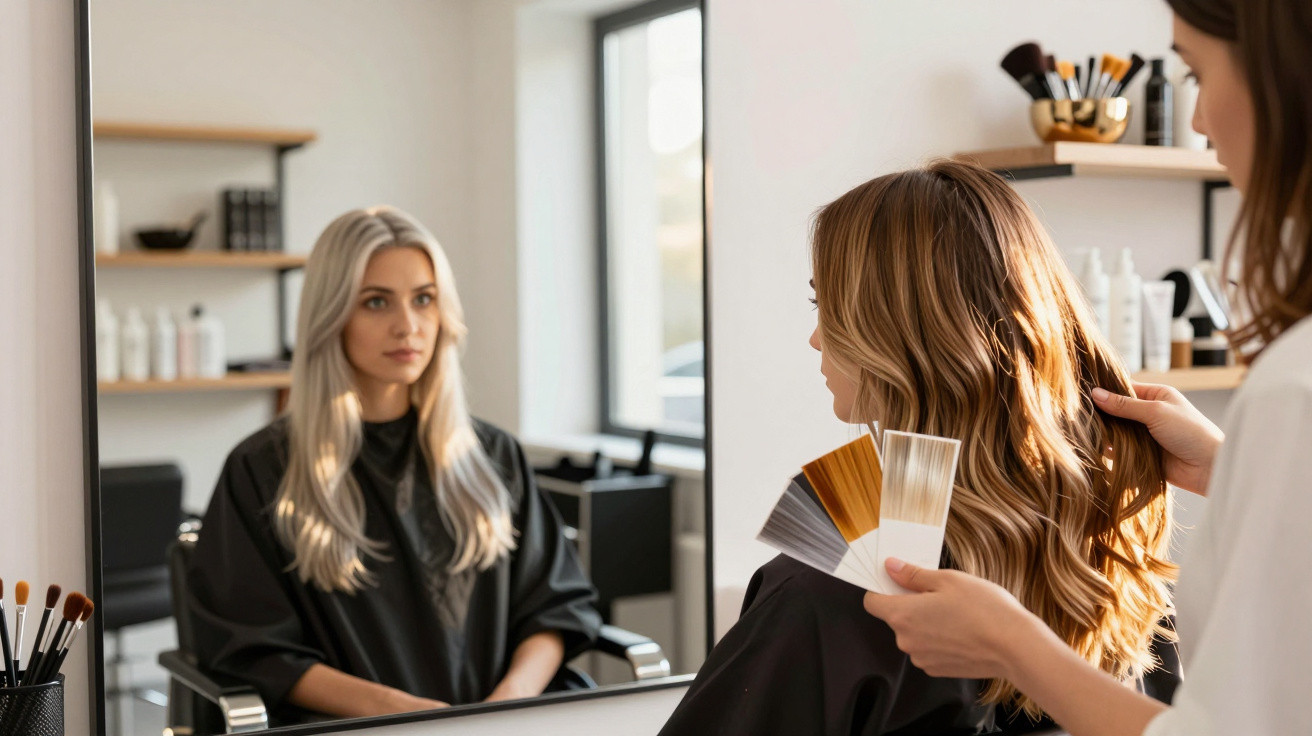
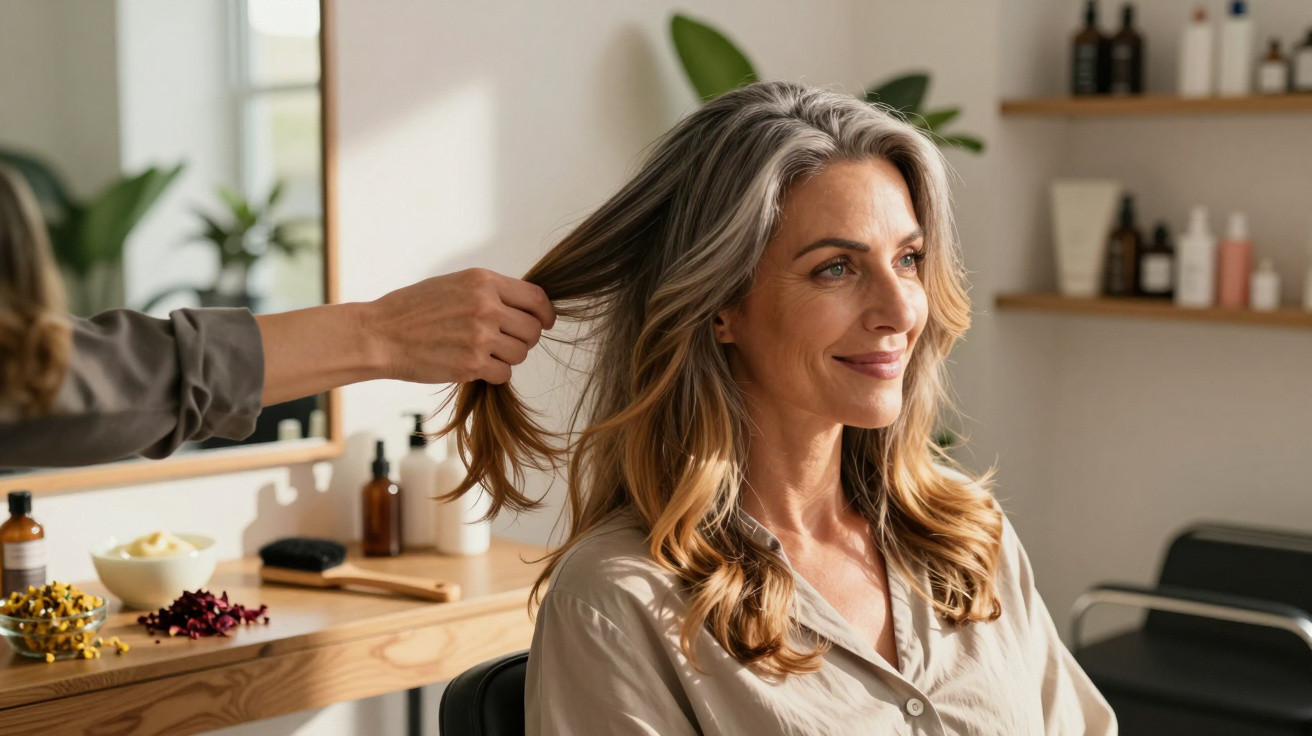
Rather than taking her straight to blonde, the stylist lightened the base by only one or two levels, then placed delicate, soft highlights around her face. A handful of cooler strands at the temples were blended with Marta’s natural silver. Her overall appearance remained dark, but it gained luminosity and depth.
Three months later, Marta sent a selfie. She had the same cut and wore the same clothes, but her cheekbones appeared more pronounced and her eyes more vibrant. No filler was involved - simply less block colour and greater subtlety.
The reasoning is uncomplicated. Skin loses contrast with age, so retaining the same depth of colour as in adolescence can look unnatural beside gentler undertones. Very dark, solid shades also make each line of grey regrowth impossible to ignore.
Shifting to a marginally lighter base with micro-highlights or lowlights is not the same as “going blonde”. It lets light reflect through the hair. Consider it a built-in soft-focus effect, particularly near the face.
Still, abandoning box dye can feel daunting. The monthly bathroom routine can offer a sense of certainty and control. But colour that is too intense resembles wearing an unsuitable foundation shade: others notice the mismatch before they notice you.
3. Tight perms and over-set curls
The third “granny-style” risk is the uniform, tightly wound perm curled within an inch of its life. For some women, that perm has formed part of their identity since their twenties. On hair that has become finer or more delicate, however, a strong perm can look dated and crisp.
Tiny, identical curls without variation can visually compress the face. They create bulk in the wrong direction - outwards rather than upwards or around the cheekbones. This balloon-like effect may overpower finer features and make the whole outline look shorter, both in photographs and in the mirror.
The hairdresser’s verdict: if your curls form a perfect little spring all around your head, it might be time to rethink.
One story shared by the stylist felt particularly familiar. A retired teacher, aged 65, arrived proudly wearing the perm she had had “every six months, without fail”. Her curls were small and consistent, sprayed into a thick, frizzy halo.
She did not want to abandon curls, so the hairdresser suggested a gentler contemporary approach: a looser wave perm, larger rods and a cut that took weight from the ends. They used considerably more hydrating products, and her hair was air-dried rather than set beneath a hood dryer.
When she returned eight weeks later for a trim, every one of her friends had asked whether she had had “something done” to her face. She had not. Her curls were simply larger, smoother and less “poodle”, becoming more of a “soft cloud”.
The science is uncomplicated. Tight curls bounce light in a way that brings out frizz and uneven texture. They also reduce the apparent length of the hair, pulling the visual focus upwards. On someone aged 25, this may look fun; on someone aged 60, it can become caricature-like when the cut and products are unsuitable.
Looser curls and waves, shaped with gentle layers, sit nearer the head and provide a lifting effect through the middle of the face. Hydration is vital here. Dry curls damaged by a perm will invariably read as older. Softness, both in texture and shape, is your strongest ally.
And yes, this can mean fewer salon perms, more air-drying at home and more cream. Let’s be honest: nobody really does that every day, but even modest changes in the way you care for curls can take you a long way from “granny” territory.
4. The short, square crop with hard edges
There is a particular short hairstyle often spotted in waiting rooms and supermarket queues: cropped very closely at the nape, square along the sides, perhaps with a thick fringe sitting heavily across the forehead. Is it practical? Absolutely. Is it always flattering after 50? Not necessarily.
A square crop can make the jaw appear harsher, highlight jowls and add width to the neck. It also offers none of the soft movement associated with modern short hair. The hairdresser I spoke to said she frequently needs to “unbox” women’s cuts, introducing curve, softness and a suggestion of fringe that does not resemble a Lego piece.
Short hair can look exceptional after 50. The issue is not its length; it is its geometry.
On a wet Tuesday, I watched a 70-year-old woman take the chair with exactly this sort of square cut. She repeatedly touched the back of her head and explained that she wanted it “really short and tidy, same as always”. Her stylist asked something else: “How do you want to feel when you look in the mirror?”
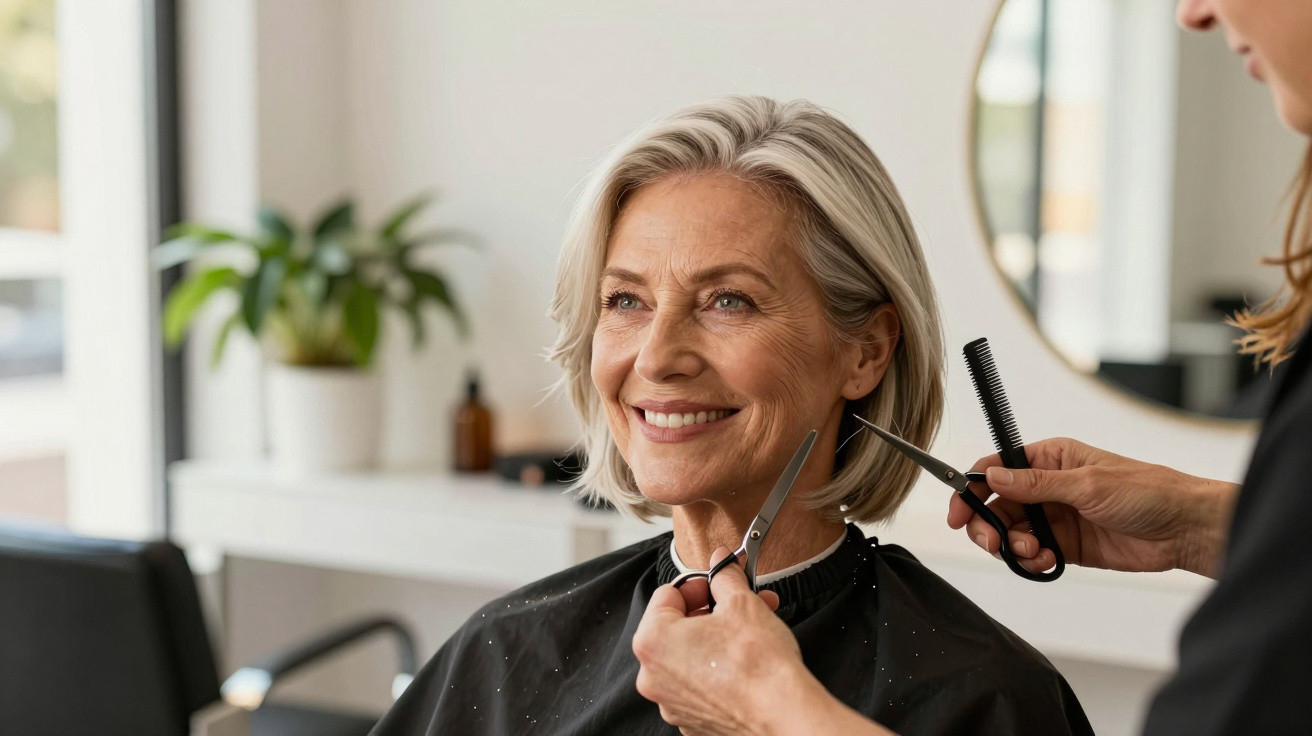
They retained the short back because she valued low-maintenance hair. However, the sides were tapered rather than bluntly cut, with a slight movement towards the cheekbones. Her heavy fringe was transformed into a soft, gently piecey version that could also sweep to one side.
When she put her glasses on at the end, she blinked with surprise. The length had not changed, but the schoolmistress outline had disappeared. Suddenly, she resembled the sort of grandmother who might board a plane carrying a backpack.
The visual mechanics are subtle but effective. Straight lines and sharp angles around the jaw form a frame that directs the eye towards fullness or sagging. Softer contours, tiny flicks and even a micro-fringe interrupt that effect.
The key is to request texture and softness rather than merely “short back and sides”. Phrases such as “tapered”, “piecey”, “soft around the ears” and “movement through the top” are invaluable in the salon. A current crop nearly always includes some difference in length, even when it appears simple on the surface.
That said, you are entitled to want manageable hair rather than a daily styling project. The aim is not extra effort, but a more considered cut for the face you have today - not the one on your work ID badge from 1995.
“I’ve seen 30-year-olds with granny cuts and 75-year-olds with rock-star bobs. It’s about whether your hair looks like a choice you’re making now, or a habit you never questioned.”
- Ask your stylist to make one modest update at each appointment instead of undertaking a complete transformation.
- Take screenshots of hairstyles worn by women your own age, rather than teenagers on TikTok.
- Focus more on the way hair moves than on how it appears in a static photograph.
5. The heavily set finish: rollers, strong spray and frozen fringes
Then there is the traditional salon routine: rollers, hood dryer, backcombing, spray, then repeat. You leave feeling taller and slightly shellacked, as though you are on your way to a wedding from a 1992 magazine.
For special events, that can still be enjoyable. As an everyday look, though, it can leave you in a visual time warp. Set hair - particularly when paired with a frozen fringe - creates distance between who you are today and the way the world around you now looks. Before you speak, it can quietly signal that you are out of date.
Most of us have experienced catching our reflection in a shop window and thinking, “That can’t be how others see me.” Set hair makes that sense of disconnection stronger.
One client told her stylist that she felt “dressed up and old” whenever she left the salon. Her routine had remained identical for 20 years: the same rollers, the same heated dryer and the same cloud of hairspray that made her cough. She had simply continued with it from habit.
On this occasion, the hairdresser suggested a round-brush blow-dry finished with lightweight cream. There were no rollers. Her fringe was made smooth but remained pliable, rather than being sprayed into a half-moon. The ends were given a faint bend, not curled into perfect shapes.
She left touching her hair every few minutes, partly amazed that it remained in position. The amusing thing was that her husband did not spot a “new cut”. He merely said she looked “less stiff” and younger. That minor adjustment - allowing hair to behave like hair again - did most of the work.
From a physical standpoint, excessive styling products can weigh hair down and create the glossy, lacquered surface associated with older hairstyles. Psychologically, the entire rollers-and-spray routine belongs to an era of weekly salon sets, rather than a life balancing work, travel, grandchildren and late-night Netflix.
This does not mean embracing disorder. A good blow-dry can last well, especially with the right cut. A small amount of flexible spray or mousse can hold hair where you prefer it, without producing a hard, glass-like shell.
Hair that shifts a little and can be run through with your fingers conveys a quiet message: I’m alive, I’m here, I’m not stuck in a time capsule. And, honestly, that is what “looking younger” really means.
A different approach to hair after 50
The hairdresser’s list of “granny-style” habits is not intended as a rulebook that makes anyone feel mistaken. It is instead a reflection on routines that may no longer suit who you are. Helmet blow-dries, block colour, tight perms, square crops and frozen sets have one shared issue: they work against light, movement and softness.
Ageing has not taken those qualities from you. Some outdated hair routines have. Your face evolves, your lifestyle changes and your sense of self develops. A style that once felt comforting can gradually become a costume that no longer belongs in your life.
Releasing that costume is not so much about pursuing youth as it is about catching up with yourself.
There is something quietly radical, too, about arriving at the salon and saying, “I don’t want to look like a ‘good 60-year-old’. I want to look like me.” This is what the best stylists respond to - not a celebrity photograph, but a description of how you want to feel when you see yourself while brushing your teeth at 7 a.m.
You do not need to transform your appearance overnight. It may be a softer fringe, block colour lightened by half a shade or one new layer at the cheekbones. These are small movements away from “set” and towards “alive”.
Hair cannot make you younger. It can, however, stop adding years that were never yours. That calm, everyday confidence - in a supermarket queue, during a video call or in a family photograph - is worth far more than any trend.
| Key point | Detail | Benefit for the reader |
|---|---|---|
| Avoid rigid shapes | Say no to helmet-style blow-dries, stiff sets and gelled fringes | Reduces the “instant ageing” effect and restores movement around the face |
| Soften colour and texture | Lighten dark blocks, relax perms and hydrate curls | Adds light, softness and a natural “soft focus” effect |
| Choose gentle modernity | Request cuts with texture, soft outlines and controlled volume | Helps you look aligned with your real age, without costume or caricature |






Comments
No comments yet. Be the first to comment!
Leave a Comment