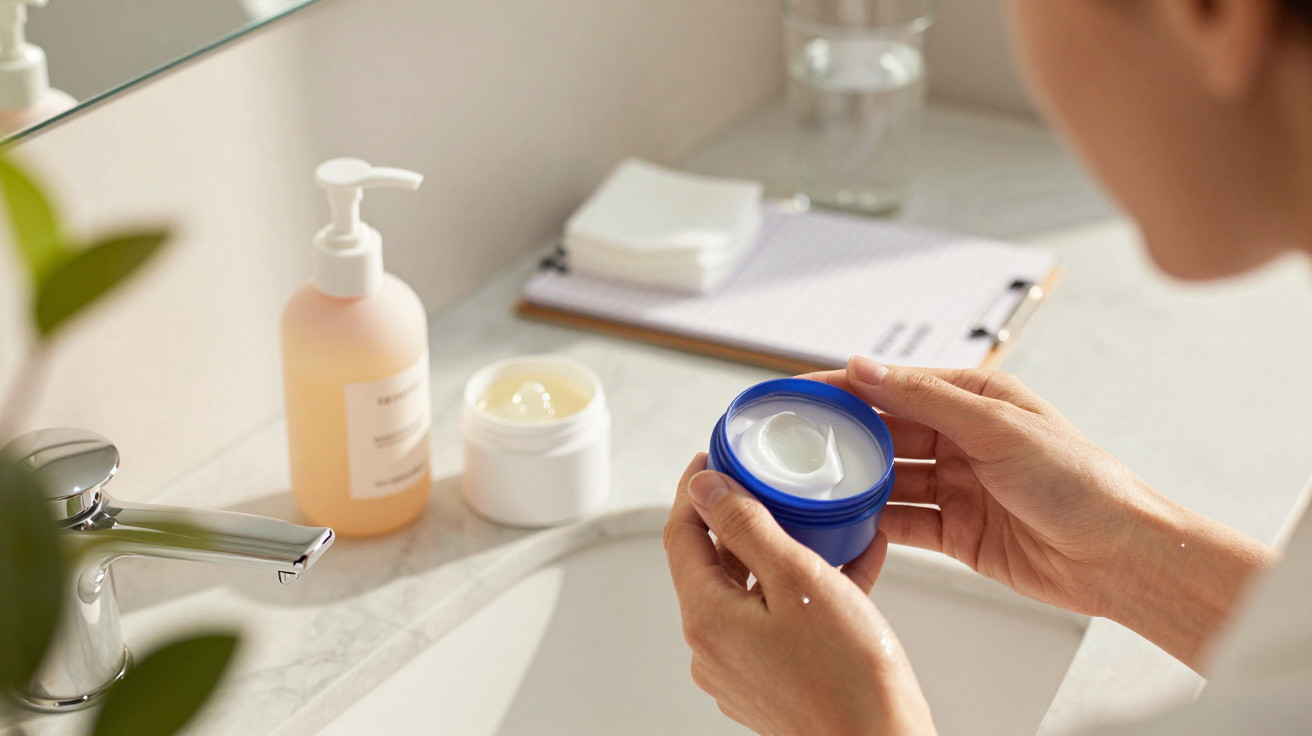
It sits in your mum’s bathroom, in your grandmother’s drawer, or beside your own basin: a slightly dented tin carrying the scent of “clean childhood”. For decades, Nivea cream has been the dependable, unassuming solution - thick, inexpensive and ready whenever skin feels dry or worn out.
But beneath that reassuring habit, experts are increasingly seeing another side. Dermatologists and toxicologists are examining its ingredient lists, following their origins through refineries, regulations and evidence on prolonged exposure. Their assessment is far less comforting than the cream’s soft texture.
Could that familiar blue tin be less harmless than it appears? Could your skin have been quietly bearing an unseen cost?
Nivea cream: from icon to question mark
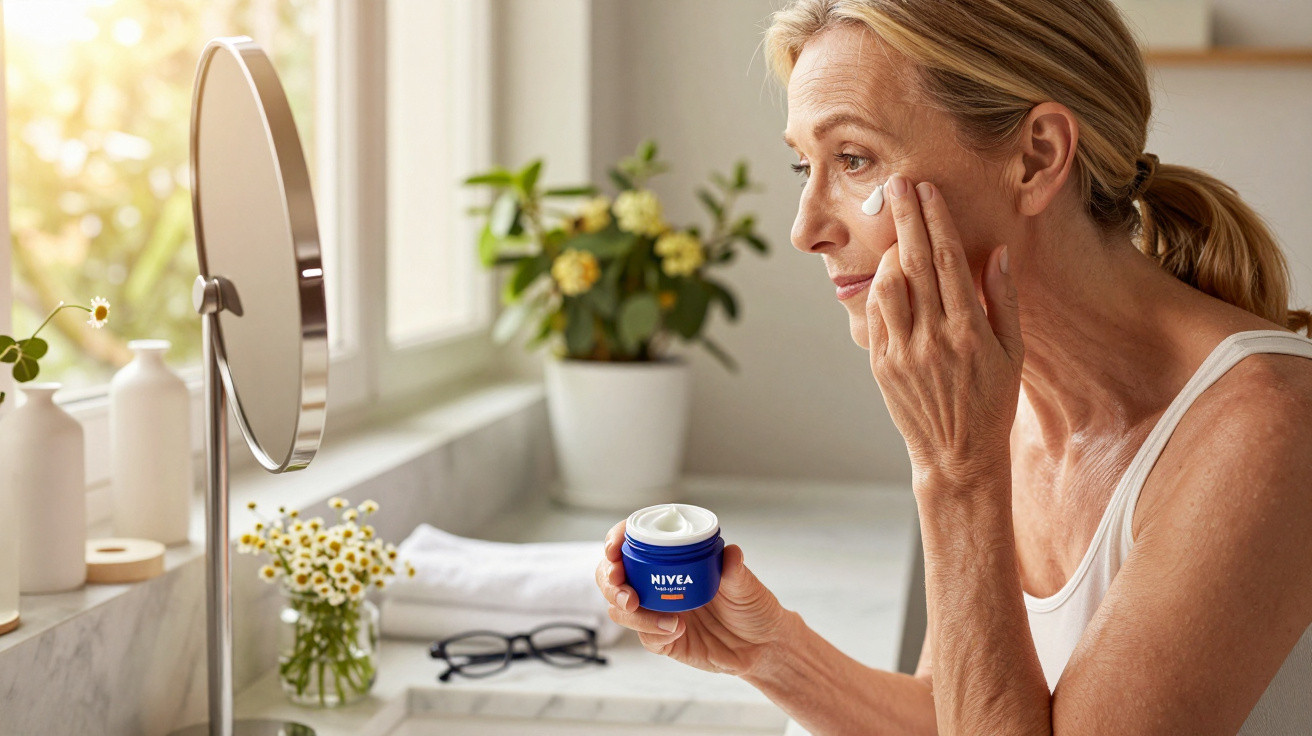
Opening a tin of Nivea is almost automatic. The cream is rich, white and faintly glossy; you take a little, smooth it on, and moments later the skin feels covered, shielded and nearly cut off from the outside. That protective layer is precisely what devoted users value.
Dermatologists interpret it differently. They see a water-in-oil emulsion largely built around mineral oils and petrolatum, both petroleum-derived ingredients. Technically, they are highly refined and classed as “safe”. In use, however, they remain on the skin’s surface, creating an occlusive layer that may hold sweat, bacteria and irritants against it.
That creates a stark contradiction: a cream marketed as soothing may, for certain skin types, contribute to irritation without much warning. The celebrated blue tin can begin to feel less eternal and more like a product of the period before widespread ingredient awareness.
Sales figures tell a related story. Worldwide Nivea sales continue to total hundreds of millions, while searches for “Nivea cream safe?” and “Nivea ingredients harmful?” have risen markedly in recent years. Skincare forums that once praised its “old-school simplicity” are now full of close analyses of paraffinum liquidum, synthetic fragrance and possible allergens.
Dermatology practices also describe a regular flow of patients with persistent facial redness or perioral dermatitis who admit, often rather apologetically, that they apply a heavy cream such as Nivea to their face every night. Once they stop, many notice improvement within a few weeks. This is not a controlled laboratory study, but it is a recurring pattern specialists are no longer overlooking.
There is also the regulatory context. Cosmetic safety rules in Europe are rigorous, but consumer watchdogs still urge brands to address trace mineral-oil contaminants, including MOAH (Mineral Oil Aromatic Hydrocarbons). Brands maintain that their refining procedures keep these substances within safe limits, yet legal limits do not invariably reassure consumers. A product may comply with the rules while still seeming misaligned with what people want to put on their skin in 2026.
At first glance, Nivea cream seems “simple”: water, mineral oil, petrolatum, glycerin, several emulsifiers, fragrance and preservatives. In reality, the picture is more complicated. Mineral oils provide its distinctive glide and shine, and they are highly effective at reducing water loss in the short term. But they do not nourish the skin; their role is closer to cling film.
For severely dry, cracked hands during winter, this can be extremely useful. For sensitive or acne-prone facial skin, though, the same coating may retain dead skin cells, heat and bacteria while disrupting the skin’s sensitive microbiome. Repeated every night for years, small imbalances can gradually develop into visible concerns.
For many dermatologists, the fragrance blend is another warning sign. It produces Nivea’s recognisable “clean” scent, but fragrance is still among the most frequent causes of contact dermatitis. Add possible allergens such as lanolin alcohol for people sensitive to wool-derived ingredients, and the claim of suitability “for all skin types” appears rather hopeful. The cream has not suddenly become different; our willingness to accept uncertainty has.
How to protect your skin when Nivea cream is in doubt
If you have used Nivea for years without noticeable problems, there is no requirement to bin it tomorrow. A more measured approach is to rethink where and how you apply it. Treat the blue tin as an occasional rescue product rather than an everyday facial essential.
Use it for brief, targeted purposes: winter-cracked knuckles, coarse elbows or heels covered with socks overnight. If your face breaks out easily or flushes readily, take a two-week break from it. In the meantime, choose a lighter, fragrance-free moisturiser containing squalane, ceramides or shea butter.
Should redness lessen or pores appear less blocked, your skin has offered a subtle response. There is nothing dramatic about it; it is simply your barrier saying that it would rather breathe.
Checking a product label is hardly glamorous, but it can make a substantial difference. Begin by looking for three entries on every cream you own: mineral oil/paraffinum liquidum, petrolatum and fragrance/parfum. When all three sit high on the ingredients list and you have pimples, blackheads or unexplained irritation, that may be meaningful.
Conversely, look for terms including “fragrance-free” and “non-comedogenic”, along with humectants such as glycerin, hyaluronic acid and aloe, plus barrier-supporting ingredients including ceramides or niacinamide. They cannot promise perfect results, but they reflect what modern dermatology actually uses in clinical settings. Let’s be honest: nobody truly reads every label in a shop while rushing between appointments.
Instead, save a brief, dependable list of brands and product names on your phone. Even when you are tired or in a hurry, it will help you make a reasonable choice.
Behind arguments about ingredients is something more delicate: the link between comfort and routine. Many people hold on to Nivea not because they consider it scientifically exceptional, but because its smell recalls somebody they loved. Changing products is not purely a skincare choice; it may feel like turning away from a memory.
“My job isn’t to scare people out of their favorite cream,” says one London-based dermatologist. “It’s to show them that a €3 product from 1960 doesn’t have to be the gold standard for their 2026 skin.”
In practical terms, the emotional transition can be made gentler with a few simple measures:
- Stop using Nivea on your face first, then reduce use on your hands and body if necessary.
- Keep a single tin for nostalgic occasions, travel or emergencies while trying alternatives.
- Replace “blue tin moments” with another small ritual, such as a soothing mist or hand massage.
At a human level, it means allowing yourself to change. Skincare is not a test of loyalty; it is a dialogue between who you used to be and the skin you have today.
A cream, a culture, and the cost of comfort
Most of us have opened an old product, breathed in its scent and instantly been transported back to a whole part of our lives. Nivea benefits from that potent response. Its advertising centres on care, mothers and touch - not molecules, refining methods or occlusive layers.
As ingredient knowledge spreads through TikTok and Reddit, two positions are emerging. One group champions the blue tin as a “classic that clearly works”, citing smooth cheeks and grandparents who used it every day and reached 90. The other examines its texture, comedogenic ratings and micro-inflammation, asking one straightforward question: if something better is available, why settle for merely good enough?
Between them is a quieter majority, caught between a wish to simplify and a persistent feeling that their skin could be lighter, calmer and less smothered. They do not require alarmism. They need candid information and the freedom to experiment without feeling guilty.
Despite every criticism, Nivea cream also reflects a broader issue: the slow pace at which major heritage brands change. Altering a formula that sells in the millions involves factories, supply chains and marketing stories. The result is an odd mismatch: our lives are intensely digital and information-rich, yet the cream we use each day can still seem fixed in the 1970s.
Perhaps that is why so many experts now sound impatient. It is not that one tin of cream is inherently dramatic, but that it stands for a larger pattern in which nostalgia and convenience repeatedly outweigh long-term skin health. Mild redness, clogged pores and barrier damage do not go viral, but dermatologists encounter them every day.
The central question is not “Is Nivea cream evil?”. It is “What kind of relationship do you want with your skin?” Is it one driven by unquestioned habit and trust, or one in which you sometimes stop, assess and adapt? There is no need to become anxious or clear out half your bathroom cupboard tonight. You can simply observe more carefully how your skin feels one hour, one day and one week after using a product.
If that famous blue layer leaves your skin soft, comfortable and free from irritation, you already have your answer. If it feels heavy, glossy or itchy, or continues to cause breakouts in the same places, that is an answer too. Either way, control quietly returns to you, rather than the logo on the lid.
| Key point | Detail | Why it matters to the reader |
|---|---|---|
| Occlusive formula | High in mineral oil and petrolatum, creating a strong surface film | Helps explain why skin can feel smothered or congested |
| Fragrance and allergens | Signature scent alongside possible irritants such as lanolin alcohol | Explains potential redness, itching or dermatitis over time |
| Smarter use | Keep it for hands and rough areas, avoid daily facial use and test alternatives | Offers practical steps without panic or waste |










Comments
No comments yet. Be the first to comment!
Leave a Comment