
In the “before” image, her hair is long, fine and visibly sparse around the crown. In the “after”, it has been cut into a close crop, styled with spray and lift, then hailed as a miracle in the comments. Beneath it, the debate erupts: “Short is the only way.” “Stop forcing women to cut their hair.” “This is hairdresser propaganda.”
A fresh kind of discouraging message is appearing across Instagram and TikTok for women with thinning hair. Hairdressers post striking transformations while delivering the same judgement: thinning hair means you must go short. There is no conversation and no room for nuance - only scissors. But the more these images circulate, the more sharply people disagree.
Some women say they feel recognised and reassured. Others feel pressured towards a style that is entirely unlike them. The question remains, as pointed as a razor sitting on a salon trolley.
“You need to cut it short”: when hair advice becomes a verdict
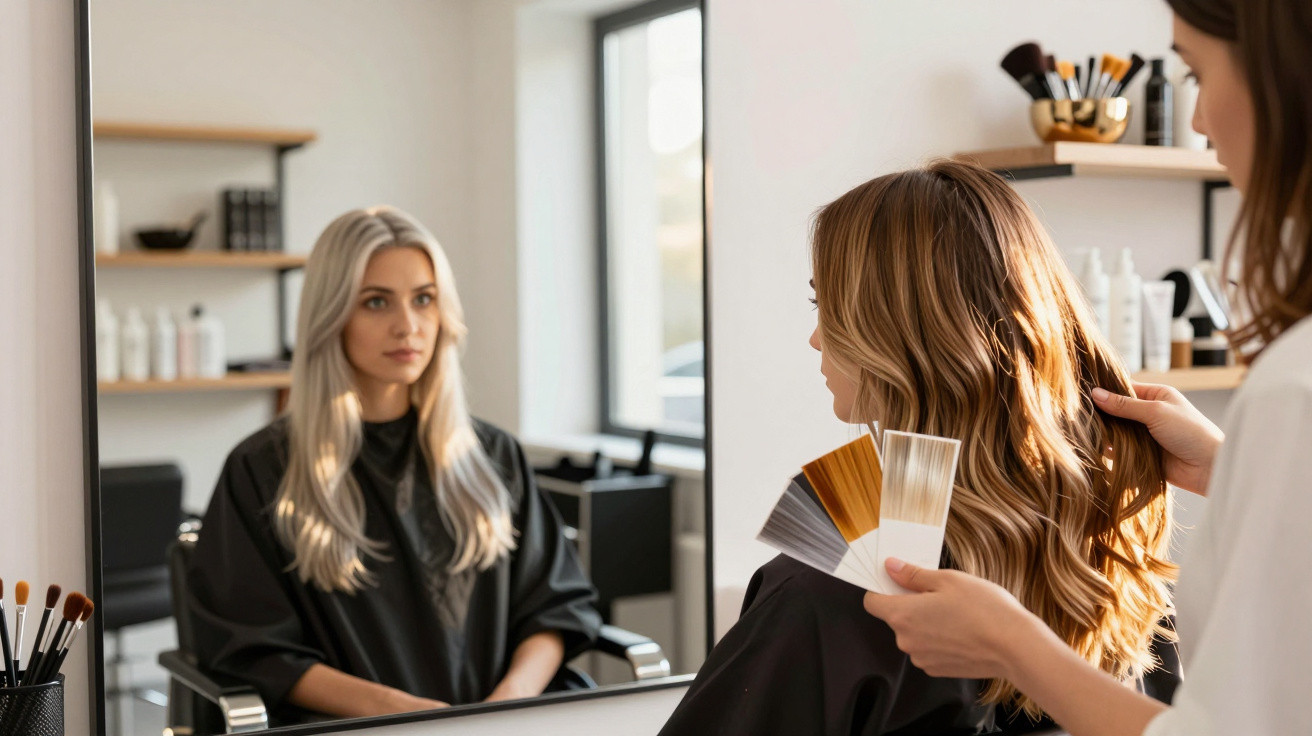
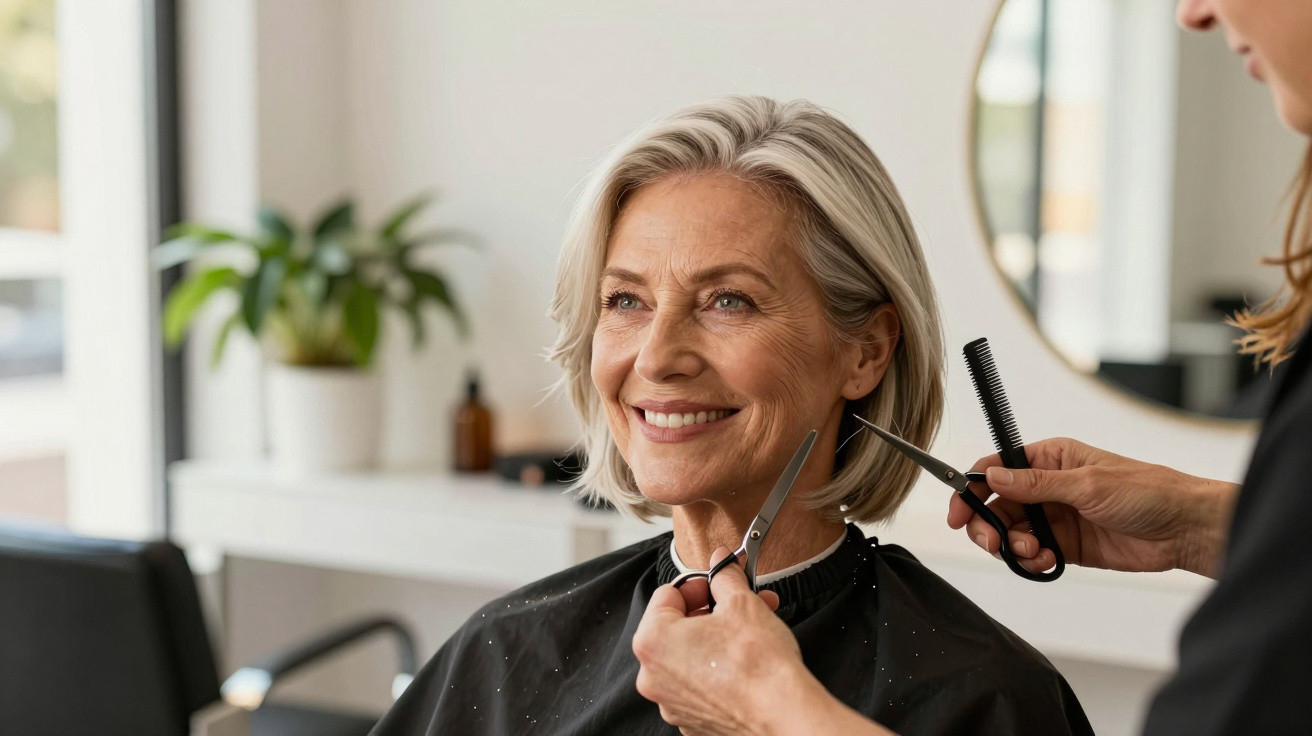
The setting is familiar. A woman is seated in the salon chair, quietly running her fingers through her hair and trying not to show her concern. The stylist raises a section, revealing the scalp beneath bright lighting, before saying: “Honestly, a short cut is your only real option now.”
At that point, it no longer feels like guidance. It feels like a judgement.
For plenty of women, long hair represents far more than hair itself. It can be tied to age, femininity and identity, or serve as a kind of comfort on difficult days. When a stylist argues that short hair is the only answer to thinning, it reaches beyond an ordinary makeover discussion. It can sound as though they are saying that your former self no longer fits.
These before-and-after images fill the internet. One viral series recently featured women in their 40s, 50s and 60s whose thinning hair had been turned into very short pixie cuts. Thousands of responses followed. “She looks 10 years younger.” “You saved her hair.” “Now she looks like a boy.” “Why do you always cut everything off?”
The caption for one 52-year-old woman said she had pleaded to retain some length. Her stylist declined, claiming her hair “couldn’t handle it”. She is smiling in the photographs, yet her comment below tells a different story: “I like it, but I don’t feel like me yet.” Under another post, a user asked simply: “Why does fixing my hair mean I have to lose it?”
Statistics add a subdued but important dimension. Research suggests that as many as 40% of women experience visible hair thinning by the age of 50. That means millions of people are looking at these posts and wondering which side of the comparison they belong on. For some, an eye-catching short cut brings relief: less shedding, more structure and fewer empty promises from serums that never delivered. To others, it resembles a final option being imposed before they feel prepared.
Technically, many hairdressers are not being dishonest. Fine, fragile lengths can indeed appear wispy and ageing, particularly with split ends and weighty layers. Cutting the hair shorter may take away weight, build volume and make the hair that remains look denser. Styling products can work more effectively, and blow-drying becomes simpler. Stylists are trained to prioritise shape before emotion.
Yet “the only option” is seldom accurate. A skilfully cut shoulder-length style with invisible layers, a lightly layered fringe or a blunt bob with considered texture can also conceal thinning. Extensions, scalp powders and delicate highlights may bring dimension without removing all the length. The rigid choice some stylists present - a “short pixie” or “nothing works” - often reflects their own comfort zone more than their client’s real possibilities.
The online photographs that spark disagreement demonstrate this divide. The hair type is similar, as is the thinning pattern. One stylist cuts close to the scalp and calls it liberation; another preserves a mid-length style, maintains softness and calls it empowerment. Between those approaches lies a simple truth: thinning hair does not suit one length alone.
What to do when thinning hair makes a short cut unappealing
You can enter a salon with thinning hair without leaving feeling ambushed by scissors. The preparation begins well before you take the chair. Take pictures of yourself with a length you once loved, even if your hair was fuller then. Also choose two or three images of women with thinning hair in styles you would genuinely consider wearing.
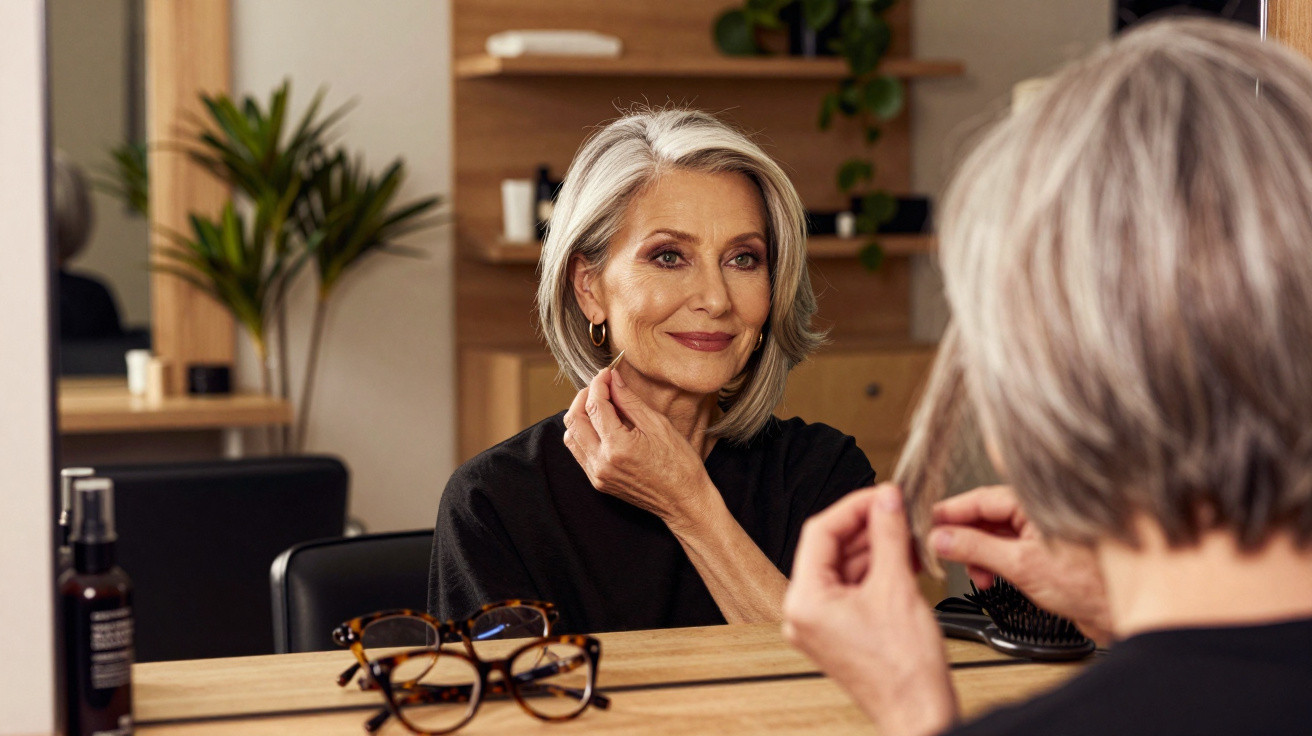
Speak to the stylist before the cape is put on. Be direct: “I know my hair is thinning. I do not want it very short. Can we explore shoulder-length or just above the shoulders first?” That sentence establishes a boundary. The conversation can then focus on choices rather than ultimatums.
In practical terms, request a blunt baseline cut falling between the collarbone and the tops of the shoulders. For many women, this length still feels feminine while being short enough to avoid straggly, transparent-looking ends. Fine, invisible layers around the face and crown can create lift without taking away from already sparse areas. Consider a soft curtain fringe only if your hairline can support it; forcing a fringe onto a thinning front section can quickly have the opposite effect.
A major cause of regret is often not the haircut, but the belief that it will solve everything by magic. Thinning hair involves the cut, everyday routine and the broader story of your health. If you treat a new cut exactly as you treated your old hair, disappointment can set in quickly. Drying the roots with a hairdryer has more impact than repeatedly smoothing the ends. Applying a lightweight volumising mousse or foam to damp hair can substantially reduce the amount of scalp visible at the crown.
On a difficult hair day, dry shampoo is useful for more than absorbing oil. Applied at the roots and worked in, it adds grip and a slightly powdery fullness to fine strands. It can build up, and scalp health remains important, but when used sparingly before an evening out or a meeting, it can be a discreet saviour. Let’s be honest: nobody really does this every day.
Certain mistakes recur: severe centre partings that reveal scalp lines like runways, heavy oils that drag every strand flat, and very dark all-over dye that creates harsh contrast against a pale scalp under bathroom lighting. Moving one or two shades lighter and adding soft highlights can soften that contrast. Aim for a “soft focus filter”, rather than a dramatic transformation.
“I used to tell women, ‘We have to cut it short or it won’t look good,’” admits Laura, a London-based stylist who now specializes in fine hair. “Then I realized what I was really saying was, ‘I don’t know how to work with your fear.’ Now I spend more time talking than cutting. Sometimes we go shorter six months later. Sometimes we never do.”
For women sitting on the other side of the mirror, that change - being listened to before being cut - can alter everything. On a personal level, thinning hair frequently carries a quiet sense of shame. Hormones, stress, pregnancy, menopause and genetics can all play a part, and it rarely seems fair. Most of us know the feeling of seeing a handful of hair in the shower drain and experiencing it as a small grief.
A few practical principles can help cut through the noise, in both salons and online:
- Set your “no-go” zone before you arrive - for instance, “Nothing above my ears for now” - and say it clearly.
- Choose one main aim for each appointment: greater volume, reduced breakage or a shape that flatters your face. Do not expect all three at once.
- Ask the stylist to demonstrate how the cut looks when only partly styled, rather than solely after a full blow-dry you will never recreate.
Thinning hair beyond the perfect “after” photo
When you scroll past row after row of immaculate “after” pictures, it is easy to overlook that hair exists in the untidy “during”. It is there on the windy walk to the bus stop, in the rushed ponytail before a late Zoom call, and on days when harsh office lighting reveals more scalp than the flattering bathroom mirror at home. That is where a haircut truly has to work.
Headlines claiming that “Short hair is the only answer for thinning hair” reduce a complicated reality to one blunt statement. They overlook culture, personality, attachment and even trauma. Some women were raised to view long hair as part of their beauty. Others had their hair cut short against their wishes as children and still carry that experience deeply. What feels like a liberating cut to one person can be another’s nightmare.
The split reactions beneath viral images reveal more about agency than they do about length. The women who appear most content are not necessarily those with the tidiest pixie cuts. They are the women saying: “I chose this.” “I was ready.” “We tried mid-length first, then I decided to go shorter.” The route to the result matters just as much as the result itself.
Perhaps the meaningful change is not moving from long hair to short hair, but moving from silence to discussion. It is the shift from “you have to” towards “here’s what could work, what do you feel about it?” It is about no longer hiding hair loss beneath hats or excuses, and instead naming it - perhaps even joking about it with friends or in group chats. Once something has a name, it gives up some of its power.
For some women, that discussion will eventually end in a happy crop: an easy wash-and-go cut that feels like shedding a burden. For others, it will mean gentle trims, strategic colour, careful styling and a determined choice to keep some length because it still feels like home. Both paths are valid.
Thinning hair is neither a moral failing nor a style offence. It is a change the body writes into your story, sometimes gradually and sometimes with brutal speed. The photographs will continue, and opinions will keep colliding. Between the pressure to cut it all off and the fear of losing even a single centimetre, there is a quieter place: a mirror, a chair and a conversation beginning with one straightforward question: what do you actually want when you look at yourself?
| Key point | Details | Why it matters to readers |
|---|---|---|
| Choosing a realistic length | With thinning hair, a blunt cut from collarbone to shoulder height often offers the strongest balance of coverage and movement. Very long hair can look transparent at the ends, whereas a dramatic pixie may feel emotionally too sudden for many women. | It helps readers imagine a middle-ground choice rather than feeling pushed into a drastic cut they could regret as soon as they leave the salon. |
| Smart layering (or not) | Heavy, choppy layers may remove valuable density from sections that are already thin. Request only very light, invisible layers at the crown and around the face, while leaving most of the length as one piece to retain thickness at the bottom. | This avoids the “ratty ends” look that can make hair seem thinner and provides clear language for speaking to stylists who may otherwise add too many layers. |
| Colour tricks to disguise scalp | Choosing a shade one or two levels lighter, with soft, blended highlights at the top of the head, reduces the contrast between hair and scalp. Avoid flat, very dark dyes, which can make every glimpse of scalp stand out sharply in daylight. | It makes thinning less obvious in daily lighting, helping readers feel less exposed in photographs, at work or beneath unforgiving bathroom mirrors. |










Comments
No comments yet. Be the first to comment!
Leave a Comment