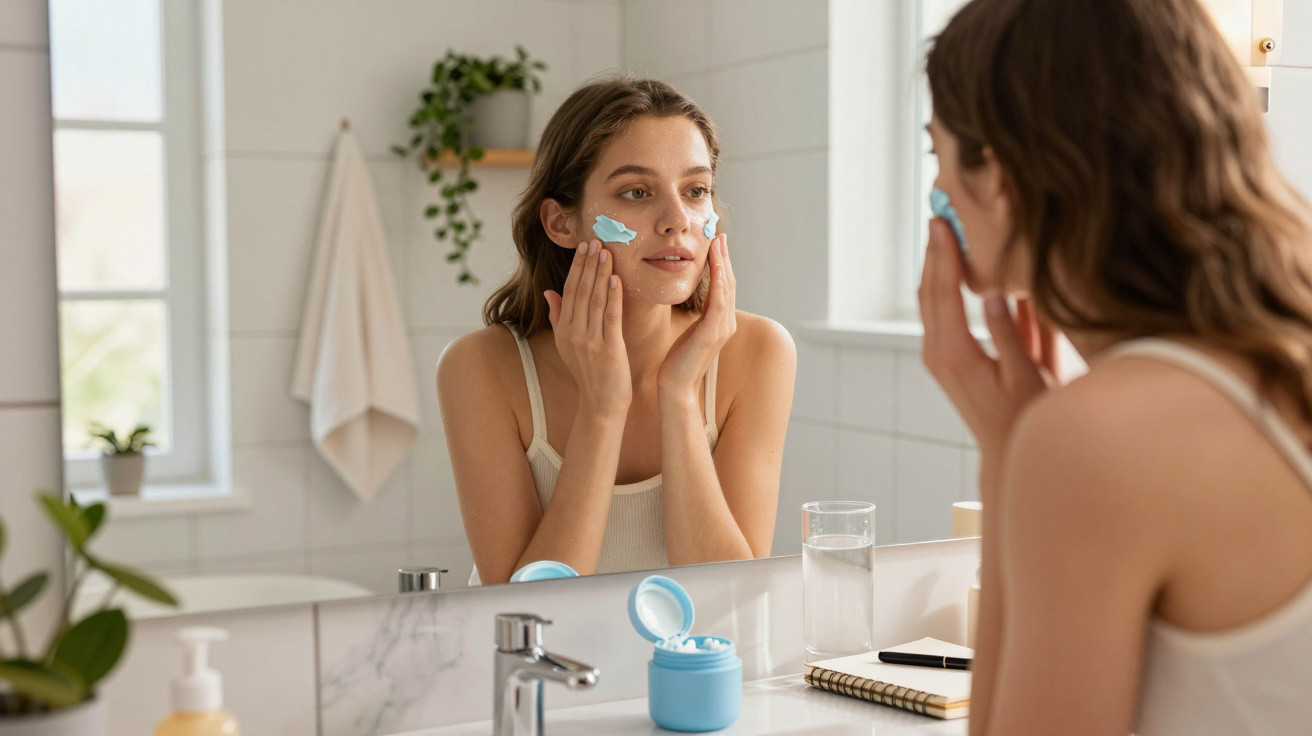
It began, as these things often do, with a 3am scroll. My algorithm had apparently decided that one more “skin cycling” reel would push me into emotional ruin, so it offered something different: the “blue-cream routine” that suddenly seemed to be everywhere. I watched a woman pat a sky-blue moisturiser over her face as though she had found a new faith, and 2.3 million likes implied that I ought to pay attention. She claimed it would reduce redness, settle breakouts and create that lightly filtered glow normally reserved for people who sleep well and avoid the news. I was not entirely convinced, but I watched the reel three times. Then I did what any tired adult with a credit card would do: I bought the cream. I also committed to testing it properly for a week - no cheating and no missed nights - to find out what shifted… and what resolutely did not.
What is the “blue-cream routine”, exactly?
The name makes it sound faintly cultish, which is not entirely inaccurate. At its heart, the blue-cream routine is an evening skincare ritual centred on one product: a dense, pastel-blue moisturiser typically loaded with centella asiatica, ceramides and some form of calming peptides. On TikTok, it is presented as the answer for angry, over-exfoliated skin. The intended routine is to cleanse, perhaps apply a mild serum, then coat your face in the blue balm before waking with a calm, glowing complexion.
Anyone who has gone too hard on retinol or acid toners and ended up with skin that feels like burning sandpaper will immediately understand the appeal. The principle is straightforward: stop waging war on your skin barrier and start treating it gently. Less “burn your face off to fix it”, more “wrap it in a cashmere blanket and apologise”. Its colour largely comes from ingredients such as guaiazulene or chamomile derivatives, which conveniently provide some of the visual drama TikTok adores. Blue simply photographs better in a bathroom-mirror selfie than beige.
I chose one of the most talked-about versions, which had appeared repeatedly in every “before and after” clip on my For You page. I studied the ingredient list as though preparing for an exam, before remembering that most people see a pretty shade, hear a promise and press “buy now”. My rules were clear: apply it nightly for seven days, avoid additional exfoliation, keep my existing cleanser and resist introducing any stealthy new serums. It would be blue cream, honesty and my distinctly ordinary combination skin, which is prone to stress-related flare-ups.
Day one: the first blue night
On the first evening, I stood under the slightly unforgiving yellow bathroom light and found myself oddly nervous. Staring at your bare face for too long can feel exposing, particularly when your camera roll is filled with smoothed-out images taken from flattering angles. My skin was in a familiar state: redness around my nose, a fading chin breakout and the sort of dullness that announces, “yes, I do read my emails after 10pm”. It was neither a catastrophe nor a glow-up - simply real life.
The cream looked as if it belonged in a science-fiction film: a glossy blue scoop sitting in its pot. It had a subtle, clean scent, rather like passing a spa beyond your budget. More substantial than a lotion but lighter than a balm, it melted immediately once warmed between my fingers. I pressed it across my face and watched the pale tint vanish, leaving a shine that resembled a “freshly glazed doughnut” - stylish on TikTok, though rather sticky when you are about to put your face on an actual pillow.
Once in bed, I could feel a fine tacky film on my cheeks. It was not unpleasant, merely… present. Like putting on new pyjamas before deciding whether you truly like them. I half anticipated waking up with blocked pores or some immediate calamity because, honestly, whenever the internet calls something “game-changing”, your expectations are usually the game in question. I switched off the light feeling cautiously optimistic and mildly prepared for disaster.
Days two and three: subtle changes and a reality check
The morning after the first blue
The following morning, I did that mildly absurd thing where you hurry to the mirror before your eyes are fully open. My complexion was not airbrushed, and my pores had not evaporated. Yet there was less redness than usual, particularly around my nose and across my cheeks. My face appeared marginally more even, as if I had slept an extra hour that I definitely had not. It was not miraculous, just… gentler.
When I touched my skin, it felt smoother in a post-facial sort of way, but without any tightness or stinging. My chin was the real surprise. The small angry spots that had been developing there looked flatter and less inflamed. I still had texture, visible pores and one stubborn mark with no intention of moving out. Even so, the overall effect was calmer, as though my skin had taken a deep breath.
Routine fatigue versus viral discipline
By day three, the initial excitement had started to fade. Everyone knows the point at which a new routine shifts from enjoyable to “do I really have to stand up and wash my face again?”. After work, commuting and spending too long prodding at my phone, a three-step routine was the last thing I fancied. This is what short videos rarely include: the mundane repetition of looking after yourself when nobody is watching.
Even so, I continued. Cleanser, a light hydrating serum, then the blue cream. Each night, my skin seemed to absorb it more quickly, so there was less of the glazed finish by the time I climbed into bed. My face also felt better beneath make-up in the morning, with foundation sitting more neatly rather than gripping every dry patch as if it had something to prove. During one quiet routine, a thought occurred to me: let’s be honest, no one really does this perfectly every day unless they’re being paid for it.
Mid-week: when the honeymoon phase meets the mirror
The good, the bad and what was still there
By day four, the differences were more obvious. My general redness had eased, especially on my cheeks, which usually appear as though I have power-walked uphill even when I have done nothing but sit at a desk. The texture of my skin felt smoother - not baby-soft, but less uneven and less irritated. I noticed it most while cleansing: the slight drag around my jaw had become more of a glide. There is something quietly satisfying about splashing water over a face that does not seem to fight back.
However, the blue cream had not magically removed the darkness beneath my eyes or the fine lines created by years of distracting myself with late-night scrolling. The marks from my chin breakout were fading, but remained clearly visible. A tiny fresh whitehead also appeared near my hairline, which was certainly not part of the promised fantasy. It was a useful reminder that skincare cannot overrule hormones, stress or the fact that I occasionally have crisps for dinner.
There was also a shine problem. The cream is rich, and my T-zone enjoys making itself known. On certain mornings, I woke looking more dewy than I wanted, edging into oily territory. A tissue and a cold rinse dealt with it easily enough, but for anyone whose skin is already oily, the routine may be less “blue dream” and more “blue slip-n-slide”. Still, my skin never felt congested, only deeply moisturised - as though I had finally supplied the drink of water it had been asking for over the years.
The emotional part of staying consistent
By the middle of the week, something else had changed that had nothing to do with the cream itself. Spending those extra five minutes at night - softly massaging in the product, pressing it around the sides of my nose and smoothing it over my forehead - began to feel less like another task and more like a small ritual. It was neither glamorous nor camera-ready, only quietly stabilising. The sound of running water, the gentle pressure of a towel and the cool glide of cream between my fingertips all seemed to stitch the day together in a small, human way.
There is a strange intimacy in becoming acquainted with your own face again - not the front-camera version, but the actual one. You notice small asymmetries, marks with their own histories and lines that remain when you stop smiling. The blue-cream routine made me confront that, evening after evening. Somewhere between days four and five, I realised the experiment was about more than whether my complexion looked “viral-ready”. It was about whether I could do something consistently for myself without turning it into content.
Day seven: the verdict in proper daylight
On the seventh morning, I deliberately examined my face in natural light: the least forgiving judge of all. There were no filters or soft bathroom shadows, only daylight through the kitchen window as the kettle boiled. My skin tone looked more even than it had a week earlier. The redness that usually flared around my nose and over my cheeks had noticeably subsided, while the mark from my latest chin breakout had shifted from “headline” to “background detail”.
My skin felt reliably hydrated, which may sound unexciting until you remember those tight, flaky days. Foundation applied in a way that made me quietly thank my past self for sticking with the ritual. It did not separate around my nose or latch onto tiny dry areas I had not realised existed. I still had pores, texture and the appearance of someone who occasionally forgets SPF on overcast days. But my face looked rested, even when I absolutely was not.
The biggest change was not, unexpectedly, visible in selfies. It appeared in accidental side-profile reflections in shop windows and lift mirrors. I did not instinctively flinch or mentally zoom in on every perceived imperfection. Instead, I felt: “Okay, this is my skin, and it looks… pretty good, actually.” It was not flawless or porcelain-like, just quietly fine. That seemed more significant than any TikTok transformation.
What changed, what did not, and what I will keep
The benefits after one week of blue
So what genuinely changed? My skin barrier felt more resilient and less reactive. Random redness flare-ups settled, and my face stopped stinging when I used products that had never caused a problem before. I had fewer dry areas, especially around my mouth and nose, which had always revealed themselves the moment I applied make-up. Even without foundation, my complexion had a soft, slightly plumper appearance, as though I had finally honoured its need for moisture rather than fighting it with an endless stream of actives.
The breakouts did not vanish, but the ones that appeared seemed to settle faster and with less residual anger. In terms of texture, my skin felt smoother and more even, rather than like a patchwork of chaos. Emotionally, the nightly ritual softened something too: that restless end-of-day feeling and the urge to move straight from Netflix to bed without stopping to check in with myself. A week is not a lifetime, but it was sufficient to show that consistency, alongside a truly soothing product, adds up.
The limitations of a viral cream
Now for what remained unchanged, because this is the point at which glossy reels tend to become conspicuously quiet. My fine lines are still present. The lines on my forehead and around my mouth did not disappear beneath ceramides and centella. They may have looked slightly softer, but if you expect a cream - blue or otherwise - to rewrite the past decade of your life, disappointment is inevitable. Skincare cannot carry the emotional burden of ageing for you.
My hormonal breakouts also continued to turn up exactly on schedule. They were slightly less inflamed, yes, but they had not been evicted. The shadows beneath my eyes looked marginally improved after a proper night’s sleep and identical after nights without one. The blue cream did nothing for my doomscrolling habit or my three-coffee mornings. It certainly did not fix the part of my brain that sometimes thinks, “If I just buy one more serum, I’ll feel better about everything else.”
One further reality: even after a week, I don’t think everyone needs a blue-cream routine. If your skin is already oily and fairly resilient, it could feel excessive. If thick textures are not your thing, you will probably stop using it after two evenings. If you want a miracle within seven days, you are likely to feel underwhelmed. This routine does not offer an instant transformation; it offers a small, practical kindness for skin that has been pushed too far.
So, was the blue-cream routine worth it?
For me, yes - with a few caveats. The blue-cream routine works best as a reset button, not a magic wand. After one week, my skin looked calmer, more even and better hydrated, and that alone made turning up at the sink each night worthwhile. It did not turn my face into somebody else’s; it simply helped mine appear as though it had finally been taken seriously. In a world that often treats faces as problems needing correction, that felt unexpectedly emotional.
What I plan to retain is the ritual: gentle cleansing, fewer harsh actives and ending the day with something soothing rather than stripping. I will keep the blue cream for weeks when my barrier is obviously asking for mercy, or when winter arrives and my cheeks feel like paper. I won’t pretend it’s a cure-all, and I won’t promise it will change your life, but it may quietly alter how you feel when you catch your reflection while brushing your teeth at midnight.
Perhaps that is the real legacy of viral routines: not the precise product or the perfect “after” photo, but the encouragement to pay attention. To your skin, certainly, but also to the exhausted person wearing it. And if it takes a pot of sky-blue cream and a 3am scroll to achieve that, perhaps it is not the worst bargain in the world.








Comments
No comments yet. Be the first to comment!
Leave a Comment