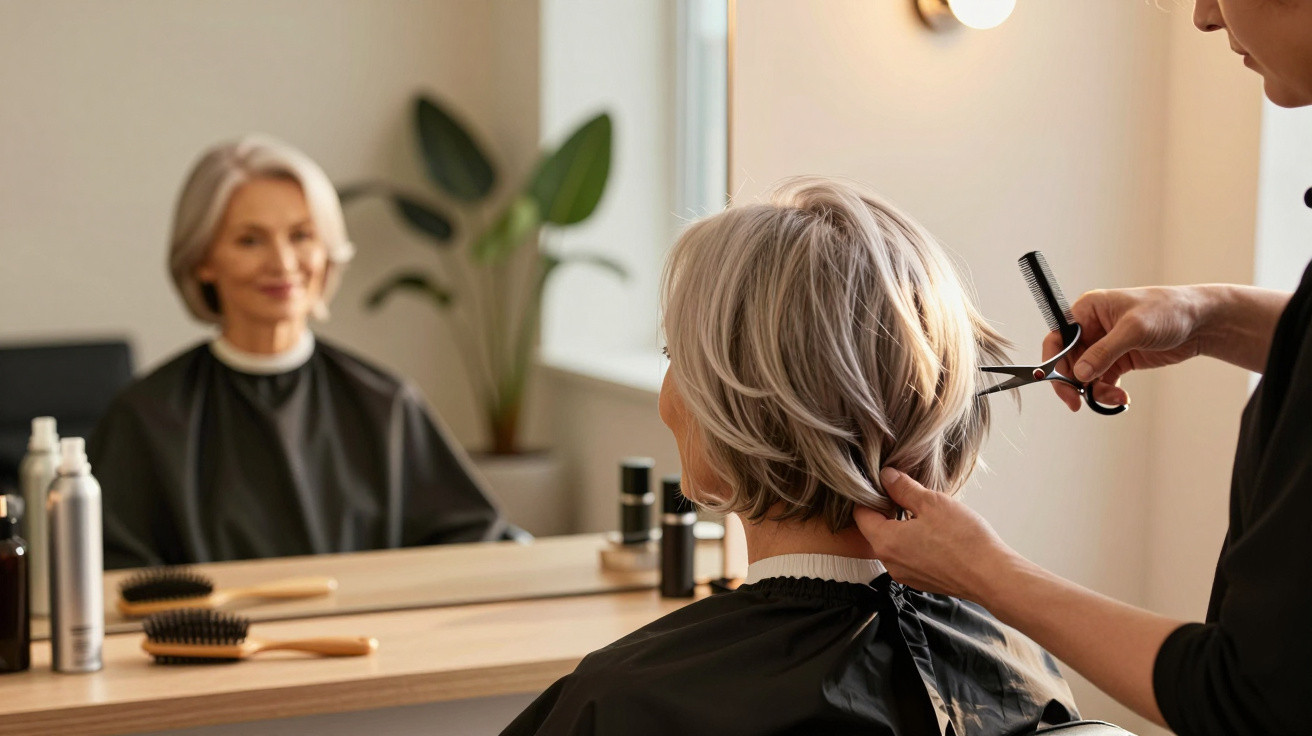
The woman sitting in my chair looked at herself in the mirror, winding a weary-looking lock of hair around her finger. “I want a change,” she told me, “but I don’t want to look like I’m trying to be 25 again.” Her hair was soft and fine, sitting far too flat at the sides. For years, she had worn a classic ponytail, but it had suddenly begun to feel like a spotlight on everything she no longer liked: her neck, her jawline and the sense that her hair had simply… given up.
We chatted, laughed and looked through photos on her phone. Without realising it, she kept passing over longer styles and returning to the same cut.
When she left, she seemed ten years lighter.
The one short haircut I keep suggesting: the soft, layered pixie-bob
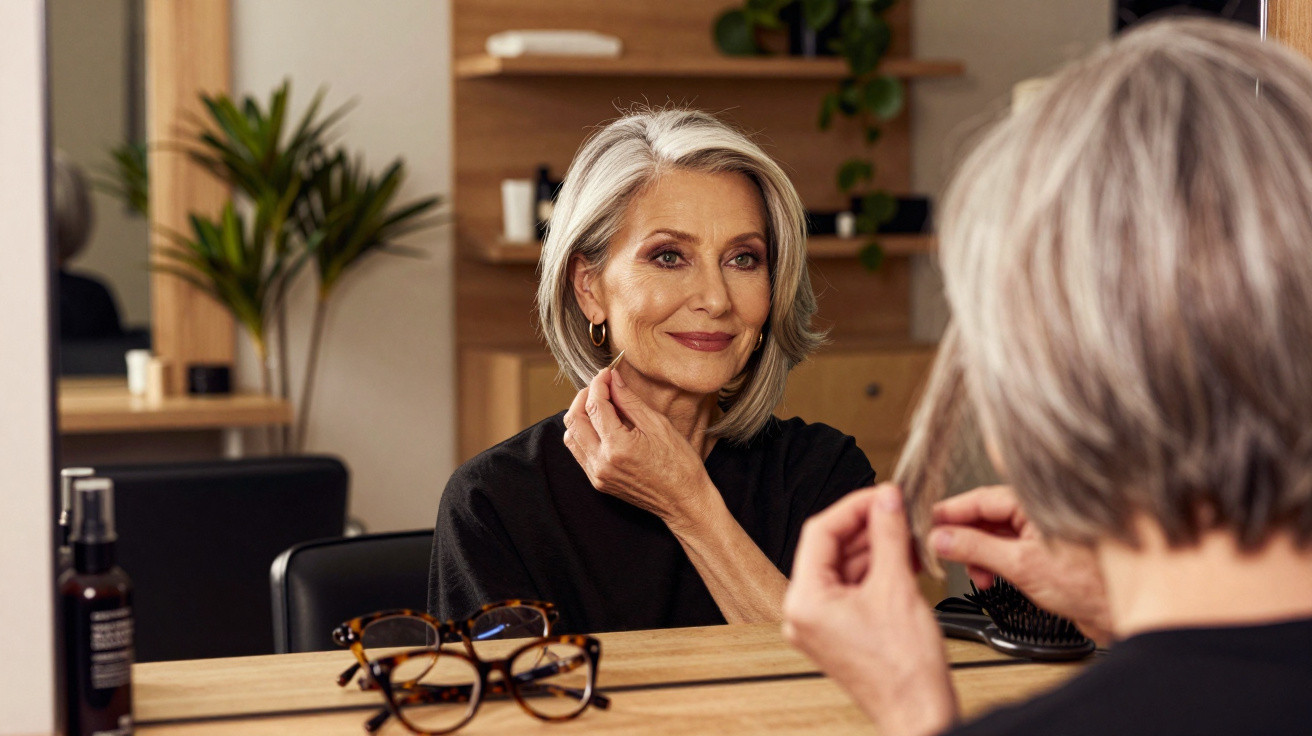
When women over 50 with fine hair sit in my chair and quietly ask, “Be honest, what would you do?”, my answer is nearly always a soft, layered pixie-bob. I do not mean the rigid, spiky pixie associated with the early 2000s. This is a hybrid style: a little more length around the ears and nape, airy layers through the top, and soft movement around the face.
It is short enough to revive fine hair without leaving you feeling too exposed. The nape looks neat, the crown gains volume, and the sides sweep across the cheekbones rather than sticking to them. It’s the kind of cut that makes people say, ‘Have you done something? You look… rested.’
One of my regular clients, Anne, 57, came in after a year of “pandemic hair.” Her fine hair had grown into an overextended bob that invariably looked a little sad by the end of the day. She works in an office where she is often the oldest woman in the meeting, and she said, “I don’t want long princess hair. I just don’t want to feel invisible.”
We chose a soft pixie-bob, keeping the top a touch longer, cropping the nape slightly, and adding side-swept bangs that brushed her brows. Three weeks afterwards, she returned simply to tell me that three people had asked whether she had lost weight, while another asked who her “new stylist” was. Her face had not changed; the way it was framed had.
Fine hair is often labelled “difficult”, but length is usually the real problem. As it grows longer, it tends to collapse against the scalp and pull the features down with it. Carefully chosen shorter lengths have the reverse effect: they lift, create an illusion and give hair structure it cannot achieve by itself.
In a layered pixie-bob, the layers should feel light and airy rather than choppy. This allows the hair to build subtly at the back before falling softly towards the face at the front. Naturally, the eye travels upwards towards the eyes and cheekbones. That’s why this cut works so well on women over 50 with fine hair: it cheats gravity a little.
How to wear this cut so it actually works on fine hair
The appeal of the pixie-bob comes down to getting the lengths in balance. If every section is cut too short, fine hair may either stick up or cling tightly to the head. I therefore prefer to leave the crown slightly longer, using soft, invisible layers to create lift during drying. The sides remain close, but never shaved, following the natural contour in front of the ears.
Around the face, I nearly always recommend either a side-swept fringe or a longer curtain-style fringe. It adds movement, softens lines and skims across forehead wrinkles. At the nape, the line should be neat without looking harsh: lightly tapered to follow the neck, so it remains elegant from behind. This is not intended to be a “statement haircut.” It is a style that quietly works in support of your face.
The mistake I encounter most often is someone requesting “layers” and receiving a cut that has been thinned out too much. For fine hair, this can be disastrous. It can leave the hair wispy, make the ends appear chewed, and turn styling into a daily fight against flyaways. Instead, ask for gentle graduation rather than aggressive texturising with thinning scissors.
There is another pitfall: holding on to too much length “just in case.” I understand why going short can feel intimidating. However, if a long, heavy front is retained while the back is weak, the style loses its form within weeks. There is a point at which the chin, jawline and crown work in harmony. That’s where this haircut really starts doing you favors instead of asking for them.
As I often tell my clients, “Short hair doesn’t age you. The wrong proportions do.” When the weight of the hair sits too low, it pulls the eye down. When volume and movement sit around the eyes and cheekbones, the whole face looks livelier, without a single injection or filter.
- A slightly longer crown: creates lift and gives the impression of thicker hair.
- Soft, face-framing layers: soften stronger lines and draw attention to the eyes.
- Tapered nape: lengthens the neck and stops the cut from appearing blocky.
- Side-swept or curtain fringe: conceals forehead lines without looking “helmet-like.”
- Minimal product: use a lightweight volumising mousse or spray, never heavy waxes that flatten fine hair.
Living with short hair after 50: more freedom, less performance
After a few weeks, clients often mention another benefit of this style: the relief. There are no more 20-minute blow-dries that still fail to achieve the desired result, and no more styling brushes battling limp lengths. With a pixie-bob on fine hair, a quick towel-dry, a blast of the dryer at the roots and your hands will generally do most of the work.
Let’s be realistic: nobody manages this every day as if they were in a hair advert. On some mornings, it is simply “finger comb and go”, which is precisely why this style has such a devoted following. Short, layered lengths recover more quickly, even after a poor night’s sleep. If you prefer a slightly undone, natural finish, this cut suits it perfectly.
| Key point | Detail | Value for the reader |
|---|---|---|
| Soft, layered pixie-bob | Short back and sides, longer crown, gentle face-framing layers | Creates volume and movement on fine hair without harsh lines |
| Balanced proportions | Lift at the crown, light fringe, tapered nape | Visually lifts features, softens jawline and forehead |
| Low-maintenance styling | Quick blow-dry, light volumising product, finger styling | Saves time daily while still looking polished and modern |







Comments
No comments yet. Be the first to comment!
Leave a Comment