
The woman opposite you on the Tube never once reaches for her hair. There is no anxious patting, no hurried attempt to repair a bun, no desperate hunt for a claw clip at the bottom of her tote. Her haircut handles it all. After a scarf, a gust of wind or being pressed against a rucksack, it simply settles back into place. It is obvious she did not spend 40 minutes at the mirror this morning. Perhaps five. Perhaps even less. Yet she looks prepared for a meeting, a date and an impromptu selfie in flattering light.
Some haircuts are kind when life is busy.
Others punish every missed blow-dry.
The five-minute haircut that quietly does everything
There is a particular haircut that only becomes noticeable after you have watched it for a moment. It is not showy or instantly salon-fresh in an “I have just stepped out under a ring light” way. Instead, it is the sort of hair that lands well even when you are already 20 minutes behind schedule.
This cut generally falls somewhere between the jawline and collarbone. Its ends are softly blunt, with subtle internal layers that are almost invisible but apparent in the way the hair moves. The shape is clean and nearly minimalist. Its real strength lies in working with your natural texture, rather than forcing it into submission.
This is the haircut that gives you grace on mornings when you have simply had enough.
Picture a refined long bob: the “lived-in” lob seen all over Pinterest, yet one that somehow appears different on actual people. Last year, my friend Emma cut her waist-length hair into a collarbone lob. She has two children, a commute and absolutely no patience for round brushes.
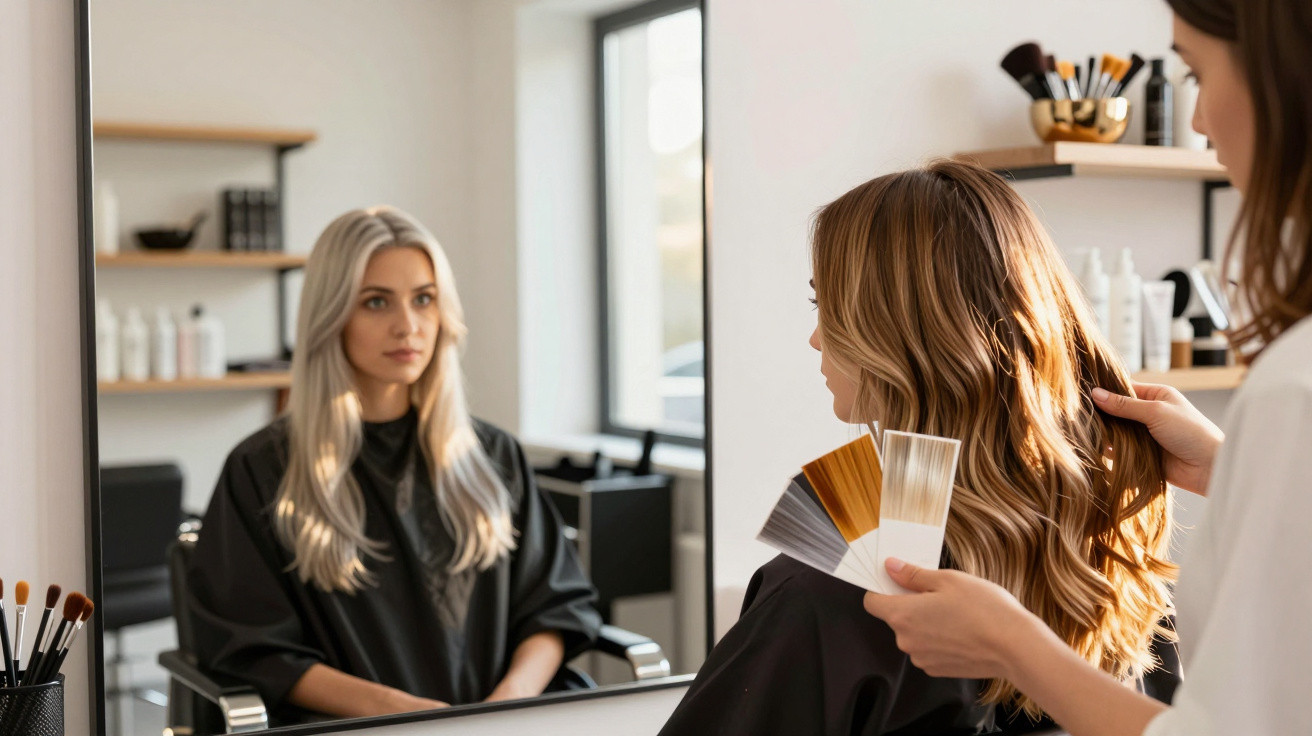
Her salon request was wonderfully blunt: “I want to look like I tried, even when I absolutely did not.” Her stylist created a lightly blunt baseline sitting just above her shoulders, then added almost undetectable layers to prevent a triangular shape. These days, she rough-dries it for three minutes, uses her fingers to sweep the front away from her face and heads out. Her colleagues continually ask which styling tool she bought.
The answer is: she bought a smarter cut.
There is a straightforward reason this style looks neat after five minutes. Collarbone-length hair carries enough weight to fall smoothly, without being so heavy that it pulls the face down or needs an hour to dry. With the gentlest guidance from a brush - or simply your hands - the ends can turn inwards or flick outwards.
Those hidden layers are not the “choppy” layers of 2005. They merely take away excess weight where hair is inclined to puff up or go flat. That produces shape without effort: lift where it is wanted and softness where it is not. Since the outline follows the neck and jawline, it can make your face look more defined, even on days when your energy is low.
That is the understated advantage of a haircut created for real mornings rather than salon lights.
How to style a collarbone lob in under five minutes (without lying)
This is the uncomplicated routine that people with apparently effortless hair rarely explain properly. Pat hair dry gently with a towel, then work a coin-sized amount of lightweight cream or serum through the mid-lengths and ends. Do not tug at it or shake it vigorously with a towel, creating frizz before you have begun.
Turn your head upside down and blow-dry for two minutes, keeping the dryer moving throughout. You are not aiming for flawlessly sleek hair; you only want to remove the heavy dampness from the roots. Turn upright again, separate the front pieces away from your face with your fingers, then run the dryer over them for 30 seconds. That is all. You will be finished before your coffee goes cold.
The main mistake is attempting to make this cut into something it is not. People overwork it with a round brush, clamp it pin-straight or pile on products promising “glass hair” that instead produce helmet hair. Then they decide the haircut is the problem.
Honestly, no one follows a 10-step styling routine every day. This is particularly true on weekdays that begin with too many notifications. If you have ever stood at the mirror while late for work, trying to control one unruly front section with straighteners, you know how quickly it escalates. This cut should end that pattern, not create another task in your morning.
“A good cut should look 80% done the second the hair is dry,” says London stylist Ana L., who has quietly converted half her clients to some version of the collarbone bob. “The final 20% is just personality - how much bend, how much shine, how ‘undone’ you like it.”
- Ask for a collarbone-length base with a slightly blunt finish, rather than ends thinned to a razor-like effect.
- Request soft internal layers that remove weight instead of creating obvious “steps”.
- Keep the pieces at the front slightly longer than those at the back for a gentle, face-framing angle.
- Take pictures of hair with a texture similar to yours, rather than only photos of your dream celebrity.
- Before leaving the salon, make sure you have practised a five-minute routine once while in the chair.
The quiet confidence of hair that does not fall apart
Once you have had a truly low-maintenance haircut, returning to anything else is difficult. You begin to see how much headspace uncooperative hair takes up. There are plans cancelled because rain ruined your blow-dry, photos you dislike because your ends looked frazzled, and the immediate feeling of being at a disadvantage when your hair refuses to behave.
A haircut that works in five minutes does not offer a perfect life. It simply removes one small source of daily resistance. Those little irritations are often what move us from “I’ve got this” to “I can’t deal”.
You may discover that this sort of haircut changes your entire getting-ready routine. Spending less time battling tools leaves more time for choosing earrings, lipstick or nothing at all. You might dry it halfway, let the rest finish in the car and feel unexpectedly relaxed about it. Or you may catch sight of yourself in a shop window at 4 p.m. and realise… it still looks fine.
That is the quiet luxury of it. It is not demanding glamour, but a reliable foundation of “presentable” that lets you agree to last-minute dinners, Zoom calls or photographs without a private surge of panic.
The reality is that hair need not become a daily project to show that you care. It only needs to be cut in a way that recognises your life: the alarm you snoozed, the full diary and the days when your energy is lying somewhere on the floor with yesterday’s outfit.
If your current haircut looks good only after a 40-minute ritual, the issue may not be that you are “lazy” or “bad at hair”. The problem may be the haircut itself. And it can be fixed: a useful conversation with a stylist, a photograph of the right lob and a small adjustment towards a length and layers that work with you rather than against you.
The most polished thing about you may ultimately be the thing you spend the least time on.
| Key point | Detail | Value for the reader |
|---|---|---|
| Five-minute-friendly length | Collarbone to just-above-shoulder lob with a softly blunt edge | Dries faster and settles into shape without intensive styling |
| Invisible structure | Light internal layers and slightly longer front pieces | Built-in movement and face framing that remain polished when you are in a rush |
| Simple routine | Two-minute rough dry, light product, fingers to set the front | A consistent “put-together” look without complicated tools or daily effort |
FAQ:
- Question 1 Will this haircut work if my hair is naturally wavy or frizzy?
- Question 2 How often should I trim a lob to keep it looking sharp but still low-maintenance?
- Question 3 Can I still put this haircut into a ponytail or clip for workouts?
- Question 4 What should I say to my stylist so they understand the “five-minute” goal?
- Question 5 Do I need expensive tools for this, or will a basic hairdryer be enough?














Comments
No comments yet. Be the first to comment!
Leave a Comment