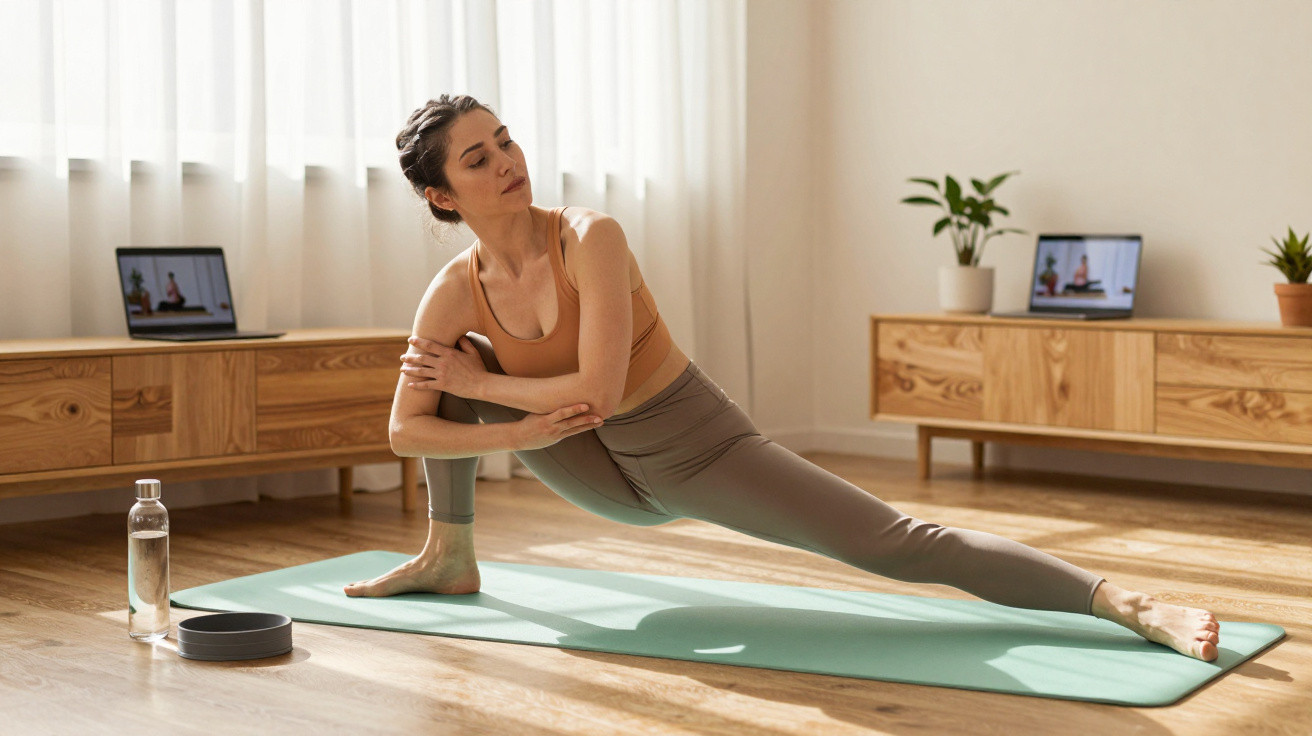
If your waistband feels restrictive, you become bloated after eating and crunches only leave you with a sore neck, you may be looking for a different approach. Pilates aims to strengthen your core without putting your spine through unnecessary strain. What makes it particularly interesting is that certain moves specifically engage the lower abs, an area that traditional sit-ups often neglect.
Why Pilates can tone the waist without a crunch marathon
Pilates is not centred on the visible “six-pack layer”, but on the deeper muscles beneath it. These deep abdominal muscles work much like an internal corset, shaping the waist from within.
While the rectus abdominis and obliques are primarily responsible for visible strength and bending the upper body, the transverse abdominis stabilises the entire torso. This is where Pilates comes in: before each movement begins, the instructor gently draws the stomach in during a deliberately controlled exhale.
“A flatter stomach is achieved mainly because the deep muscles learn to stay active all the time – when standing, walking and sitting.”
This delivers several benefits at once: the waist appears more defined, the back is relieved and posture becomes more upright. After a few weeks, many people find that they naturally sit taller and are less likely to overarch their lower back. In turn, this reduces pressure on the lumbar spine and may ease back pain.
The coach’s 5 favourite Pilates exercises for a toned core
From dozens of variations, the Pilates coach has chosen five classics that can easily be done at home without equipment. Every exercise targets the core, while some also work the glutes and hamstrings.
- Single Leg Stretch – primarily activates the transverse abdominis and obliques, improving the core’s ability to hold steady.
- Double Leg Stretch – works the whole abdominal area while also mobilising the shoulders and hips.
- Double Leg Lower Lifts – places a clear emphasis on the lower abs and lower abdominal wall.
- Shoulder Bridge with Kick – strengthens the glutes, hamstrings and back while the core remains stable.
- Scissors – trains hip mobility and keeps the abdominal muscles continuously engaged.
Single Leg Stretch: controlled pulls rather than fast pedalling
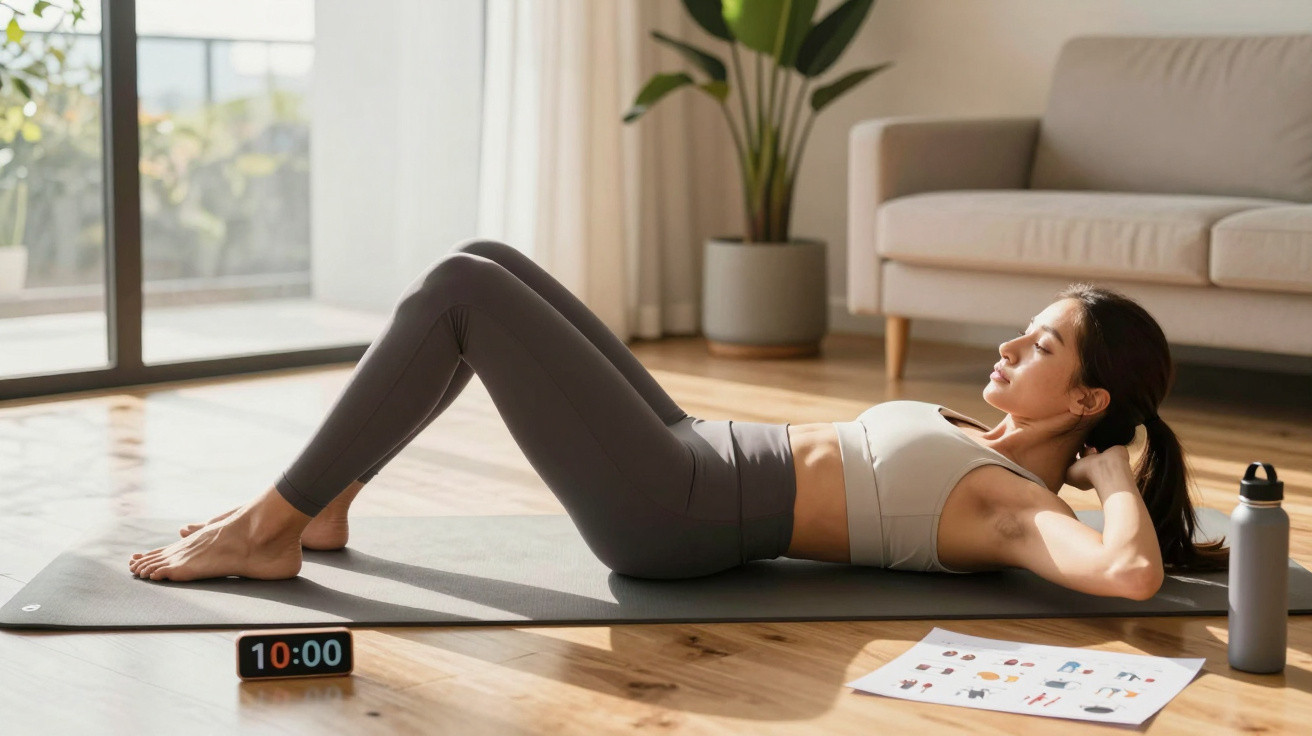
Starting position: lie on your back and lift your head and shoulder blades slightly. Draw one knee towards your chest while extending the other leg diagonally forwards.
Switch the position of your legs with every breath. One leg comes in as the other reaches out. The coach pays particular attention to keeping the stomach flat and the lower back heavy against the mat. The movement should come from the centre of your body, not your neck.
Double Leg Stretch: arms and legs move with the centre
Begin again on your back, with both knees pulled into your chest. Your head and shoulder blades hover just above the floor. As you inhale, lengthen your arms and legs far forwards without allowing your lower back to arch. On the exhale, draw everything back towards the centre.
The key is to keep your navel gently pulled in throughout the movement, as though you were zipping up a zip. This keeps the torso steady even as your arms and legs travel through a large range of motion.
Double Leg Lower Lifts: lower-ab focus
Hold your legs straight in the air, at roughly the angle of a slanted V shape. As you exhale, slowly lower both legs towards the floor – but only as far as you can without your back lifting. Bring the legs back up on the inhale.
“Less is more here: anyone who lowers their legs by only a few centimetres while keeping their back stable works the lower abs far more effectively than someone flailing almost down to the floor.”
The coach stresses that this detail often determines whether the exercise works: as soon as the back slips into an arch, the lower-ab effect is lost – and the back starts to complain.
Shoulder Bridge with Kick: glutes, back and abs working together
Lie on your back with your feet hip-width apart and your arms by your sides. On an exhale, roll upwards one vertebra at a time until your knees, pelvis and shoulders form a straight line. From this bridge position, extend one leg towards the ceiling, then lower it with control until it reaches the height of the other knee. Lift it again, then change legs.
Your abdominal muscles keep the pelvis stable so that it does not drop to one side. At the same time, the glutes work hard, providing extra support for the lower back.
Scissors: a scissor movement for hips and abs
While lying on your back, lift both straight legs. Send one leg towards the ceiling while lowering the other towards the floor with control. At the highest point, you can lightly hold the raised leg with your hands and give it two small pulses as you breathe. Then swap sides.
Your abdominal muscles stay engaged throughout. The coach also makes sure that the ribcage stays relaxed and the shoulders do not creep up towards the ears.
How to create a home routine for a flatter stomach
A short block of just 10 to 15 minutes is enough to turn these five exercises into a useful routine. The instructor recommends this order:
- Single Leg Stretch
- Double Leg Stretch
- Double Leg Lower Lifts
- Shoulder Bridge with Kick
- Scissors
At first, eight to ten repetitions of each exercise are sufficient. Keep the pace fairly slow and focus on purposeful breathing. If your core strength is still developing, shorten the levers instead: do not lower your legs as far, rest your head on the mat if needed and take breaks.
“Most people notice a different feeling in their body after the very first sessions – less wobbling through the torso and greater control when getting up, climbing stairs or carrying things.”
How often should you train – and when will visible results appear?
Reports from real-world experience often mention initial visible changes after around three weeks. The requirement is to follow the routine two to three times weekly, alongside a reasonably balanced lifestyle with enough movement and sensible nutrition.
| Training frequency | Expected effects |
|---|---|
| 1× per week | a slightly improved body awareness, minimal visible change |
| 2–3× per week | noticeably greater core stability, a flatter-looking stomach area |
| 4× per week | clear toning, better posture and less tendency to overarch the lower back |
If you have not exercised for a long time or already have back problems, it is better to begin with two shorter sessions and build up gradually. A painful neck is a warning sign: rest your head on the mat and practise the deep breathing first before increasing the intensity.
Living room rather than studio: doing Pilates without expensive equipment
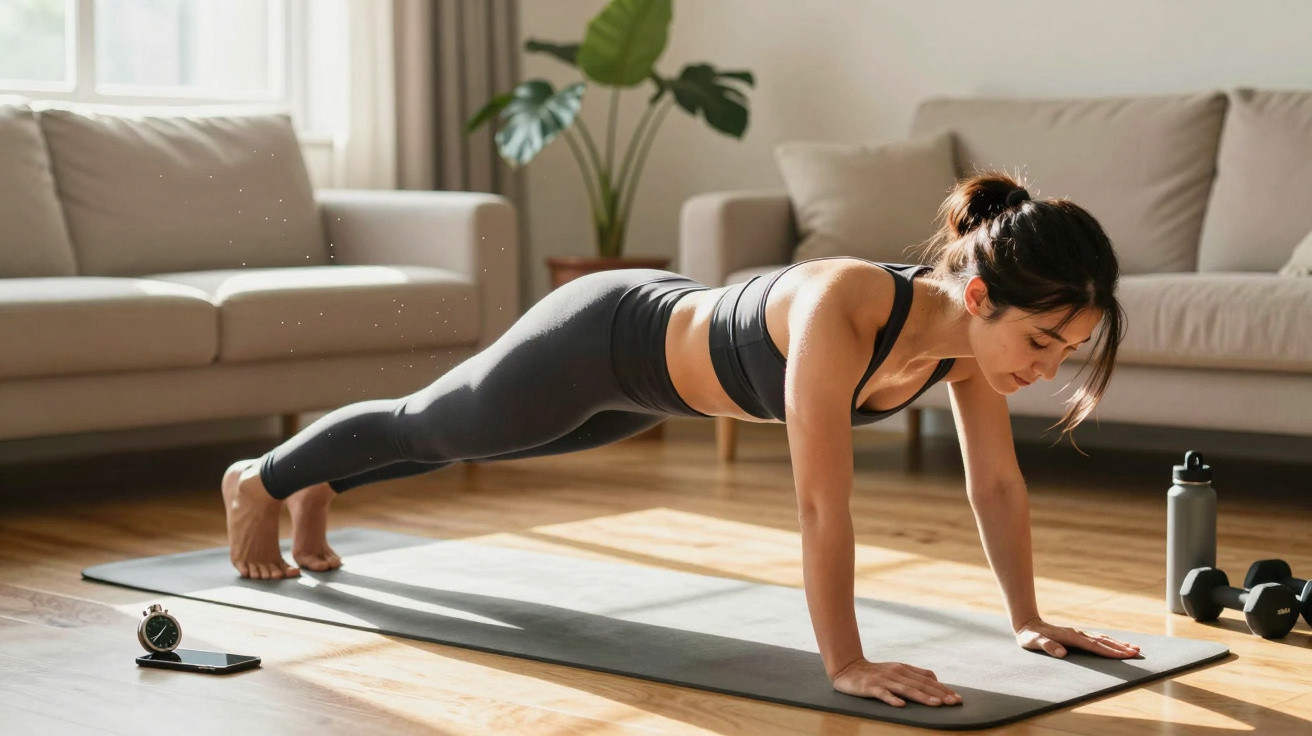
One advantage of this routine is that it works almost anywhere. All you need is a non-slip surface, such as an exercise mat or firm carpet. It is best to keep your feet bare so you can feel both stability and contact with the floor.
If you would like more variety, everyday household items can help. For instance, two socks on a smooth floor can replace gliding pads and add an extra challenge for the core muscles. They allow you to perform slow sliding movements with your feet while your abs maintain alignment.
Who is this Pilates routine suitable for – and what are its limits?
Pilates is generally suitable beyond the age of 50 or 60, particularly because its movements are controlled and usually slow. As you get older, however, a smaller range of movement is advisable. In practice, that means not lowering the legs as far, not lifting as high in the bridge, and choosing short sets rather than long rounds.
Anyone with known heart problems, severe high blood pressure or recent back injuries should seek medical advice beforehand. A pronounced pulling sensation in the back, sharp pain or dizziness are signals to stop immediately. A comfortable muscle burn is fine; pressure pain around the spine is not.
Why breathing and the pelvic floor matter for a flat stomach
One aspect that is easily missed in a quick online workout is the pelvic floor. In Pilates, the pelvic floor works alongside the deep abdominal muscles. With every exhale, the instructor gently contracts the pelvic floor – as if briefly trying to stop the flow of urine. At the same time, the stomach draws slightly inwards.
“Anyone who connects this internal tension with their breathing gets far more from the exercises, even when there does not appear to be much happening externally.”
This approach can be especially helpful after pregnancy or long periods of sitting, when it may help you feel your core as one connected unit again. A stable pelvic floor also helps protect against issues such as incontinence and creates a greater sense of security during exercise.
How to stay motivated – and actually stick to the routine
Three weeks may sound brief, but it is long enough in everyday life for people to give up halfway through. Clear, manageable targets can help: for example, three ticks in your calendar each week, a dedicated place for your mat in the living room and two set times that become habitual.
Many people prefer a short morning session before the day “runs them over”. Others use the workout after work as a deliberate counterbalance to office life. If you like, take a short video of yourself on day one using your phone. After a few weeks, you will be able to see changes in posture and body tension clearly – and that is often more motivating than the number on the scales.

Comments
No comments yet. Be the first to comment!
Leave a Comment