That is precisely what one remarkably simple exercise promises.
Many people assume they need complex routines, dumbbells or costly equipment to noticeably strengthen their bodies. Trainers increasingly stress that this is not the case. One very straightforward exercise can challenge the core, back, shoulders, glutes and legs – taking only minutes and requiring nothing more than your living room.
The unassuming exercise trainers swear by
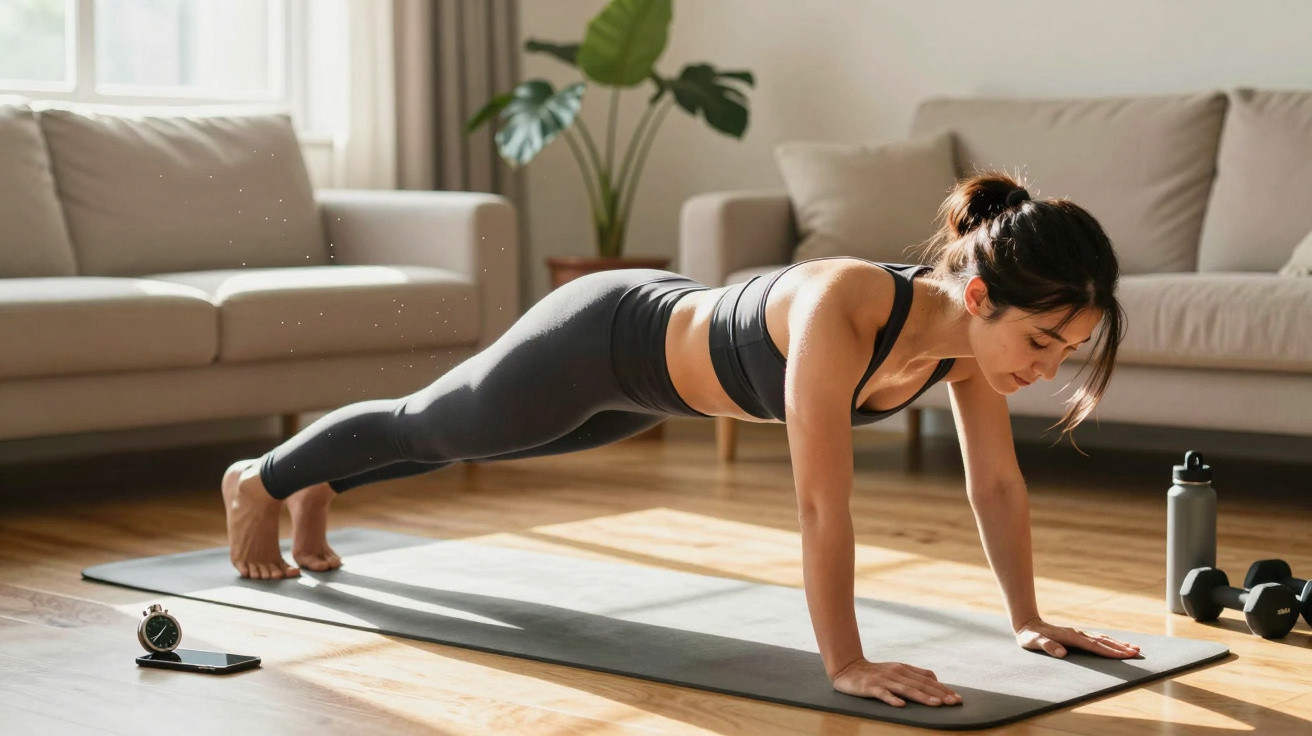
It is the classic plank, often called the forearm plank. It looks harmless: you do not lie down, jump or lift weights. Yet after only a few seconds, it can feel as though every muscle is working hard.
“The forearm plank strengthens the abs, back, shoulders, glutes and legs at the same time – without a single piece of additional equipment.”
This particular combination is why the plank is so popular with professionals:
- it engages several muscle groups simultaneously
- it can improve everyday posture
- it can be adapted to any fitness level
- it fits into even the busiest schedule
Whereas many exercises target just one area, the plank makes the entire body work as a unit. That makes it a genuine all-round exercise for anyone who wants to train efficiently.
Why the plank has such a powerful effect on your body
At its heart is the core – the middle section of the body. This includes the abdominal muscles, lower back, pelvic floor and parts of the hip muscles. When this area works strongly, you benefit during almost every everyday movement.
Regular core training can help you stand more steadily, lift loads more safely and take strain off your back. Many cases of back pain are linked to weak surrounding muscles, leaving other structures to compensate.
“A stable core means the spine is better supported and the body works more efficiently.”
The plank is also an isometric exercise. In other words, there is very little movement, but you hold the position under tension. This static load requires both the deep and surface muscles to work together. That is especially valuable in daily life, when you often need to maintain positions while carrying bags, standing or working at a desk.
Why only a few minutes are enough
Its major advantage is that you do not need a lengthy workout. For instance, three to four rounds of 20 to 30 seconds with good form already provide an intense full-body session. Many trainers advise keeping sessions short, focused and regular rather than forcing yourself into one long weekly workout that ultimately gets missed.
Over time, you can gradually increase both the duration and difficulty. This creates a sustainable training effect without having to completely reorganise your life.
How to perform the plank correctly at home
Success depends entirely on technique. A badly held plank may look similar, but it is far less effective and can even lead to discomfort.
Step-by-step guide to the forearm plank
- Lie face down on the floor or on a mat.
- Place your weight on your forearms, positioning your elbows directly beneath your shoulders.
- Set your feet behind you so that only your toes touch the floor.
- Lift your body until it forms a straight line from your head to your heels.
- Actively tighten your stomach, glutes and thighs.
- Keep your gaze slightly downwards so your neck stays in line with your spine.
“A good test: if someone placed a ruler along your body from the back of your head to your heels, it should barely wobble.”
Common mistakes include allowing the lower back to sag, lifting the hips too high or tensing the neck. If this happens, it is better to pause, briefly shake out the tension and reset your position rather than struggle on with poor form.
How long should you hold it?
Beginners in particular often overestimate their ability and then give up in frustration. A more sensible approach is to begin cautiously:
| Training level | Recommended hold time | Number of rounds |
|---|---|---|
| Beginner | 15–20 seconds | 3–4 rounds |
| Intermediate | 30–45 seconds | 3–5 rounds |
| Experienced | 60 seconds or more | 3–5 rounds |
You can rest for 20 to 40 seconds between rounds. The key is to maintain controlled tension for the full duration of each hold.
Plank variations for every fitness level
Not everyone begins at the same level. The good news is that the plank can easily be made easier or harder.
Easier variations to get started
- Knee plank: Support yourself on your knees rather than your toes. This shortens the lever and reduces the load.
- Wall or table plank: Lean your forearms against a wall, or place straight arms on the edge of a table, so that your body is at a slight angle.
- Shorter intervals: Hold for 10 seconds, release briefly, then hold for another 10 seconds – allowing you to build up gradually.
More challenging variations for intermediate exercisers
- Side plank: Turn onto your side and support yourself on just one forearm. This particularly challenges the side abdominal muscles.
- Plank with leg lifts: From the standard position, lift one leg slightly at a time without allowing your lower back to arch.
- Plank with shoulder taps: From a high plank, supported on your hands, alternate touching each hand to the opposite shoulder. This also develops balance.
These adjustments ensure that the exercise remains challenging even after several weeks and that you can feel your progress.
How many times a week will make a real difference?
Many trainers suggest scheduling the plank three to four times a week. It can be easily linked to existing routines: before a shower, after brushing your teeth or while watching the news. In this way, the forearm plank becomes a regular mini-ritual in everyday life.
“Consistency beats perfection: three short sessions a week achieve more than one big session that keeps being missed.”
If you already take part in other sports, you can include the plank in your warm-up or cool-down. Runners, cyclists and office workers in particular benefit from a strong core because it stabilises posture and movement patterns.
Risks, warning signs and useful additions
For healthy people, the plank is generally well tolerated. However, if you have existing back problems, have recently had surgery or are significantly overweight, it is still advisable to check briefly with a doctor or physiotherapist.
Warning signs during the exercise include:
- sharp pain in the lower back
- tingling in the arms or legs
- severe neck tension
In these situations, stop immediately, review your technique or choose an easier variation.
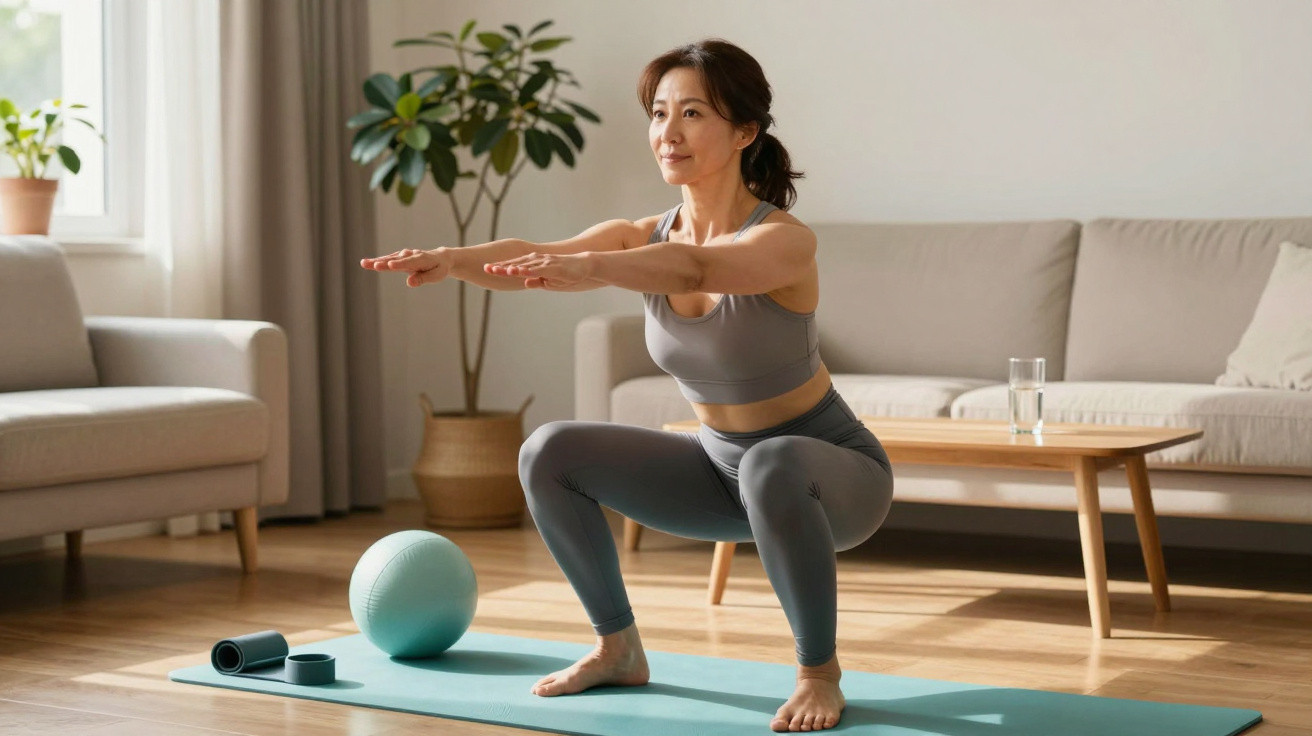
It is particularly useful to combine the plank with a few other simple bodyweight exercises, such as squats, lunges or wall press-ups. This creates a short full-body programme that can be done almost anywhere – without equipment and without extensive planning.
Those who perform the exercise carefully, include it regularly and remain patient often notice changes after only a few weeks: posture becomes steadier, the stomach feels firmer and everyday movements become easier. This is exactly why so many trainers rely on this one unassuming exercise – it is simple, quick to explain and has a surprisingly comprehensive effect on the whole body.














Comments
No comments yet. Be the first to comment!
Leave a Comment