A new, ultra-slow method promises visible results - without sprinting, jumping or pushing yourself to total exhaustion.
Many people who train on the mat know the feeling: improved posture, a more stable back, yes - but at some point the body shape stops changing. Rather than working ever harder or torturing themselves with punishing HIIT workouts, a Californian training method takes the opposite approach: maximum muscular effort at minimal speed. That combination is precisely what makes it so appealing to Pilates fans right now.
When Pilates is no longer enough: why the body plateaus
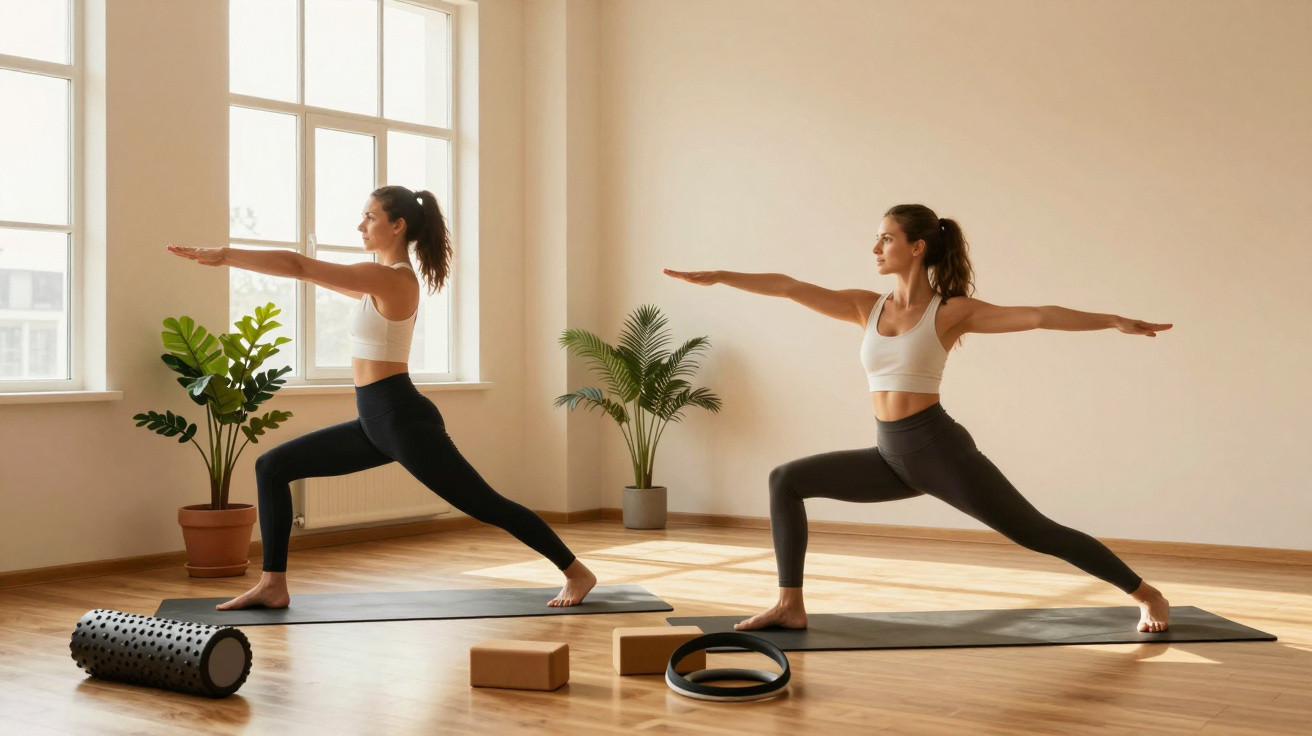
At first, traditional Pilates delivers major progress. You stand taller, feel your abdominal muscles working and notice that your back is becoming more stable. After a few months, however, progress often starts to level off. The body has adapted to repeating the same movements.
Without progressively increasing the load, the muscles and nervous system become accustomed to the routine. The exercises may still feel pleasant, but they no longer provide enough challenge to create visible changes. This is exactly when the feeling of standing still sets in.
Without gradually increasing intensity, your body shape stays the same - no matter how disciplined your training is.
Anyone who then turns to radical options such as demanding interval training or CrossFit can quickly face another dilemma: lots of impact, a high risk of injury, and strain on the joints and pelvic floor. What is needed is a middle ground that challenges the body without breaking it down.
Lagree Training: more intense than Pilates, gentler than HIIT
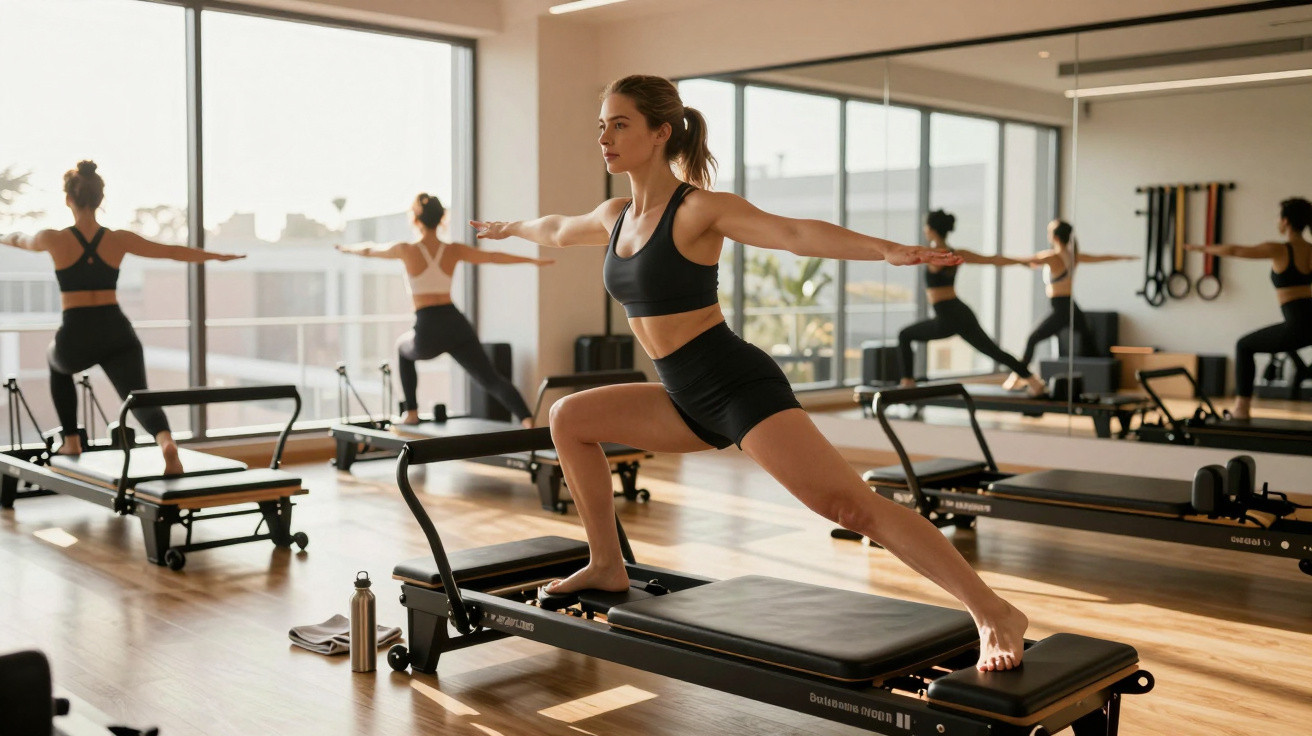
This is the middle ground that so-called Lagree Training aims to offer. Developed in California, the method is gradually spreading through studios across Europe. Visually, much of it resembles a modern Pilates studio, but its focus is clearly on strength and muscle definition.
The principle is high intensity with low impact on the joints. Every exercise is designed to take the muscle to its limit. Movements are performed in a controlled way until no more technically clean repetitions are possible - with no jumps and no jerky motions.
The Megaformer: the machine behind the hype
At the heart of the method is a piece of equipment that looks like a blend of a Reformer, core trainer and torture bench: the Megaformer. It features a moving carriage, fixed platforms at both ends and several springs offering different resistance levels.
- Central carriage - creates instability and movement
- Platforms at both ends - provide standing, support and varied angles
- Springs - adjust the resistance from light to very high
- Handles and grips - allow pulling and pushing movements in every direction
Unlike the traditional Reformer, which is often used in rehabilitation, the Megaformer does not make anything easier. It demands continuous resistance with virtually no breaks. The person controls the machine, rather than the other way round.
Full-body training in slow motion
Lagree Training combines strength, endurance and core work in one continuous flow. Instead of training individual muscles in isolation, several areas work intensely at the same time. A typical example is a lunge on the unstable carriage while the arms work with cables and the torso has to maintain balance.
Your heart rate rises even though there are no sprints. The challenge comes from the amount of active muscle tissue - and from one feature that makes the method so demanding: its extremely slow pace.
The power of slowness: why four seconds change everything
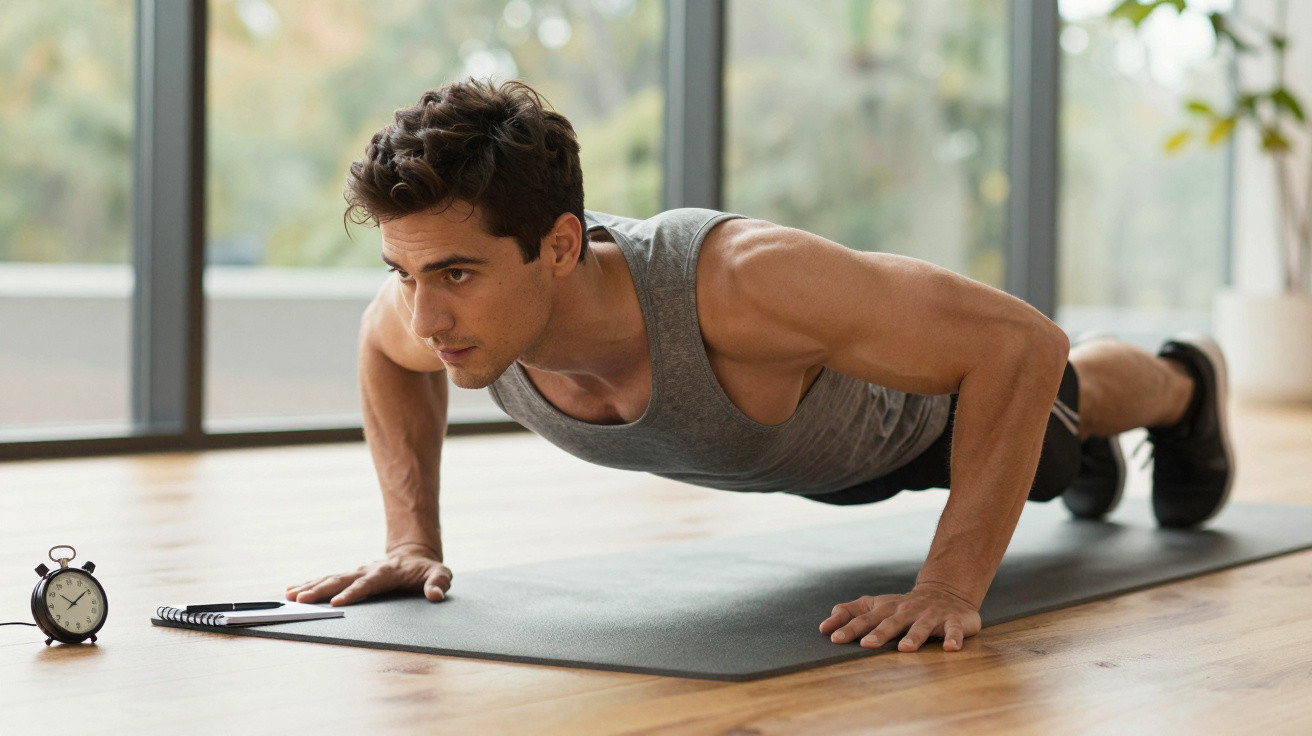
Perhaps the most surprising aspect of this training style is the requirement to carry out movements exceptionally slowly. Every phase, both downwards and upwards, lasts at least four seconds. There is no momentum, no bouncing and no cutting corners.
Slowness here is not an easy option, but a turbo boost for the muscles.
Reducing the pace, increasing the stimulus
When momentum is removed, the muscle has to work actively through every millisecond. The fibres remain under constant tension, whether they are lengthened or contracted. The slow-twitch muscle fibres in particular - responsible for endurance and the characteristic ‘lean’ definition - are challenged intensely.
Anyone who assumes four seconds is brief will quickly discover otherwise in practice: after only a few repetitions, the burning starts. The sensation resembles isometric training, only with continuous movement.
Constant tension instead of a pause between repetitions
In conventional strength training, there is a brief moment of relief between two repetitions. In Lagree Training, that point is almost completely eliminated. The muscle remains fully under tension for one to two minutes.
This sustained tension temporarily reduces the oxygen supply to the muscle. The result is intense burning, shaking and a powerful training stimulus. The body responds through adaptations in the muscles and hormonal system, which boosts fat burning and supports muscle building - while placing relatively little mechanical strain on bones and joints.
Why everything suddenly shakes on the Megaformer
A first encounter with the Megaformer often surprises even sporty people. Exercises that look harmless can trigger pronounced shaking in the legs, arms and stomach within seconds.
Instability as a training partner
The moving carriage deliberately creates a slight loss of control. To avoid sliding forwards or backwards, the deep stabilising muscles must remain engaged constantly. The core in particular works almost continuously - without a single traditional sit-up.
Rather than relying on numerous crunches, the method uses intense, cross-body bracing. The stomach feels as if it is drawing towards the spine, the waist gradually appears narrower and the back becomes more stable. The result looks less like bodybuilding and more like a dancer’s physique.
Quick exercise changes, slow movements
The combination of unhurried movements and fast transitions is particularly interesting. There are often only a few seconds to move from one exercise to the next, so the heart rate does not drop.
| Element | How it works |
|---|---|
| Slow execution | Maximum muscle tension, with a high stimulus through every centimetre of movement |
| Fast changes | Heart rate remains consistently elevated, and fat burning continues |
| No impact | Gentler on the knees, hips and back |
Sweat flows freely despite nobody jumping or sprinting. Many describe the experience as “cardio through pure muscular work” - you breathe heavily without getting the familiar treadmill feeling.
The famous muscle shake: a sign of real change
In Lagree studios, muscular shaking - often called the “Shake” - is viewed almost as a mark of quality. When the muscles start twitching uncontrollably, the point has been reached at which the structures need to adapt.
The shaking shows that the body is leaving its comfort zone - and that is exactly where it reshapes itself.
People often get startled when they experience this sensation for the first time. Over time, they learn to interpret it and may even seek it out deliberately. The neuromuscular system becomes more resilient, while control over your own body improves. Many also report a mental training effect: learning to continue breathing calmly while shaking builds perseverance.
Intense, yet kind to the joints
Despite the high intensity, the workout remains remarkably gentle on the joints. Hands and feet stay in contact with the machine, there are no landing impacts as there are in running, and no jumps that the knees have to absorb.
This makes it possible to strengthen sensitive areas such as the knees, hips and shoulders without overloading them. It is a strong advantage, particularly for people coming from running, demanding class formats or sports with a tendency towards injury.
How the body changes - and why many do not want to go back
Those who train two to three times a week usually notice changes fairly quickly: the shoulders become more clearly defined, posture looks more upright and the midsection feels ‘compact’. At the same time, muscles tend to remain long and lean rather than bulky.
Typical effects reported by participants include:
- firmer arms and shoulders without a ‘bodybuilder look’
- a noticeably tighter stomach and less of a hollow back
- strong yet defined legs and glutes
- noticeably greater everyday stability, for example when carrying things or climbing stairs
Many people do not feel drained after a session, but instead clearer and more alert. Since the workout does not include sprint intervals, there is enough energy left for work, family and everyday life. This particular mix can quickly become ‘addictive’ and often makes traditional workouts seem lacklustre by comparison.
Who is Lagree suitable for - and what should you consider?
In principle, the workout suits both beginners and advanced participants, because resistance can be adjusted very precisely using the springs. However, anyone who has not exercised for a long time or has existing discomfort should always discuss starting with trainers.
Important points for a safe start:
- choose small groups so that corrections are possible
- focus on correct technique, not on using as much weight as possible
- adjust immediately if there is severe pain rather than trying to ‘push through’
- accept the learning phase - the machine feels unfamiliar at first
Lagree can also be an exciting addition for Pilates fans who have reached a plateau: the precise body control gained from mat training is enormously helpful for execution, while the Megaformer provides the additional muscular stimulus.
How to incorporate slow training into everyday life
Anyone who is curious does not need to replace every Pilates session straight away. A realistic introduction could be one or two Lagree sessions per week, combined with walks, light endurance exercise or continued traditional Pilates classes.
It makes sense to set a clear objective: is the main aim to firm up the body shape, improve posture or increase core strength? Depending on the goal, trainers can adapt the exercises - for example, with more focus on the leg muscles, shoulder girdle or core.
Combining it with other gentle methods such as yoga, fascia training or swimming can also be worthwhile. While Lagree provides the strong stimulus, these sessions support recovery, mobility and stress reduction. This creates a training mix that not only affects appearance, but also keeps the body resilient over the long term.








Comments
No comments yet. Be the first to comment!
Leave a Comment