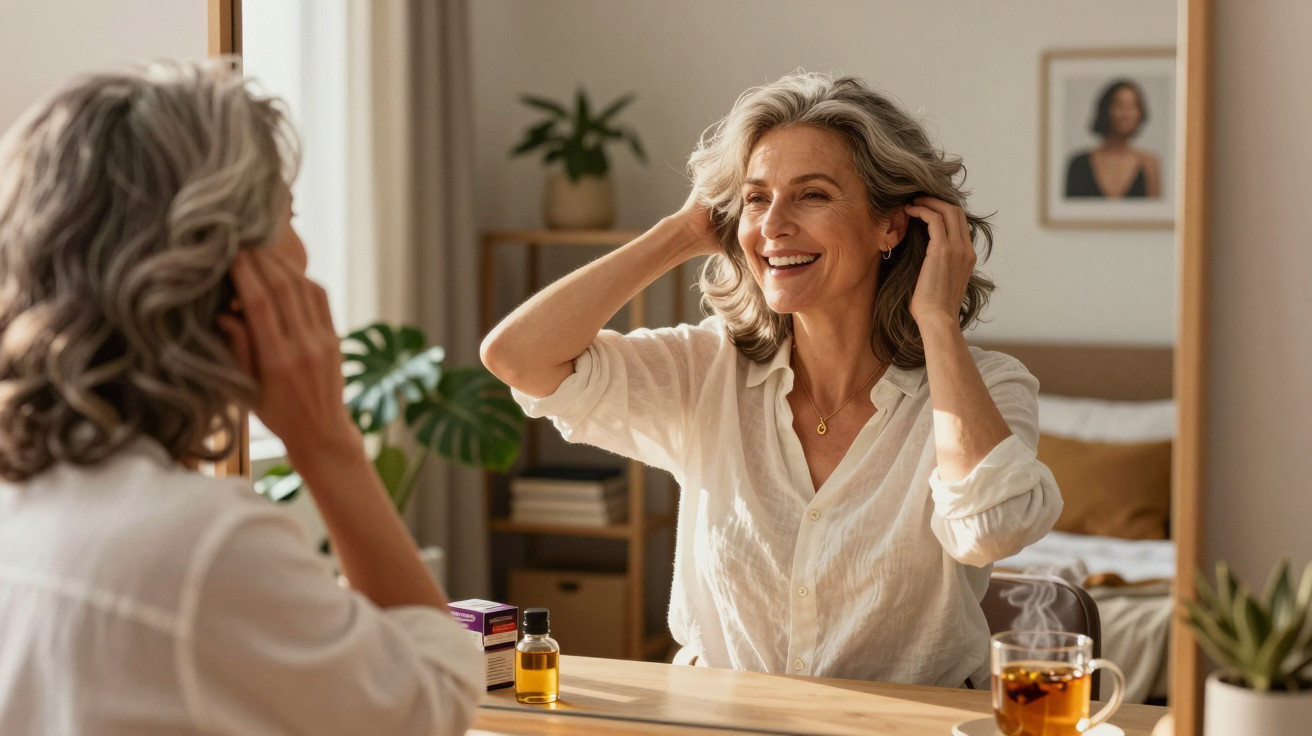
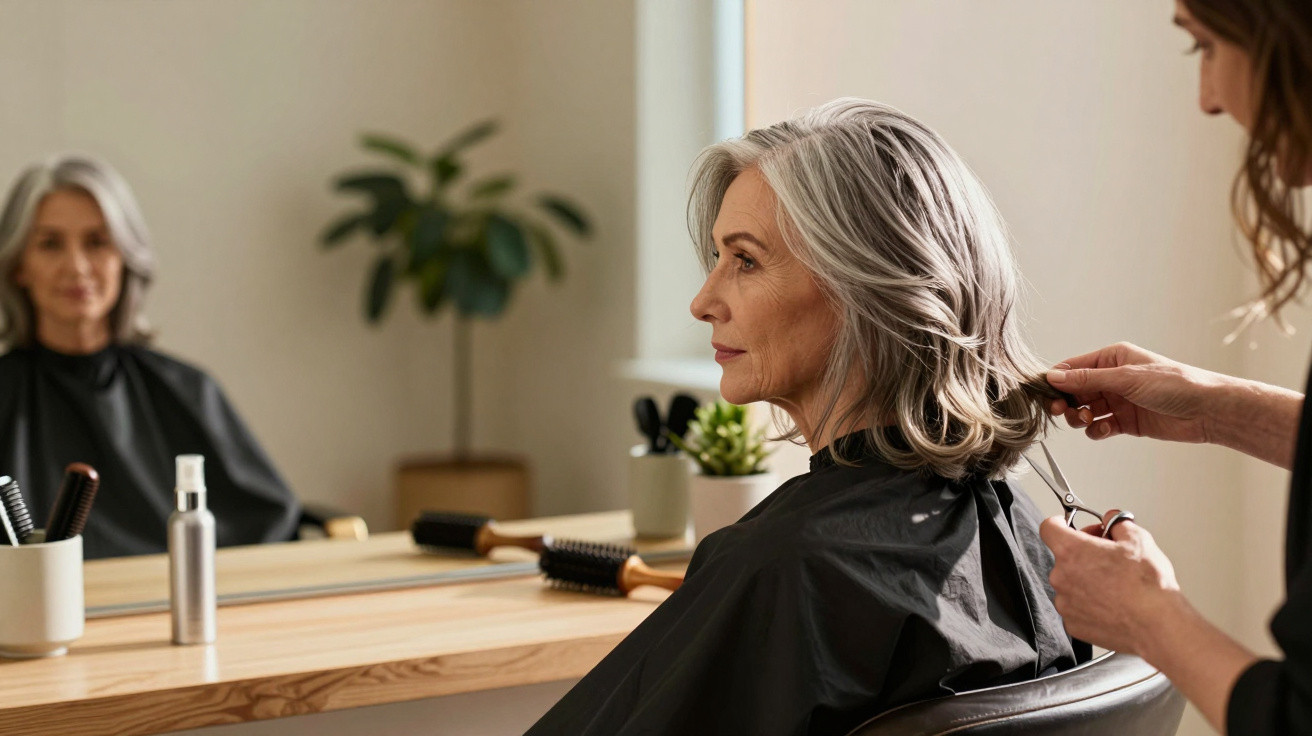
People who stop reaching for hair dye as they get older may initially seem simply committed to a natural look. On closer inspection, however, the choice often reflects a whole combination of strength of character, clear values and inner calm. Grey or silver hair is not a flaw; it becomes a visible declaration: I am who I am – with nothing to conceal.
Why grey hair is far more than “missing colour”
In the past, the first grey strands were seen as an alarm bell: “Time to colour it, or you’ll look old.” Today, that perception is noticeably changing. More and more people are deliberately showing their natural grey in chat shows, workplaces and on social media – from board directors to influencers in their early forties.
Grey hair becomes a message: I do not hide my age – I stand by my journey.
Psychologists see this as part of a move towards greater authenticity: away from relentless self-improvement and towards a more relaxed relationship with one’s reflection. Choosing not to colour your hair is not a decision against grooming, but against disguise.
1. They encourage others to stay true to themselves
People who wear their grey hair visibly often become role models without intending to. At work, within the family and among friends, others can see that someone is consciously refusing to join in with the constant effort to “cheat” their way to looking younger.
That can open the door to more honesty about getting older. Colleagues may suddenly feel able to let their tint grow out for longer. Friends speak more openly about their fears of ageing. A personal styling choice turns into a small, quiet rebellion against appearance-related pressure.
Showing natural grey hair sends a signal: it is acceptable to age visibly while remaining attractive, lively and relevant.
2. They free themselves from ongoing stress about appearance
Regular colour appointments can become a project in themselves: arranging a booking, spending several hours at the salon, correcting faded colour and concealing regrowth. Many say that, eventually, they felt genuinely dependent on the routine.
Stopping brings benefits on several fronts:
- More time: No more last-minute panic because regrowth is visible before the next meeting.
- Lower costs: Monthly salon bills become noticeably smaller.
- Less mental pressure: The constant checking in the mirror comes to an end.
The energy this releases can go into things that truly matter: relationships, hobbies, health or simply a calmer everyday life.
3. They show their real personality, not just a “10-years-younger version”
Those who no longer try to look younger send a clear message: I do not define myself by my biological age. Instead of projecting youthfulness, their personality takes centre stage: humour, conviction and life experience.
People with grey hair often report that their conversations change. Rather than compliments about their “lovely colour”, they receive questions about their journey, life choices and experiences. Attention shifts from the wrapping to what is inside.
Grey hair does not automatically make anyone more interesting. But it removes the pressure to keep pretending to be a former version of yourself.
4. They see every stage of life as development – not decline
For many, the first hint of grey feels like a small moment of shock. Soon afterwards, it often leads to a change of perspective: what is becoming visible is not “deterioration”, but a kind of record of life.
Every wrinkle and every grey hair can then represent hardships overcome, important decisions and years fully lived. People who see it this way regard ageing not as a loss, but as progress – with different responsibilities, different freedoms and different priorities.
This takes some of the pressure out of getting older and makes room for a question that can easily be lost in the obsession with youth: how do I want to shape this phase consciously?
5. They project a distinctive kind of self-confidence
Someone who enters a room confidently with grey hair conveys a powerful message: I do not need camouflage to feel worthwhile. This confidence is often quieter, yet especially steady.
At work, it can increase credibility. People whose life experience is visible are often perceived as calmer, clearer and more dependable. In private life, someone who does not hide frequently radiates greater composure – and that is attractive.
Self-confidence is not shown only through grand speeches, but also through what a person is willing to give up.
6. They gain time, money and health benefits
Hair colour is not merely a lifestyle product; it also involves chemicals on the scalp. Anyone who colours regularly for a long time is repeatedly exposed to ingredients that can irritate sensitive people, causing anything from allergies to a dry, itchy scalp.
Leaving it out therefore offers three very practical advantages:
- Less contact with chemicals for skin and hair
- More money each month for other things
- More freedom, because there is less pressure on the diary
Many people say their hair seems fuller, stronger or less prone to breakage after taking a break from colouring. This reinforces the feeling: my body benefits when I stop continually covering it with colour.
7. They practise genuine self-respect
Liking yourself also means not continually forcing your body towards an ideal that hardly anyone can attain. Those who accept their natural grey often set internal boundaries: I will go this far, but no further.
That is a form of self-respect. They place their own health and peace of mind above the expectation of always appearing “freshly upgraded”. Many report that, alongside accepting grey hair, other choices become easier too: saying no more effectively, setting clearer limits and letting go of unhealthy relationships.
8. They wear their experience visibly – and often seem more at ease
Grey hair has traditionally been associated with wisdom. There is a grain of truth in this: people who do not conceal their age openly show how many years they carry in their life rucksack, signalling: I have already seen quite a lot.
| Signal | Effect on others |
|---|---|
| Clearly visible grey hair | Impression of calm, perspective and experience |
| No pressure to appear youthful | Conversations become more factual and less superficial |
| Natural presence | More trust and less distance |
Naturally, grey does not guarantee maturity. Yet those who choose to show it often communicate this: I accept the time behind me – and I have learned something from it.
When grey hair suddenly becomes a topic: familiar everyday moments
A typical moment happens in the bathroom, when the first silver strand appears in the mirror. Some people instinctively reach for a tint. Others pause and think: “Maybe I’ll just leave it.” This seemingly small decision involves much more than a question of style.
Later, there may be comments in the office: “Brave of you to wear it like that.” Or among friends: “To be honest, it really suits you.” Responses like these can be affirming, or unsettling when they feel overly judgemental. People who stick with their natural grey often develop a resilient inner attitude over time: nice if others like it – but they do not have to.
What can help when the transition feels difficult
Moving from coloured hair to natural hair can take time, particularly with dark shades. Three approaches that many find useful are:
- Gentle transition hairstyles: Shorter cuts help old colour disappear more quickly.
- Gloss treatments or semi-permanent colours in grey shades: These soften harsh lines between coloured and natural hair.
- Deliberate care instead of colour: Good products for shine and texture can provide reassurance, even without a tint.
This turns the dreaded “regrowth drama” into a planned transition – more an exciting change than an embarrassing in-between stage.
Grey hair as part of a wider trend
Embracing natural grey fits into a broader movement: fewer filters, less retouching and greater honesty, both online and offline. People are showing stretch marks, scars and fine lines. Grey hair belongs among these visible signals that say, “I am human”.
For many, this has a surprising side effect: those who make peace with their grey hair also become gentler with other changes, including weight, fitness and performance. Acceptance in one area has a positive knock-on effect in other parts of life.
Grey hair is not a flaw that must be hidden; it can become a visible sign of freedom, clarity and inner strength.









Comments
No comments yet. Be the first to comment!
Leave a Comment