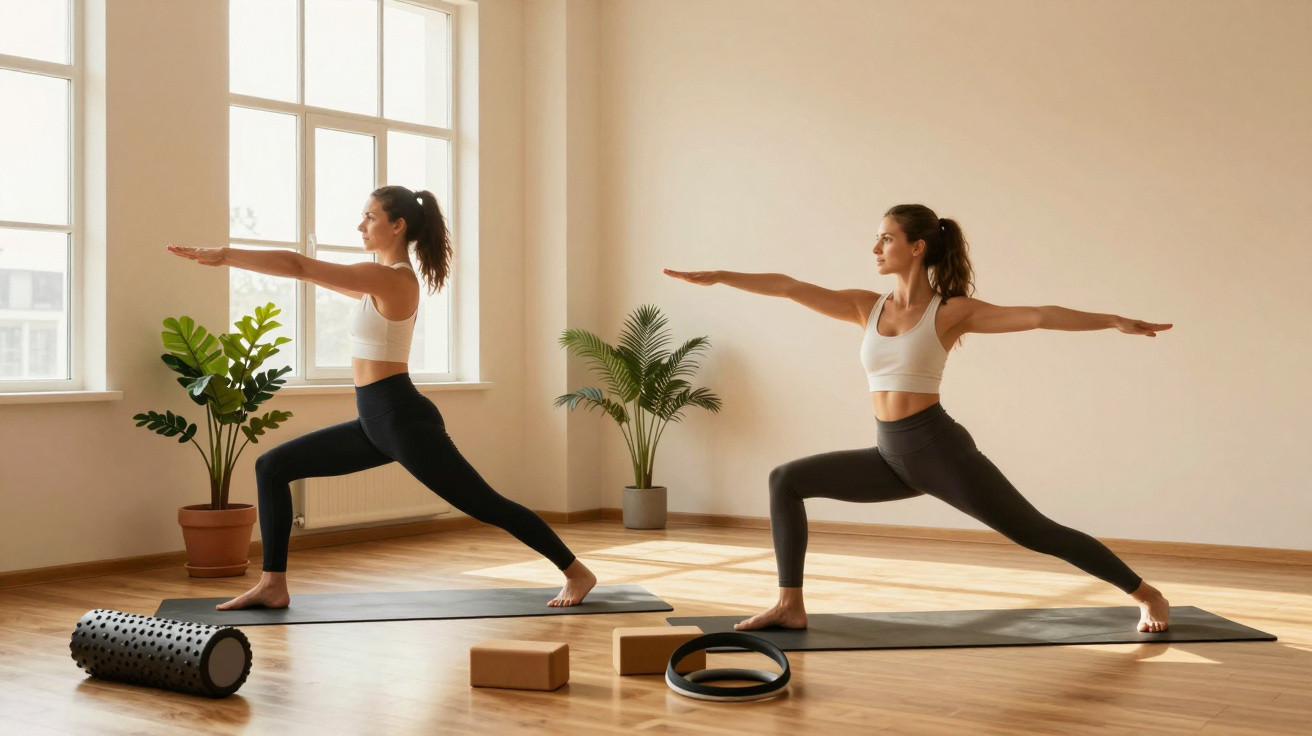
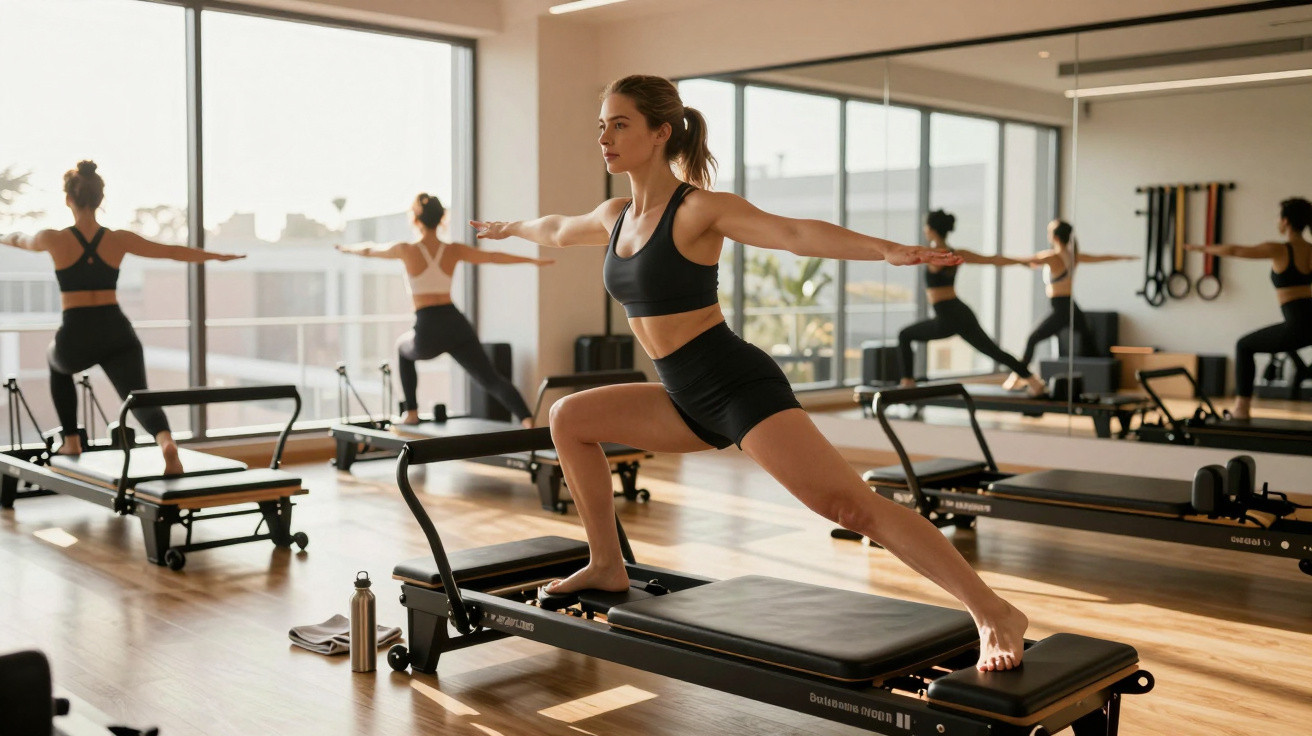
On the left, two friends unroll their yoga mats: barefoot, in bright leggings, quietly giggling. On the right, someone adjusts a Pilates reformer with intense focus; straps are tightened and a faint metallic hum fills the air. One side of the room breathes slowly and deeply, while the other counts repetitions with determined attention. Two worlds sharing one studio. Somewhere between them, you may be wondering: which one suits my body – and my life?
Pilates vs. Yoga: two approaches, one shared goal
Watch a studio for any length of time and it soon becomes clear that yoga and Pilates often appeal to the same people. They are people who recognise that desk work, stress and constantly looking at a phone eventually take their toll. Both practices promise a stronger connection with your body, greater strength and a calmer mind. Yet the atmosphere could hardly feel more different. In yoga, a candle may flicker as someone breathes with their eyes closed; in Pilates, the instructor counts with crisp precision: “Three more. Two more. Hold. Breathe.” They are two distinct languages serving the same desire: to reclaim your own body.
Picture a Tuesday evening in autumn in Berlin-Mitte. The after-work yoga class is fully booked: 26 people packed closely together for a Vinyasa Flow. The teacher guides them through sun salutations; foreheads glisten with sweat, and some wobble from downward dog into an unsteady plank. Next door, there are just eight people doing mat Pilates, with every movement carefully cued. While someone in the other room tries not to topple in Warrior II, the Pilates coach quietly adjusts the pelvis of the participant in spot three. By the end, everyone leaves with flushed cheeks. The yogis look slightly blissed-out, while the Pilates group seems more alert and taller, as though an invisible internal cord has been gently tightened.
The contrast starts with their origins. Yoga comes from an Indian tradition spanning thousands of years: a whole system of postures, breathing, meditation and, at times, philosophy. Pilates, by comparison, is a relatively modern 20th-century creation by Joseph Pilates, originally designed as rehabilitation training for injured dancers. Yoga makes extensive use of stretching, balance and consciously stepping back from everyday life. Pilates centres on the Powerhouse – the deep abdominal and core muscles – and on control in every single movement. Either can help the back, reduce stress and improve sleep. The real question is whether you would rather tune into yourself or “rewire” your body like an intelligent, sensitive system.
Who should choose Pilates or Yoga – and when?
If you have back problems, spend long hours sitting or want to feel like yourself again after pregnancy, Pilates is often the more straightforward option. Its exercises are designed to activate the deep muscles surrounding the spine and pelvic floor. The well-known Pilates breathing technique, ribcage breathing, supports this: inhale into the sides of the ribs, then exhale while engaging the abdominal muscles. Movements are small, controlled and almost microscopic. That can feel especially reassuring for anyone who feels out of place in a conventional gym: you receive clear instructions, manageable sequences and quickly noticeable changes, particularly in the lower back and posture.
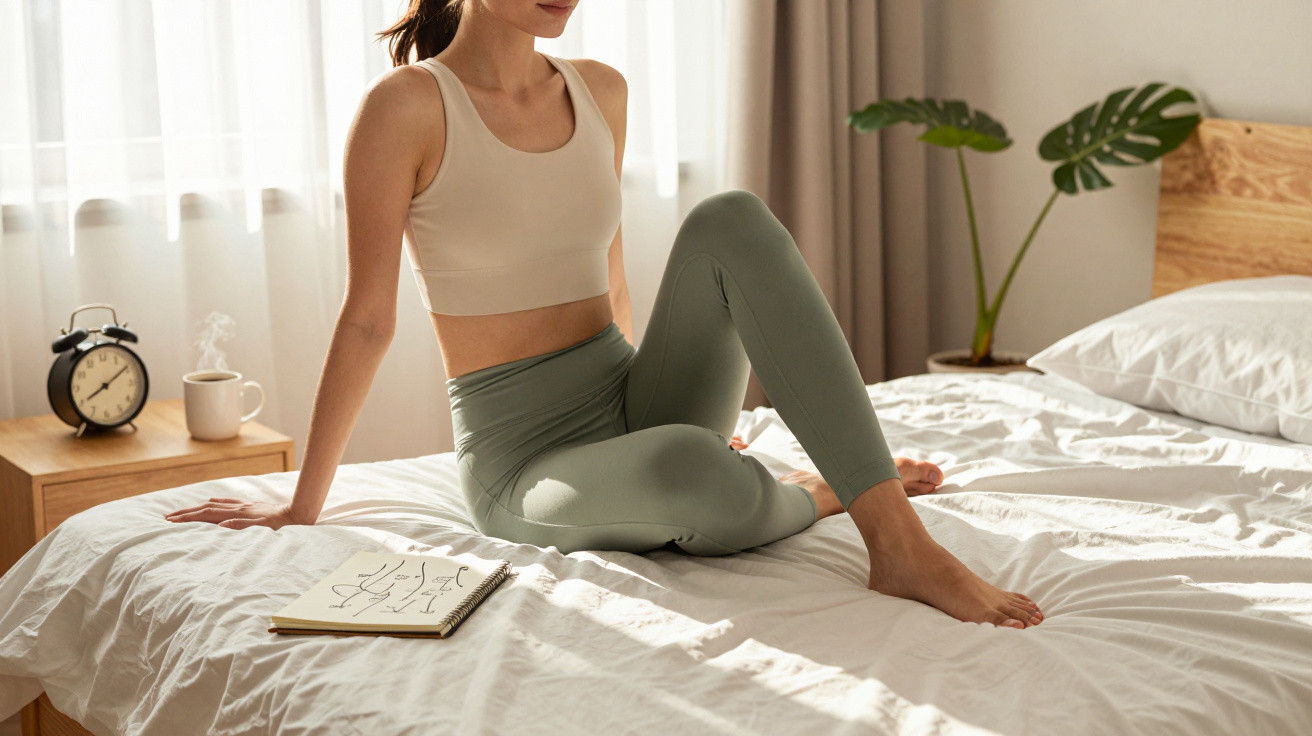
Yoga is particularly well suited to those who feel permanently switched on. Its mix of stretching, held poses and deliberate breathing can work like a mental reset. After a few weeks, many people find they respond more calmly, sleep better and no longer flare up over every minor irritation. Let’s be honest: nobody willingly sits in Chair Pose for 60 seconds or holds a long plank simply to “grow spiritually”. People keep returning because those minutes leave their body feeling different afterwards. For those prone to overthinking, inner restlessness or a need for ritual, a regular yoga practice can become a dependable anchor.
“Pilates builds you up from the inside out. Yoga brings you back from the outside in.”
That line comes to mind repeatedly when I ask people about their experiences. The benefits become especially interesting when viewed in practical terms:
- Pilates mainly strengthens the core, pelvic floor and deep muscles – making it ideal for back pain, postural issues and recovery after injuries.
- Yoga enhances mobility, balance and the nervous system – useful for stress, tension and sleep difficulties.
- Both methods can support weight management, not through calorie burning but through improved body awareness and less stress-related eating.
- People who are very stiff often feel safer starting with Pilates before moving into yoga with greater ease.
- Those carrying a heavy emotional load may be more likely to find respite in gentle yoga classes than in Pilates’ structured countdowns.
Making your choice: why combining Pilates and Yoga can be smartest
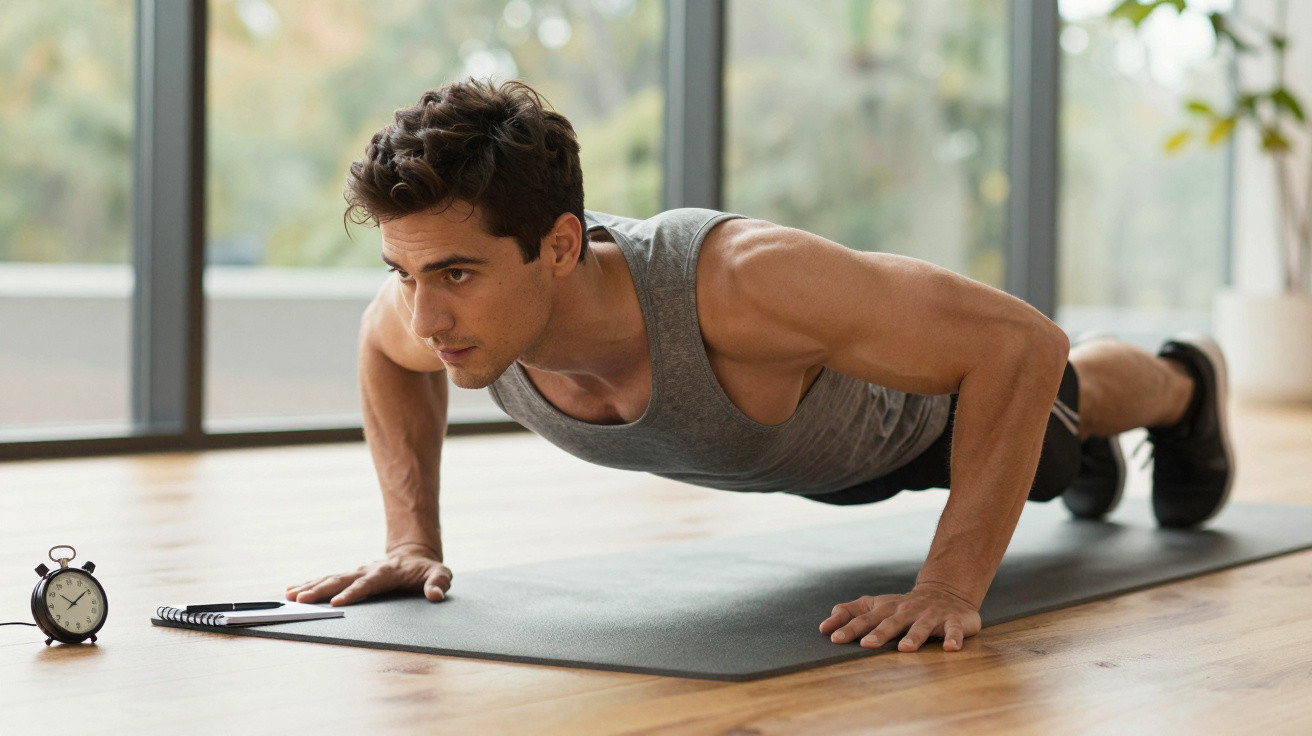
A highly practical approach is to set aside four weeks for a deliberate trial: two weeks of Pilates and two weeks of yoga, with one or two sessions each week. Afterwards, write down some straightforward observations: How does my back feel in the morning? What about my neck by evening? How quickly can I unwind mentally again? This small personal experiment may sound demanding and take around eight hours in total. But its impact can be far greater than any generic piece of online advice. The body rarely lies: if you leave a Pilates class standing taller or sleep more deeply after yoga, that is a clear vote in its favour.
Many people make the mistake of letting Instagram imagery dictate their choice: hyper-flexible yogis in the splits or Pilates bodies with ultra-defined stomachs. That external view can be paralysing. What actually matters is what your body can do NOW – and what you can sustain regularly. If the thought of “Om” already makes you switch off internally, maintaining a yoga studio habit will be difficult. If the sound of a reformer makes you tense, you are unlikely to attend consistently. Give yourself permission to be honest: what appeals more immediately, and where do you feel less resistance? Your nervous system remembers every experience – and helps determine whether you keep going.
“The best method is the one you still attend on a bad day.”
For many people, a smart combination is the ideal answer:
- One Pilates session each week for posture, the back and core stability.
- One gentler yoga session (Yin or Hatha) for the nervous system, sleep and joints.
- Very active people can use Pilates as a “secret workout” to prevent injuries.
- Those doing a great deal of mental work can treat yoga as a weekly reset button.
- And: attend a workshop once a year – it deepens technique and helps stop poor habits from creeping in.
The result is not a rigid plan, but a living system that adapts to your life rather than the other way around.
What remains once the hype has faded?
At some point, “Pilates vs. Yoga” will no longer be a trending topic. Studios will close, new methods will emerge and TikTok will have announced its next wave of body hacks. What will remain? Probably not the label attached to the practice, but the ritual of properly looking after your body once or twice a week. It is the quiet moment when, for the first time that day, you notice your feet standing on the floor. It is the instant when a movement works that seemed impossible three weeks earlier.
Many people I have followed for reports do not ultimately end up in either camp. They say things such as: “I go to Pilates on Mondays for my back and yoga on Thursdays for my head.” The argument over which is “better” suddenly seems remarkably theoretical. What is real is your body after a long day at the office, your mind after a week of deadlines and your neck after too much phone use. Equally real is the small pleasure of realising: I can actively do something rather than simply complain. Perhaps that is the quiet essence of yoga and Pilates: the knowledge that change does not come from grand resolutions, but from those 50 minutes when you arrive at the studio on time and lie down on your mat.
| Key point | Detail | Benefit for the reader |
|---|---|---|
| Similarities between Pilates and Yoga | Both improve body awareness and posture, and can reduce stress. | Understands why the two can often feel similar and removes some of the pressure of choosing. |
| Differences in focus and origin | Pilates: centred on the core and stability, a modern method. Yoga: an ancient practice involving stretching, breathing and sometimes philosophy. | Identifies which method may suit back health, mobility or mental strain more effectively. |
| Individual strategies | A brief four-week trial, honest self-observation and a potential combination of both. | Gains a practical everyday route to finding a personal routine without dogma. |




Comments
No comments yet. Be the first to comment!
Leave a Comment