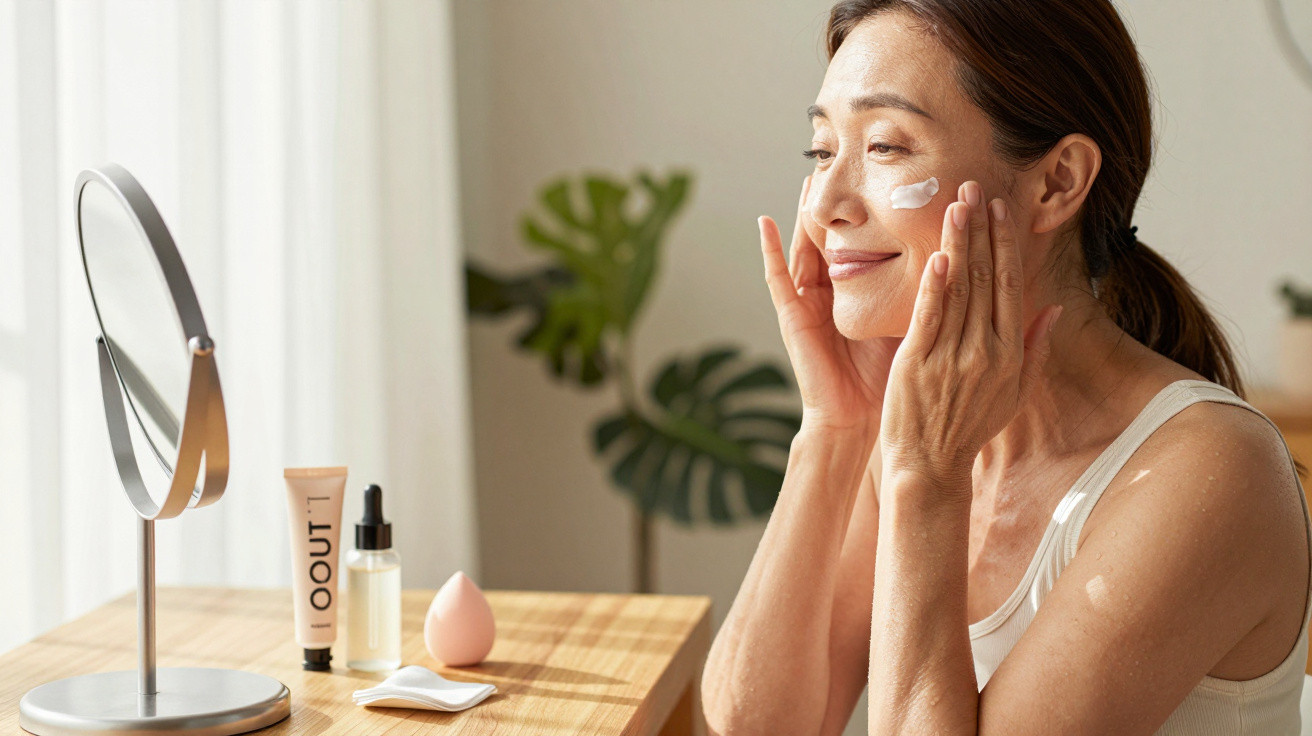
Professionals are therefore increasingly choosing a different solution.
Many women notice the change clearly around their 50th birthday: their former favourite foundation no longer looks right. It settles into fine lines, draws attention to pores and can make the complexion appear tired. Make-up artists are responding by using a product that brings together skincare, sun protection and a sheer tint – smoothing the complexion without coating it in make-up.
Why heavy foundation can be unkind to mature skin
Skin structure changes over time. It becomes thinner and drier, loses elasticity, and is more prone to redness and pigmentation marks. Pores and fine lines also become more noticeable, and high-coverage formulas can quickly make them stand out.
This is precisely the issue with traditional full-coverage foundations: they can sit on the skin’s surface like a layer, gather in fine lines and highlight dry patches. The result can soon look “caked on” – making the face appear older rather than younger.
Professionals look for textures that even out the complexion without making the skin disappear behind a mask.
For this reason, make-up artists increasingly focus on:
- lightweight, flexible formulas
- sheer coverage rather than complete coverage
- moisturising ingredients
- a fresh, subtly radiant finish
One product is becoming ever more important: CC cream.
What makes a CC cream so suitable for skin over 50
CC means “Colour Correcting”. Essentially, it describes a blend of skincare, a light tint and colour correction. Rather than attempting to conceal everything, these formulas are designed to make the complexion look calmer and more refined.
Make-up artists particularly appreciate three qualities in CC creams:
- Colour correction rather than a mask: redness, visible veins and marks appear softened while the skin’s natural texture remains visible.
- More glow, less dullness: the complexion looks fresher and more awake without becoming greasy or overly shiny.
- Care and protection: they often include moisture, anti-ageing ingredients and SPF.
The aim: skin that looks like skin – simply calmer, more even and smoother.
Many women, especially after the menopause, experience tightness and dryness. A product that provides care as well as coverage can make the morning routine feel far less demanding.
Popular CC creams make-up artists recommend for mature skin
Certain products appear repeatedly among professionals. They are considered dependable because they combine a range of skin benefits and come in shades suited to many complexions.
| Product | Strengths | Who is it suitable for? |
|---|---|---|
| IT Cosmetics Your Skin But Better CC+ Cream SPF 50+ | high UV protection, good coverage, wide shade range | anyone exposed to plenty of sun or with pigmentation marks |
| Erborian CC Crème with Centella Asiatica | highly natural “second-skin” finish, light glow | women who do not want to feel as though they are wearing much make-up |
| L’Oréal Paris Age Perfect CC Cream | formulated specifically for mature skin, affordable price | beginners and budget-conscious users |
| Clinique Moisture Surge / Superdefense CC | intensive hydration, comfortable wear | dry, sensitive skin |
| La Roche-Posay Anthelios Age Correct CC SPF 50+ | high sun protection, anti-ageing ingredients, suitable for daily use | fair skin prone to sun damage |
The selection makes one point clear: choosing a flattering shade is not the only consideration. UV protection, a comfortable skin feel and a natural-looking result are just as important.
How make-up artists apply CC cream to mature skin
Even the best shade offers limited benefit if the application technique is wrong. Professionals use straightforward methods that are easy to copy at home.
Preparation: skincare remains essential
Although many CC creams contain skincare ingredients, they are not a replacement for a complete routine. Mature, dry or sensitive skin in particular still needs the following underneath:
- a hydrating serum
- a rich but not overly oily day cream
- separate sunscreen when needed, if the CC cream’s SPF is too low
Well-prepared skin helps the formula apply evenly rather than becoming patchy or settling.
Apply with a brush, fingers or a sponge?
Make-up artists tend to fall into two camps. One group favours a brush: they first work a small amount of CC cream carefully into the skin with a dense brush, then lightly refine it with a slightly damp sponge. This produces a particularly fine, almost soft-focus finish.
The other group prefers fingertips. Body warmth helps the product blend especially well with the skin. Many women find this approach more comfortable, particularly if their skin is very dry or sensitive.
More important than the tool is making sure the CC cream is worked into the skin properly – rather than simply sitting on top.
Where powder still helps – and where it does not
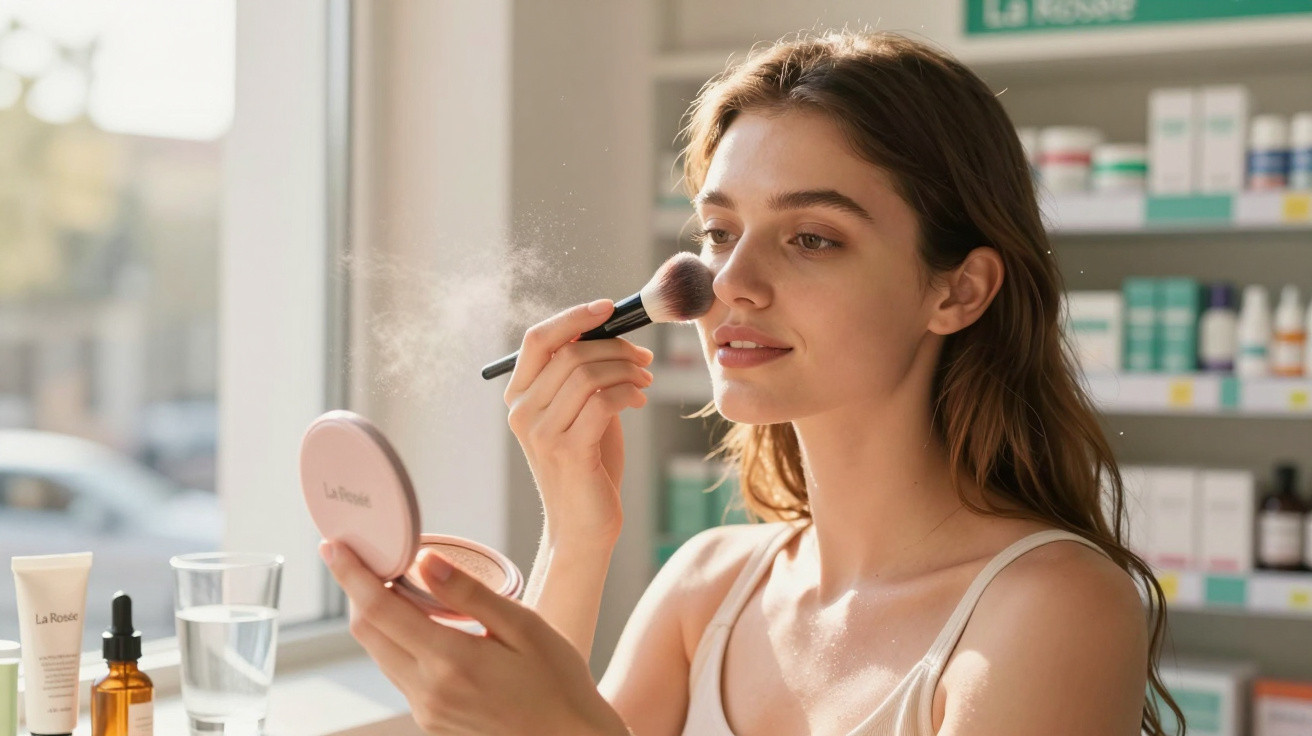
Some skin types cannot do entirely without powder. Make-up artists advise mattifying only the areas where shine is unwanted: usually the forehead, nose and chin. A very light application with a fluffy brush is enough.
Too much powder immediately emphasises dry fine lines, removes the glow and can make the face look dull. It is best avoided beneath the eyes and on the cheeks.
BB cream, CC cream or foundation – what really suits mature skin?
The names may sound similar, but each product has a different role. This brief comparison provides an overview:
- BB cream: lightly tinted skincare, usually with minimal coverage. Ideal for very natural-looking days or when the skin is in good condition.
- CC cream: focuses on colour correction and an even complexion, with light to medium coverage and often built-in SPF.
- Foundation: available in medium to high coverage and many finishes. More suitable when certain areas genuinely need substantial coverage.
Mature skin often benefits from a combination: use a CC cream across the face, then apply concealer only where needed for stronger redness or pigmentation marks. This keeps the overall result soft and lively.
Can a CC cream replace day skincare after 50?
It is tempting to use only an “all-in-one” product in the morning. However, dermatologists and make-up artists still advise keeping serum and moisturiser in the routine – especially for dry, hormonally affected skin.
A good CC cream then acts as the final step: it seals in skincare, calms the complexion and adds colour to the face. Without a proper base, it is more likely to apply unevenly, while the skin may start to feel tight as the day goes on.
Practical tips for an instantly fresher complexion
Anyone switching from foundation to CC cream can achieve even more with a few simple techniques:
- Apply a thin layer, wait briefly, then add more only where greater coverage is needed.
- Correct redness around the nose, on the cheeks and at the chin precisely, rather than covering the entire face.
- A cream blusher or subtle bronzer on top can make the complexion look more vibrant.
- For very dry skin, mix a drop of facial oil into the CC cream – this makes the formula more supple.
Those who have worn foundation for years often need a little confidence to let some skin show through. Many women report, however, that they eventually look younger because the harsh edge of heavy make-up disappears.
Risks, limitations and useful combinations
As practical as CC creams are, they do not meet every need. Very oily skin may begin to shine because of the added skincare element. Severe acne or pronounced rosacea often requires specialised products and, potentially, medical advice.
It can be helpful to pair a CC cream with targeted skincare, such as vitamin C serums for pigmentation marks or retinol night care for improved firmness. During the day, the built-in SPF in many CC creams protects against further UV-related skin ageing, but it does not replace dedicated sun protection in intense sunshine.
There is also an interesting psychological effect: people who no longer hide behind a thick layer of make-up often view their reflection more kindly. Small imperfections remain visible, but can feel less dramatic. This more relaxed attitude towards one’s own face is exactly what makes the CC cream trend so appealing to many women over 50.













Comments
No comments yet. Be the first to comment!
Leave a Comment