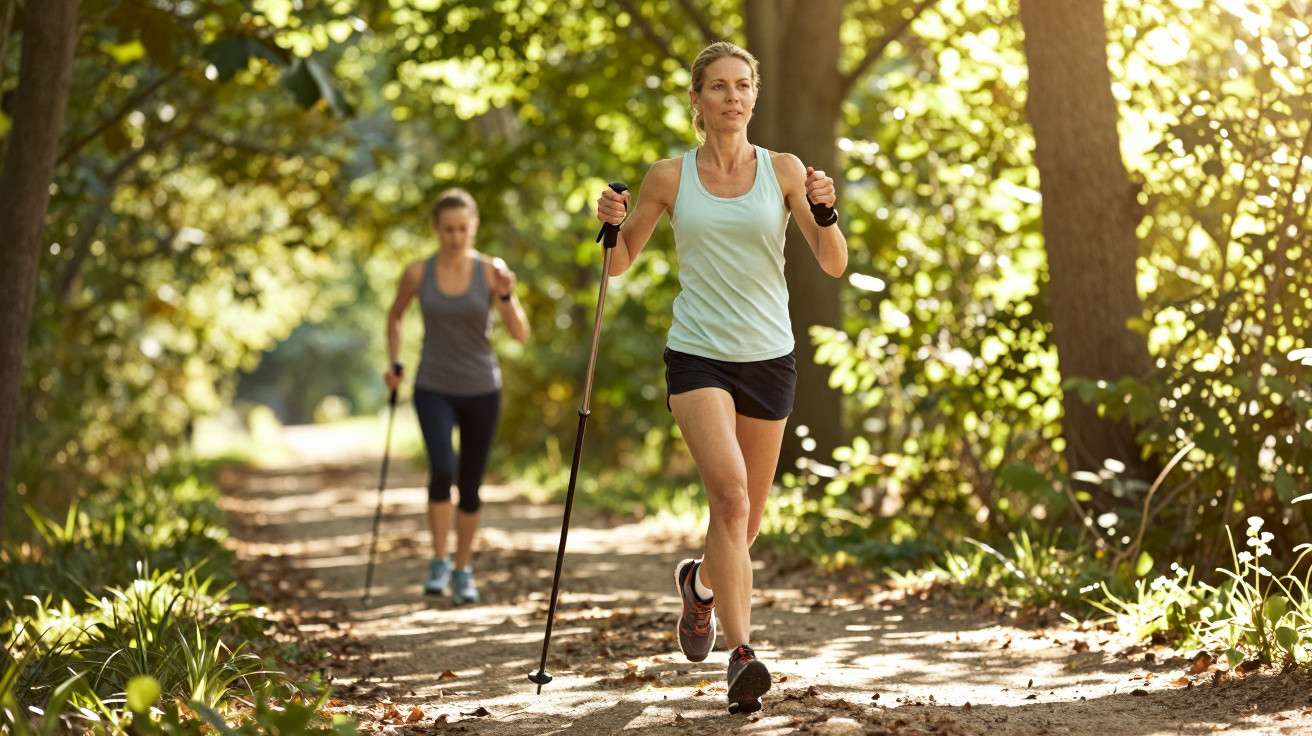
Nordic Walking may look straightforward: two poles, comfortable shoes and you are ready to go. Yet that apparent simplicity is precisely why many people never pay attention to technique. They walk, work up a slight sweat, but miss out on much of the training potential – and, in the worst case, may even end up with muscle tension.
Why Nordic Walking is far more than walking with poles
Often seen as a gentle endurance activity, Nordic Walking is actually a remarkably comprehensive full-body workout. When the technique is performed correctly, sports physicians say it can engage up to 80 per cent of the body’s muscles:
- The legs, glutes and hips drive each step.
- The arms and shoulders contribute actively every time the poles are planted.
- Core and abdominal muscles keep the body stable.
- The back muscles are trained dynamically too.
Using the poles reduces strain on the knees and hips, as some of the load is transferred to the arms. This is a major benefit particularly for older people or those who are slightly overweight: they can train their heart and circulation without putting excessive stress on their joints.
“When done properly, Nordic Walking is significantly more intense than ordinary walking – while placing less pressure on the joints.”
There are also benefits that are often overlooked in everyday life. Regular brisk walking can improve balance, posture and body awareness. An upright stance makes breathing easier, helps the cardiovascular system work more efficiently and gets the metabolism going. Studies indicate that Nordic Walking can have a positive effect on blood sugar and blood pressure – a benefit, for instance, for people with diabetes or high blood pressure.
The most common mistakes – and how to avoid them
Many people use poles for months without ever truly practising Nordic Walking. The same typical errors can be seen across almost every group in the park.
Carrying the poles rather than using them actively
The classic mistake is for the poles merely to tap the ground decoratively in front of the feet, much like when hiking. In that case, the session remains largely a leg workout while the upper body gets a break.
The principle is quite different: the pole acts as a lever used to propel the body forwards. Let the arm swing loosely behind the body, briefly open the hand at the end of the push, and only then plant the pole in front again.
“Anyone who simply places the poles in front of them is, at best, training their balance – but anyone who pushes off with them turns walking into a genuine full-body workout.”
A rounded back and eyes fixed on your shoes
Beginners in particular often look down to check whether their poles are positioned “correctly”. Their head drops, their back rounds and their shoulders rise. This slows the stride and can encourage tension in the neck.
Instead, look into the distance, lift the breastbone slightly and keep the shoulders relaxed and low. Imagining that an invisible thread is gently pulling the back of the head upwards often helps the body settle naturally into a more stable posture.
Poor arm-leg coordination
Nordic Walking relies on a diagonal movement pattern: right arm with left leg, then left arm with right leg. At first, many people either move in parallel, with right arm and right leg together, or barely move their arms at all.
A simple way to get started is to walk without poles first, deliberately swinging the arms as you would during a brisk walk. Then add the poles without changing the rhythm. The pole should follow the arm swing, rather than the other way around.
Steps that are too short or too long
Tiny steps take momentum out of the workout, while exaggerated strides can overwork muscles and tendons. Aim for a natural, energetic stride, with the body leaning slightly forwards and the push-off coming through the ball of the foot.
Getting started with Nordic Walking – step by step
Anyone beginning Nordic Walking will benefit greatly from some initial guidance. Many clubs, adult education centres and health organisations offer beginner courses. One or two hours with an experienced instructor can prevent technical mistakes that might otherwise become ingrained for months.
“The sooner the basic technique becomes established, the greater the training benefit – and the lower the risk of frustration.”
Choosing suitable equipment
There is no need for expensive high-tech equipment, but a few essentials are worthwhile:
- Poles of the right length: A useful rule of thumb is roughly 68 per cent of your height. Many manufacturers provide sizing charts. Poles that are too short force you into a hunched posture, while overly long poles restrict the shoulders.
- Wrist straps: These should fit securely, allowing you to briefly open your hands during the push without losing the poles.
- Shoes with good cushioning: Lightweight walking or running shoes with a grippy sole are ideal. Stiff hiking boots interfere with the rolling movement of the foot.
- Clothing: Choose breathable, weather-appropriate clothing, preferably several thin layers rather than one thick layer.
Training plan for beginners
If you have not exercised for a long time, it is best to begin cautiously. One possible introductory plan is:
- Weeks 1–2: Two sessions a week, each lasting 20–30 minutes, at an easy pace.
- Weeks 3–4: Three sessions a week, each lasting 30–40 minutes, increasing the pace only slightly.
- From week 5: Gradually extend sessions to 45–60 minutes and occasionally include short faster sections.
The body needs time to adapt to the unfamiliar demands placed on the arms and core. Mild muscle soreness is normal, but sharp pain or joint problems are warning signs and should be assessed by a doctor.
Who can benefit most from Nordic Walking
One of the great advantages of this form of exercise is that it can be done almost anywhere and at nearly any age. It is especially beneficial for:
- People over 50: Gentle endurance training and fall prevention through improved balance.
- Office workers: A counterbalance to prolonged sitting that gets the shoulders and back moving.
- People returning after a long break from exercise: A good bridge towards more intensive sports.
- People with mild high blood pressure or diabetes: A cardiovascular workout that can be easily regulated, in consultation with their doctor.
“Anyone who quickly develops knee or hip pain when jogging will often find Nordic Walking a surprisingly comfortable alternative.”
Common misconceptions about Nordic Walking
Nordic Walking still has a reputation in many people’s minds as an activity “for pensioners”. This stubborn stereotype is particularly off-putting for younger people who could actually benefit from the workout.
In reality, the intensity can be adjusted considerably. A brisk pace, powerful pole use and gently undulating terrain can quickly raise the heart rate into a training zone that also appeals to committed runners. Those wanting a gentler session can simply reduce their speed and apply less force through the poles.
Another misconception is that the technique can be learned “on the side” without ever practising it consciously. In practice, this often results in tense shoulders, rigid arms and unsteady steps. A short technique session at the beginning saves plenty of time later and makes the activity more enjoyable.
Practical tips for more enjoyment and better results
Variety helps to prevent Nordic Walking from becoming a monotonous chore. Routes with different surfaces challenge the muscles and balance in different ways:
- Park paths with gentle slopes
- Woodland trails with roots and uneven ground
- Field tracks with softer surfaces
- Urban routes with kerbs and short climbs
Many people find it easier to settle into a consistent rhythm when walking in a group. Groups can be motivating, make it easier to keep going and provide opportunities to discuss technique or equipment along the way.
“Small technique exercises during a walk – such as 5 minutes with a particularly pronounced arm swing – sharpen body awareness and gradually improve the movement pattern.”
Combining Nordic Walking with other activities
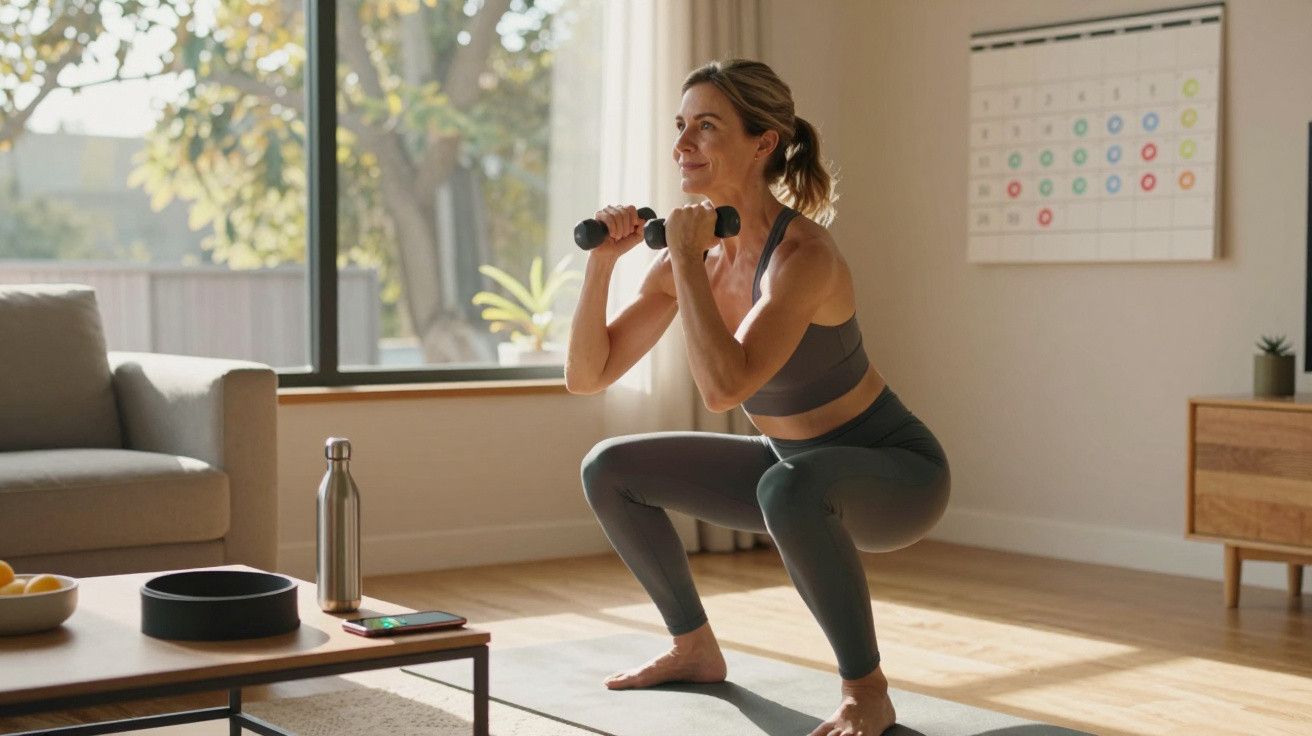
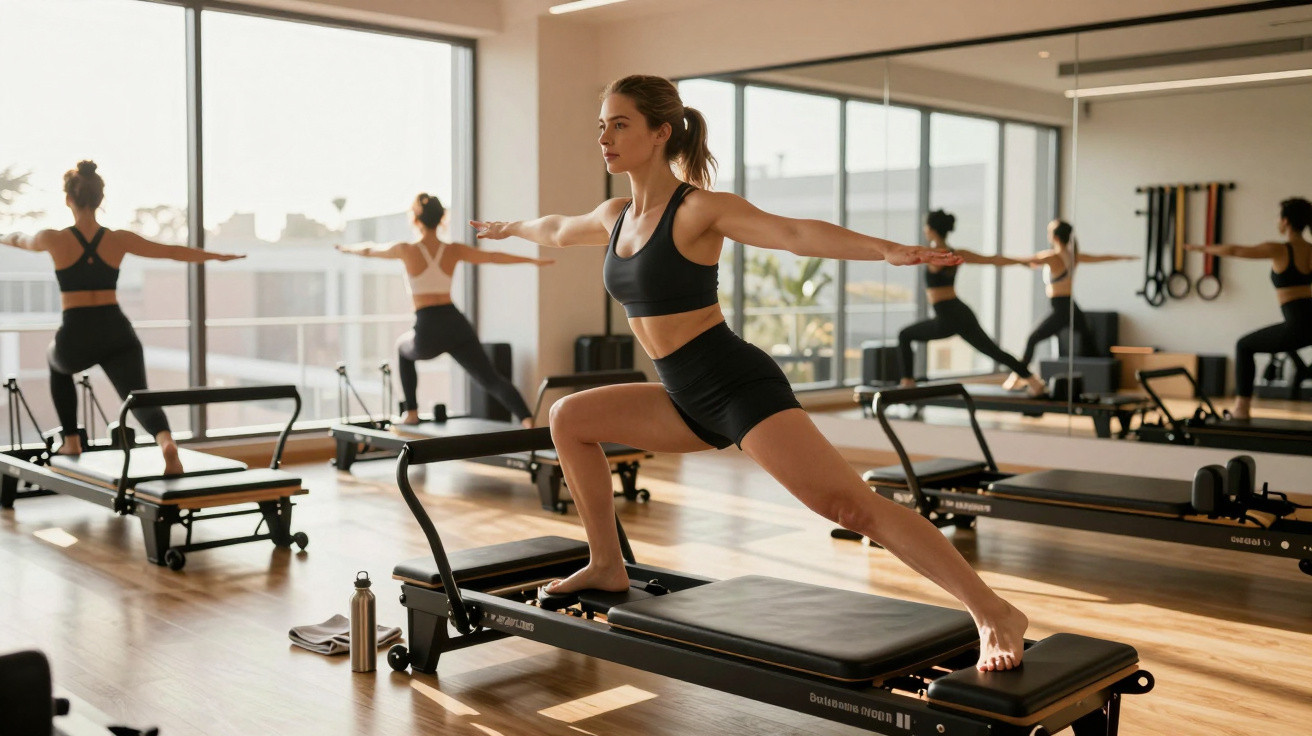
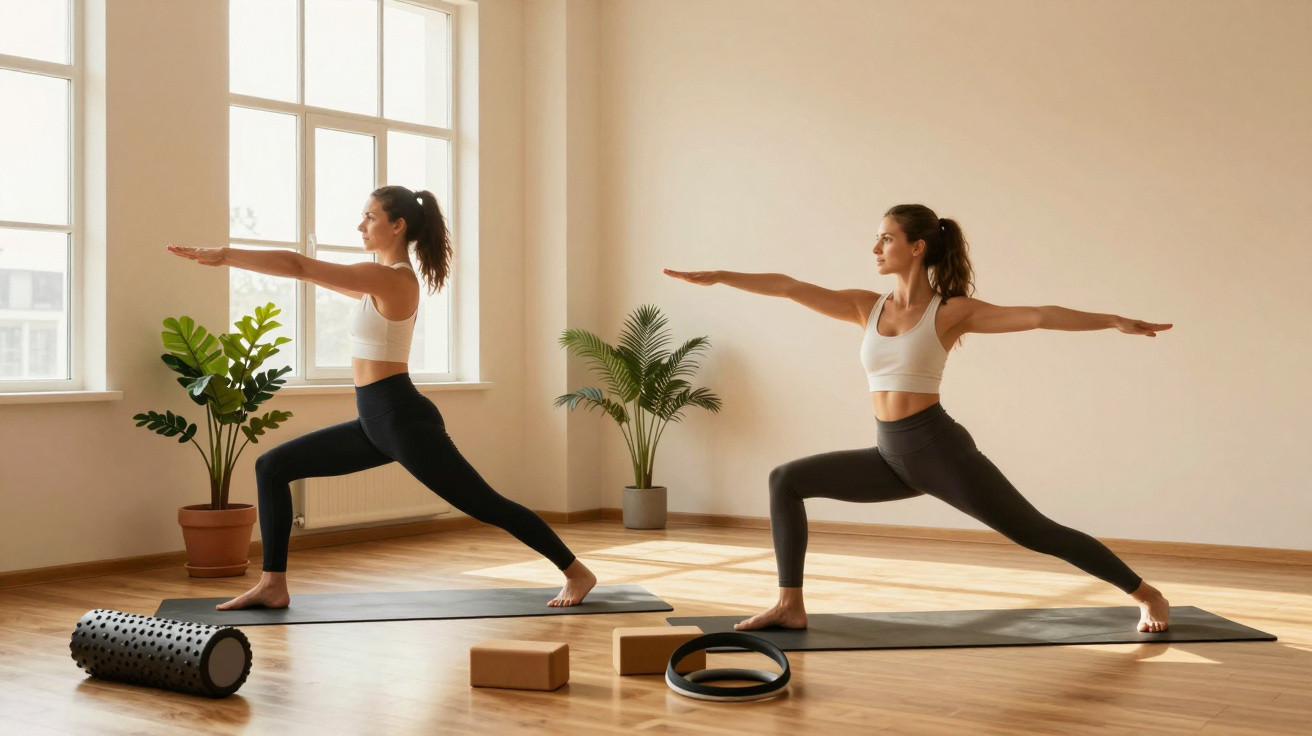
Regular walking with poles creates a solid base for other sports. Two or three Nordic Walking sessions a week can be combined effectively with light strength training. Exercises targeting the core, glutes and hips are particularly useful, such as squats, lunges or planks.
Nordic Walking also works well for recreational runners as a joint-friendly alternative on recovery days. It keeps the circulation active and promotes blood flow to the muscles without imposing the same level of strain as running.
The activity is equally interesting for people looking to reduce stress. The rhythmic use of the poles, repetitive steps and time spent outdoors often have a calming effect. Many people report that after 30 to 40 minutes of walking, they can think more clearly and feel less tense.
By planning sessions deliberately, it is therefore possible to pursue several goals at once: build endurance, help prevent back pain, manage weight and clear the mind – provided the technique is right and the poles are more than just an accessory.












Comments
No comments yet. Be the first to comment!
Leave a Comment