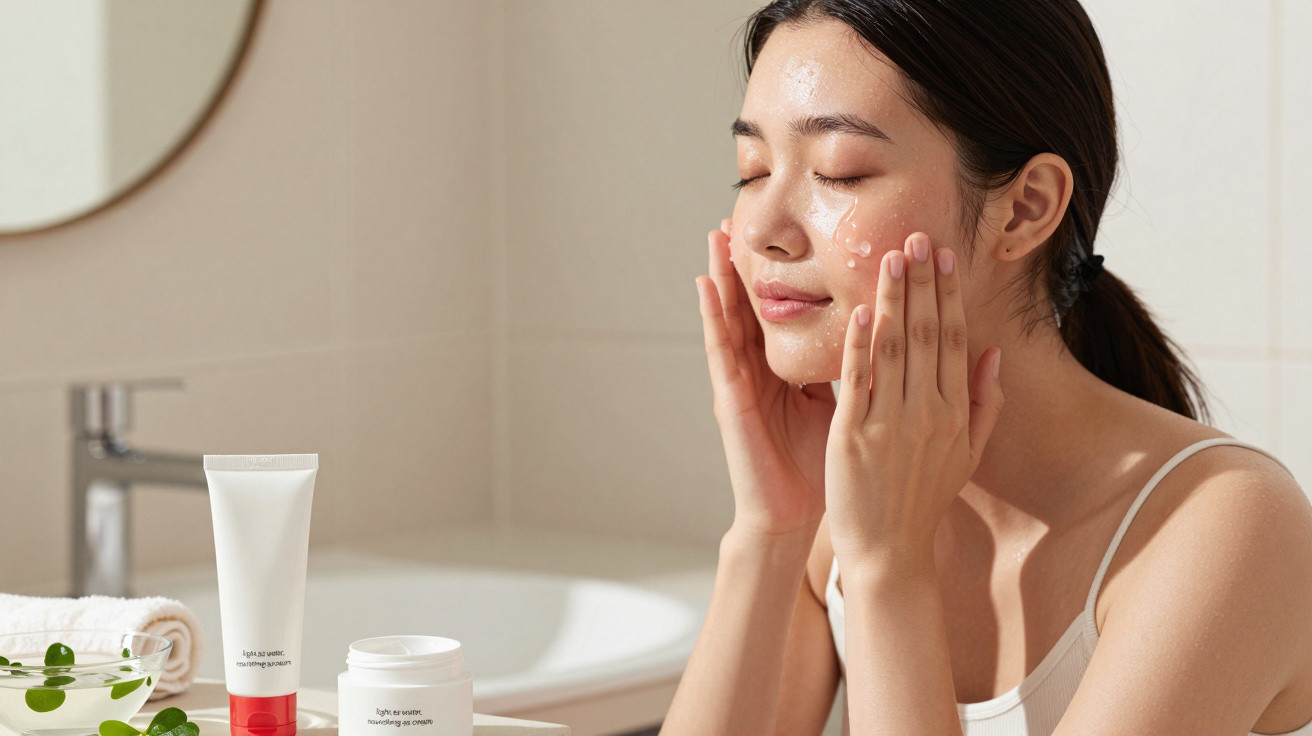
Many people struggle with red, sensitive skin that reacts badly to wind, centrally heated air or unsuitable skincare almost immediately. Rather than needing a thick layer of cream, this skin needs something that reinforces it without suffocating it. A hydrating gel from the Korean K-beauty world is currently attracting attention for doing precisely that.
Why sensitive skin becomes unbalanced so quickly
At the heart of this is a term frequently used in dermatology: the skin barrier. Acting as a protective shield, it is made up in part of lipids, or fats. Ceramides are among its most important components. They keep moisture within the skin and help defend it against external irritants.
When ceramide levels fall, the skin loses water, becomes dry, reddens easily and may feel tight or itchy. Common triggers include:
- overly harsh cleansing products, such as strong surfactants and foaming face washes
- centrally heated air and air conditioning
- retinol, acid exfoliants or using too many active ingredients at once
- cold winds, UV radiation and frequent handwashing
For sensitive, irritated skin, dermatologists therefore often recommend skincare with a high ceramide content. Over time, it replenishes what the skin lacks instead of merely depositing short-lived moisture on the surface.
“A good ceramide booster helps the skin protect itself more effectively again – rather than simply ‘creaming’ it from the outside.”
The Korean Illiyoon gel designed to rebalance the skin barrier
The much-discussed gel comes from Korean brand Illiyoon, which belongs to cosmetics giant Amorepacific. This is not a niche item from a small Etsy shop, but a skincare product from a major company focused on efficacy and research.
Its formula rests on three key pillars:
- Ceramides: reinforce the lipid layer, lock in moisture and shield against cold, wind and irritants.
- Amino acids: components of the skin’s natural moisturising factor that promote even hydration.
- Soothing plant extracts: including ginseng-based and other botanical ingredients that may reduce redness.
The ceramides are supplied in a specialised encapsulated format. In other words, they are contained in tiny particles that release the active ingredients gradually rather than all at once. This allows the moisturising effect to last longer without leaving a heavy layer on the skin.
As light as water, as nourishing as a cream
People with combination skin or an oily T-zone will often know the issue: rich creams can leave skin soft, but may also cause shine, blocked pores and a sticky sensation. This is exactly where the gel comes in.
Its gel-like, almost watery consistency absorbs extremely quickly. Users report an instant feeling of freshness, as though giving the skin a glass of water – but without drips or stickiness.
“Intense hydration but no greasy film: this exact combination is what makes the gel so appealing for combination and oily skin.”
According to user experiences, skin feels after application:
- smoother and plumper
- less hot and red
- noticeably less prone to tightness
- naturally matte rather than shiny
The product avoids familiar potential irritants such as artificial fragrance, silicones and certain preservatives that consumers increasingly view critically. For many reactive skin types, that is a decisive benefit.
Real-world feedback: what users report
Across beauty forums and product reviews, one feature appears repeatedly: its rapid soothing effect. Many say that redness and stinging lessen considerably when their skin is “going haywire”, whether after an overly strong exfoliant or icy winter weather.
Three benefits receive particularly positive attention:
- Immediate sensation: Skin feels lightly cooled, while minor redness appears visually reduced more quickly.
- Comfort: No stinging on application and no tight feeling, even several hours later.
- All-round use: Many use the gel not only on the face, but also on the neck, décolletage or very dry hands.
One commonly shared approach is to use the gel as an “in-between layer” in winter – applying the gel first, followed by a slightly richer cream. This keeps the skin soft without making it feel smothered.
How to incorporate the gel effectively into your routine
The gel can be added easily to almost any skincare routine. The order matters if the ingredients are to work as effectively as possible.
| Step | Application |
|---|---|
| 1. Cleanse | Use a gentle face wash or cleansing lotion, not a strongly foaming product. |
| 2. Toner / essence | If you use one, apply a hydrating facial toner. |
| 3. Serum | For example, use niacinamide or hyaluronic acid if your skin tolerates it. |
| 4. Ceramide gel | Massage a small amount into skin that is still slightly damp. |
| 5. Cream / oil | For very dry skin, apply a thin layer of cream over it. |
| 6. Morning sun protection | Use SPF 30 or above as the final step. |
Because of its lightweight texture, the gel works well both morning and evening. During the day, it sits comfortably beneath make-up as it leaves no film and does not make foundation slip more quickly.
“Many use the gel as an ‘SOS product’ when their skin suddenly plays up – for instance, after a long day in an office with dry air.”
Who is the Illiyoon gel suitable for – and who may find it less suitable?
The gel is ideal for:
- reactive, sensitive skin with redness
- dehydrated combination skin that develops blemishes in response to rich creams
- oily skin that becomes shiny during the day but feels tight after cleansing
- skin that appears stressed by retinol, acids or dermatological treatments
It may be slightly less suitable for:
- very mature, severely lipid-depleted skin that cannot manage without a more occlusive cream
- people who need extremely minimal INCI lists and cannot tolerate plant extracts
Anyone with very dry, flaky patches should ideally use the gel as a moisture base, then layer a slightly richer barrier-supporting cream or oil over it.
Why ceramides feature so often in skincare recommendations
Ceramides are not fleeting trend ingredients, but established skincare staples. They resemble the building blocks that skin naturally produces, which enables them to integrate well into the natural structure of the stratum corneum. This provides lasting support for its protective function.
Ceramide-containing products are especially useful:
- after dermatological treatments such as peels or laser procedures
- during extended periods of central heating or in cold, windy weather
- for a tendency towards eczema, alongside medical treatment
- after frequent sanitising and handwashing, when hands become cracked
Combined with amino acids, they create a kind of “moisture network” that binds water and slows its evaporation. This can reduce the need for very rich creams, particularly for combination skin types.
Gels, creams and lotions: which suits each skin type?
Many people stand in the skincare aisle wondering whether to choose a gel, cream or lotion. The answer depends greatly on how their own skin feels.
- Gels: Water-based, cooling and fast-absorbing. Best suited to combination, oily and heat-sensitive skin.
- Lotions: Lighter than traditional creams and often a good option for normal to slightly dry skin.
- Creams: Higher in lipids and forming a thicker layer. Useful for very dry, mature or barrier-impaired skin.
A ceramide gel such as Illiyoon’s can bridge the gap: it supplies barrier-building components without weighing skin down. Anyone needing more lipids can simply add a second layer over the top.
Those with sensitive skin should first test new products on a small area, such as along the jawline or on the inside of the forearm. If the skin becomes very red or burns for longer than a few seconds, stop using the product and, if in doubt, consult a dermatologist.














Comments
No comments yet. Be the first to comment!
Leave a Comment